Language


Views: 222 Author: Tomorrow Publish Time: 2026-01-28 Origin: Site


Content Menu
● Understanding CNC Thread Milling
● Advantages of Thread Milling on a CNC Milling Machine
● Understanding Thread Milling Parameters
● Step-by-Step Process for CNC Thread Milling Programming
>> Step 1: Choose the Right Tool
>> Step 2: Define Machining Parameters
>> Step 3: Set Machine Offsets
>> Step 4: Write G-Code Commands
>> Step 5: Simulate and Verify
● Advanced Thread Milling Strategies
● CAM-Assisted Thread Milling Programming
● Real-World Application Examples
● Maintenance of CNC Milling Machine for Thread Milling
● Troubleshooting Common Problems
● Safety Precautions in Thread Milling
● FAQ About CNC Thread Milling
>> (1) What is thread milling on a CNC milling machine?
>> (2) What types of threads can be produced?
>> (3) Which materials are suitable for thread milling?
>> (4) How can I increase tool life?
>> (5) Is thread milling better than tapping?
Programming a CNC milling machine for thread milling requires not only technical precision but also a solid understanding of toolpath geometry and machining dynamics. Thread milling is widely adopted across industries that demand high-quality threaded components, such as aerospace, automotive, and precision engineering. Compared with tapping, thread milling offers excellent flexibility, better control of chip evacuation, and the ability to produce both internal and external threads with the same tool.
This comprehensive guide walks through everything you need to know about CNC thread milling—from the fundamentals to writing optimized G-code and ensuring superior machining results.
CNC thread milling is a high-precision machining process that forms threads on a workpiece using a rotating milling cutter. Unlike traditional tapping, which drives a tool straight into the material, thread milling uses a helical interpolation movement to gradually remove material around the thread profile. This produces clean, accurate threads while minimizing stress on the tool and the workpiece.
The CNC milling machine executes the process by coordinating multiple axes simultaneously—typically X, Y, and Z—allowing the cutter to follow a helical path. This method gives users full control over the thread's pitch, diameter, and tolerance. It also eliminates the limitation of matching tool diameter with hole size, which is common in tapping operations.
When performed on a CNC milling machine, thread milling delivers numerous advantages in efficiency and versatility:
- Exceptional Accuracy: Thread pitch, depth, and angle are digitally controlled by the machine.
- Multi-Size Capability: One thread mill can cut different diameters as long as the pitch remains constant.
- Reduced Tool Pressure: Lower cutting forces reduce the risk of tool breakage, making it ideal for tough materials.
- Superior Chip Evacuation: The helical movement pushes chips away from the cutting zone.
- High Surface Quality: With proper toolpath and feed parameters, thread milling produces smooth, reliable threads.
- Repair Flexibility: Damaged threads can easily be repaired without re-tapping.
These benefits make CNC milling machines the preferred choice for both prototyping and high-volume threading applications.
The first step in CNC thread milling is ensuring the correct machine setup and tool selection. A properly equipped CNC milling machine can dramatically influence accuracy and tool life. Below are the essential elements:
1. CNC milling machine: A 3-axis or higher machine capable of helical interpolation is required.
2. Thread mill cutter: Choose between single-form (for small batch runs) or multi-form (for high production) tools.
3. Tool holder: Precision collet or hydraulic chucks provide rigidity during high-speed rotation.
4. Workholding device: Fixtures, vises, or custom clamps ensure stable workpiece positioning.
5. Coolant system: Streams or mist cooling enhance chip evacuation and extend tool life.
6. Tool length and diameter offsets: These values must be entered accurately in the controller to avoid dimensional errors.
Before programming begins, verify that all coordinate zeros (G54, G55, etc.) are properly set and that the spindle alignment corresponds with the work origin.
Every successful thread milling operation on a CNC milling machine depends on correctly defined parameters. These include:
- Thread pitch (P): The axial distance between two successive thread peaks.
- Major diameter (D): The external diameter of the thread.
- Minor diameter (d): The internal diameter (for internal threads).
- Helix path radius (R): The distance from the thread's center to the tool centerline.
- Feed rate (F): Linear advance per revolution of the tool.
- Cutting speed (V): Determined based on the workpiece material and cutter specifications.
Selecting the right combination of these variables ensures a balanced cutting load and a clean thread profile.
Programming a CNC milling machine for thread milling follows a logical workflow that blends geometry, G-code commands, and machine motion control.
Select a thread mill that matches the thread pitch. Multi-flute cutters are suitable for large-diameter or deep threads, while single-point cutters offer more flexibility for small holes or unique thread profiles.
Calculate key data, including cutter path radius and thread depth. Include cutter compensation values and approach angles to prevent unexpected collisions.
Input length and cutter radius offsets (usually via G43, H codes) in the CNC milling machine. Proper offsets ensure accurate Z-depth and radial movement.
Thread milling uses specific G-code functions. The most important commands include:
- G17: Select XY working plane.
- G02 / G03: Clockwise and counterclockwise circular interpolation.
- G90 / G91: Absolute or incremental programming positions.
- G41 / G42: Cutter compensation left or right.
- G43: Apply tool length compensation.
Below is a simplified example for internal thread milling:
G90 G17 G21
T3 M6
S1800 M3
G0 X0 Y0
Z5.0
G1 Z-12.0 F150
G3 I0 J0 Z-12.0 P1
G0 Z5.0
M30
This sequence can be customized for different thread dimensions or machine controls (Fanuc, Siemens, Haas, etc.).
Run a full toolpath simulation on the CNC controller or CAM software. Check for errors, tool overlap, and clearance issues, especially at the thread's start and end points.
Testing on a sample material ensures that the programmed parameters function correctly before machining the final workpiece. Always measure the resulting threads with gauges or inspection tools.
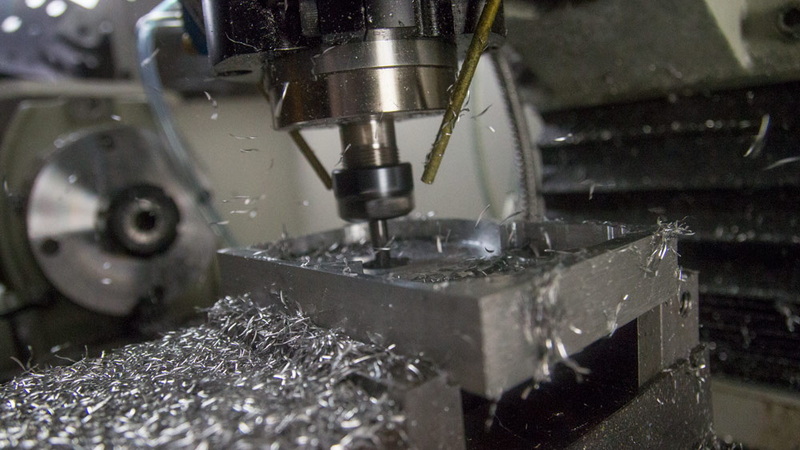
To improve productivity and tool longevity on a CNC milling machine, apply the following optimization strategies:
- Use climb milling direction to minimize cutting forces and improve surface finish.
- Apply multiple passes for hard materials instead of cutting full depth in one pass.
- Adjust spindle speed dynamically during entry and exit to reduce tool load.
- Overlap start and end points by 20–30 degrees for seamless thread transitions.
- Use cutter compensation (G41 or G42) for quick diameter adjustments without modifying G-code.
- Apply proper retract clearance between thread passes to prevent damage during re-positioning.
These advanced practices ensure efficient cutting and enhance the consistency of finished threads.
Nowadays, most machinists rely on CAM (Computer-Aided Manufacturing) software to generate thread milling toolpaths automatically. When integrated with the CNC milling machine, CAM systems like Fusion 360, Mastercam, or SolidCAM streamline the workflow:
1. Input the desired thread type (metric, UNC, UNF, BSP, etc.).
2. Select cutter geometry and tool material.
3. Define thread depth and lead-in/lead-out parameters.
4. The software automatically calculates the helical path and outputs ready-to-run G-code.
By automating complex calculations, CAM software reduces human error and allows for quick program modifications when part designs change.
CNC thread milling is extensively used in several industrial fields:
- Aerospace: Turbine housings, engine parts, and precision fittings requiring tight tolerances.
- Automotive: Transmission shafts and cylinder components with strong, uniform threads.
- Medical Devices: Titanium bone screws and orthopedic implants demanding perfect surface finishes.
- Oil and Gas: Deep-hole threads in stainless or Inconel components.
- Tool and Die: Custom molds and holders where thread accuracy ensures assembly precision.
These applications demonstrate how thread milling enhances both production reliability and cost efficiency.
The longevity and performance of a CNC milling machine rely on periodic maintenance. When used for thread milling operations, special care should be taken to ensure:
- Daily cleaning: Remove chips, coolant residue, and metal dust from the worktable and spindle.
- Lubrication check: Keep linear guideways and ball screws properly lubricated to minimize wear.
- Calibration: Regularly align the machine axes using precision measuring tools.
- Coolant filtration: Replace and clean filters to maintain constant flow and temperature stability.
- Inspection of tool holders: Worn or unbalanced holders cause chatter and poor thread quality.
Routine maintenance ensures the CNC milling machine maintains its threading accuracy and repeatability even under heavy-duty production.
Even experienced programmers face issues during thread milling. Understanding frequent problems helps ensure smooth operations.
- Tool Breakage: Often caused by excessive feed rate or insufficient coolant flow.
- Poor Thread Finish: Typically due to incorrect spindle speed or dull cutting edges.
- Dimensional Error: Can result from incorrect tool offset values or machine backlash.
- Thread Pitch Inaccuracy: Caused by improper synchronization of feed and spindle speeds.
- Burr Formation: Happens when exit ramping angles are too steep.
By addressing these factors early, machinists can minimize downtime and ensure consistent results.
Safety remains a top priority while operating any CNC milling machine. Observe the following measures:
- Always verify the spindle rotation direction before engagement.
- Keep guarding doors closed during operation.
- Ensure the toolholder is well-secured before starting the spindle.
- Use protective eyewear and gloves when handling sharp thread mills.
- Never attempt to modify G-code while the machine is running.
Proper adherence to safety procedures ensures a secure and productive machining environment.
Programming a CNC milling machine for thread milling blends precision, planning, and process control. When executed correctly, it provides unmatched versatility, improved tool life, and superior thread integrity across materials and applications. By mastering both the manual programming approach and CAM-assisted techniques, manufacturers can achieve optimal performance in modern CNC threading operations. A systematic focus on parameters, machine maintenance, and error prevention ensures every thread is perfectly formed—efficiently and consistently.
Contact us to get more information!
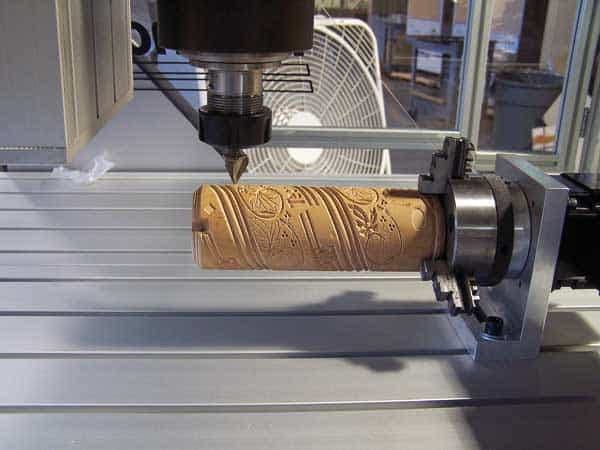
Thread milling is a cutting method that creates threads using a helical toolpath controlled by a CNC milling machine. It offers higher accuracy, less tool wear, and improved flexibility compared to tapping.
CNC thread milling can produce internal, external, straight, or tapered threads. It supports metric, imperial, and custom thread designs depending on the tool and programming.
All machinable materials—from soft aluminum to hard alloys like titanium or stainless steel—can be threaded using CNC milling machines. Adjust cutting speed and feed rates according to the material's properties.
Use climb milling, apply proper cooling, avoid aggressive depths, and regularly inspect cutting edges. Maintaining the right chip load is key to extending tool life.
Yes, for most industrial applications. Thread milling offers greater control, minimizes tool breakage, and supports thread repair or re-machining without damaging the component.
1. https://www.cnccookbook.com/thread-milling-guide/
2. https://www.mastercam.com/solutions/milling/thread-milling/
3. https://academy.autodesk.com/fusion-360-thread-milling
4. https://www.machineryhouse.com.au/blogs/how-to-thread-mill
5. https://www.haascnc.com/service/training/online-training/thread-milling-tutorial


