From idea to market-ready product, our NPI solutions make every stage easier, faster. Discover How We Help

Views: 222 Author: Tomorrow Publish Time: 2026-01-28 Origin: Site


Content Menu
● Understanding CNC Milling and Its Pricing Basis
● Why Basing Cost on Cubic Inches Removed Works
● The Formula for Estimating Cost
● Step-by-Step Process to Quote CNC Milling Based on Volume Removed
>> Step 1: Calculate Material Volume Removed
>> Step 2: Identify Workpiece Material
>> Step 3: Determine Material Removal Rate (MRR)
>> Step 4: Include Tooling and Setup Costs
>> Step 5: Compute Cost Per Cubic Inch
● Factors Affecting Cost Per Cubic Inch
● Enhancing Quoting Accuracy with Software
● Advanced Considerations: Overhead and Indirect Costs
● How to Improve CNC Milling Efficiency
● Common Mistakes When Quoting CNC Milling Jobs
● Benefits of the Cubic Inch Method
● Integrating AI and IoT in Quoting Processes
● FAQs
>> 1. How can I calculate cubic inches removed accurately?
>> 2. What is the typical range of cost per cubic inch for CNC milling?
>> 3. Is quoting by cubic inch suitable for all CNC milling machines?
>> 4. Can quoting software automate this process?
>> 5. How does material hardness impact cost per cubic inch?
Quoting CNC machining jobs accurately is one of the most important steps in ensuring profitability and maintaining long-term customer relationships. For many machine shops, the most consistent and data-driven approach is to quote CNC milling based on cubic inches removed. This method eliminates guesswork, ties pricing directly to machining efficiency, and allows both buyers and manufacturers to gauge performance in measurable terms.
This article will help you understand how to create accurate CNC cost estimates based on material volume removed, explain the required calculations, explore influencing factors, and provide practical optimization strategies. By the end, you will know how to confidently build a reliable pricing system around your CNC milling machine operations.
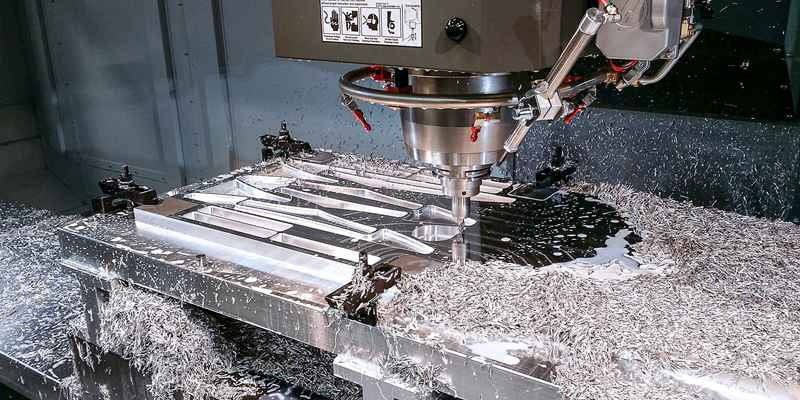
CNC milling is a subtractive manufacturing process that uses rotating tools controlled by computer-aided commands to remove material from a workpiece. A CNC milling machine can perform highly precise cuts, drill holes, and shape complex surfaces on materials such as aluminum, stainless steel, brass, or titanium.
Each CNC machining job incurs costs associated with equipment depreciation, energy consumption, operator labor, tool wear, and setup time. However, one of the most objective factors for calculating milling cost is the amount of material removed. The more cubic inches of material a CNC milling machine removes, the more time, energy, and tool wear it involves — making cubic inches removed a core pricing indicator.
Many quoting methods rely on machining time, hourly rate, or average toolpath length. While useful, these metrics often vary depending on programming efficiency or operator habits. Using cubic inches removed creates a more universal benchmark that reflects the actual work performed by the CNC milling machine.
Here are some important advantages:
- Predictable pricing: It ties cost directly to measurable machining effort.
- Comparability: Different jobs and materials can be evaluated using a single metric.
- Objectivity: Reduces human bias or experience-based inconsistency in quoting.
- Automation-friendly: Ideal for integration with quoting software and digital manufacturing systems.
- Performance insight: Shows how well the CNC milling machine converts time into material removed.
By turning material removal into a standard metric, shops can manage processes better, track machine utilization, and ensure fair jobs-to-cost correlations.
To determine machining cost based on cubic inches removed, use the core formula:
Cost per part = Volume removed (in³) × Cost per cubic inch removed
To calculate the cost per cubic inch, you must first know the machine's hourly rate and the material removal rate (MRR).
Cost per cubic inch removed (CIR) = Machine hourly rate ÷ (MRR × 60)
Where:
- Machine hourly rate = Total machine cost per hour (labor, electricity, depreciation, maintenance, overhead).
- MRR (Material Removal Rate) = Volume of material removed per minute, measured in cubic inches.
Using your part's CAD design, determine the raw stock volume and the finished part volume. Subtract these to find the total volume of material removed. Modern CAD and CAM software, such as SolidWorks, Mastercam, or Fusion 360, often include built-in analysis tools to calculate this automatically.
*Example:*
Raw stock volume: 150 in³
Final part volume: 80 in³
Material removed = 150 - 80 = 70 in³
Material type significantly influences machining cost. Softer materials such as aluminum can be cut quickly with minimal tool wear, while tougher materials like stainless steel or Inconel require slower feed rates and higher tool costs.
Common guidelines for average cost per cubic inch removed:
| Material Type | Ease of Machining | Typical CIR (USD/in³) | Notes |
|---|---|---|---|
| Aluminum Alloy | Very Easy | 0.15–0.25 | High-speed cutting possible |
| Mild Steel | Moderate | 0.25–0.40 | Requires balanced feed |
| Stainless Steel | Difficult | 0.40–0.65 | Causes high tool wear |
| Titanium | Very Difficult | 0.60–1.00+ | Requires low MRR |
| Brass | Easy | 0.20–0.30 | Fast machining |
MRR defines how fast a CNC milling machine removes material. It depends on the spindle speed (RPM), feed rate, cutting width, and depth of cut.
MRR = feed per tooth × number of teeth × RPM × depth of cut × width of cut
An efficient setup maintains consistent MRR to balance cost and tool longevity. Improving MRR without compromising surface finish can greatly reduce machining cost.
Tool cost per cubic inch should factor in the wear rate and replacement schedule. The same applies to setup time, especially for small-batch or one-off projects. For mass production, setup cost is distributed across many units.
*Tip:* Track tool life data for your CNC milling machine in different materials to accurately estimate per-part wear.
Now, plug the numbers into the formula.
Suppose your CNC milling machine costs \$80/hour to run, and the MRR is 8 in³/min:
CIR = 80 ÷ (8 × 60) = 0.166
This means the removal cost is \$0.166 per cubic inch.
If the total removal is 70 in³:
Total Machining Cost = 70 × 0.166 = \$11.62
Add finishing, setup, and inspection fees for the complete part quote.
A CNC machining shop processes an aluminum housing using a 3-axis milling machine.
- Material: Aluminum 6061
- Raw stock volume: 120 in³
- Finished part volume: 72 in³
- Material removed: 48 in³
- MRR: 10 in³/min
- Machine hourly rate: \$75
CIR = 75 ÷ (10 × 60) = 0.125
Cost = 48 × 0.125 = \$6.00
If setup and inspection add \$2 per part, the total quote is about \$8 per part. Over 1,000 parts, this ensures predictable, consistent pricing.

Quoting precision depends on real-world machining conditions. Here are primary factors that influence milling cost:
- Material hardness and toughness: Harder materials reduce cutting speed and shorten tool life.
- Tool quality and coating: Coated carbide or PCD tools often extend life, lowering per-inch cost.
- Machine condition and rigidity: A stable CNC milling machine handles higher MRR efficiently.
- Coolant system performance: Proper cooling maintains tool temperature, improving precision and tool longevity.
- Operator skill: Experienced machinists can fine-tune cutting parameters to maximize efficiency.
- Machine type: A 5-axis CNC mill can achieve complex shapes with fewer setups, often justifying a higher rate.
Modern machining relies heavily on integrated quoting tools. CAM simulation programs calculate the MRR and even simulate cutting paths to estimate machining time and tool wear automatically. ERP systems can then import this information to generate cost quotes instantly.
Common digital quoting systems for CNC milling include:
- Fusion 360 Manufacture
- Mastercam Cost Estimator
- Protolabs or Xometry quoting engines
- Custom shop management software
When combined with historical performance data, these tools can output reliable cost-per-cubic-inch metrics that adapt to live production feedback.
While material volume is the core factor, quoting also needs to consider indirect cost contributions such as:
- Machine depreciation: Accounts for long-term wear and tear of the CNC milling machine.
- Electricity consumption: High-speed spindles consume more energy.
- Tool inventory: Storage, calibration, and logistics add small but measurable costs.
- Maintenance and downtime: Predictive maintenance helps stabilize cost consistency.
- Quality assurance: Dimensional inspection, coordinate measuring, and tolerance verification.
Accurate quotes include both direct machining cost per cubic inch and indirect overhead, adjusted proportionally to production volume.
Reducing cost per cubic inch depends largely on process optimization. Consider these strategies:
1. Maximize Feed and Speed Combinations: Use manufacturer-recommended cutting data and test different settings to push MRR safely higher.
2. Employ Adaptive Toolpaths: CAM software can redistribute cutting loads for faster material removal.
3. Upgrade to Dynamic Tooling: Modern carbide inserts and solid end mills last longer and allow deeper cuts.
4. Use CNC Simulation Tools: Simulations prevent crashes, optimize steps, and ensure stable feeds.
5. Implement Machine Monitoring: Sensors help analyze spindle loads and optimize tool life cycles.
6. Adopt Automation: Pallet changers and robotic feeding reduce idle times between machining cycles.
Efficient machining not only lowers production time but also increases the shop's quoting competitiveness.
Machine shops often make avoidable mistakes that lead to inaccurate quotes:
- Relying on outdated MRR data that doesn't reflect real machine performance.
- Ignoring hidden setup times such as fixturing, alignment, or program load.
- Missing post-machining costs like deburring, anodizing, or inspection.
- Underestimating tool wear when machining hard alloys.
- Not updating pricing models after purchasing new CNC milling machine types.
Avoiding these errors ensures sustainable profitability and consistent pricing transparency.
Adopting the “cubic inch removed” quoting model provides long-term operational advantages:
- Improved accuracy: Quotes align closely with actual machining performance.
- Simplified training: Even new estimators can produce reliable results.
- Transparency: Easier communication between shop and client.
- Scalability: Works across manual, 3-axis, or multi-axis CNC milling machines.
- Profit optimization: Helps identify underperforming machines or inefficient setups.
This method is also adaptable for hybrid manufacturing or mixed-material batches, making it a universal cost estimation framework suitable for digital manufacturing environments.
With the development of industrial Internet of Things (IoT) and artificial intelligence, quoting is becoming even more precise. Smart CNC milling machines now collect real-time data on spindle load, cutting torque, and vibration levels. AI analytics can convert this data into predictive cost-per-volume insights.
AI-powered quoting systems can:
- Predict tool wear before it happens.
- Adjust cost estimates based on live cutting performance.
- Optimize future job bids by learning from past production runs.
These innovations are transforming traditional manufacturing into a data-intelligent quoting ecosystem, helping machine shops maintain competitive margins even in highly dynamic markets.
Quoting CNC milling work based on cubic inches removed offers a measurable, transparent, and fair pricing system that both shops and clients can trust. By applying basic principles of material volume, removal rate, and hourly cost, manufacturers can estimate machining expenses accurately.
This method normalizes pricing across various materials, improves quoting consistency, and helps identify efficiency improvements in CNC production. When combined with data-based monitoring and automated quoting software, it ensures competitive pricing while protecting profit margins.
In the evolving digital manufacturing world, understanding exactly how your CNC milling machine transforms material removal into measurable cost is the foundation for scalable success.
Contact us to get more information!
Measure the raw material's total cubic volume and subtract the final part's volume, which can be extracted directly from 3D CAD software or part design data.
It varies from \$0.15 for aluminum up to \$1.00 for titanium, depending on machine rate, tool life, and removal speed.
Yes. It works across 3-axis, 4-axis, and 5-axis machines, as long as you can measure the material removal rate accurately.
Modern CAM and ERP platforms automatically compute MRR, time, and cost estimates based on 3D toolpath simulation, reducing manual error.
Hard materials like stainless steel require slower feed rates and lead to higher tool wear, causing the cost per cubic inch to rise significantly.
1. https://www.autodesk.com/products/fusion-360
2. https://www.mastercam.com
3. https://www.xometry.com/resources/machining/cnc-machining-cost-guide
4. https://www.protolabs.com/resources/blog/how-much-does-cnc-machining-cost
5. https://makeitfrommetal.com/how-to-estimate-cnc-machining-time


