From idea to market-ready product, our NPI solutions make every stage easier, faster. Discover How We Help

Views: 222 Author: Tomorrow Publish Time: 2026-01-27 Origin: Site
Content Menu
● Key Factors That Affect CNC Machining Costs
>> 2. Machining Time and Complexity
>> 3. Type of CNC Machine and Axis Configuration
>> 4. Tolerances and Precision Levels
>> 5. Surface Finish and Post-Processing
>> 7. Setup, Programming, and Tooling Costs
>> 8. Labor, Overhead, and Location
● Detailed CNC Machining Cost Estimation
● Regional Cost Comparison for CNC Machining
● Cost Optimization Strategies for CNC Machining
● Future Trends in CNC Machining and Pricing
● FAQ
>> 1. What is the average hourly rate for CNC machining?
>> 2. Is CNC machining more expensive than 3D printing?
>> 3. Which materials offer the best value in CNC machining?
>> 4. Can CNC machining be used for mass production?
>> 5. How can a company get a fast CNC machining quote?
In today's manufacturing landscape, CNC machining has become one of the most essential and precise production methods across industries. From automotive prototypes to aerospace components and consumer electronics, CNC machining allows engineers to transform digital designs into highly accurate physical parts. However, one of the most common and complex questions among buyers and engineers is: How much does custom CNC machining actually cost?
The answer isn't a simple one. CNC machining costs vary widely depending on material type, part complexity, machining time, surface finish, and geographic location. Understanding these factors enables you to forecast budgets, negotiate better with suppliers, and optimize designs for cost-efficiency. This article provides a detailed overview of CNC machining pricing, elements affecting overall cost, and practical ideas to control expenses without sacrificing quality.
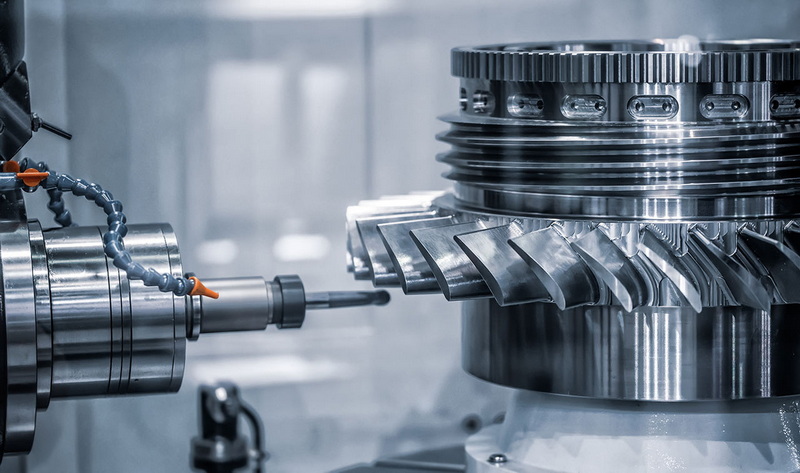
CNC machining stands for *Computer Numerical Control machining*. It is a subtractive manufacturing technique where a block of raw material—metal or plastic—is shaped into a finished part by precisely controlled tools. These tools operate under pre-programmed computer instructions (G-code) derived from CAD (Computer-Aided Design) models.
CNC machining plays an essential role in producing parts requiring high dimensional accuracy and consistent quality. Industries such as aerospace, defense, electronics, and medical equipment depend heavily on CNC technology because it ensures repeatability, smooth surface finishes, and compatibility with mass production scaling.
There are different types of CNC machines used, including:
- CNC Milling Machines: Remove material with rotating tools.
- CNC Lathes: Shape cylindrical parts through turning operations.
- CNC Routers: Cut large sheets of material like wood, plastics, or aluminum.
- CNC Grinders and EDM Machines: Used for ultra-precise finishing and complex geometries.
These machines can operate on 3, 4, or 5 axes, with higher-axis machines handling more complex parts but at higher costs.
Several factors influence the total cost of CNC machining. Understanding each one in context helps engineers tailor their designs for both performance and cost-efficiency.
The raw material is often the most significant cost driver in CNC machining. Each material has a unique machining characteristic—some are easy to cut while others wear down tools faster.
Common materials and their cost implications include:
- Aluminum (6061, 7075, etc.): Excellent machinability, lightweight, affordable, and corrosion-resistant. Commonly used for prototypes and general parts.
- Stainless Steel: Offers strength and corrosion resistance but takes longer to machine due to hardness, increasing tool wear and machining time.
- Titanium: Superb strength-to-weight ratio, often used in aerospace, but difficult to machine. High tool cost and slower feed rates increase expense.
- Brass and Copper: Easy to machine but more expensive in raw material costs.
- Plastics (ABS, Nylon, PEEK, Delrin): Ideal for rapid prototyping; non-conductive and cost-effective.
Material prices fluctuate regularly based on supply chain and metal market conditions, so always confirm current rates when estimating costs.
The longer a part requires machining, the more expensive it becomes. Complexity is measured not only by the number of features (holes, threads, pockets) but also by tolerance levels and geometric intricacies.
- A simple aluminum block may take less than 30 minutes to machine on a 3-axis mill.
- A multi-axis titanium component can require several hours due to detailed toolpaths and precision passes.
CNC machine time is often billed by the hour, typically between $35 and $125/hour, depending on region and machine type. Reducing complexity early in the design phase can yield major savings.
CNC machines vary in capability, speed, and accuracy. The more axes a machine has, the more movements it can make simultaneously—ideal for intricate designs but with higher operating costs.
| CNC Machine Type | Capability | Typical Hourly Rate |
|---|---|---|
| 3-Axis Milling | Simple parts, basic cuts | $35 – $75/hr |
| 4-Axis Machining | Medium-complex parts, angled holes | $60 – $100/hr |
| 5-Axis Machining | Complex surfaces, aerospace parts | $90 – $200/hr |
Whenever possible, optimizing your design for 3-axis machining is one of the most effective ways to lower total cost.
The tighter the tolerances, the longer the machining time and the more precise the inspection required.
- Standard tolerance (±0.005 inch): Suitable for general applications.
- Tight tolerance (±0.001 inch): Demands slower cutting and quality verification.
- Ultra-tight (below ±0.0005 inch): Used in aerospace or medical-grade parts.
These tighter tolerance operations require premium tools and longer inspection times, both of which raise production expense.
Many CNC machining parts require finishing processes to enhance durability or aesthetics. Common finishing treatments include:
- Anodizing: Protects aluminum and improves appearance.
- Powder Coating: Adds color and corrosion protection.
- Bead Blasting: Gives a matte surface finish.
- Polishing or Passivation: Improves smoothness and corrosion resistance.
Each finishing process adds extra cost—typically 10–30% more—depending on part volume and surface area.
CNC machining setup and programming costs are spread over the total number of parts produced. Thus, the cost per part decreases substantially as the volume increases.
For example:
- Single prototype: $200–$400 per part.
- 50-piece run: $30–$70 per part.
- 500-piece batch: $10–$30 per part.
Whenever possible, producing in batches improves efficiency by reducing downtime between setups.
Before production begins, the machinist must prepare the machine setup and programming files. This phase involves translating CAD models into toolpaths, verifying codes, and choosing cutting tools.
Setup activities might include:
- Fixture installation and calibration.
- Toolpath simulation in CAM software.
- Sample test runs for verification.
Setup costs typically range from $60 to $500, depending on complexity. If your parts will be reordered frequently, maintaining the same setup files reduces repeat costs.
Labor and shop overhead directly affect CNC machining pricing. Machine operators, programmers, and inspectors all contribute to hourly expenses. Shops located in North America or Europe usually have higher overhead due to wages and facility costs, while Asian suppliers, particularly those in China or Vietnam, can offer the same service at lower rates — often 30–50% less.
However, choosing the lowest-cost region is not always best; communication, delivery time, and quality control should also be considered in total project value.
Let's take a closer look at an example cost breakdown for producing a custom CNC machined part:
| Cost Element | Description | Estimated Range (USD) |
|---|---|---|
| Material | Aluminum 6061-T6 block | $10 – $30 |
| Design & Programming | G-code and setup | $80 – $200 |
| Machining Time | 1.5 hours @ $65/hr | $98 |
| Finishing | Anodizing matte surface | $25 – $50 |
| Inspection & QA | CMM measurement and report | $20 – $40 |
| Total Estimated Cost (per part) | Single prototype | $230 – $420 |
For a bulk production run, the unit cost could fall below $50 per piece. This shows how design simplicity and batch volume strongly impact total project budgets.
CNC machining prices differ significantly by region:
- United States & Europe: $75–$150/hour on average. Generally offer top-tier material traceability and compliance standards.
- China: $25–$50/hour, a cost-effective option for large quantities or rapid prototyping.
- Southeast Asia (Vietnam, Malaysia): $30–$60/hour, emerging as competitive alternatives with good quality control.
- Eastern Europe: Mid-range pricing with growing industrial base and precision capabilities.
When sourcing globally, companies must weigh factors such as lead time, shipping costs, intellectual property protection, and certification compliance (ISO 9001, AS9100, etc.).
Reducing CNC machining cost involves more than simply seeking cheaper suppliers. Smart design, planning, and collaboration between engineers and machinists often yield the biggest returns.
Effective strategies include:
1. Simplify the geometry. Avoid unnecessary undercuts, tiny radii, or complex curves that demand multi-axis work.
2. Consolidate operations. Design features that can be machined in fewer setups.
3. Choose cost-efficient materials. For non-structural components, lighter materials like aluminum or plastics are sufficient.
4. Relax tolerances. Tighten only where absolutely necessary for fit or function.
5. Plan for batch production. Grouping multiple parts cuts per-unit cost through shared setup time.
6. Seek feedback early. A quick consultation with a machining engineer during the design stage can prevent costly manufacturing errors.
7. Consider hybrid production. For prototypes, 3D printing the initial version before CNC machining final parts can save material and setup expense.
By applying these methods, companies often achieve 15–40% cost reductions without compromising part quality or dimensional stability.
The CNC machining industry continues to evolve through technology, materials, and automation:
- Automation and robotics: Reduce manual labor needs and increase production speed.
- AI-driven optimization: Machine learning algorithms adjust cutting parameters in real time to extend tool life.
- Hybrid manufacturing: Combines additive manufacturing (3D printing) and subtractive machining, reducing waste and machining time.
- Smart factories: Integrate IoT sensors for predictive maintenance and machine uptime tracking.
- Eco-friendly materials: Growing demand for recyclable plastics and sustainable metals impacts both cost and sourcing.
These innovations are making CNC machining more cost-stable and efficient, helping manufacturers manage material and energy fluctuations more effectively.
Determining how much custom CNC machining costs requires analyzing numerous variables—material, complexity, tolerances, volume, and region. While a simple aluminum prototype may cost less than $150, a precision-engineered, multi-axis titanium part can easily exceed $1,000.
The key to cost-effective CNC production lies in smart design, open communication with suppliers, and scalable production planning. CNC machining continues to be an indispensable technology for modern manufacturing, offering unmatched accuracy, consistency, and flexibility across virtually all industries. By understanding each cost factor and implementing proactive cost-saving strategies, businesses can maximize efficiency while maintaining the superior quality CNC machining is known for.
Contact us to get more information!
Rates typically range between $35 and $125 per hour, based on region, material, and complexity. High-precision or 5-axis machines command higher prices.
For simple models, 3D printing may be cheaper. However, CNC machining produces parts with superior strength, dimensional accuracy, and finish suitable for industrial applications.
Aluminum 6061 provides the best balance of machinability, durability, and cost, making it ideal for most general-purpose parts.
Yes, particularly when combined with automated loaders or multi-part fixtures. CNC machining excels in both prototyping and continuous production.
You can obtain quick quotes by uploading 3D CAD files to online machining platforms that automatically calculate machining time and provide instant pricing.
1. (https://www.protolabs.com/resources/blog/cnc-machining-costs-guide/)
2. (https://www.fictiv.com/articles/how-much-does-cnc-machining-cost)
3. (https://www.xometry.com/resources/blog/cnc-machining-cost-breakdown/)
4. (https://www.thomasnet.com/articles/custom-manufacturing-fabricating/cnc-machining-cost/)
5. (https://www.rapiddirect.com/blog/cnc-machining-cost/)


