From idea to market-ready product, our NPI solutions make every stage easier, faster. Discover How We Help

Views: 222 Author: Tomorrow Publish Time: 2026-01-29 Origin: Site


Content Menu
● Understanding Swiss-type CNC Machining
>> Key Features
● Growth of the CNC Machining Industry in Tajikistan
● Top Swiss-type CNC Machining Manufacturers And Suppliers in Tajikistan
>> 1. TajMach Precision Engineering
>> 2. Dushanbe Micron Solutions
>> 3. Central Asia Machinery Co.
>> 4. Pamir Precision Components (PPC)
● Why Partner With Swiss-type CNC Machining Manufacturers in Tajikistan?
>> 2. Strategic Central Asian Location
>> 3. Industrial Policy Support
● Collaboration with Chinese OEM Manufacturers
>> Why Combine Tajik and Chinese Capabilities?
● Applications of Swiss-type CNC Machining Worldwide
>> Industrial Sectors and Products
● Challenges Facing the Industry
>> 2. Limited Supplier Ecosystem
>> 3. Financing and Capital Investment
● Future Outlook: The Rise of Precision Manufacturing in Central Asia
● Frequently Asked Questions (FAQ)
>> 1. What makes Swiss-type CNC machining different from standard CNC turning?
>> 2. Are Tajikistan-based Swiss-type CNC manufacturers competitive globally?
>> 3. What industries in Tajikistan use Swiss-type CNC machining?
>> 4. Can Tajik and Chinese manufacturers collaborate on OEM projects?
>> 5. What are the main challenges for manufacturers in Tajikistan?
The global precision manufacturing industry has witnessed a powerful transformation over the past decade, driven by automation, globalization, and technological innovation. Among the many machining technologies that define modern industries, Swiss-type CNC machining stands out for its extreme precision and versatility. Initially designed for the Swiss watchmaking industry, this process is now vital in producing micro-components for sectors including medical devices, aerospace, electronics, and automotive systems.
While Switzerland and East Asia have long dominated the precision machining supply chain, Tajikistan has recently started gaining attention as an emerging location for subcontract manufacturing, supported by industrial growth policies and regional trade links. This article explores the top Swiss-type CNC machining manufacturers and suppliers in Tajikistan, detailing their capabilities, advantages, market potential, and the role of Chinese OEM factories in global collaboration.
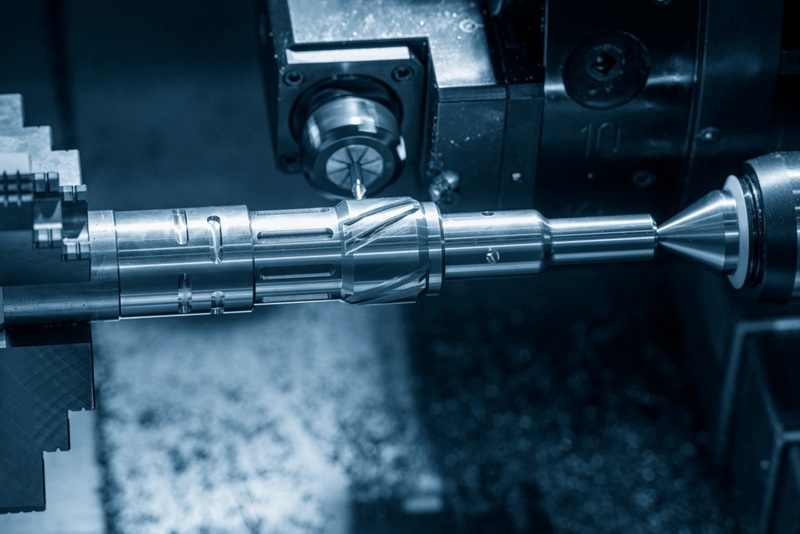
Swiss-type CNC machining is a specialized turning process where the workpiece is supported by a guide bushing, allowing tools to cut extremely close to the point of support. This unique mechanism minimizes deflection, enabling the production of slender and complex components with outstanding accuracy.
- Sliding headstock design for precise longitudinal motion.
- Guide bushing support system to minimize vibration and tool wear.
- Multi-axis configuration, often 7–9 axes, to complete multiple operations in a single setup.
- High repeatability, ideal for mass production of precision parts.
1. Superior accuracy and surface finish — achievable within a few microns.
2. Efficient production — reduced setup times and consistent automation.
3. Cost savings due to minimal material waste and fewer secondary operations.
4. Wide material compatibility, including stainless steel, titanium, aluminum, brass, and plastic.
Swiss-type CNC machining is especially valued where tolerance and stability determine product quality — in miniature shafts, pins, screws, fittings, and custom connectors.
Tajikistan's manufacturing landscape has traditionally focused on textiles, mining, and hydropower. However, new industrial initiatives under the government's “National Industrial Development Strategy” aim to diversify exports and attract high-precision engineering investments. With improved logistics corridors connecting China, Uzbekistan, and Kazakhstan, the country presents growing opportunities for Swiss-type CNC machining manufacturers and suppliers.
- Infrastructure investment: Industrial parks in Dushanbe, Khujand, and Danghara support small and medium manufacturers.
- Trade partnerships: Preferential trade deals with regional partners reduce export tariffs for mechanical components.
- Technical education programs: Vocational centers now include CNC programming and machine operation courses.
- Foreign collaboration: Tajik companies increasingly partner with Chinese and Russian engineering firms for technology transfer.
The following companies and facilities play a central role in Tajikistan's emerging precision manufacturing ecosystem.
Location: Dushanbe
TajMach Precision Engineering ranks among the leading Swiss-type CNC machining manufacturers and suppliers in Tajikistan. It specializes in producing precision components for hydraulic actuators, industrial automation systems, and electrical housings. The company's Swiss-type CNC lathes and inspection equipment imported from Japan ensure accurate machining for export-quality parts.
Capabilities
- CNC turning and Swiss-type CNC machining for micro-parts.
- CAD/CAM-driven programming and prototyping.
- Material options: aluminum, copper alloys, stainless steel, and carbon steel.
TajMach emphasizes continuous improvement through ISO 9001:2015 certification and tight process control, positioning itself as a competitive supplier within Central Asia.
Location: Dushanbe Free Economic Zone
This medium-sized enterprise focuses on Swiss-type CNC machining for electronic connectors, fluid control components, and miniature fasteners. It is known for combining local machining with technical input from European consultants to achieve precision tolerances.
Key Services
- Multi-axis Swiss turning and micro-milling.
- Custom parts for electronics, telecommunications, and medical prototypes.
- Surface finishing: electroplating, anodizing, and micro-deburring.
With advanced measuring tools such as CMM and digital laser inspection, Dushanbe Micron Solutions continues to improve dimensional reliability and customer confidence.
Location: Khujand Industrial Park
Central Asia Machinery Co. serves multiple industries, including automotive, tooling, and industrial equipment fabrication. By adding Swiss-type CNC machines to its production line, it expands capabilities for small-diameter, high-precision components.
Core Strengths
- Experienced engineering design team.
- Integration of dual-spindle Swiss lathes for multi-axis machining.
- Prototype-to-production support for OEM contracts.
The company also collaborates with regional universities to train operators and improve CNC programming efficiency.
Location: Khujand Free Industrial Zone
Pamir Precision Components focuses on precision parts for aerospace, oilfield, and optical industries. Its Swiss-type CNC machining department produces micro bushings, threaded inserts, fittings, and shafts with excellent repeatability.
Technical Advantages
- Dust-free assembly and precision inspection facilities.
- Materials: titanium alloy, brass, nickel, and hardened steel.
- High-standard metrology equipment ensuring sub-micron accuracy.
With a growing customer base in Turkey, Russia, and the UAE, PPC has become one of the most internationalized Swiss-type CNC machining suppliers in Tajikistan.
Location: Danghara
TechnoTaj Engineering is a new-generation precision workshop focusing on OEM and ODM custom part production. It offers small-batch prototyping and flexible volume manufacturing using state-of-the-art Swiss-type CNC lathes imported from Citizen and Star.
Capabilities
- Machining for high-precision components in aerospace instruments.
- 3D simulation and computer-integrated quality control systems.
- Metal and non-metal machining for hybrid assemblies.
The firm's flexible pricing and reliability attract startups and foreign buyers seeking cost-effective precision manufacturing partners.
Several factors position Tajikistan as a promising region for precision machining collaboration.
Compared to traditional manufacturing hubs, Tajikistan offers significantly lower operational and labor expenses. This enables Swiss-type CNC machining manufacturers and suppliers to offer competitive unit prices for global clients.
Situated near China's western border and integrated with regional road and rail infrastructure, Tajikistan allows shorter shipping times to nearby markets like Uzbekistan, Kazakhstan, Russia, and Afghanistan. It serves as an efficient hub for regional logistics.
Free trade zones provide tax exemptions on equipment imports and raw material purchases, further reducing cost barriers for new investors and foreign partners in precision machining.
New technical programs and university collaborations aim to train more local engineers in CNC operation, CAD/CAM design, and industrial quality assurance, ensuring a sustainable human resource base for future growth.
While Tajikistan excels in cost efficiency and accessibility, Chinese precision manufacturers remain the global leaders in Swiss-type CNC machining services. Many foreign companies source from China due to large-scale production capacity, advanced technology, and proven export experience.
1. Complementary Supply Chain: Tajik facilities can handle small-batch or specialized production, while Chinese OEM factories manage large-scale mass manufacturing.
2. Technology Transfer: Chinese partners provide continuous training and advanced programming expertise.
3. Reduced Lead Times: Regional logistics coordination between western China and Tajikistan streamlines delivery within Asia and Europe.
4. Enhanced Quality: Integrating Chinese precision with Tajik assembly and testing improves efficiency and consistency.
This partnership model enables global buyers—especially those sourcing medical, optical, or automotive micro-components—to achieve both affordability and excellence.
As demand for compact, reliable mechanical parts grows, Swiss-type CNC machining manufacturers and suppliers play an increasingly important role in multiple industries.
- Aerospace: Precision pins, valves, fasteners, and sensor housings.
- Medical Devices: Orthopedic screws, bone plates, and dental surgical tools.
- Electronics: Connectors, pins, plugs, and thermal management hardware.
- Automotive: Fuel injector components, miniature shafts, and custom fittings.
- Instrumentation: Measurement probes, couplings, and calibration pins.
Tajikistan's integration into these value chains offers global buyers flexible sourcing in an evolving market.
Despite promising potential, Tajikistan's precision machining sector still faces operational and developmental challenges.
Many Tajik workshops rely heavily on imported machines and spare parts. Training local technicians for maintenance and programming remains a priority to reduce dependency.
Local access to material suppliers and tooling distributors is limited. Most high-grade steels, cutting fluids, and carbide inserts are imported, increasing costs.
Establishing a full-scale Swiss-type CNC machining facility requires substantial capital. To stay competitive, businesses depend on partnerships or government-supported industrial credit programs.
Global buyers are still unfamiliar with Tajikistan's manufacturing capabilities. Building trust through transparency, certification, and marketing is essential to expand international recognition.
The rise of Swiss-type CNC machining manufacturers and suppliers in Tajikistan reflects a broader shift in the global manufacturing landscape. As companies seek to diversify from traditional hubs, Central Asia's resource-rich and strategically located nations are stepping forward to fill the niche.
Over the next decade, Tajikistan is anticipated to strengthen its precision manufacturing base by:
- Establishing joint ventures with Asian and European partners.
- Investing in smart manufacturing systems and digital supply chain management.
- Promoting vocational training and CNC operator upskilling.
- Offering export incentives to private manufacturers.
Combined with ongoing collaboration with Chinese OEM suppliers, Tajikistan can evolve into a vital bridge linking Central Asian craftsmanship and global engineering standards.
Tajikistan's rise in the precision manufacturing sector marks an encouraging step for Central Asia's industrial transformation. With cost-efficient production, strategic trade location, and an expanding talent pool, the country is positioning itself among emerging Swiss-type CNC machining manufacturers and suppliers on the global stage.
When paired with the large-scale capabilities of Chinese OEM factories, Tajikistan represents an optimal solution for brands seeking quality, flexibility, and regional supply chain resilience. For international buyers, engaging this new manufacturing frontier can open doors to innovation, sustainable sourcing, and competitive industrial partnerships.
Contact us to get more information!
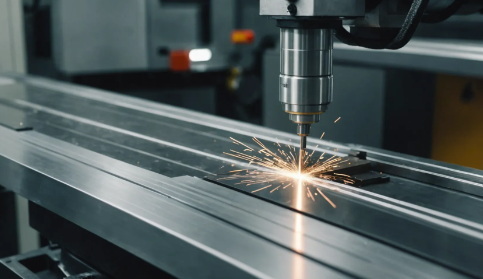
Swiss-type CNC machining uses a sliding headstock and guide bushing to maintain stability, enabling the precise machining of long, slender, or complex components that ordinary lathes cannot handle efficiently.
Yes. Many suppliers follow international standards, leveraging low operational costs and growing technical expertise to compete effectively in regional and global markets.
Industries include medical equipment, aerospace toolmaking, electrical assemblies, and light automotive component manufacturing.
Absolutely. Many Tajik workshops partner with Chinese OEM factories to access advanced technology, joint production models, and efficient logistics.
Key challenges include financing, access to modern machinery, and the need for advanced operator training. However, foreign partnerships are helping bridge these gaps rapidly.
1. (https://www.minindustry.tj)
2. (https://www.swissmem.ch)
3. (https://www.manufacturingglobal.com)
4. (https://www.worldbank.org/en/country/tajikistan)
5. (https://www.adb.org)


