From idea to market-ready product, our NPI solutions make every stage easier, faster. Discover How We Help

Views: 222 Author: Tomorrow Publish Time: 2026-01-23 Origin: Site


Content Menu
● Understanding Swiss-type CNC Machining
● Why Japan Excels in Swiss-type CNC Machining
>> Precision and Technical Mastery
>> Innovation and Digital Manufacturing
>> Custom OEM and ODM Services
>> Certification and Global Compliance
● Leading Swiss-type CNC Machining Companies in Japan
>> Citizen Machinery Co., Ltd.
>> Seiko Instruments Inc. (SII)
● Material Capabilities in Japanese CNC Machining
● How to Select the Best CNC Machining Manufacturer or Supplier in Japan
● Key Industries Served by Japanese CNC Manufacturers
● The Role of CNC Machining in Japan's Export Economy
● Future Outlook: The Next Generation of CNC Machining in Japan
>> 1. AI-Driven Production Control
>> 3. Hybrid Manufacturing Techniques
>> 4. Global Digital Collaboration
>> 5. Workforce Development and Knowledge Retention
● Practical Tips for Importing CNC Machined Parts from Japan
● Frequently Asked Questions (FAQ)
>> Q1: What makes Japanese CNC Machining Manufacturers and Suppliers different from others in Asia?
>> Q2: Are OEM customization and small-batch orders acceptable?
>> Q3: What file formats do suppliers accept for part design?
>> Q4: What industries benefit the most from Swiss-type CNC machining in Japan?
>> Q5: How long is the shipping lead time for international clients?
Japan stands as one of the global centers of precision manufacturing, where tradition meets innovation. Among its numerous industrial specialties, Swiss-type CNC machining represents a flagship example of how Japanese technology and craftsmanship merge to deliver unmatched quality. The country's CNC Machining Manufacturers and Suppliers are not only highly respected in domestic markets but also serve as trusted partners to international OEMs, wholesalers, and product developers worldwide.
The excellence of Japanese machining lies in its ability to engineer components that require extreme accuracy, from micrometers to nanometers. These factors make Japan a top destination for companies looking for high-performance parts used in medical devices, aerospace systems, robotics, electronics, and advanced automotive applications.
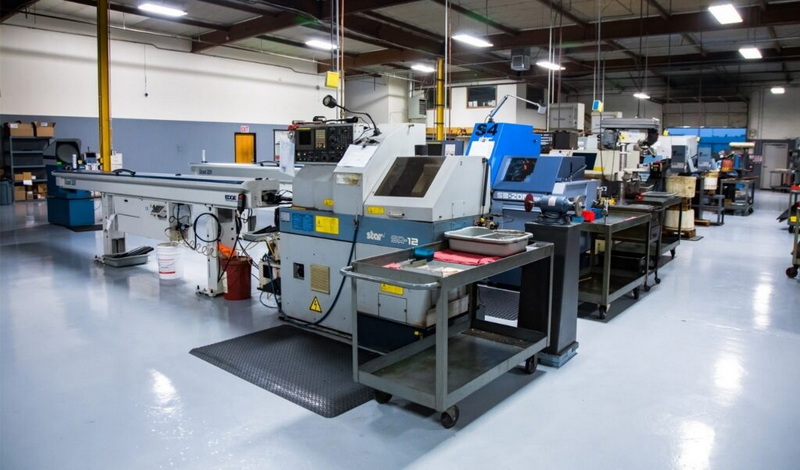
Swiss-type CNC machining originated in Switzerland in the early 19th century, developed specifically for producing miniature precision watch components. Over time, the technology evolved into a sophisticated process that supports complex multi-axis movements and extremely tight tolerances.
A Swiss-type lathe differs from traditional CNC machines by its sliding headstock mechanism. Instead of the workpiece being clamped and rotated in place, the material is fed through a guide bushing. This system allows the cutting tool to work very close to the supported section of the part, minimizing bending and vibration. As a result, manufacturers can achieve tolerances as fine as ±0.001 mm — far more accurate than standard processes.
Japan's CNC Machining Manufacturers and Suppliers have fully mastered and advanced this technique, integrating digital automation, intelligent control systems, and ultra-fine tooling materials to achieve precision that rivals the world's best.
In Japan, precision is not just a goal — it is a cultural philosophy. Even small family-owned machining shops deploy state-of-the-art inspection equipment like coordinate measuring machines (CMMs), digital microscopes, and optical comparators. Continuous improvement (Kaizen) practices ensure that manufacturing processes evolve daily, guaranteeing consistent results for global partners.
Japan leads in smart factory adoption. Many CNC Machining Manufacturers and Suppliers have embraced Industry 4.0 principles, equipping production lines with IoT sensors, automated feeders, and AI-based monitoring systems. These innovations reduce downtime, enhance machining accuracy, and maintain stable quality across long production runs.
Japanese manufacturers commit heavily to quality assurance. They apply statistical process control (SPC) methods, automated inspection, and 100% traceability systems that track materials from sourcing to final inspection. This attention to detail allows international buyers to trust every delivery.
Many Japanese CNC Machining Manufacturers and Suppliers specialize in custom-made OEM parts for corporate clients. They offer comprehensive services — from engineering design review and prototyping to volume production and final assembly. Their ability to adapt to specific client drawings, tolerance standards, and packaging needs makes them top-tier partners for demanding B2B projects.
Respected Japanese companies maintain certifications such as ISO 9001, ISO 13485 (for medical devices), and IATF 16949 (for automotive). These certifications demonstrate their adherence to strict international manufacturing standards, ensuring reliable quality for every export project.
Citizen Machinery is among the most recognized names in the CNC lathe industry. It produces advanced automatic lathes and offers OEM production services for high-precision parts. Their expertise extends from medical device components to watch and electronics production. Citizen's reputation stems from reliability, operational stability, and decades of engineering know-how.
Key Strengths:
- Exceptional machine precision and defect-free production
- Excellent after-service and maintenance systems
- Strong global logistics network
Star Micronics is renowned for its superior Swiss-type CNC machines, which are used extensively across Europe, Asia, and North America. It also provides custom component manufacturing and prototypes for industries that require ultra-small, complex parts.
Key Strengths:
- Multi-axis machining capability
- Advanced temperature control for accuracy
- Global engineering support teams
Tsugami's machines combine speed and rigidity, enabling mass production of highly accurate parts. The company also offers subcontract machining through its partner network, supporting clients in the automotive, aerospace, and defense industries.
Key Strengths:
- Multi-functional turning and milling capability
- Automated tool exchange for continuous production
- Reliable export support
Mazak is a leader in smart manufacturing systems. Though widely known for multi-axis machining centers, Mazak also produces precision turning machines compatible with Swiss-style configurations. Its connected factory systems allow remote operation and real-time production tracking.
Key Strengths:
- AI-integrated system monitoring
- Global service networks
- Sustainable manufacturing initiatives
Seiko Instruments, internationally famous for its horological origins, has transferred its expertise in micro-precision machining to industrial applications. The company supplies parts for micro-sensors, digital devices, and medical tools using Swiss-type lathes and robotic automation.
Key Strengths:
- Decades of ultra-fine machining expertise
- Specialized material handling systems
- Proven supplier for global electronics brands
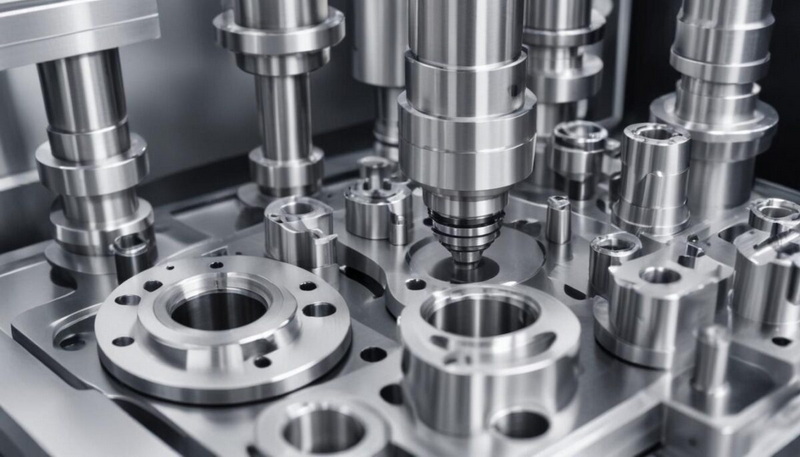
Japan's CNC Machining Manufacturers and Suppliers handle an extensive range of metals and engineered plastics, each suited to different applications.
- Stainless Steel: Common for medical, optical, and automotive components due to corrosion resistance and strength.
- Titanium: Used in aerospace and medical parts, valued for its strength-to-weight ratio.
- Aluminum: Ideal for electronic and transportation industries, offering lightweight performance and good machinability.
- Brass and Copper: Preferred for electrical and precision fittings.
- Engineering Plastics: Such as PEEK, PTFE, and polycarbonate, used for insulation and biocompatibility requirements.
Each supplier invests heavily in understanding material science to prevent thermal deformation, ensure dimensional stability, and achieve perfect finishes even for component diameters below 1 mm.
Finding the right partner among Japanese suppliers is crucial for long-term success. Here are some essential considerations:
1. Technical Expertise: Verify the supplier's experience in your specific industry — for example, aerospace or medical device components.
2. Machinery Portfolio: Check whether their machines support complex machining like simultaneous 5-axis turning or cross-drilling.
3. Quality Assurance System: Certifications and live inspection reports help guarantee your parts meet specifications.
4. Communication Capability: English-speaking engineers or project managers can significantly improve efficiency and reduce misunderstandings.
5. Prototype and Mass Production Options: A reliable manufacturer should support smooth transition from prototype to full production.
6. Lead Time and Delivery Reliability: Japanese suppliers are known for their punctuality, but buyers should confirm production timelines during project planning.
Japanese CNC Machining Manufacturers and Suppliers support an impressively wide range of industries:
- Medical and Dental: Implant screws, surgical instruments, and microfluidic devices.
- Aerospace: Cabin fittings, hydraulic couplings, and lightweight titanium brackets.
- Automotive: Fuel injectors, gears, shafts, and sensor housings.
- Electronics: Connectors, camera parts, and smartphone housing components.
- Watchmaking and Optics: Micro gears, axles, and precision housings.
Their advanced level of automation ensures each part meets the highest dimensional and surface standards demanded by these sectors.
CNC machining represents a vital component of Japan's manufacturing exports. Small and medium-sized enterprises (SMEs) contribute significantly to the country's high-precision supply network. Many of these companies act as contract suppliers for major Japanese brands, as well as foreign partners from Germany, the United States, and China.
The consistent export growth of machined parts from Japan can be attributed to:
- High customer retention rates due to superior quality.
- Comprehensive technical reports accompanying each shipment.
- Integration with automated warehousing and logistics systems.
International clients often choose Japanese suppliers not only for precision but also for their reliability, ethical business practices, and transparent communication.
As digitalization and sustainability shape global manufacturing, Japan's CNC Machining Manufacturers and Suppliers continue to innovate in several key areas:
Artificial intelligence systems now analyze real-time data during machining to predict tool wear, reduce human error, and automatically adjust cutting parameters. This technology helps maintain consistency even in 24-hour manufacturing operations.
Japan is leading the shift toward energy-efficient CNC machines that minimize coolant waste and reduce carbon emissions. Many factories are investing in solar power and closed-loop material recycling systems.
New machines combine additive manufacturing (3D printing) and subtractive CNC machining to create highly complex structures with reduced material waste. This innovation supports rapid prototyping and advanced design freedom.
With cloud-based project management, international clients can now monitor live machining progress, inspection data, and delivery schedules directly through secure portals — making cross-border cooperation smooth and transparent.
Japan is tackling its aging workforce challenge by training the next generation of machinists through partnerships between universities, vocational schools, and private companies. This ensures continuity in precision expertise.
If you're planning to source machined components from Japan, consider these practical steps to streamline your process:
- Request a Non-Disclosure Agreement (NDA): Protect proprietary designs before sharing technical drawings.
- Ask for Sample Runs: Evaluate machining accuracy with a small batch before large-scale orders.
- Confirm Packaging Standards: Most Japanese suppliers use moisture-proof and precision-safe export packaging.
- Leverage Trade Shows: Events like “JIMTOF (Japan International Machine Tool Fair)” are great venues to meet potential partners and inspect their capabilities firsthand.
By following these measures, international buyers can develop long-term, reliable supply chain relationships with Japanese CNC Machining Manufacturers and Suppliers.
Japan's industrial landscape continues to set benchmarks in precision and quality. Its Swiss-type CNC Machining Manufacturers and Suppliers stand at the forefront of technical excellence, driven by a legacy of innovation, craftsmanship, and efficiency. For international OEMs, wholesalers, and manufacturers seeking reliable partnerships, Japan remains one of the best destinations for high-quality machining solutions.
The collaborative spirit, technological innovation, and relentless pursuit of perfection embodied by Japanese CNC experts ensure that the country remains a dominant force in the global precision machining sector. Whether producing ultra-miniature optical components or complex aerospace fittings, Japanese manufacturers deliver unmatched consistency, performance, and trust — the foundation of true global manufacturing excellence.
Contact us to get more information!
Japanese suppliers emphasize long-term quality, continuous innovation, and total reliability. Their operations are less focused on cost competition and more on product perfection and accuracy improvement.
Yes, most Japanese suppliers cater to both prototype and mid-volume OEM production, offering flexible schedules and design technical support.
Typically, CAD formats such as STEP, IGES, DWG, or STL are accepted. Buyers can directly transfer these for prototype machining and production quotes.
Industries such as medical devices, robotics, aerospace, and electronics benefit heavily due to their need for reliable ultra-fine machining.
Depending on complexity and volume, lead time ranges between 3 and 8 weeks, including final inspection, packaging, and logistics.
1. https://www.citizen.co.jp/machinery/
2. https://www.starmicronics.com/
3. https://www.tsugami.co.jp/
4. https://www.mazak.com/
5. https://www.sii.co.jp/
6. https://www.jimtof.org/


