From idea to market-ready product, our NPI solutions make every stage easier, faster. Discover How We Help

Views: 222 Author: Tomorrow Publish Time: 2026-01-24 Origin: Site


Content Menu
● The Digital Transformation of CNC Machining
>> Integration with CAD/CAM Systems
>> Digital Twins and Process Simulation
>> IoT and Real-Time Monitoring
● Automation and Robotics in CNC Machining
>> Robotic Loading and Unloading Systems
>> Multi-Axis and Multi-Tasking Machining
● Materials and Tooling Advancements
>> Cutting Edge Tool Materials
>> Hybrid Manufacturing Systems
>> Machining of New Generation Materials
● CNC Machining and Sustainability
>> Minimizing Waste Through Precision
>> Energy and Coolant Efficiency
>> Recycling and Circular Manufacturing
● Artificial Intelligence and Smart Manufacturing Systems
>> Predictive Analysis and Self-Learning Machines
>> AI-Enabled Toolpath Optimization
>> Cloud Manufacturing and Data Analytics
● Globalization and On-Demand CNC Machining
>> Distributed Manufacturing Networks
>> Rapid Prototyping and Custom Manufacturing
● The Future Landscape of CNC Machining
>> Advanced Connectivity and Human-Machine Collaboration
>> Edge Computing and Real-Time Coordination
>> Anticipated Technological Advances
● FAQ
>> 1. What industries benefit the most from CNC machining?
>> 2. How does automation improve CNC machining efficiency?
>> 3. What materials can be processed with CNC machining?
>> 4. Why is sustainability important in CNC machining?
>> 5. What role does AI play in CNC machining?
CNC machining is entering a new era of innovation that is deeply transforming global manufacturing. What began as a precision cutting process has evolved into an intelligent, interconnected, and automated production system. Across industries such as aerospace, automotive, energy, and medical devices, CNC machining is becoming more efficient, sustainable, and digitally empowered than ever before.
At its core, CNC machining uses computer numerical control to guide machine tools with exact precision. But the modern version of this technology goes far beyond controlling simple operations. It integrates artificial intelligence, automation, data analytics, and advanced materials to deliver a level of performance that was unthinkable just a decade ago. As we move further into Industry 4.0, CNC machining continues to be one of the pillars driving innovation, efficiency, and adaptability for global manufacturers.
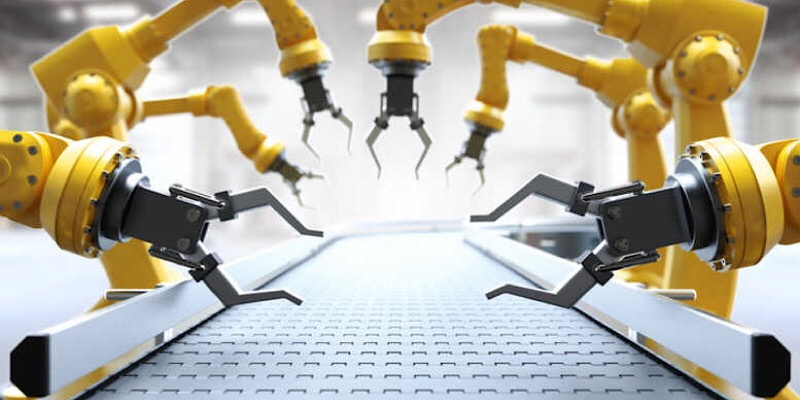
The digitalization of manufacturing is reshaping every aspect of CNC machining — from design and prototyping to production, quality control, and facility management.
The combination of Computer-Aided Design (CAD) and Computer-Aided Manufacturing (CAM) software creates a seamless process from concept to execution. Engineers now design products in three dimensions and generate toolpaths that machines can understand directly. This reduces setup time, minimizes programming errors, and ensures that each part matches the digital model with micrometer-level accuracy.
Modern CAM platforms also automatically suggest optimized cutting parameters — spindle speeds, feed rates, and depth of cut — based on the material and geometry of each component. This automation eliminates many of the manual calculations that once slowed production, enhancing both consistency and efficiency.
The arrival of digital twin technology allows manufacturers to create virtual replicas of CNC machining systems and production environments. By simulating the machining process before starting actual production, engineers can detect potential collisions, improve toolpath efficiency, and estimate machine loads. This digital foresight reduces costly rework and ensures optimal resource utilization.
The Industrial Internet of Things (IIoT) is also transforming CNC machining. Sensors embedded in machines transmit data about temperature, vibration, pressure, and tool wear to cloud-based dashboards. Operators and engineers can monitor performance in real time, predicting maintenance needs before a failure occurs. This predictive maintenance approach minimizes downtime and extends machine lifespan, improving overall equipment effectiveness (OEE).
Automation is driving one of the most significant changes in CNC machining. From loading raw materials to finishing parts, robots and automated systems are taking on repetitive tasks, allowing human workers to focus on programming, inspection, and continuous improvement.
Robotic arms integrated with CNC machining centers can efficiently load blanks and unload finished parts in a continuous cycle. This not only boosts production rates but also improves safety by reducing manual handling. Advanced robots can even recognize part orientation and automatically adjust to different shapes or sizes, contributing to flexible automation strategies.
Traditional CNC machining used three or four axes of motion. Modern systems now use five or more, enabling the machining of complex geometries in a single setup. This reduces part handling, eliminates alignment errors, and speeds up production. Multi-tasking machines can perform milling, turning, drilling, and tapping on one platform, improving throughput and accuracy.
One of the most exciting trends in CNC machining is “lights-out manufacturing” — the ability to run production unattended around the clock. Once the setup and programming are complete, CNC machines equipped with sensors and automated tool changers can continue operating without supervision. When combined with real-time monitoring and predictive maintenance, this approach drastically lowers production costs and increases competitiveness.
The expansion of CNC machining into new materials is another game-changer. What was once limited to steel and aluminum now includes alloys, plastics, ceramics, composites, and even advanced polymers.
To handle these challenging materials, advances in cutting tool technology have been crucial. Tools made from carbide, ceramic, diamond, and cubic boron nitride (CBN) enable high-speed cutting and superior finish quality. Coating technologies such as TiAlN (Titanium Aluminum Nitride) improve thermal resistance and reduce friction, allowing for longer tool life and fewer changeovers.
A remarkable trend is the blending of CNC machining and additive manufacturing. Hybrid machines can 3D print a near-net-shape part and then machine it to precision. This integration reduces raw material consumption, shortens production cycles, and allows for creating components with internal channels or intricate structures that traditional machining could not produce alone.
Industries are increasingly requiring lightweight, strong, and heat-resistant materials such as titanium and Inconel. CNC machining systems equipped with adaptive controls adjust cutting parameters dynamically, maintaining precision despite the material's difficulty. This capability is critical in aerospace, energy, and medical implant applications.
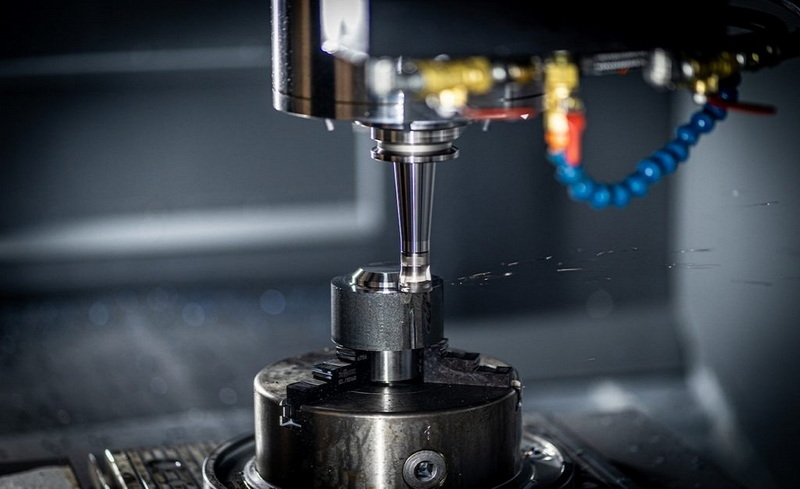
Sustainability has become a fundamental factor in manufacturing operations. CNC machining is evolving to address environmental concerns through reduced waste, energy efficiency, and recycling initiatives.
Because CNC machining is inherently subtractive, material waste can be an issue. However, modern optimization techniques, such as near-net machining and process simulation, ensure minimal waste by removing only what is necessary. Improved material nesting strategies and adaptive toolpaths further reduce scrap.
CNC machine manufacturers now design equipment with energy-efficient drives, low-friction bearings, and regenerative braking systems to conserve power. Coolant use has also changed dramatically through Minimum Quantity Lubrication (MQL) and cryogenic cooling technologies, which drastically cut fluid consumption and improve safety for workers.
Many machine shops now implement circular economy principles by collecting chips and scrap metal for recycling. Some even convert used coolants and emulsions into reusable by-products. As sustainability regulations tighten worldwide, these practices help companies remain competitive while protecting the environment.
Artificial intelligence (AI) has become the heart of smart manufacturing. When integrated with CNC machining, AI enables better decision-making, faster optimization, and predictive insights based on machine data.
AI-driven machining centers can analyze vibration, temperature, and acoustic signatures to predict tool wear and automatically adjust speeds or feeds before quality issues occur. This adaptive intelligence significantly reduces scrap rates and enhances consistency.
Machine learning algorithms now optimize toolpaths to achieve the fastest cutting time with minimal tool wear. These systems learn from previous jobs, continuously refining performance to deliver higher efficiency and lower production costs. Over time, CNC machining processes evolve on their own — adapting to each new design with improved accuracy.
Cloud platforms make it possible for CNC machines located across the world to share performance data and production information in real time. This global connectivity not only enables remote monitoring but also provides valuable insights into productivity, capacity utilization, and cost optimization. Smart analytics helps manufacturers identify weak points, streamline workflows, and improve resource allocation.
The rise of digital marketplaces and global cloud platforms has made it easier than ever to source CNC machined components from anywhere in the world. Companies can now upload 3D designs, receive instant quotes, and order parts directly from verified suppliers.
Distributed manufacturing allows production to take place closer to consumers, reducing logistics costs and delivery times. Many businesses now partner with CNC machining facilities located strategically near target markets. This distributed model provides redundancy and flexibility, minimizing the risks associated with supply chain disruptions.
CNC machining is ideal for producing prototypes in small quantities or specialized parts that require precision and speed. The ability to move seamlessly from digital design to a finished product helps reduce development cycles and accelerates innovation. Designers can test multiple iterations before committing to mass production, reducing risk and cost.
Looking ahead, CNC machining will continue to evolve alongside technologies like AI, robotics, and quantum computing. Fully digital production ecosystems will connect machines, operators, and suppliers in an intelligent loop of continuous improvement.
The next phase of CNC machining will not replace humans but augment them. Advanced interfaces, augmented reality (AR), and wearable devices will enable operators to diagnose issues, run simulations, and monitor systems more intuitively. The collaboration between humans and intelligent machines will redefine manufacturing roles, shifting the focus from operation to innovation.
As data volumes grow, edge computing allows CNC systems to process information locally rather than relying solely on cloud servers. This reduces latency, enhances process control, and enables faster decision-making at the machine level. Real-time coordination across multiple machines ensures smoother workflow and better production balance.
Researchers are already experimenting with ultra-high-speed spindles, nano-scale machining, and adaptive fixturing systems. Quantum computing has the potential to revolutionize toolpath optimization, allowing CNC systems to compute the most efficient cutting strategies instantaneously. These advancements will push the boundaries of what is physically and economically possible in manufacturing.
CNC machining has entered an age of transformation that extends beyond precision cutting into the realms of automation, digital connectivity, sustainability, and artificial intelligence. From cloud-based collaboration and robotic automation to hybrid manufacturing and green operations, every development points toward a future of smarter, cleaner, and faster production.
This shift is not merely technological — it represents a cultural transformation in how factories operate, collaborate, and innovate. As CNC machining becomes increasingly integrated into the digital ecosystem of Industry 4.0, its role will continue to expand as a foundation of modern industrial progress and a key enabler of next-generation manufacturing.
Contact us to get more information!
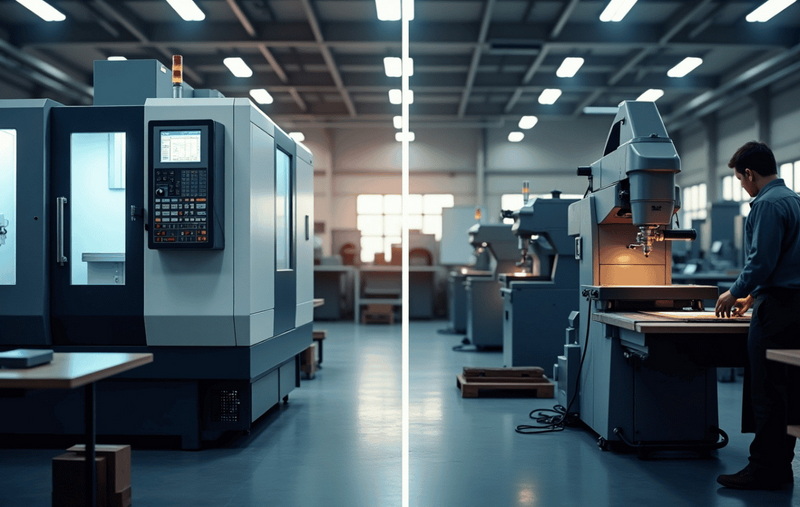
Industries such as aerospace, automotive, energy, defense, medical, and consumer electronics rely heavily on CNC machining for precision parts, durability, and performance consistency. It enables the production of complex components required in regulated or high-precision environments.
Automation significantly boosts production speed by reducing manual intervention. Robotic loading, tool changers, and real-time monitoring systems allow continuous operation, often 24/7, improving yield and reducing human error.
CNC machining handles various materials such as aluminum, titanium, stainless steel, brass, plastics like PEEK and ABS, and exotic alloys. With proper tooling and programming, even challenging materials can be machined with high accuracy.
Sustainability minimizes environmental impact by reducing waste, energy use, and material consumption. Modern CNC setups use highly efficient power systems, recycle scrap material, and implement eco-friendly lubrication technologies.
AI integrates with CNC systems to predict tool wear, optimize toolpaths, and fine-tune machining parameters autonomously, improving production reliability, reducing downtime, and enhancing overall process intelligence.
1. https://www.autodesk.com/solutions/cadcamsolutions
2. https://www.sandvik.coromant.com
3. https://www.siemens.com/manufacturing
4. https://www.haascnc.com
5. https://www.machinistguides.com
6. https://www.engineering.com
7. https://www.makepartsfast.com


