From idea to market-ready product, our NPI solutions make every stage easier, faster. Discover How We Help

Views: 222 Author: Tomorrow Publish Time: 2026-01-24 Origin: Site


Content Menu
● Precision and Accuracy Enhancement
● Improved Speed and Production Efficiency
● Enhanced Design Flexibility and Complexity
● Material Optimization and Waste Reduction
● Consistency and Quality Assurance
● Integration with Smart Manufacturing Technologies
● Applications Across Multiple Industries
● Cost Efficiency and Scalability
● Future of CNC Machining in Product Development
● CNC Machining and the Global Supply Chain
● Environmental and Sustainability Benefits
● FAQ
>> 1. What is CNC machining and how does it work?
>> 2. How is CNC machining different from traditional machining?
>> 3. What materials can be processed with CNC machining?
>> 4. Can CNC machining support small-batch or custom production?
>> 5. What are the future trends in CNC machining?
CNC machining has completely transformed modern manufacturing, providing a level of precision and efficiency that manual methods could never achieve. Across industries such as aerospace, automotive, medical, and electronics, CNC machining has become the backbone of advanced production. It not only improves product accuracy and repeatability but also revolutionizes how companies design, prototype, and scale their goods for global markets.
With the rise of Industry 4.0 and smart manufacturing technologies, CNC machining is evolving faster than ever. This article explores how CNC machining has improved products in terms of precision, consistency, sustainability, and innovation—reshaping the entire product development process.
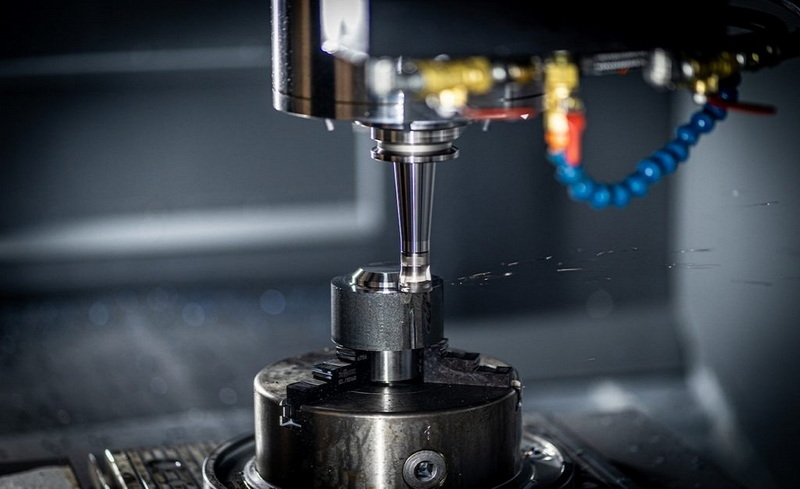
CNC machining, or Computer Numerical Control machining, refers to using computer-driven tools to cut and shape materials according to pre-programmed digital commands. It integrates advanced software such as CAD (Computer-Aided Design) and CAM (Computer-Aided Manufacturing), allowing precise instructions to guide every tool movement. Whether milling, turning, or drilling, every motion follows a code-fed coordinate path that ensures perfect accuracy.
Unlike conventional machining, which depends heavily on manual skill, CNC machining eliminates irregularities caused by human error. This makes it ideal for producing complex geometries and achieving tight tolerances. In addition, the ability to run machines continuously has turned CNC machining into a foundation for both mass production and specialized, small-batch custom parts.
Precision has always been the hallmark of CNC machining. When designing products that demand exact mechanical fit or aerodynamic efficiency, even a minor deviation can cause performance issues. CNC machining resolves this problem by translating digital blueprints into high-accuracy physical shapes. Modern machines can consistently achieve tolerances as small as ±0.002 mm.
For industries such as aerospace and defense, this consistency ensures safety and reliability. Every turbine blade, aircraft panel, or engine component produced using CNC machining meets stringent international standards. In the medical field, precision-machined implants and surgical instruments must adhere to microscopic accuracy to match the human body's anatomy. This precision also extends to electronics manufacturing, where CNC-machined housings allow perfect alignment of circuit components and connectors.
Speed and productivity are equally significant in modern manufacturing. CNC machining reduces turnaround times by automating multi-step operations. Programming once allows continuous production, enabling companies to meet rising demand without compromising quality.
Multi-axis CNC machines—particularly 4-axis and 5-axis models—further enhance efficiency by enabling multiple cutting directions in one setup. This drastically reduces downtime between processes. Manufacturers no longer need several tools or repeated repositioning to achieve complex cuts, saving both labor and energy. As a result, products reach the market faster, while companies gain cost advantages from accelerated workflows.
The integration of CNC machining with computer design platforms has given engineers unmatched creative flexibility. They can now produce highly intricate parts that were once practically impossible to make using traditional machines. CNC machining supports all types of materials, including aluminum alloys, stainless steel, copper, titanium, plastics, and carbon composites.
This design freedom leads to innovation in multiple sectors. In the automotive industry, lightweight CNC-machined aluminum parts reduce vehicle weight, contributing to better fuel efficiency and environmental performance. In consumer electronics, the sleek frames and enclosures of smartphones and laptops rely on CNC machining for a flawless finish. The ability to machine parts with unique textures and surface geometries encourages designers to push the boundaries of what products can look and feel like.
Prototyping also benefits immensely. CNC machining enables rapid prototyping based on digital models, allowing companies to test and refine designs in real time. This shortens the product development cycle and reduces risks associated with design flaws.
CNC machining's computer-controlled cutting paths maximize the use of raw material, ensuring minimal waste. Before actual production begins, CAM software simulates the process to identify the most efficient tool paths. This prevents unnecessary cutting motion and material removal. The optimization directly translates into cost savings—particularly useful for high-value materials like titanium, nickel alloys, or carbon-fiber composites.
Furthermore, CNC machining promotes sustainability by reducing scrap and rework rates. In conventional machining, small deviations or manual miscalculations often result in part rejections. CNC machining eliminates these inconsistencies. Many factories also recycle unused chips and metal powder from CNC processes, reinforcing environmentally responsible production practices.
Consistency builds credibility in manufacturing, and CNC machining ensures uniformity across every production batch. Once a program is developed, it can be reused indefinitely without deviations. Digital controls, sensors, and real-time feedback systems allow automatic adjustments to maintain quality standards.
This repeatability guarantees that each product, whether the first or the thousandth, maintains the same structural integrity and surface finish. Manufacturers in the automotive and aerospace industries rely on this level of uniformity to ensure replacement parts fit perfectly across different models and production years.
CNC machines often include in-process inspection systems, using laser measurement or probing tools to monitor quality while machining occurs. This proactive correction mechanism prevents defects and enhances yield rates, which improves overall production efficiency.
Modern CNC machining plays a key role in smart manufacturing and the Internet of Things (IoT) ecosystem. Today's CNC machines are equipped with sensors that collect performance and wear data in real time. Through cloud-based monitoring systems, manufacturers can track tool conditions, predict faults before breakdowns happen, and automatically update software parameters.
This digital connectivity allows seamless data exchange between machines, operators, and ERP (Enterprise Resource Planning) systems. Predictive maintenance and automated workflow scheduling improve uptime and reduce unexpected costs. For example, if a cutting tool's vibration increases inaccurately, the system can automatically adjust the spindle speed or alert technicians before a defect occurs.
CNC machining's alignment with smart technology makes it a true pillar of Industry 4.0, driving fully automated and intelligently optimized factories.
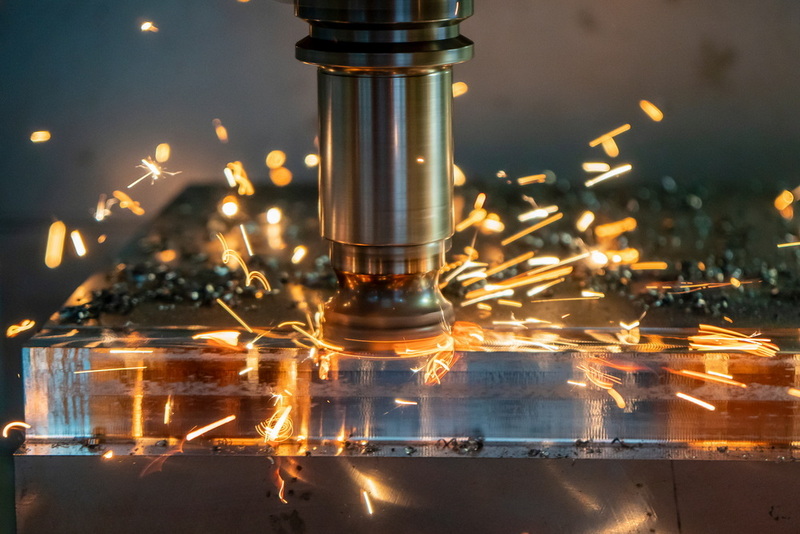
CNC machining supports an incredible range of industrial applications due to its precision, adaptability, and scalability:
- Aerospace Manufacturing: Produces high-strength structural components like turbine blades, brackets, and panels with extreme dimensional accuracy required for flight safety.
- Automotive Production: Manufactures engine parts, gear housings, brake systems, and lightweight frames that improve performance and energy efficiency.
- Medical Devices: Ensures high-precision production of implants, prosthetics, surgical tools, and dental instruments compliant with international medical standards.
- Electronics Industry: Creates micro-precision housings, heat sinks, and cases for phones, computers, and semiconductors.
- Energy and Construction: Produces turbine blades, valves, and heavy-duty parts used in renewable energy, oil, and infrastructure equipment.
Each sector benefits from CNC machining's blend of precision, scalability, and cost control, making it a cornerstone technology for both mass production and custom-engineered parts.
Although CNC machining systems require a higher initial investment than manual machinery, the long-term cost efficiency is substantial. Once the setup and programming are complete, large production volumes can be produced with minimal operator input, saving both labor and material costs. Automated systems run 24/7, boosting productivity without fatigue or supervision.
For small and mid-sized manufacturers, CNC machining also provides scalability. The same machine that produces a prototype can seamlessly shift to mass production by simply loading a new digital file. There's no need for retooling or manual recalibration, ensuring cost savings for both low-volume and high-volume operations.
Over time, the consistent output quality and reduced scrap rates deliver excellent returns on investment. Moreover, companies that integrate CNC machining with automated material handling systems see significant improvements in both throughput and safety.
CNC machining continues to evolve alongside artificial intelligence (AI), additive manufacturing, and advanced robotics. The next generation of CNC systems will feature self-learning algorithms capable of dynamic process adjustments. Machines will analyze vibration, temperature, and tool performance in real time, instantly modifying parameters for maximum precision.
Hybrid manufacturing is another promising development where CNC machining combines with 3D printing. Additive processes create basic shapes, while CNC machining refines surfaces and edges to achieve final tolerances. This hybrid method accelerates prototyping and lowers material waste.
AI integration also enhances predictive quality control. By analyzing thousands of data points, AI systems can forecast potential errors or misalignments before they occur. Such advancements will further boost the competitiveness and sustainability of CNC machining worldwide.
CNC machining has also improved supply chain efficiency by allowing localized, on-demand production. Because digital CAD/CAM files can be transmitted anywhere, manufacturers can produce the same component at facilities across continents with identical results. This reduces shipping costs and lead times, helping global manufacturers operate more flexibly.
In addition, CNC machining supports rapid replacement part production. When a machine or vehicle component fails, the digital file can be quickly accessed and machined near the end user, minimizing downtime. This agility has become particularly valuable in industries where precision parts are mission-critical, such as healthcare and defense.
Beyond material efficiency, CNC machining contributes to sustainability in other ways. Modern CNC machines consume less energy thanks to optimized cycle times and integrated power management systems. The precision cutting process also reduces pollution by minimizing coolant waste and chemical use.
Some advanced CNC systems employ dry or near-dry machining, significantly reducing the environmental footprint. By integrating energy monitoring sensors and recycling mechanisms, manufacturers can track power usage and reduce emissions. These eco-friendly improvements make CNC machining a forward-thinking solution for sustainable industrial development.
CNC machining has dramatically improved how products are designed, developed, and produced. Its unparalleled precision, flexibility, and integration with intelligent technologies have redefined the standards of modern manufacturing. From enhancing production speed and efficiency to supporting environmental sustainability, CNC machining continuously elevates global industry performance.
As manufacturers embrace automation, AI, and digital integration, CNC machining will remain at the heart of innovation—shaping smarter, stronger, and more efficient products for the world.
Contact us to get more information!
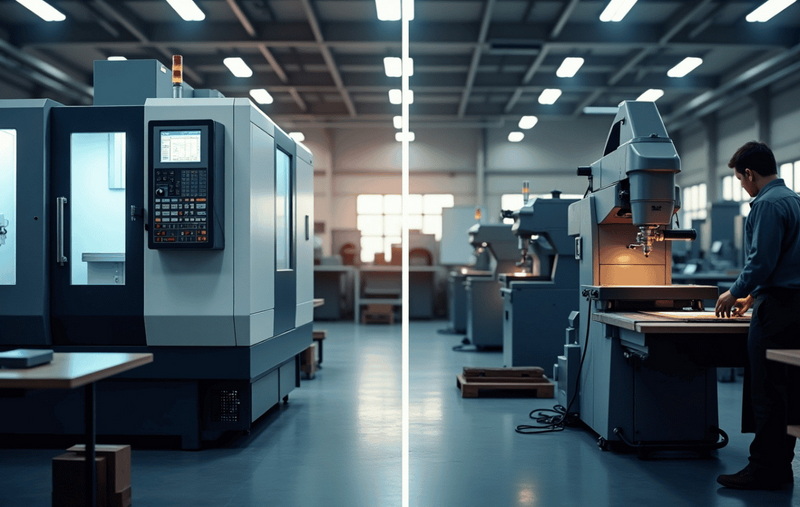
CNC machining is the use of computer-controlled tools to manufacture precise components by cutting and shaping materials according to digital designs. It ensures accuracy and repeatability in industrial production.
Traditional machining depends on manual operation and human skill, while CNC machining uses programmed instructions to ensure consistent precision and faster output.
CNC machining can handle metals such as aluminum, steel, titanium, brass, plastics, and composites, providing outstanding versatility across industries.
Yes. CNC machining allows cost-effective small-batch production since programs can be easily modified without excessive setup time or additional tooling.
Future developments include AI-driven optimization, smart factory integration, hybrid additive-subtractive machining, and sustainable processing advancements.
1. https://www.autodesk.com/solutions/cnc-machining
2. https://www.sandvik.coromant.com/en-gb/knowledge/general-turning/cnc-machining-basics
3. https://www.hubs.com/knowledge-base/what-is-cnc-machining/
4. https://www.engineering.com/story/the-future-of-cnc-machining
5. https://www.machiningcloud.com/the-benefits-of-cnc-machining


