From idea to market-ready product, our NPI solutions make every stage easier, faster. Discover How We Help

Views: 222 Author: Tomorrow Publish Time: 2026-01-24 Origin: Site


Content Menu
● The Evolution of Manufacturing Through CNC Machining
● Key Advantages of CNC Machining
>> 1. Unmatched Precision and Repeatability
>> 2. Continuous Operation and High Productivity
>> 3. Reduced Waste and Production Costs
>> 4. Rapid Prototyping and Design Flexibility
>> 5. Safety and Human Efficiency
● CNC Machining Across Key Industries
>> Electronics and Semiconductor Production
>> Medical and Healthcare Equipment
>> Energy and Construction Sectors
● How CNC Machining Drives Innovation
● The Role of CNC Machining in Global Trade
● How CNC Machining Supports Small and Medium Enterprises
● Training and Workforce Transformation
>> 1. What materials can be used in CNC machining?
>> 2. How does CNC machining differ from 3D printing?
>> 3. Can CNC machining be used for large-scale manufacturing?
>> 4. How does CNC machining improve productivity?
>> 5. What industries depend most on CNC machining?
CNC machining has profoundly transformed the world of manufacturing by introducing automation, precision, and digital control into production. It has become the foundation of modern manufacturing practices, enabling industries to produce complex parts faster, cheaper, and more accurately than ever before. From aerospace to medical engineering, CNC machining continues to redefine what's possible in product design and industrial production.
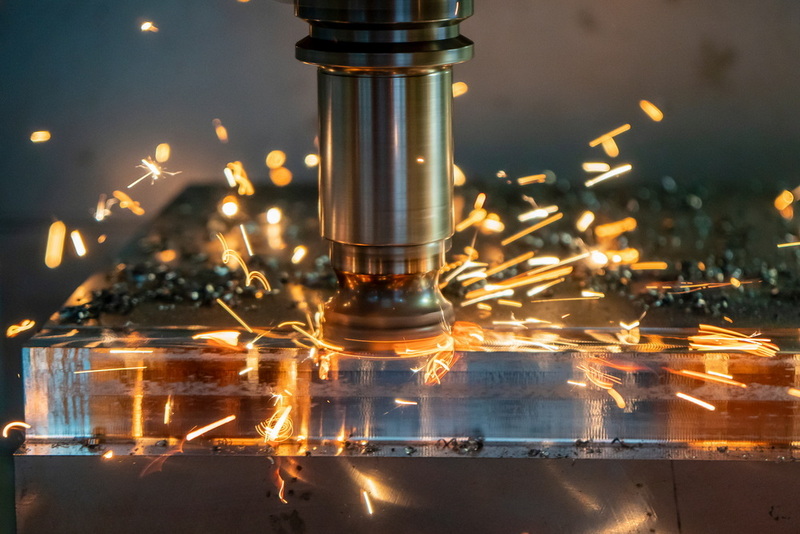
CNC machining, or Computer Numerical Control machining, is a process where computer-programmed instructions control machine tools such as mills, lathes, grinders, and routers. Instead of relying on manual hand movements, every motion — from positioning the cutting tool to the depth of material removal — is governed by precise numerical data.
The process begins with a CAD (Computer-Aided Design) model of the part. This file is converted into a CAM (Computer-Aided Manufacturing) program, which converts the design into machine-readable commands. The CNC system then executes these commands, guiding motors and tools to shape the material with pinpoint accuracy.
Thanks to digital control, CNC machining ensures consistency across multiple units, eliminates operator error, and allows engineers to produce intricate designs that traditional machining cannot achieve. Because of these capabilities, CNC machining is used in both high-volume industrial manufacturing and low-volume custom prototyping.
The origins of CNC machining date back to the 1940s, when early automated milling machines were developed using punched tape systems. Over time, these systems evolved into advanced computer-controlled interfaces capable of performing complex multi-axis operations.
This evolution brought several milestones:
- Transition from manual to automated operation. Human operators were replaced by digital programming, significantly reducing human error.
- Adoption of multi-axis control. Modern CNC machines can operate on 3, 4, or even 5 axes, enabling them to cut and shape from multiple directions simultaneously.
- Integration of real-time monitoring. Sensors and intelligent software track performance and precision throughout the machining process.
- Fusion with digital design. The combination of CAD/CAM software has made the transition from concept to production seamless and efficient.
Today, smart factories and Industry 4.0 technologies integrate CNC machining with robotics, IoT, and data analytics. Machines can automatically adjust parameters based on live feedback, detect tool wear, and even schedule maintenance before a breakdown occurs. This level of automation has made CNC machining the backbone of digital manufacturing.
CNC machining brings multiple competitive advantages that make it indispensable in global manufacturing.
CNC machining achieves tolerances measured in microns, making it ideal for producing components that must fit or interact with others perfectly. This consistency is especially crucial in aerospace, medical, and automotive applications, where even the tiniest error can cause significant failures.
Unlike traditional methods that require constant human supervision, CNC machines can run 24 hours a day with minimal downtime. Their automated operation allows entire production lines to function continuously, even during night shifts or holidays. As a result, companies can meet tight deadlines and maintain consistent supply chains.
Because of the precision of CNC machining, materials are cut and shaped with minimal waste. Advanced programming ensures each piece is machined exactly as designed, reducing errors and scrap rates. Additionally, operational efficiency lowers energy consumption and labor costs over time.
CNC machining accelerates product development cycles through quick prototyping. Engineers can test, revise, and optimize designs much faster. Complex forms or parts requiring fine detailing can be created directly from CAD models without the need for specialized molds.
By automating the machining process, CNC systems reduce the risk of injury associated with manual cutting, drilling, or grinding. Operators supervise from safe control areas, and modern sensors immediately stop the machine when irregularities are detected.
The impact of CNC machining extends across multiple industries, each benefiting from its precision, consistency, and scalability.
Aerospace manufacturers require materials that can endure extreme temperatures, high loads, and vibration. CNC machining allows mass production of lightweight, high-strength components such as turbine blades, engine mounts, and fuselage frames. The ability to machine titanium and aluminum alloys with ultra-fine precision ensures aircraft safety and efficiency.
The automotive sector uses CNC machining for producing engines, transmission systems, brake components, and even intricate interior details. Automation ensures every part meets strict dimensional accuracy and performance standards. With CNC machining, custom tooling for prototype vehicles and race cars can also be developed rapidly.
The miniaturization of electronics depends heavily on the accuracy of CNC machining. It's used to craft enclosures, heatsinks, sockets, and micro-components for circuit boards. The high precision and clean finishes produced by CNC processes make them essential for devices like smartphones, tablets, and computers.
In medical manufacturing, CNC machining plays a vital role in producing surgical tools, orthopedic implants, dental prosthetics, and specialized instruments. Customization capability ensures products suit individual patient requirements while meeting strict hygiene and accuracy standards.
From wind turbine hubs to power plant valves, CNC machining ensures structural strength and longevity for critical energy components. In construction, it's used for fabricating heavy-duty connectors, machine parts, and steel profiles that ensure infrastructure stability and efficiency.
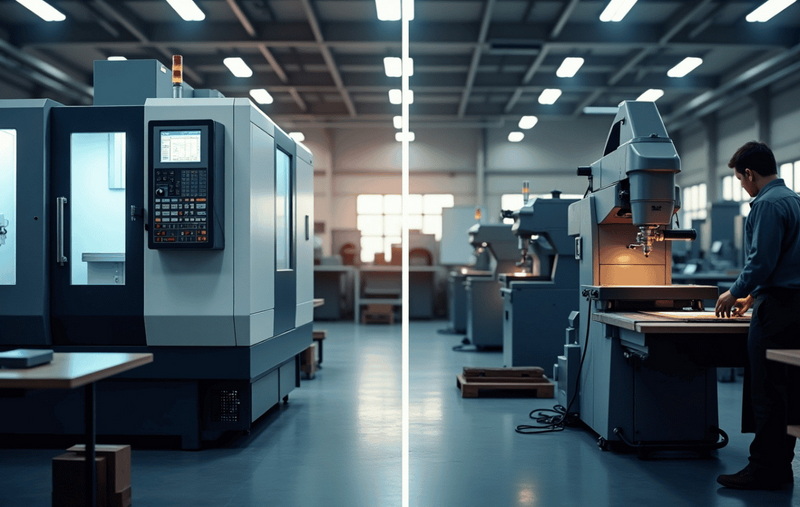
Today's innovation depends on the ability to move quickly from design to prototype. CNC machining enables rapid iteration, allowing manufacturers to test new ideas without heavy tooling investments. Engineers can easily modify an existing CAD file, upload it, and produce a new design in hours rather than weeks.
The combination of CNC machining and additive manufacturing (3D printing) is further revolutionizing production. Manufacturers use 3D printing to create complex shapes and CNC machining to refine them for precision and surface quality. This hybrid workflow maximizes both creativity and accuracy while optimizing material efficiency.
In many industries, CNC machining also supports sustainability goals. Automated cutting strategies minimize energy use and waste, while renewable energy sources can now power modern CNC systems. Moreover, recycled materials like aluminum or plastics are often reprocessed into new components with minimal quality loss.
CNC machining also influences international trade and global competitiveness. Its ability to ensure consistent quality across high-volume production runs allows manufacturers to serve worldwide customers confidently.
In regions like Asia, Europe, and North America, CNC machining drives economic growth by supporting export-oriented manufacturing. Companies can maintain low defects, quick delivery, and high reliability — critical factors in global B2B operations.
Furthermore, CNC machining has democratized access to manufacturing. Small businesses and independent inventors can now outsource CNC production to specialized service providers, gaining access to high-end manufacturing without massive infrastructure costs.
Looking to the future, CNC machining is evolving beyond simple automation. Artificial intelligence (AI) and machine learning are enabling machines to optimize operational parameters dynamically. Systems can now predict tool wear, correct trajectory deviations, and even suggest process improvements autonomously.
Emerging trends include:
- 5-axis and multi-tool machining: Expanding capabilities for producing complex geometries in a single setup.
- Smart manufacturing integration: Linking CNC machines to networked production systems for real-time data analysis and efficiency tracking.
- Eco-friendly practices: Using energy-optimized machining paths and advanced coolant systems to reduce environmental impact.
- Remote monitoring and control: Technicians can oversee operations via cloud-based dashboards, improving efficiency across multiple facilities.
In this ever-evolving environment, CNC machining will remain central to all future manufacturing systems. Its capacity to merge software, materials science, and mechanical engineering sets a strong foundation for sustainable industrial growth.
While large corporations depend on CNC machining for mass production, small and medium enterprises (SMEs) also benefit significantly. CNC machining provides scalability and affordability for custom manufacturing runs.
Small factories can perform short production batches without sacrificing quality or precision. Moreover, local workshops using CNC technology can meet rapid delivery expectations of global e-commerce platforms and component supply networks.
Additionally, the growing number of CNC machining service providers allows SMEs to outsource production without heavy investment. This flexibility keeps them competitive in rapidly shifting markets.
CNC machining has also reshaped the industrial workforce. Operators today need advanced technical skills in programming, digital modeling, and process optimization rather than traditional machining techniques.
Educational institutions worldwide are promoting CNC programming, CAD/CAM design, and machine automation training. This shift is creating a new generation of high-tech workers capable of managing smart factories and digital manufacturing environments.
CNC machining has helped revolutionize global manufacturing by combining mathematical precision, automation, and software intelligence. From heavy industries to small design startups, it offers unbeatable flexibility and reliability. Industries can now produce more sophisticated, efficient, and eco-friendly products, meeting the high standards of modern markets.
CNC machining's ongoing innovation — integrating robotics, AI, and data analytics — ensures it will remain the driving engine of industrial technology for decades to come. The result is a more connected, precise, and sustainable future for manufacturing.
Contact us to get more information!
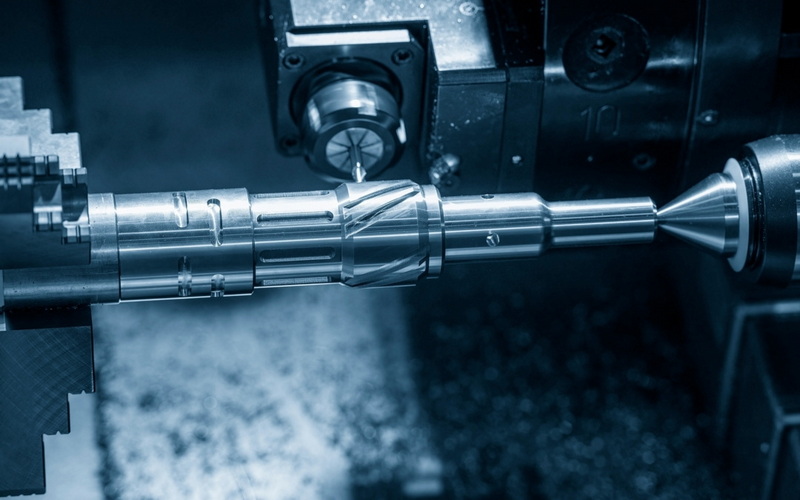
CNC machining supports a broad range of materials including metals like aluminum, brass, titanium, and stainless steel, as well as plastics such as ABS, nylon, and PEEK. The selection depends on strength, flexibility, and end-use requirements.
CNC machining is a subtractive technique that removes material from a workpiece, while 3D printing is an additive process that builds parts layer by layer. CNC machining achieves greater structural strength, smoother surface finishes, and higher dimensional accuracy.
Yes. CNC machining is ideal for both prototypes and large-scale production. Its repeatability ensures consistent quality, making it the standard method in high-volume manufacturing operations.
Automation allows CNC machines to operate continuously with minimal supervision. Computerized control reduces downtime, optimizes tool paths, and ensures precise execution of complex operations — all of which enhance overall productivity.
Industries such as aerospace, automotive, electronics, energy, and medical rely heavily on CNC machining to meet strict tolerance requirements and performance expectations. Its adaptability makes it valuable across nearly every manufacturing domain.
1. https://www.engineerlive.com/content/what-cnc-machining
2. https://www.autodesk.com/solutions/cnc-machining
3. https://www.thomasnet.com/articles/custom-manufacturing-fabricating/what-is-cnc-machining/
4. https://www.makepartsfast.com/introduction-to-cnc-machining/
5. https://en.wikipedia.org/wiki/Numerical_control


