From idea to market-ready product, our NPI solutions make every stage easier, faster. Discover How We Help

Views: 222 Author: Tomorrow Publish Time: 2026-01-24 Origin: Site
Content Menu
● Introduction to CNC Machining
● The Evolution of CNC Machining: From Manual to Intelligent Systems
● Automation and Smart Manufacturing Integration
● Material Advancements and Complex Machining Capabilities
● The Role of Artificial Intelligence and Data Analytics
● Digital Twins and Process Simulation
● Hybrid Manufacturing: Combining Additive and Subtractive Methods
● Energy Efficiency and Environmental Sustainability
● The Human Factor: Workforce and Skill Evolution
● Challenges Ahead for CNC Machining
● Future Outlook of CNC Machining
● FAQ
>> (1) What industries benefit most from CNC machining?
>> (2) How is artificial intelligence used in CNC machining?
>> (3) What is hybrid CNC machining?
>> (4) Can CNC machining be made sustainable?
>> (5) Is manual machining becoming obsolete?
The manufacturing industry is undergoing one of the most significant transformations in its history. Advancements in digital technology, automation, and artificial intelligence have redefined how products are designed and produced. Among these technologies, CNC machining stands as a cornerstone of modern precision manufacturing. As we look toward the coming decades, the critical question emerges: How does the future of CNC machining unfold, and what will drive its continued evolution?
This article explores the innovations shaping CNC machining—from automation and smart integration to sustainability, material science, and workforce development. By examining emerging trends, we gain a clearer understanding of how CNC machining will redefine manufacturing in the digital era.
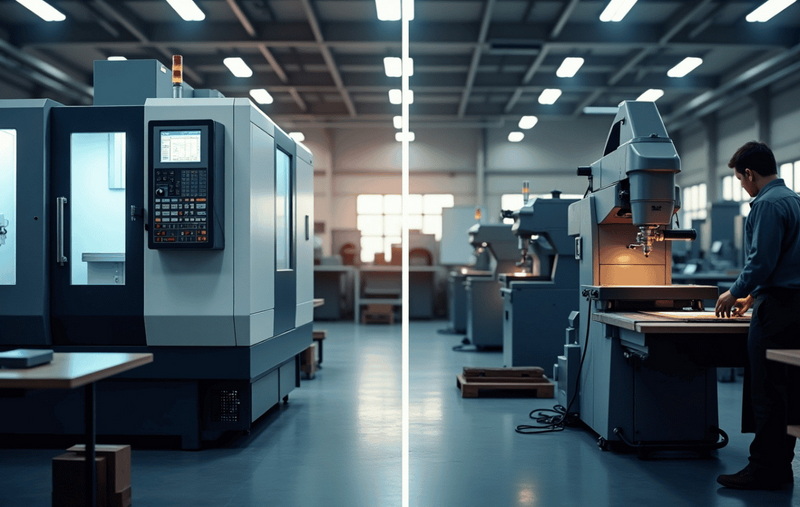
CNC machining (Computer Numerical Control machining) refers to the automated control of machining tools through computer programming. It replaces the manual operation of equipment such as lathes, mills, grinders, and routers with precise, repeatable digital processes.
CNC systems interpret design data generated from CAD (Computer-Aided Design) and CAM (Computer-Aided Manufacturing) software, translating digital blueprints into physical components. This eliminates much of the variability found in manual machining and ensures each part meets exact tolerances.
The modern value of CNC machining lies in precision, scalability, and efficiency. Whether for automotive engine components, aerospace turbine parts, or custom medical implants, CNC machining plays a vital role in products where accuracy determines safety and performance.
When CNC machines first emerged in the 1940s, they were considered revolutionary. Operations were directed using punched paper tapes before digital computers became standard. Over time, however, hardware improvements, servo technologies, and integrated software transformed CNC systems into sophisticated, multi-axis tools.
Today's CNC machines are faster, smarter, and more autonomous than ever before. They can self-calibrate, compensate for wear, and communicate data across networks. Looking ahead, the integration of machine learning, IoT (Internet of Things), and cloud connectivity is pushing CNC machining further into the realm of intelligent manufacturing.
The concept of the “smart factory”—where machines exchange data and make automated decisions—represents the next evolutionary leap. CNC machining will be at the center of this transformation, seamlessly combining speed, precision, and adaptiveness.
Automation continues to be the dominant driver shaping the future of CNC machining. Robotic arms, conveyors, and sensors are increasingly integrated into machining cells, reducing manual handling and enabling continuous operation.
In a smart manufacturing environment, CNC machines are equipped with real-time monitoring systems that track every aspect of operation—from spindle vibration to tool temperature. This data enables predictive maintenance and process optimization, reducing downtime and improving product quality.
Automated tool changers and robotic loading systems allow operations to run 24/7, often with minimal human supervision. This shift toward “lights-out manufacturing” increases production capacity while minimizing labor costs.
Furthermore, machine-to-machine communication (M2M) allows different CNC machines to coordinate production tasks dynamically. As artificial intelligence grows more sophisticated, production systems can automatically adapt workflows based on demand forecasts and supply availability.
Another key driver of innovation in CNC machining is material science. Industries now require components made from advanced alloys, composites, and high-performance polymers to achieve superior strength-to-weight ratios, corrosion resistance, and thermal stability.
Modern 5-axis CNC machines are capable of machining these advanced materials with exceptional precision. Laser-assisted cutting and ultrasonic machining systems make it possible to handle heat-resistant superalloys that were once impossible to process economically.
In addition, micro-scale CNC technology is accelerating innovations in electronics and medical devices. Ultra-precise machining processes can now produce miniature implants, microfluidic devices, and intricate electronic connectors that require tolerances measured in microns.
As materials continue to evolve, so too will the technology required to machine them effectively, fostering continuous innovation within the CNC sector.
Artificial Intelligence is rapidly transforming how CNC machining systems perceive and respond to production challenges. AI algorithms analyze machine data to detect inefficiencies and optimize toolpaths automatically. Unlike conventional machining setups, AI can learn from historical data and predict potential tool failure before it happens.
For instance, if an AI-driven CNC system detects unusual vibration patterns or power fluctuations, it can automatically adjust spindle speeds or feed rates to prevent surface defects. This form of adaptive machining reduces waste, enhances durability, and ensures consistent quality.
Moreover, predictive analytics tools can analyze production schedules and performance metrics, ensuring that each CNC machine operates at maximum efficiency. In large-scale operations, cloud-based dashboards allow engineers to oversee multiple production lines and make data-driven adjustments in real time.
The future will see even deeper AI integration, where CNC systems not only execute predefined instructions but also make autonomous decisions that improve performance.
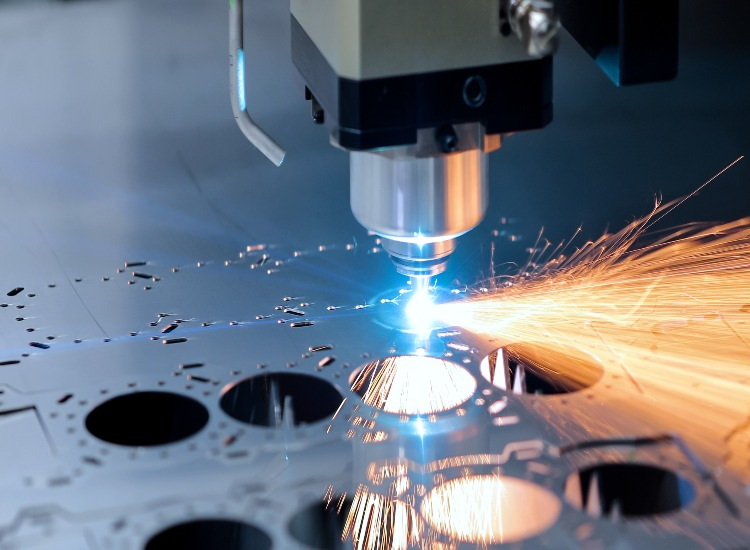
Digital twins are virtual replicas of physical assets that continuously receive data from real-world machines. In the context of CNC machining, a digital twin allows manufacturers to simulate machining processes, forecast performance, and troubleshoot potential issues—all before actual production begins.
This technology dramatically reduces prototyping time and helps engineers refine product designs virtually. For example, designers can adjust tool angles, cutting speeds, or coolant flow in a simulated environment and predict wear patterns or surface finishes with incredible accuracy.
Digital twins also enhance post-production analysis, allowing factories to study how a real CNC machine behaves over time and implement targeted improvements in its maintenance cycle.
As cloud computing and high-performance simulation software advance, digital twins will become indispensable tools for manufacturers seeking both speed and precision.
Hybrid manufacturing represents one of the most exciting frontiers in CNC machining. It merges traditional subtractive methods (where material is removed) with additive manufacturing (such as 3D printing, where material is added).
This synergy allows engineers to fabricate complex geometries that are unachievable through machining alone, followed by precision finishing through CNC operations. The result is reduced material waste, lower production time, and superior design flexibility.
For example, an aerospace manufacturer might 3D print a titanium structure with internal lattice features for weight reduction and then finish the part with CNC machining to achieve tight tolerances. This combination offers the best of both worlds—innovation and accuracy.
Hybrid systems will likely dominate prototyping, low-volume production, and custom-engineered parts for industries prioritizing speed and flexibility.
Today's manufacturers are under growing pressure to reduce environmental impact. CNC machining, traditionally energy-intensive, is adapting to meet this challenge through innovative system design and smarter energy usage.
New-generation CNC machines feature energy-efficient servo motors, regenerative braking systems, and optimized coolant management to reduce power consumption. Additionally, advanced cutting strategies minimize material waste and shorten cycle times.
Digital tools like CAM software optimization help engineers plan machining paths that balance performance with sustainability, reducing unnecessary tool movements and extending tool life.
Greener lubricants and closed-loop coolant systems are becoming standard, further supporting environmental goals without compromising precision. Sustainable production not only protects natural resources but also enhances brand value and competitiveness in global markets.
As CNC machining becomes more automated and data-driven, the human role in manufacturing is also evolving. While traditional machinist skills remain essential, new-generation operators must now possess expertise in digital programming, software troubleshooting, and data analysis.
Educational institutions and private organizations are rapidly updating curricula to prepare workers for Industry 4.0 environments. Augmented reality (AR) and virtual simulation tools now allow trainees to practice CNC programming and maintenance in immersive digital settings.
Instead of manually operating machines, humans increasingly act as system managers, optimizing workflows, analyzing data, and implementing improvements. This shift enhances productivity and creates opportunities for higher-skilled, better-paid roles within the manufacturing ecosystem.
Despite its bright outlook, the future of CNC machining faces several challenges. The rising cost of advanced equipment, cybersecurity risks associated with connected systems, and a shortage of skilled technicians all pose barriers to rapid adoption.
Supply chain instability and fluctuations in raw material prices also impact profitability for small and medium-sized machining businesses. However, the growing accessibility of cloud-based software and modular machine systems offers hope by reducing costs and complexity.
To stay competitive, manufacturers must invest not only in hardware but also in continuous learning, cyber protection, and digital transformation initiatives.
The road ahead for CNC machining is characterized by deeper automation, smarter integration, and greener production. As 5G networks and edge computing become mainstream, real-time data exchange between CNC machines will dramatically increase efficiency.
Digital twins, AI algorithms, and advanced simulation tools will merge into unified ecosystems where design, machining, and quality control are part of one continuous digital workflow.
Moreover, as global industries demand faster turnaround times and hyper-customized products, CNC machining will serve as the backbone of flexible manufacturing systems—capable of producing anything from aerospace turbines to consumer electronics with unmatched precision.
The future belongs to manufacturers who leverage CNC machining not just as a tool but as a strategic advantage within an interconnected, intelligent production network.
The future of CNC machining combines precision, intelligence, and sustainability. Intelligent automation, AI-based control, hybrid manufacturing, and eco-friendly practices are transforming how components are produced worldwide.
What was once a purely mechanical process has evolved into a digitally driven, data-powered discipline. As manufacturers embrace smart technologies, CNC machining will continue to drive efficiency, shape innovation, and sustain industrial growth for decades to come.
Contact us to get more information!
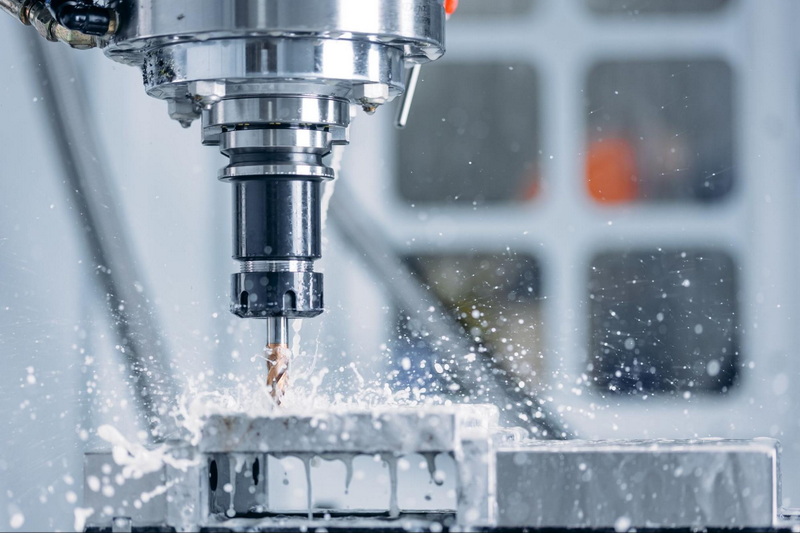
Industries such as aerospace, automotive, defense, medical, and electronics rely on CNC machining for high-precision and repeatable part production essential to safety and performance standards.
AI enhances CNC machining by enabling predictive maintenance, optimizing cutting paths, and automatically adjusting process parameters to ensure consistent quality.
Hybrid CNC machining merges additive manufacturing (3D printing) with traditional machining to produce complex, lightweight structures with precisely machined surfaces.
Yes. Through smart energy management, coolant recycling, efficient toolpaths, and eco-friendly lubricants, CNC machining is evolving to support sustainable production.
While CNC machining dominates large-scale manufacturing, manual machining remains valuable for one-off parts, repairs, and prototype development due to its flexibility and tactile control.
1. https://www.machinemfg.com/
2. https://www.autodesk.com/solutions/cnc-machining
3. https://www.3ds.com/
4. https://www.haascnc.com/
5. https://www.engineering.com/
6. https://www.makeitfrommetal.com/
7. https://www.additivemanufacturing.media/
8. https://www.manufacturingglobal.com/
9. https://www.researchgate.net/
10. https://www.sme.org/


