From idea to market-ready product, our NPI solutions make every stage easier, faster. Discover How We Help

Views: 222 Author: Tomorrow Publish Time: 2025-12-10 Origin: Site


Content Menu
● Understanding the Concept of CNC Milling
● Types of CNC Milling Machines
● Materials Used in CNC Milling
● Core Components of a CNC Milling Machine
● Advanced Techniques in CNC Milling
● Comparison Between CNC Milling and Manual Machining
● FAQ
>> 1. What is the difference between CNC milling and CNC turning?
>> 2. How accurate is CNC milling?
>> 3. What tools are commonly used in CNC milling?
>> 4. Can CNC milling produce custom prototypes?
>> 5. What industries rely most on CNC milling?
CNC milling represents a powerful fusion between digital automation and mechanical precision, standing as one of the most advanced forms of subtractive manufacturing used today. The term “CNC” stands for Computer Numerical Control, a technological system that allows machines to perform intricate operations automatically based on pre-programmed instructions. Milling, in this context, refers to the process of gradually removing material from a solid block, known as a workpiece, using a rotating cutting tool. When combined, CNC milling transforms raw material into precisely engineered components that meet strict dimensional and structural requirements.
Modern industries depend heavily on CNC milling—from automotive and aerospace engineering to electronics, medicine, and consumer products. To understand what CNC milling truly means is to explore its technology, applications, benefits, and the innovative direction it continues to take in advanced manufacturing.
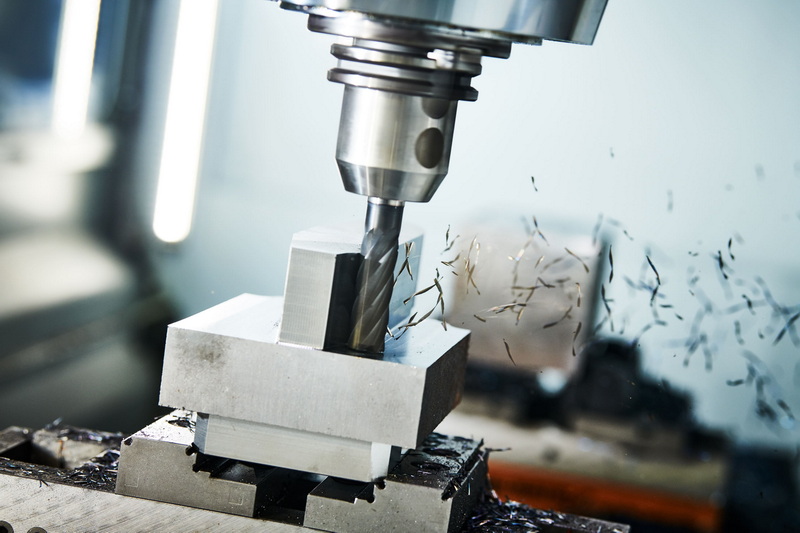
CNC milling is a production technique in which computers control the motion and operation of milling machines. Using numerical codes—mainly G-codes and M-codes—the machine interprets commands to execute highly specific cutting motions. Operators or engineers feed digital designs into specialized software, converting them into mathematical coordinates that correspond to cutting paths. The milling machine then follows these paths with precision that manual control cannot achieve.
Unlike basic machining, CNC milling can simultaneously control multiple axes of movement. For example, while one axis guides horizontal movement, another can manage vertical positioning and even rotational angles. Multi-axis capability gives CNC milling its advantage, allowing manufacturers to produce surfaces, cavities, and contours with outstanding accuracy.
The CNC milling process generally follows a systematic workflow consisting of several key phases that translate a digital concept into a tangible product:
1. Digital design creation: Engineers design a 2D or 3D model using CAD (Computer-Aided Design) software. Every wall, surface, and hole in the model has exact dimensions.
2. Toolpath generation: CAM (Computer-Aided Manufacturing) software converts the CAD model into machine-readable code. The software determines cutting paths, spindle speeds, feed rates, and tool changes.
3. Machine setup: The operator secures the raw workpiece on the table using clamps or vises, installs the necessary cutting tools, and initializes the zero point on the machine.
4. Automated machining: The milling operation begins as the machine follows its programmed instructions, continuously cutting away material until the desired shape appears.
5. Inspection and quality control: After machining, the part undergoes dimensional verification and, if necessary, heat treatment, polishing, or coating for enhanced durability.
Sensors constantly monitor vibration, temperature, and position throughout the milling cycle to ensure the machine performs within tolerance limits. This closed-loop control mechanism enables smart feedback and immediate correction during production.
Not all CNC milling machines are the same. They vary based on mechanical design, degrees of freedom, and the complexity of motion they can achieve.
- 3-axis CNC milling: The most common type, moving the tool along the X, Y, and Z axes. Ideal for flat surfaces or simple contours.
- 4-axis CNC milling: Adds rotation around one axis, enabling more efficient cutting and access to multiple sides of the workpiece without repositioning.
- 5-axis CNC milling: Offers rotation around two additional axes, providing complete flexibility for creating intricate shapes such as turbine blades and molds.
- Horizontal milling machines: Feature a horizontally oriented spindle. They're suited for cutting deep slots and machining large or heavy parts efficiently.
- Vertical milling machines: Feature a vertically oriented spindle, more compact and flexible, ideal for precision detail work and high-quality surface finishing.
The choice of machine type depends on project complexity, production volume, material, and desired tolerances.
CNC milling is highly versatile and compatible with a wide range of materials. It can process metals, plastics, composites, and even ceramics or wood.
Common examples include:
- Aluminum: Lightweight and corrosion-resistant, suitable for prototypes and aerospace components.
- Steel and stainless steel: Used for strength-critical applications, such as automotive frames and tooling.
- Brass and copper: Ideal for electrical parts and decorative components.
- Titanium: Lightweight yet strong, widely used in aerospace and medical industries.
- Plastics (ABS, PEEK, nylon, Delrin): Perfect for low-weight assemblies or insulation parts.
- Composite materials: Fiber-reinforced polymers provide excellent strength-to-weight ratios.
Each material requires specific cutting speeds, coolant use, and tool geometries to ensure optimal results and prevent tool wear.
While machines vary in layout and function, several core components exist in nearly every CNC milling system:
- Frame and bed: Provide structural stiffness and vibration resistance.
- Spindle: The heart of the machine, responsible for driving cutting tools at controlled speeds.
- Worktable: Holds the workpiece firmly in place during operation.
- Tool magazine and changer: Enable seamless transitions between tool types for different cutting operations.
- Control panel: The operator interface for loading programs, setting parameters, and monitoring progress.
- Drive motors and axes: Convert digital commands into precise physical movements.
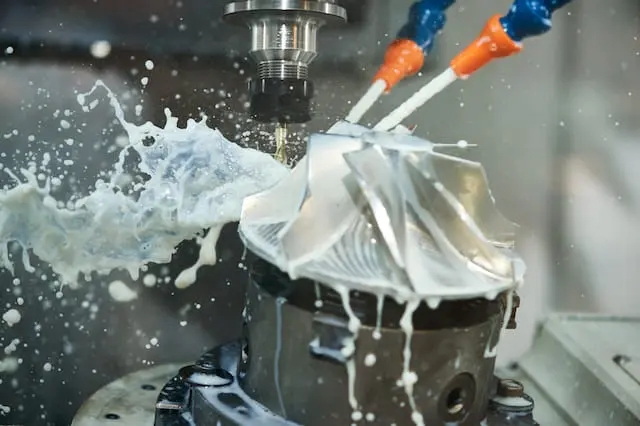
- Coolant and lubrication system: Maintain temperature control and extend tool life.
These interconnected components work together, transforming digital input into mechanical reality with speed and accuracy.
CNC milling offers multiple advantages compared to traditional manufacturing approaches:
- Exceptional precision: Achieves outstanding tolerances, often below ±0.01 mm.
- Rapid production: Reduces setup and human intervention, improving output rates.
- Design freedom: Allows complex surfaces, holes, and contours that manual machining cannot replicate.
- Reduced waste: Optimized toolpaths and precise cuts minimize material loss.
- Consistency and repeatability: Every replica matches the original perfectly.
- Safety: Automation minimizes direct operator involvement, lowering accident risks.
- Scalability: Suitable for both prototype development and high-volume production.
These strengths make CNC milling a core technology for high-value industries that demand dependability and accuracy.
Despite its advantages, CNC milling is not without challenges:
- High initial investment: Setting up advanced equipment and software can be expensive.
- Requirement for skilled programmers: G-code knowledge and CAD/CAM proficiency are essential.
- Material wastage: Being subtractive, it removes excess material, creating chips as by-products.
- Machine maintenance: Tool wear and calibration require ongoing management.
- Size and axis limitations: Some machines cannot accommodate extremely large or complex parts.
Balancing these challenges often depends on production scale and the balance between time, cost, and complexity.
CNC milling supports a diverse range of industries, enabling precision manufacturing across the globe:
- Aerospace and defense: Produces high-strength structural parts, turbine blades, and landing gear components.
- Automotive: Used in crafting engines, aluminum wheel rims, and transmission housings.
- Medical: Creates precise surgical tools, orthopedic implants, and prosthetic components.
- Electronics: Manufactures casings, connectors, and heat sinks for consumer and industrial devices.
- Industrial machinery: Develops molds, dies, jigs, and mechanical components for automated systems.
- Energy: Produces parts for wind turbines, oil rigs, and nuclear reactors.
Its adaptability ensures that CNC milling remains integral to every sector where precision directly affects performance and reliability.
Recent developments have introduced advanced milling techniques designed to improve efficiency and outcome:
- High-speed milling: Uses optimized cutting parameters to increase productivity while maintaining accuracy.
- Multi-axis simultaneous milling: Combines rotational movements for smoother, more efficient finishing.
- Hybrid manufacturing: Integrates additive (3D printing) and subtractive (milling) methods.
- Micromilling: Specializes in miniature parts for microelectronics and precision instruments.
- Automation and robotics: Enables unattended operations through robotic arm integration and smart scheduling.
These innovations highlight how CNC milling constantly evolves to meet new design challenges and materials.
The future of CNC milling is being reshaped by the integration of *Industry 4.0* technologies. Smart manufacturing relies on machine connectivity, autonomous operation, and real-time analytics. AI-driven optimization adjusts tool parameters for energy efficiency and predictive maintenance, while *digital twins* replicate machining conditions for simulation and testing before production begins.
Environmental sustainability also influences the next generation of milling. Cutting fluids are being reformulated for eco-friendly performance, while waste recycling and energy-efficient drives reduce production footprints. Furthermore, hybrid CNC systems merge milling with laser cutting or additive manufacturing, combining subtractive precision with additive flexibility.
Traditional manual milling depends heavily on operator skill and experience. While capable artisans can achieve high precision, repeatability remains limited. CNC milling, by contrast, eliminates human error through computer control. It can operate continuously 24/7, producing identical results even in complex geometries. Manual machining still serves for initial concept development and repair work, but in most industrial contexts, CNC milling reigns as the efficient, scalable, and cost-effective alternative.
CNC milling redefines what is possible in precision manufacturing. By fusing advanced computer control with mechanical cutting innovation, it enables the creation of complex geometries, tight tolerances, and flawless finishes across a wide variety of materials. From a single prototype to large-scale production, CNC milling efficiently bridges the gap between concept and reality. As automation, connectivity, and AI continue to advance, CNC milling will remain a foundation of smart manufacturing—driving innovation, quality, and efficiency in every corner of the industrial world.
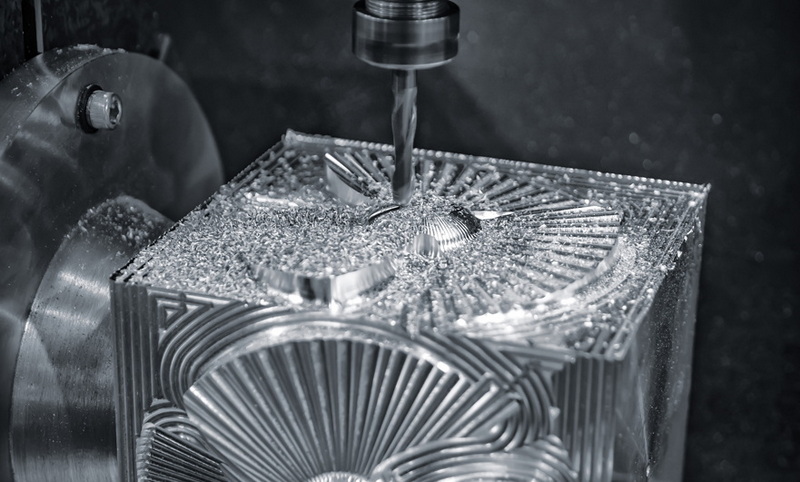
CNC milling involves a rotating cutting tool removing material from a stationary workpiece, while CNC turning spins the workpiece itself against a stationary tool. Milling handles complex surfaces; turning is ideal for cylindrical shapes.
CNC milling machines typically achieve accuracies within ±0.01 mm, though higher-end equipment can reach sub-micrometer tolerances depending on material and process conditions.
End mills, ball-nose cutters, face mills, drills, and chamfer tools are frequently used. Selecting the right tool depends on the material type and surface requirements.
Yes, CNC milling is ideal for prototype development. Engineers can quickly adjust designs, test functionality, and iterate without needing full-scale tooling.
Key industries include aerospace, automotive, medical device manufacturing, electronics, and energy production—sectors that demand high precision, repeatability, and durability.


