From idea to market-ready product, our NPI solutions make every stage easier, faster. Discover How We Help

Views: 222 Author: Tomorrow Publish Time: 2025-12-14 Origin: Site


Content Menu
● The Importance of CNC Milling in Modern Manufacturing
● Why Portugal's CNC Industry Is Growing
● Core Capabilities of Portuguese CNC Milling Suppliers
● Spotlight on Leading CNC Milling Services Manufacturers and Suppliers in Portugal
>> Moldit – Molds & Precision Components
>> Matceramica Precision Engineering
>> Groupe SET
>> PMM – Portuguese Metal Manufacturing
● The Global Reach of Portuguese CNC Manufacturers
● Cooperation Between Portuguese and Chinese OEM Partners
● Technological Advancements in Portugal's CNC Machining
● Selecting the Right CNC Milling Supplier
● The Role of Sustainability and ESG in CNC Manufacturing
● Challenges and Opportunities Ahead
>> FAQs About CNC Milling Services Manufacturers and Suppliers
>> 1. What industries benefit most from CNC milling services in Portugal?
>> 2. What materials can Portuguese CNC suppliers process?
>> 3. How does Portugal compare with other European machining centers?
>> 4. Are the top suppliers export-focused?
>> 5. Can Portuguese CNC suppliers collaborate with non-European OEMs?
Portugal is steadily developing a global reputation as an advanced manufacturing nation, particularly within the field of precision CNC machining. Across the industrial landscape of Europe, Portuguese CNC Milling Services Manufacturers and Suppliers are gaining recognition for combining technical sophistication, cost-effectiveness, and attention to engineering detail.
For businesses worldwide—whether they are automotive OEMs, aerospace producers, or consumer electronics brands—Portugal represents a strategic sourcing destination that merges European quality standards with operational agility. Portuguese machining companies not only offer the latest in high-speed, multi-axis CNC milling but also bring decades of mold-making, metalworking, and mechanical design experience.
This article explores the panorama of Portugal's CNC milling industry, the capabilities of its top suppliers, and why the nation's manufacturers have become trusted partners for global production lines.
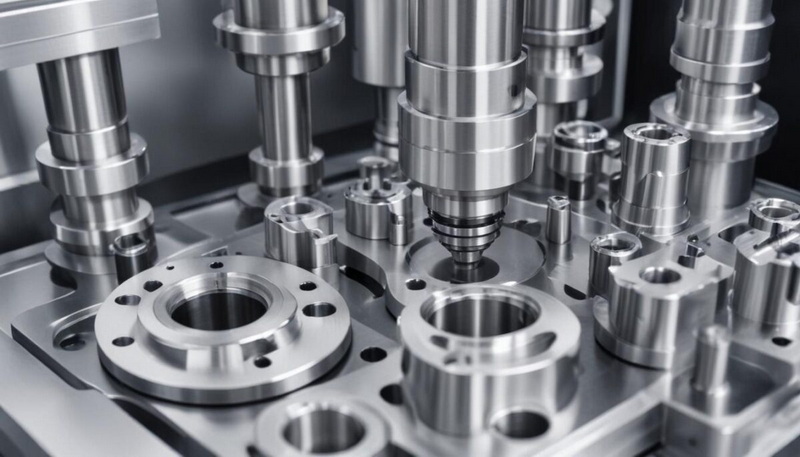
CNC (Computer Numerical Control) milling has transformed how components are produced in nearly every industry. Unlike manual machining, CNC milling uses automated, computer-guided tools to remove material from a solid block, forming precise and repeatable parts. Portuguese CNC Milling Services Manufacturers and Suppliers employ top-tier machinery, such as 3-axis to 5-axis milling centers, ensuring dimensional accuracy that can meet even the strictest engineering tolerances.
In application, CNC milling supports:
- Prototyping and product development: Rapid turnaround for complex parts before mass production.
- Tool and mold making: Essential for plastic injection, die casting, and composite forming.
- End-use part manufacturing: Producing everything from turbine housings to surgical instruments.
Because of its accuracy, consistency, and adaptability, CNC milling has become a backbone of advanced industrial supply chains. Portuguese manufacturers have embraced this technology as a way to position themselves competitively within the European and global markets.
Portugal's manufacturing roots stretch back decades, especially in mold making, precision tooling, and the automotive supply chain. Over time, local firms transitioned from traditional machining to advanced digital production, incorporating robotics, CAD/CAM integration, and simulation-driven workflows.
Several factors make Portugal especially attractive for clients seeking capable CNC Milling Services Manufacturers and Suppliers:
- Strong technical ecosystem: Portugal's mold, metalworking, and tooling clusters, located in cities such as Aveiro, Braga, and Oliveira de Azeméis, form a collaborative network that accelerates innovation.
- Government and EU support: Public investment programs help SMEs adopt Industry 4.0 technologies and energy-efficient machinery.
- Global export focus: Around 70% of CNC and mold-making output is exported to markets like Germany, France, the UK, and the United States.
- Stable infrastructure: Portugal's transportation, digital, and energy systems support efficient trade and logistics operations.
This environment allows both small workshops and large-scale manufacturers to deliver top-tier machining to international clients.
Today's leading Portuguese CNC shops offer a spectrum of capabilities that serve various product engineering needs. Typical services include:
- 3-, 4-, and 5-axis milling for complex geometries.
- Precision surface finishing (polishing, grinding, anodizing).
- CNC turning and EDM (Electrical Discharge Machining) integration.
- CAD/CAM programming and reverse engineering.
- Rapid prototyping and small batch production.
- Dimensional inspection using CMM (Coordinate Measuring Machines).
The emphasis on precise tolerances—often in the ±0.005 mm range—demonstrates the attention to quality that elevates Portugal's machining capabilities above many competitors.
Moldit, headquartered in Oliveira de Azeméis, exemplifies Portugal's legacy of craftsmanship and innovation. The company specializes in precision CNC milling for tools and molds used by global automotive and electronics firms. With its state-of-the-art 5-axis machines and in-house design teams, Moldit guarantees repeatability, accuracy, and excellent surface finishes. Its commitment to R&D makes it a reliable partner for high-performance component manufacturing.
As one of Portugal's largest industrial groups, Simoldes has decades of experience delivering complex parts and injection molds to the world's biggest brands. Operating multiple plants, Simoldes provides complete project management—from engineering simulation to CNC milling and assembly. Its global footprint and emphasis on technical precision make it one of the most recognized CNC Milling Services Manufacturers and Suppliers in Europe.
Blending ceramics expertise with metallic and composite machining, Matceramica has evolved into a high-tech engineering supplier. The company operates advanced CNC systems from DMG Mori, Okuma, and Mazak, delivering multi-material solutions for industries like renewable energy and medical devices. Its quick response times and customized service are especially valued by international OEMs.
Groupe SET, with its plant in central Portugal, integrates milling, turning, and assembly for defense, marine, and energy clients. Their production process prioritizes quality validation, with every part passing through advanced CMM inspection and quality control certifications. Clients appreciate the team's ability to balance flexibility with large-scale reliability.
PMM is appreciated for addressing intricate geometries and tight production schedules. Known for its automation investments and digital machining cells, PMM demonstrates the sophistication of Portugal's new generation of CNC Milling Services Manufacturers and Suppliers. The company tackles a wide range of alloys, including titanium, Inconel, and aluminum, catering to aerospace and industrial markets.
Portuguese precision manufacturers serve clients far beyond Europe. Their success in international markets is based on:
- Multilingual client communication in English, German, and French.
- Flexible production capacity adjusted to seasonal or regional demand.
- Adherence to international compliance standards such as ISO 9001, ISO 14001, and AS9100 for aerospace.
- Competitive lead times resulting from optimized logistics near major ports.
Because of their integration with global supply chains, Portuguese companies often act as bridging partners between Western Europe and Asian production bases. Many coordinate projects where pre-machined components from Asia are finalized and assembled in Portugal, balancing cost and quality optimization.
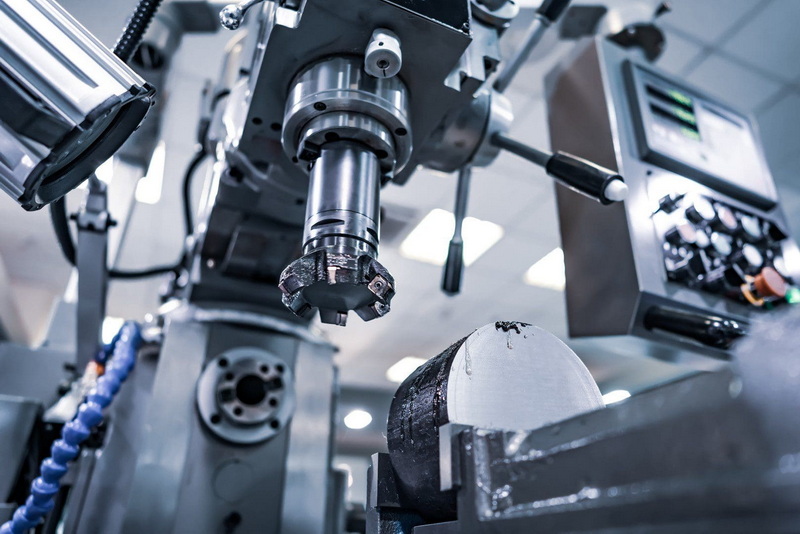
In recent years, cooperation between Portuguese machining specialists and Chinese OEMs has strengthened significantly. Portuguese companies value the scale and cost advantages that Chinese partners can provide, while Chinese OEMs benefit from Europe's design innovation and strict quality control framework.
For example, a precision parts producer in China can handle large-batch CNC milling under the supervision of Portuguese quality experts. The finished or semi-finished goods are then inspected, fine-tuned, and distributed from Portugal to global markets.
This partnership approach allows customers to enjoy:
- Shorter development cycles.
- Transparent supply chain management.
- Balanced pricing without sacrificing quality.
- Access to dual technical expertise—European engineering and Asian production efficiency.
As a result, many Portuguese CNC Milling Services Manufacturers and Suppliers now advertise hybrid sourcing solutions that provide global scalability with local accountability.
Portugal's CNC sector is among Europe's most proactive in adopting Industry 4.0 and digital manufacturing methods. Smart factory concepts and data connectivity systems increasingly define how top firms operate.
Key developments shaping Portuguese CNC machining include:
- Digital twins and simulation-based programming: Virtual modeling ensures toolpaths are optimized before cutting begins, saving materials and minimizing risk.
- AI-powered predictive maintenance: Algorithms detect potential mechanical failures early, reducing downtime.
- Hybrid manufacturing: Combining 3D metal printing with CNC machining to produce lightweight and complex structures.
- Energy-efficient processes: Manufacturers are upgrading to eco-friendly coolant systems and chip recycling operations to meet sustainability goals.
- Cloud-based production monitoring: Remote management of machining workflows and real-time production tracking for customers.
These innovations increase workflow transparency and position Portugal as a global leader in smart CNC manufacturing.
Finding the right partner among the numerous Portuguese CNC Milling Services Manufacturers and Suppliers can be critical to project success. Buyers should consider several evaluation criteria before signing supply agreements.
1. Technical compatibility: Ensure the supplier's machines and software systems can achieve your required tolerances and materials.
2. Prototyping readiness: A capable supplier should support rapid prototyping, model verification, and engineering adjustment.
3. Quality assurance structure: Check for calibration, inspection equipment, and certifications.
4. Supply flexibility: Verify whether the manufacturer can handle both small prototyping and larger production runs without compromising delivery speed.
5. Communication efficiency: Language fluency and digital documentation systems streamline international cooperation.
6. Cost-effectiveness and logistics: Compare total landed cost (including transport and customs) instead of unit price only.
By analyzing these parameters, businesses can identify a Portuguese supplier who aligns best with their product complexity, budget, and market goals.
Modern buyers are increasingly emphasizing environmental and social responsibility when selecting manufacturing partners. Portuguese machining companies have responded by adopting sustainable initiatives within their CNC milling operations.
Many factories operate under renewable energy contracts or implement energy recovery systems from spindle drives. Others employ coolant recycling and waste segregation programs to minimize ecological impact. In terms of workforce policies, Portuguese manufacturers often emphasize safety, continuous training, and equal opportunity employment—values that strengthen their reputation as ethical suppliers.
This green and socially conscious approach adds another competitive layer, aligning Portuguese CNC suppliers with sustainability-oriented clients in Northern Europe and North America.
As global manufacturing continues to evolve, Portuguese CNC mills face both challenges and opportunities. Rising energy costs and workforce shortages could pressure smaller workshops, but technological advancements—like automation and remote operation—help mitigate these challenges.
Portugal's strategic position within the EU allows it to collaborate effectively with both Western and Asian markets. The growing need for localized or nearshore suppliers in Europe also works in Portugal's favor, as buyers seek to shorten supply chains to reduce risk.
By emphasizing precision, responsiveness, and digital efficiency, Portuguese companies are well-positioned to become indispensable in the next generation of international manufacturing ecosystems.
Portugal's CNC Milling Services Manufacturers and Suppliers exemplify the synergy between tradition and technology. With decades of experience in precision tooling and a new wave of Industry 4.0 adoption, the country has positioned itself among Europe's most advanced manufacturing regions.
Portuguese CNC companies excel through their strong engineering skills, flexible production capacities, adherence to international standards, and openness to global cooperation—including OEM partnerships with factories in China and other regions. Their attention to quality, sustainability, and customer service allows them to stand out in the global supply market.
For businesses seeking a dependable and cost-effective machining partner, Portugal offers a unique balance of innovation, craftsmanship, and reliability—making it a prime destination for CNC milling and precision component sourcing in the coming decade.
The main industries include automotive, aerospace, electronics, medical equipment, renewable energy, and general industrial manufacturing. Each benefits from Portugal's reliable precision engineering and short lead times.
They handle metals such as aluminum, steel, titanium, copper, and brass, as well as engineering plastics like PEEK, nylon, and PTFE, using the right cutting parameters for each material.
Portugal competes with Germany and Italy in quality but offers more competitive pricing while maintaining precision and EU-certified processes.
Yes. Most Portuguese CNC Milling Services Manufacturers and Suppliers export more than half of their production to international clients, proving their reliability in cross-border logistics and documentation.
Absolutely. Many already maintain partnerships with Chinese, American, and Japanese companies, serving as technical intermediaries for global production networks.


