From idea to market-ready product, our NPI solutions make every stage easier, faster. Discover How We Help

Views: 222 Author: Tomorrow Publish Time: 2025-12-09 Origin: Site


Content Menu
● Understanding CNC Machining Time
● Why CNC Machining Time Matters
● Primary Factors Influencing CNC Machining Time
>> 3. Tool Geometry and Quality
>> 4. Part Design and Geometry
>> 5. Setup and Auxiliary Operations
● Theoretical Formula for CNC Machining Time
● Step-by-Step Machining Time Estimation Process
>> Example 1: Turning Mild Steel
>> Example 2: Milling Aluminum Part
● Methods to Improve Estimation Accuracy
>> 1. Use Digital CAM Simulation
>> 2. Build a Knowledge Database
>> 3. Consider Tool Load and Wear
>> 4. Include All Non-cutting Activities
>> 5. Validate Through Test Pieces
● Common Errors in CNC Time Estimation
● The Role of Automation and Industry 4.0
● Estimating Non-cutting and Setup Times
● Cost Estimation from Machining Time
● FAQ
>> 1. How do you calculate machining time manually?
>> 2. What software tools can estimate CNC machining time?
>> 3. How does tool wear impact machining time?
>> 4. How can manufacturers reduce machining time effectively?
>> 5. Why is setup time critical in small-batch production?
Estimating CNC machining time is an essential aspect of manufacturing and process planning. An accurate estimation not only ensures production efficiency but also determines the profitability of a machining project. In today's competitive industrial environment, precision manufacturers rely on both theoretical calculations and practical data to plan their jobs accurately.
This comprehensive guide explains how to estimate CNC machining time correctly. It details influencing factors, provides step-by-step formulas, and offers insights on process optimization. The article is structured for both beginners seeking fundamental understanding and professionals who aim to refine their estimation practices.
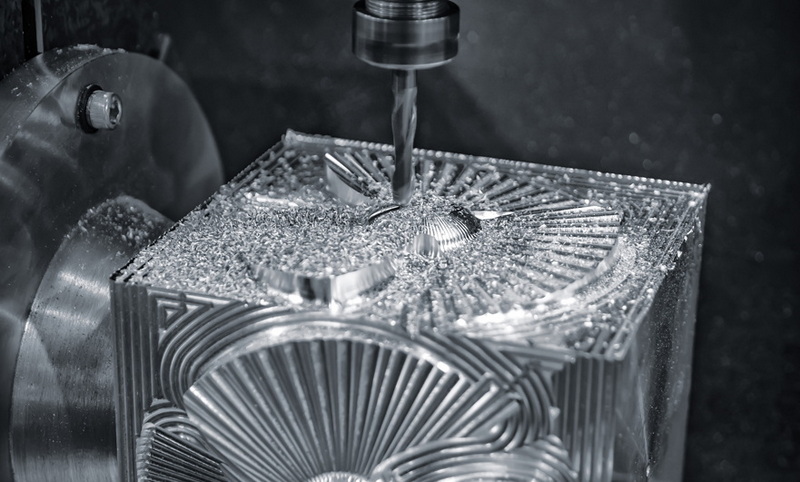
CNC machining time refers to the amount of time required for a computer numerical control machine to complete a specific part or operation. The total machining time covers not only actual cutting but also all the non-cutting activities that support the machining process. These include setup, tool changes, loading and unloading, inspection, and idle machine motion.
Since every part and operation are unique, machining time estimation is rarely straightforward. It involves both measurable technical variables—like feed rate and spindle speed—and contextual factors such as material type, machine condition, and tool performance. Therefore, estimation accuracy improves with experience and careful analysis.
Correctly estimating CNC machining time has far-reaching benefits across all stages of manufacturing:
- Accurate pricing: Time directly affects machine rates and production cost. Overestimating leads to lost business opportunities, while underestimating causes financial loss.
- Efficient scheduling: Precise time estimation allows managers to sequence tasks logically and prevent machine bottlenecks.
- Inventory control: Knowing cycle times enables better coordination of raw material orders and just-in-time manufacturing.
- Customer satisfaction: Predictable lead times help maintain client trust and ensure on-time deliveries.
- Performance improvement: Regular comparison of estimated vs. actual machining time supports continuous optimization.
Whether for quoting or scheduling, time estimation helps maintain balance between economic feasibility and production consistency.
CNC machining time depends on a wide range of parameters. For clarity, they can be categorized into machine-related, material-related, part-related, and human-related factors.
Each CNC machine has different specifications—spindle speed limits, tool changer capacity, acceleration rate, and maximum feed speed. High-end machining centers naturally handle faster speeds and higher feed rates. Machines with high rigidity and advanced servo motors maintain accuracy even at maximum speed, shortening machining times without compromising surface quality.
Material hardness and machinability strongly influence cycle times. Softer materials like aluminum or brass allow aggressive cutting speeds and larger tool engagement. By contrast, tough materials such as titanium, inconel, or hardened steel require slower cutting parameters to preserve tool life and achieve dimensional accuracy. Machinability data from handbooks or supplier recommendations should always guide parameter selection.
Tool material (carbide, ceramic, HSS), coating type (TiN, TiAlN, or diamond), and cutting edge geometry collectively affect the cutting force and temperature. Using the right tool minimizes wear and ensures higher chip removal rates. Tool condition is equally vital—dull edges increase friction and extend machining time significantly.
Complex parts with tight tolerances, deep cavities, or multi-axis features inherently demand longer machining cycles. Every additional surface or contour involves more tool paths, program changes, and verification steps. Designers can reduce machining time by simplifying geometry where function allows and implementing design-for-manufacturing (DFM) principles.
Setup time includes fixture alignment, tool offset adjustment, work coordinate definition, and part probing. Though often underestimated, this time may outweigh pure cutting time for small batch runs. For large-volume production, the same setup time is distributed across thousands of parts, making it relatively negligible.
The basic formula for estimating machining time in most cutting operations is:
Tm =L / ( f * N )
Where:
T: Machining time (min or sec)
L: Total cutting length (mm)
F: Feed per revolution or per tooth (mm/rev or mm/tooth)
N: Spindle speed (rev/min)
To calculate spindle speed:
N = 1000 * Vc / (pi * D)
Where:
Vc: Cutting speed (m/min)
D: Workpiece or tool diameter (mm)
Feed rate can be written as:
F = ft * z * N
Where:
ft: Feed per tooth (mm/tooth)
z: Number of cutting edges
N: Spindle speed (rpm)
Finally, total machining time is expressed as:
Tmachining = L / F
This formula is widely used for turning, milling, drilling, and boring when approximate parameters are known.
1. Identify operation type. Determine whether it's milling, turning, drilling, or tapping.
2. Gather necessary parameters. These include cutting speed, feed rate, part dimensions, and tool diameter.
3. Calculate spindle speed (N). Use the appropriate formula for rotational speed.
4. Compute feed rate (F). Multiply feed per tooth by number of teeth and spindle speed.
5. Find path length (L). This describes the total distance the tool travels through material.
6. Apply the formula \(T = L / F\). Derive cutting time.
7. Add setup, tool change, and idle times. Include fixed or estimated values based on job history.
8. Review and adjust for tolerance precision. Closer tolerances generally require slower finishing passes.
9. Document total estimated cycle time. Use this value for quotation or scheduling purposes.
Following these steps offers a structured approach to achieve repeatable and practical estimations.

- Workpiece diameter: 50 mm
- Cutting length: 100 mm
- Cutting speed: 150 m/min
- Feed rate: 0.2 mm/rev
Spindle speed:
N = 1000 *150 / (3.14 * 50) = 955 rpm
Machining time:
T = 100 / (0.2 * 955) = 0.524 min = 31.4 sec
- Cutting length: 200 mm
- Feed rate: 600 mm/min
T = 200 * 600 = 0.333 min} = 20 sec
In real situations, adding setup and retraction time often increases the total cycle by 15–20%.
CAM tools such as Mastercam, Fusion 360, or SolidWorks CAM can automatically predict machining time based on programmed parameters. They simulate full tool motion, including retraction, rapid travel, and acceleration, which manual calculations may overlook.
Recording every actual machining job's cycle time and comparing it with estimates fosters learning and accuracy. Over months, this builds a database of empirical benchmarks that reflect specific machine performance.
Tool wear causes increased friction, slower cutting, and potential chatter. Adjust cycle time upward slightly for long production runs to account for mid-job tool replacements or regrinding.
Approach, retraction, fixture setup, coolant operations, and part measurement collectively influence total machining time. Neglecting these factors leads to underestimation.
For new materials or unfamiliar part designs, conducting a short trial run reveals the real cutting behavior and helps tune estimation formulas effectively.
- Ignoring machine acceleration or deceleration phases.
- Using theoretical speeds without verifying tool capability.
- Forgetting about rigid tapping, probing, or multi-axis repositioning time.
- Assuming identical efficiency across different machines.
- Over-optimistic productivity assumptions for complex parts.
Each of these mistakes builds up small inaccuracies that can collectively distort estimates and affect delivery commitments.
Modern manufacturing environments increasingly adopt AI-assisted machining time estimation. Smart systems analyze CAD geometry, material properties, and machine dynamics to forecast cycle time with high precision. These digital tools integrate with ERP software to automatically update production schedules and costs.
Sensors and IoT connectivity provide real-time data about spindle speed, feed rate, and vibration. With continuous feedback, the actual machining time database becomes the foundation for self-improving estimation algorithms. As a result, predictive analytics transforms what was once trial-and-error into a data-driven discipline.
While cutting time is quantifiable, non-cutting time can vary greatly by operation complexity and operator skill. A general breakdown is as follows:
| Operation Type | Typical Time Range |
|---|---|
| Tool change | 5–15 seconds |
| Workpiece loading/unloading | 30–90 seconds |
| Setup and alignment | 2–10 minutes |
| Measurement and inspection | 2–5 minutes |
| Program loading | 30–60 seconds |
A realistic total machining time (Ttotal) is given by:
Ttotal = Tcutting + Tnon-cutting
In large-scale automation environments, robotic systems can reduce many of these manual delays, improving both speed and consistency.
Time reduction directly increases machine efficiency and operational profit. Below are effective strategies:
- Optimize tool paths. Shorter and smoother movements reduce travel time and tool wear.
- Use higher feed rates for roughing. Remove most material quickly before switching to finer finishing passes.
- Choose advanced cutting tools. Modern carbide or coated tools can sustain higher speeds.
- Implement high-speed machining strategies. Adaptive tool paths minimize sharp corners and maintain constant tool load.
- Streamline setups. Modular fixtures allow rapid workpiece changes.
- Monitor performance through sensors. This avoids unexpected downtime.
Small optimizations in each area collectively produce significant cycle time improvements.
Once total machining time is obtained, it can be translated into an estimated cost using:
Cost} = Ttotal * Rm
Where (Rm) is the hourly machine rate, including operator wage, tool cost, electricity, and depreciation. Additional charges may include setup cost, material waste, or overhead. This cost estimation is vital for generating customer quotes and evaluating job profitability.
Despite automation, human expertise remains crucial. Skilled machinists and programmers can predict anomalies that formulas cannot—such as tool deflection or chip evacuation challenges. Their experience complements mathematical precision and ensures the final estimate aligns with reality. Training and cross-disciplinary knowledge therefore strengthen an organization's overall estimation ability.
Estimating CNC machining time accurately is an interplay of science, mathematics, and craftsmanship. By understanding cutting parameters, material properties, machine behaviors, and setup dynamics, manufacturers can produce reliable predictions that guide pricing, scheduling, and optimization.
Combining theoretical formulas, CAM tools, and real-production data creates a robust estimation framework. As technology evolves toward automation and artificial intelligence, the precision of these predictions continues to improve — ensuring efficiency, cost control, and consistent product quality in the world of precision manufacturing.
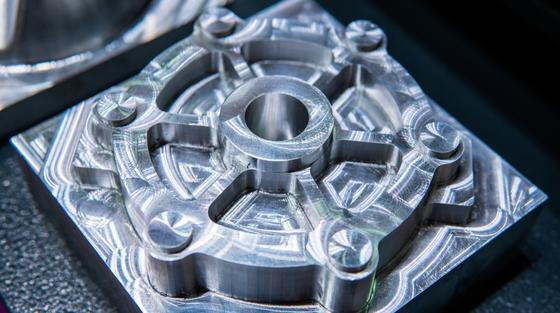
Machining time can be manually calculated with the formula \(T_m = L / (f \times N)\), where \(L\) is cutting length, \(f\) feed per revolution, and \(N\) spindle speed. It's advisable to add setup and idle time afterward for accuracy.
Programs such as Autodesk Fusion 360, SolidWorks CAM, and Mastercam offer integrated machining time estimation based on programmed speeds, feeds, and tool paths. Some even simulate material removal in 3D for precision forecasting.
Tool wear increases cutting resistance, requiring slower feed or replacement, both of which extend machining cycles. Monitoring wear helps maintain optimal time and surface finish.
They can optimize feed rates, upgrading tools, streamline tool paths, and minimize unnecessary setups. Using high-speed machining and advanced CAM strategies also improves efficiency drastically.
In small runs, setup time often outweighs cutting time since it does not scale with part quantity. Reducing setup time directly enhances profitability in low-volume projects.


