From idea to market-ready product, our NPI solutions make every stage easier, faster. Discover How We Help

Views: 222 Author: Tomorrow Publish Time: 2025-12-16 Origin: Site


Content Menu
● Understanding CNC Milling Basics
● 1: Define the Design Requirements
● 2: Design the Machine Frame and Structure
● 4: Spindle and Tooling System Design
>> Key Elements
● 5: Electrical and Control System Design
● 6: Software Integration and Programming
>> Machine Control and User Interface
● 7: Safety, Testing, and Calibration
● 8: Performance Optimization and Vibration Control
● 9: Cost Analysis and Maintainability
● 10: Future Enhancements and Smart Features
● FAQ
>> 1. What materials are best for building a CNC milling machine?
>> 2. What is the difference between a stepper and a servo motor?
>> 3. How do you ensure accuracy in a CNC design?
>> 4. Can a beginner design a CNC milling machine?
>> 5. How much does it cost to design and build a CNC machine?
Designing a CNC (Computer Numerical Control) milling machine requires a multidisciplinary approach that blends mechanical engineering, electronics, software programming, and precision manufacturing. A CNC milling machine is capable of cutting, drilling, and shaping a variety of materials with high accuracy and repeatability. Whether it is a small desktop prototype or an industrial multi-axis machining center, the design principles remain consistent: rigidity, precision, efficiency, and safety.
This guide walks through each crucial design stage of a CNC milling machine — from defining performance goals to testing and optimization.
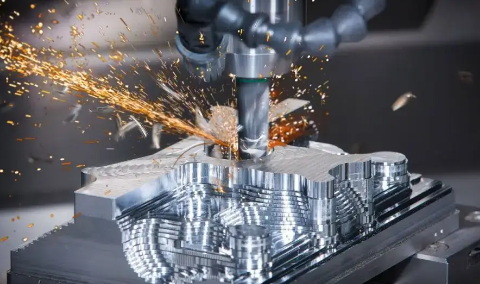
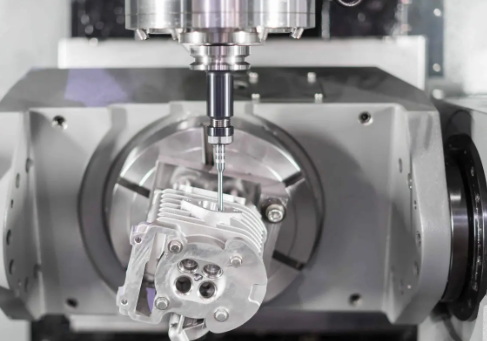
A CNC milling machine operates by using pre-programmed G-code instructions to move cutting tools across materials. The cutting head, or spindle, moves along multiple linear and rotational axes, typically labeled X, Y, and Z for translation, and A or B for rotation.
The combination of controlled movement and consistent cutting speed allows CNC milling machines to produce complex geometries that manual machining cannot easily achieve. The precision of the final product depends on mechanical rigidity, alignment, and electronic synchronization.
Every engineering project should start with a clear definition of goals and specifications. For a CNC milling machine, this includes determining the application scope and operational performance targets.
- Material types: Decide whether the machine will cut soft materials (like plastics or wood) or hard ones (like stainless steel or titanium).
- Work area size: Define the maximum travel distance of each axis to match the part dimension requirements.
- Cutting performance: Specify spindle speeds, torque, and feed rates.
- Tolerance and accuracy: Establish precision levels. Most hobby machines achieve 0.05 mm precision, while industrial units reach microns.
- Power supply and environment: Consider voltage, available space, and thermal conditions.
Defining these parameters helps designers avoid overcomplicating or undersizing the machine — ensuring efficiency and cost-effectiveness.
The frame serves as the foundation for all other systems. Its rigidity and structural damping directly influence machining stability.
- Cast iron: Excellent damping and dimensional stability but heavy.
- Steel: Strong and affordable but needs heat treatment to reduce distortion.
- Aluminum: Lightweight, suitable for portable or small-format designs.
- Epoxy granite: Offers great vibration absorption for precision engineering environments.
Incorporate ribs and gussets to strengthen key joints and surfaces. For further optimization, use Finite Element Analysis (FEA) to simulate mechanical loads, spindle forces, and dynamic resonance to minimize vibration.
Common structures include:
- C-frame: Simplified and used in small machines.
- Bridge or gantry type: Offers high stability for larger work areas.
- Double-column: Found in heavy-duty, high-precision mills.
Bolting, welding, or casting techniques may be used depending on the chosen material and manufacturing capacity.
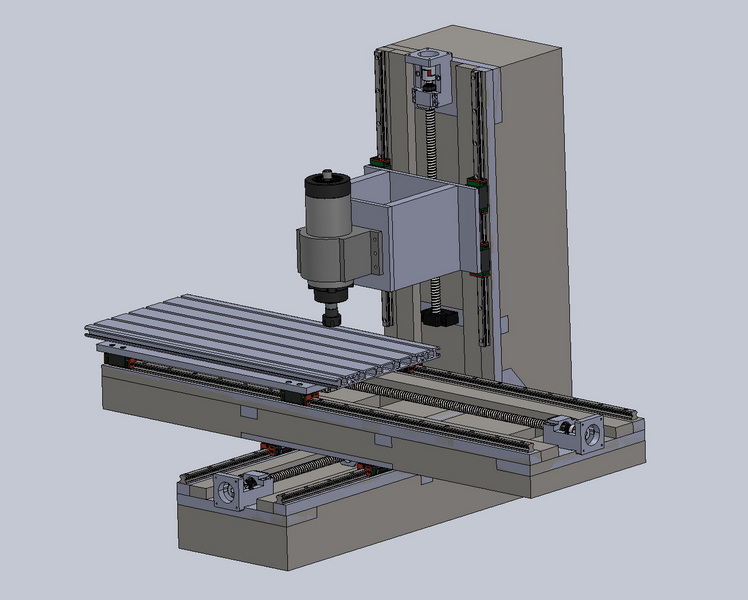
The motion system defines how each machine axis moves with speed and accuracy. It typically consists of actuators (motors), transmission mechanisms, and linear guides.
Designers must choose between stepper motors or servo motors:
- Steppers are easy to control and fit small CNC projects.
- Servos include closed-loop feedback for precision control and higher torque.
To achieve smooth motion, motor torque must exceed the maximum cutting and frictional loads by an ample safety margin.
- Ball screws: Offer high precision and minimal backlash, ideal for metal cutting.
- Lead screws: Cost-effective for light materials.
- Rack and pinion: Suitable for large travel distances with moderate precision.
- Linear motors: Provide direct drive motion, reduce friction, but are expensive.
Select guideways based on load capacity and movement smoothness. Hardened linear rails with recirculating ball carriages are standard in professional CNCs.
The spindle is the core of the milling process, transferring motor power to cutting tools.
- Spindle speed range: Determines suitability for cutting different materials. A range between 500 to 24,000 rpm is typical.
- Torque: Defines cutting capability for hard materials.
- Cooling system: Essential for temperature control, using air or fluid coolants.
- Tool holders: Systems like BT30 or CAT40 guarantee alignment and precision.
Balancing the spindle reduces vibration and noise, while a rigid mounting system keeps the cutting tool steady during operation.
The control system interprets digital commands and converts them into synchronized mechanical movement.
- Motion controller or CNC board for command interpretation.
- Motor drivers to regulate current and motion control.
- Sensors and limit switches to establish travel boundaries.
- Power supply with overcurrent protection and grounding.
The control architecture may use open-loop (for basic systems) or closed-loop (for industrial precision) configurations. Industrial controllers from Siemens or Fanuc include advanced feedback signals, error correction, and real-time process monitoring.
Proper cable management and shielding prevent signal interference. All wiring must comply with electrical safety standards to avoid short circuits or electromagnetic noise.
Software integration bridges the mechanical and electronic domains.
1. Create models in CAD software such as SolidWorks or Fusion 360.
2. Generate tool paths in CAM. This stage defines cutting sequences, feed rates, and tool selection.
3. Post-process files into G-code. The machine reads G-code to move tools accordingly.
Software like Mach3, LinuxCNC, or GRBL provides the operator interface. It allows manual jogging, automatic operation, tool offset calibration, and job simulation.
Fine-tuning parameters such as acceleration, jerk limits, and feed rates can improve smoothness and machining quality.
Safety design prevents hazards during operation and extends machine life.
- Install emergency stop switches in accessible locations.
- Include limit switches to avoid travel overrun.
- Use protective enclosures or transparent shields to block debris.
- Equip coolant and dust removal systems to maintain visibility and part cleanliness.
Start with manual calibration:
- Measure backlash and compensate in the control software.
- Verify squareness of XYZ axes.
- Inspect spindle runout and parallelism.
- Conduct test cuts in soft materials to analyze performance.
Accurate calibration ensures consistent part dimensions and smooth operation under various loads.
Even after calibration, optimization is necessary to achieve maximum performance.
- Dynamic balancing: Reduces spindle vibration.
- Thermal compensation: Sensors adjust offsets when the machine heats up during long operations.
- Lubrication systems: Prevent wear in bearings and screws. Automatic grease pumps improve reliability.
- Damping elements: Rubber isolators or composite materials absorb vibrations from heavy cutting.
Measure repeatability and drift using precision tools like laser interferometers. Consistent results over long machining cycles reflect superior design quality.
Balancing performance and cost determines a project's success.
- Mechanical parts (40–50%) include frame, axes, and spindle.
- Electronics (30%) like controllers and sensors.
- Assembly and tuning (20%) including fabrication, maintenance, and calibration.
For long-term use, prioritize maintainability by designing easy-access panels, modular electronic compartments, and removable covers. This reduces downtime during service.
Modern industrial CNC systems integrate regenerative braking, energy-efficient servos, and power monitoring systems to minimize operational costs.
Advanced CNC designs incorporate automation and intelligent control.
- Adaptive feed control: Adjusts cutting feed in real-time based on load feedback.
- IoT connectivity: Enables remote monitoring, predictive maintenance, and data logging.
- AI-based optimization: Algorithms learn best cutting parameters for each material.
- Automatic tool changers (ATC): Increases production efficiency by swapping tools automatically.
The inclusion of these features transforms traditional milling into a smart manufacturing process that optimizes productivity and part quality.
Designing a CNC milling machine is an intricate process that combines engineering precision with creative problem-solving. Each subsystem—mechanical, electronic, and software—must operate harmoniously to ensure accuracy, rigidity, and long-term reliability.
From defining requirements to implementing control algorithms, every design decision contributes to overall machine quality. With methodical planning, simulation, and testing, it's possible to develop a CNC milling machine that delivers dependable performance across varied industrial and creative applications.
Cast iron and steel offer high rigidity and damping, essential for heavy-duty machines. Aluminum or epoxy granite can be used for smaller or precision-focused systems due to lighter weight and vibration control.
Stepper motors move in discrete steps and are easier to control but less powerful. Servo motors use encoders to provide feedback, allowing high precision, faster acceleration, and smoother motion—ideal for professional applications.
Accuracy depends on structural rigidity, component alignment, backlash compensation, and calibration. Regular testing and environmental control reduce vibration and thermal distortion, ensuring precise results.
Yes. Beginners should start with smaller open-source CNC kits or conversion projects to learn principles. Gradually, they can experiment with larger designs after gaining knowledge in CAD, electronics, and mechanics.
Costs vary by size and complexity. DIY desktop CNC machines can be built for under $1,000, while industrial multi-axis systems can exceed $100,000. The budget mainly depends on materials, electronics, and spindle choice.


