From idea to market-ready product, our NPI solutions make every stage easier, faster. Discover How We Help

Views: 222 Author: Tomorrow Publish Time: 2025-12-16 Origin: Site


Content Menu
● What Is a CNC Milling Machine?
● How CNC Milling Machines Work
● Main Components of a CNC Milling Machine
● Types of CNC Milling Machines
● Advantages of CNC Milling Machines
● Materials Used in CNC Milling
● Applications Across Industries
● Future Trends in CNC Milling Technology
● Operator Skills and Training
● Safety Measures in CNC Milling
● FAQ
>> 1. What does CNC stand for in CNC milling?
>> 2. What are the main advantages of CNC milling machines?
>> 3. Can CNC milling machines work with all materials?
>> 4. How many axes can a CNC milling machine have?
>> 5. Is CNC milling suitable for small-scale production?
CNC milling machines represent one of the most powerful innovations in modern manufacturing technology. The abbreviation "CNC" stands for Computer Numerical Control, reflecting the computer-based automation that drives these machines. Unlike traditional milling, which relied on manual operation, CNC milling uses pre-programmed digital codes to direct tool movement with exact precision. This transformation allows industries to produce intricate and consistent parts on a massive scale while minimizing human error and production time.
CNC milling machines are central to industries ranging from aerospace and electronics to automotive and medical device manufacturing. Whether fabricating turbine blades or creating electronic casings, these machines ensure precise results, repeatability, and efficiency. Understanding how they work, their components, benefits, and challenges can reveal how indispensable they have become in modern production.
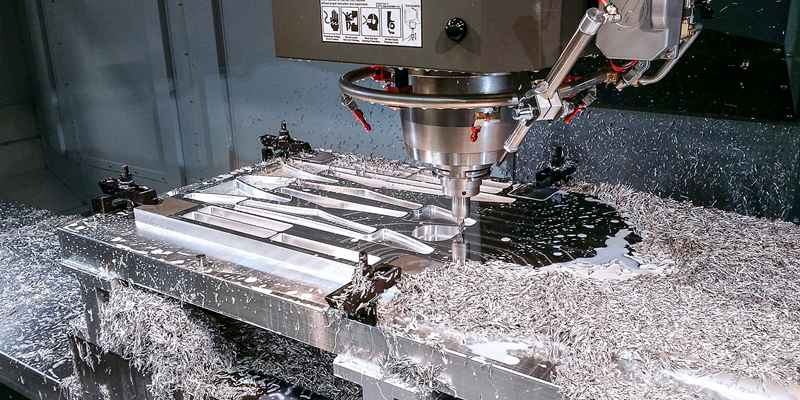
A CNC milling machine is an automated machining tool that removes material from a solid workpiece. It sculpts the material into specific shapes by using rotating cutting tools. Traditional milling machines required operators to manually adjust controls to shape a part, but CNC machines use coded computer instructions to achieve the same — and far more — with unmatched precision.
These machines can carve complex three-dimensional parts or fine details that are impractical or impossible to achieve manually. The precision they offer ensures that every component produced matches design requirements down to micrometer-level tolerances.
At the heart of CNC milling lies a marriage between digital precision and mechanical performance. The process starts with a virtual blueprint — a 3D model created using computer-aided design (CAD) software. This model represents the ideal final product. The CAD file is then translated into a machine-readable format through computer-aided manufacturing (CAM) software, which converts the model into instructions known as G-code.
The machine's controller reads these G-code commands, each defining specific tool movements or speeds. The system coordinates motion across multiple axes:
- X-axis: Horizontal, left and right.
- Y-axis: Depth, forward and backward.
- Z-axis: Vertical, upward and downward movements.
- A-axis and B-axis: Rotary and tilting axes that enable multidirectional cutting for complex shapes.
The synchronization of these axes enables high flexibility and detailed precision, allowing CNC milling to produce smooth curves, slots, threads, gears, and grooves.
CNC milling systems integrate an array of components designed for accuracy and durability:
- Spindle: The rotating shaft that holds the cutter. It powers the cutting tool and operates at variable speeds to accommodate different materials and operations.
- Machine bed and frame: Provide rigidity and absorb vibrations to ensure stable cutting.
- Worktable: Holds the workpiece securely using clamps or vises, ensuring no movement occurs during machining.
- Tool changer: Automatically swaps tools, saving setup time when executing complex multi-step operations.
- CNC controller: The “brain” of the system that interprets the G-code and orchestrates tool motion.
- Drive systems: Include motors, servos, and ball screws that deliver smooth, accurate translation of commands into motion.
- Coolant system: Keeps the tool and workpiece from overheating and removes metal chips from the cutting area.
When precisely calibrated, these components work together to deliver dependable, high-quality results.
There are several versions of CNC milling machines, each serving distinct manufacturing purposes.
1. Vertical milling machines: These have vertically oriented spindles, making them ideal for precise drilling and contouring.
2. Horizontal milling machines: Feature horizontal spindles better suited for cutting deeper grooves and larger workpieces.
3. Gantry or bridge-type mills: Large machines with a moving gantry, commonly used for processing large parts such as aircraft panels or molds.
4. 5-axis milling machines: Offer rotational and tilting functions, enabling simultaneous multi-directional cutting. This is essential for sculpting aerodynamic or orthopedic shapes.
5. Universal milling machines: Incorporate features of both horizontal and vertical designs, adding flexibility for complex projects.
Choosing the right type depends on production volume, part complexity, and the level of accuracy required.
CNC milling provides numerous competitive advantages that make it the backbone of advanced manufacturing:
- Superior precision and consistency: Automated controls guarantee exact replication across thousands of identical components.
- Reduced labor dependency: The process requires less direct human intervention, reducing fatigue errors and operational costs.
- Time efficiency: Automated tool changes and simultaneous multi-axis operations drastically speed production.
- Versatility: Suitable for a wide variety of materials and parts, from heavy structural metals to lightweight plastics.
- Enhanced safety: Operators interact mainly with machine interfaces, minimizing exposure to sharp tools or moving parts.
- Flexible manufacturing: Digital programming allows easy modification of designs and rapid adaptation to new projects.
These capabilities allow manufacturers to maintain tight quality control while optimizing speed and cost.
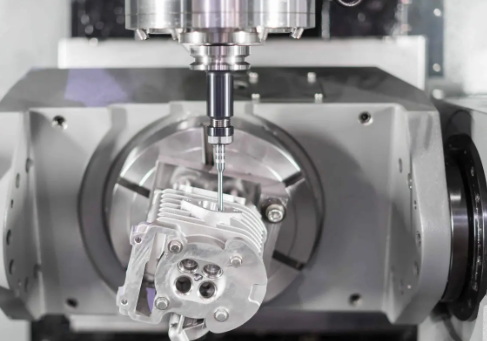
A CNC milling operation follows several structured stages:
1. Design and modeling: Engineers conceptualize the product using CAD software, defining precise geometric details.
2. Program conversion: The CAD file is processed in CAM software to generate toolpaths and cutting parameters.
3. Machine setup: Technicians mount the workpiece, calibrate the spindle, and load proper cutting tools.
4. Machining: Automated milling begins, executing sequential tool passes based on programmed coordinates.
5. Quality checking: Finished parts undergo dimensional inspection to ensure compliance with specified tolerances.
Many firms integrate in-process measurement systems that automatically detect deviations during cutting, further improving accuracy.
CNC milling machines can handle an impressive range of materials, each requiring different cutting speeds, feed rates, and tool types:
- Metals: Aluminum, brass, steel, titanium, copper, and Inconel.
- Plastics: Polycarbonate, acetal (Delrin), nylon, ABS, and PEEK.
- Composites: Carbon fiber-reinforced polymers and fiberglass.
- Wood and foam: Used for models and prototypes.
Selecting the right tool material and coating, such as carbide or diamond, ensures smoother finishes and longer tool life.
CNC milling's adaptability allows it to thrive in multiple industries:
- Aerospace: Produces precision parts like turbine blades, landing gear components, and cockpit frames.
- Automotive: Manufactures engine blocks, cylinder heads, and prototypes for concept models.
- Electronics: Machines casings, cooling systems, and precision connector housings.
- Medical: Creates implants, surgical tools, and orthodontic devices requiring high biocompatibility and accuracy.
- Industrial tooling: Produces molds, dies, and machine fixtures critical to other production lines.
Each sector leverages CNC milling for reliable, repeatable, and scalable production capabilities.
While revolutionary, CNC milling is not without hurdles:
- High initial investment: Machines and setup infrastructure are expensive.
- Programming complexity: Crafting efficient toolpaths requires highly skilled operators.
- Maintenance needs: Regular calibration and lubrication are essential to maintain accuracy.
- Material waste: Inefficient setups can increase scrap rates, though simulation software now helps reduce this risk.
Future advancements in software automation and machine learning may mitigate many of these limitations.
CNC milling continues to evolve alongside innovations in manufacturing automation. Smart factories now integrate CNC machines into Internet of Things (IoT) networks, enabling real-time monitoring of tool wear, power usage, and output data. Predictive maintenance algorithms can forecast failures before they occur, preventing costly downtime.
Artificial intelligence is also improving machining efficiency by analyzing millions of toolpaths and optimizing feed rates automatically. Hybrid manufacturing systems that combine milling (subtractive) with 3D printing (additive) are emerging, offering the best of both worlds — high-speed prototyping and superior mechanical performance.
Moreover, sustainable manufacturing trends are shaping CNC technology. Advanced coolant recycling systems, energy-efficient motors, and digital twins are reducing carbon footprints in industrial environments.
Even with automation, skilled operators remain essential. They must understand machine dynamics, cutting tool selection, CAD/CAM programming, and maintenance schedules. Modern training also includes data analysis, as operators increasingly interact with digital dashboards providing machine diagnostics and efficiency metrics.
As precision standards continue to rise, ongoing education ensures smooth integration between human oversight and machine intelligence.
Safety in CNC milling is paramount. Machines operate at high rotational speeds, so protective enclosures, interlock systems, and automatic emergency stops are built into every device. Operators wear protective eyewear, gloves, and hearing protection while adhering to strict operational guidelines. Routine inspections of tool conditions, clamping fixtures, and coolant systems prevent accidents and maintain consistent performance standards.
CNC milling machines have fundamentally transformed how products are designed and manufactured. By combining digital programming, automation, and precise control, they enable unparalleled accuracy across countless industries. These machines streamline production, lower error rates, and push innovation forward, ensuring consistent quality in complex designs. Even though initial costs and setup complexities remain, the efficiency and precision CNC machines deliver make them a cornerstone of today's industrial ecosystem. As technology advances, the future of CNC milling promises even greater integration, intelligence, and sustainability.
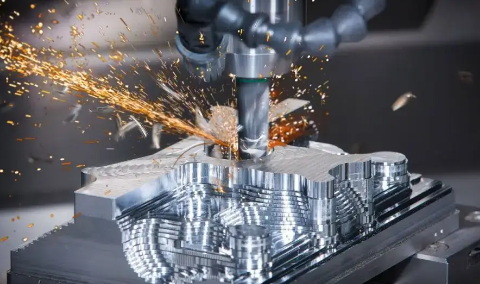
CNC stands for Computer Numerical Control, a system where programmed instructions direct machine tool movements instead of manual operation.
They provide higher accuracy, reduced errors, faster production, greater versatility, and improved safety compared to traditional machining.
They can handle metals, plastics, composites, and even wood, though the tool type, spindle speed, and coolant method must be customized for each material.
Most have 3 basic axes (X, Y, Z), but advanced systems include up to 5 or more, allowing for complex multidirectional cutting.
Yes. CNC milling efficiently creates prototypes, one-off parts, or limited production batches thanks to its rapid programming and consistent repeatability.


