From idea to market-ready product, our NPI solutions make every stage easier, faster. Discover How We Help

Views: 222 Author: Tomorrow Publish Time: 2025-12-14 Origin: Site
Content Menu
● What Is CNC Milling and Why It Matters
>> Key Benefits of CNC Milling
● The Manufacturing Strength of South Korea
>> Supporting Industry Ecosystem
● Key Advantages of South Korean CNC Milling Manufacturers
>> 1. Technological Innovation
>> 2. Rigorous Quality Systems
>> 3. Highly Skilled Workforce
>> 5. Sustainable Manufacturing Practices
● Leading CNC Milling Manufacturers and Suppliers in South Korea
>> 1. Hwacheon Machinery Co., Ltd.
>> 2. DN Solutions (formerly Doosan Machine Tools)
>> 5. Sambo Precision Co., Ltd.
>> 6. Korea Institute of Industrial Technology (KITECH) Partnerships
● CNC Milling Applications Across Industries
● How to Choose the Right CNC Milling Supplier in South Korea
● The Future of CNC Milling in South Korea
● FAQs
>> Q1: What makes South Korean CNC milling companies globally competitive?
>> Q2: Can South Korean suppliers handle customized OEM projects?
>> Q3: What industries most rely on CNC milling in South Korea?
>> Q4: How do Korean factories ensure quality control?
>> Q5: How can overseas buyers collaborate with Korean suppliers?
South Korea has become a global leader in precision engineering and advanced manufacturing, powered by its strong industrial base, skilled workforce, and continuous innovation. Among its growing industrial sectors, CNC Milling Services Manufacturers and Suppliers play an essential role. They provide high-accuracy parts and components for industries such as automotive, aerospace, medical, electronics, and robotics.
Over the past two decades, South Korean manufacturers have moved far beyond traditional machining. They've adopted digital manufacturing, automation, and smart factory systems that integrate Artificial Intelligence (AI), machine learning, and real-time data analytics. The result is a CNC industry that's not only reliable but also forward-thinking, setting benchmarks for quality and efficiency that rival those of Japan, Germany, and the United States.
This article explores in detail the Top CNC Milling Services Manufacturers and Suppliers in South Korea, analyzing what makes them competitive, how they serve international clients, and where the industry is heading.

CNC milling is the process of removing material from a workpiece using computer-controlled cutting tools. This technology ensures unmatched precision and repeatability, allowing parts to be produced within extremely tight tolerances.
- Accuracy and repeatability: CNC milling ensures each part matches the design specifications precisely, with tolerances as small as ±0.002 mm.
- Efficiency: Once a program is set, mass production becomes consistent and efficient.
- Material flexibility: From titanium and aluminum to engineering plastics, CNC milling supports various materials.
- Automation: CNC machining minimizes manual involvement, reducing human error and production downtime.
In modern manufacturing, especially in high-tech industries, CNC Milling Services Manufacturers and Suppliers are key enablers of product quality and innovation.
South Korea's industrial ecosystem is built on three pillars — innovation, precision, and export excellence. The country's investment in automation and smart factories positions it at the forefront of Asia's advanced manufacturing sector.
- Government investment: Programs under “K-Smart Manufacturing Strategy” promote AI-enabled machining and robotics.
- Technology transfer: Collaborations between universities and industrial research centers enhance CNC machining methods.
- Export-driven growth: Over 70% of Korean CNC services are tied to global OEM supply chains.
This integrated structure ensures the CNC Milling Services Manufacturers and Suppliers in South Korea remain globally competitive while maintaining sustainable growth.
Modern Korean factories are equipped with multi-axis CNC machining centers, automated pallet changers, digital inspection cells, and IoT-linked production systems. The use of 5-axis CNC milling machines allows for complex geometry manufacturing with fewer setups, saving time and cost.
Top CNC Milling Services Manufacturers and Suppliers operate under international quality management systems such as ISO 9001, ISO/TS 16949, and AS9100. Each product undergoes strict dimensional inspection using coordinate measuring machines (CMMs), surface roughness testers, and laser scanners to ensure conformance at every stage.
South Korean machinists and engineers are among the most skilled in Asia. Many have backgrounds in mechanical design, mechatronics, or precision engineering. They are adept at using CAD/CAM software such as SolidWorks, Siemens NX, and Mastercam, allowing seamless communication between design and production teams.
Korean manufacturers have established long-term relationships with international corporations, offering customized OEM and ODM CNC milling services. These collaborations involve design reviews, rapid prototyping, and mass production, supported by bilingual project management teams that ensure effective cross-border communication.
Sustainability is increasingly central to South Korea's industrial strategy. Many CNC Milling Services Manufacturers and Suppliers implement eco-friendly processes, such as coolant recycling, energy-efficient machine tools, and material waste minimization, to align with global environmental standards.
Founded in 1952, Hwacheon is South Korea's oldest machine-tool manufacturer. Apart from building their own CNC equipment, Hwacheon also provides comprehensive CNC milling services for clients needing precision prototypes or mass production. Their plants integrate real-time process monitoring and 5-axis machining solutions ideal for aerospace and automotive parts.
DN Solutions is a cornerstone of South Korea's CNC industry. Their services include large-scale component milling, turning, and complex mold manufacturing. With advanced automation systems, DN Solutions delivers high-accuracy milling services for shipbuilding, defense, and semiconductor equipment companies.
As part of the Hyundai Motor Group, Hyundai WIA extends its capabilities beyond automotive parts to precision CNC component production. The company operates advanced CNC machining centers that serve global partners in aerospace and robotics. Its digital twin manufacturing approach enhances accuracy and reduces production costs.
DRC Machinery provides design-to-delivery CNC milling support for OEM clients. The company specializes in custom components for industrial machines and offers rapid prototyping, small-batch, and large-volume production with short lead times. Their portfolio includes high-performance aluminum housings and stainless-steel enclosures.
A leader in fine mechanical components, Sambo Precision excels in small, high-tolerance CNC parts used in optics, robotics, and laboratory instruments. Their facilities incorporate automated assembly and packaging lines for efficient turnkey delivery.
Several Korean SMEs collaborate with KITECH to access R&D infrastructure and innovation programs. These partnerships have fostered breakthroughs in hybrid machining, additive-subtractive manufacturing, and AI-based process control systems, further strengthening Korea's CNC ecosystem.
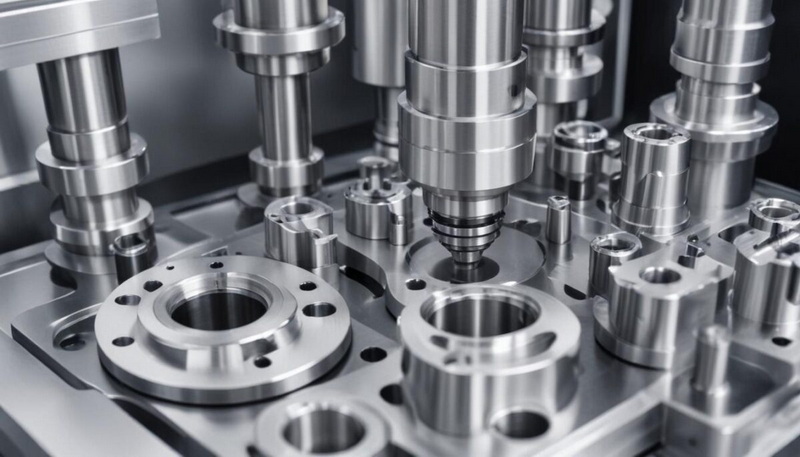
South Korea's CNC Milling Services Manufacturers and Suppliers provide vital support across several industrial applications:
- Aerospace: Production of structural parts made from aluminum and titanium alloys that meet strict aviation standards.
- Automotive: Machining of engine blocks, transmission cases, brake systems, and precision molds.
- Medical and dental devices: Milling of implant components, orthopedic devices, and disposable surgical tools.
- Semiconductor manufacturing: Precision tooling for wafer processing machines, cleanroom-compatible components, and jigs.
- Electronics: Heat sinks, housings, fixtures, and connector components for communication devices.
- Industrial equipment: High-strength steel components for heavy machinery, robotics, and renewable energy systems.
By producing parts that meet international standards, South Korean CNC suppliers empower global manufacturers to maintain productivity and product integrity.
Selecting the ideal CNC Milling Services Manufacturers and Suppliers partner requires careful evaluation of several factors:
1. Technical Competence: Choose suppliers with extensive experience in 3D modeling and multi-axis machining.
2. Equipment Capability: Verify the presence of 4-axis or 5-axis machines and digital measuring systems.
3. Quality Assurance: Confirm the company holds valid certifications and uses precision inspection tools.
4. Communication Efficiency: Prefer providers with project managers fluent in English for smooth coordination.
5. Lead Time and Flexibility: Assess whether the company can meet your required turnaround for both prototyping and mass production.
6. Pricing and Value: Evaluate cost-effectiveness relative to capabilities rather than focusing solely on low price.
Reliable CNC suppliers in South Korea often provide transparent quotations, design advice, and sample validation before bulk production, which strengthens long-term partnerships.
The future of CNC Milling Services Manufacturers and Suppliers in South Korea is closely tied to digital transformation. The industry is transitioning into “Smart Machining 4.0,” where machines communicate directly with ERP systems, and AI optimizes tool paths in real time.
Emerging trends include:
- AI-assisted machining: Algorithms predict tool wear and automatically adjust cutting parameters.
- 3D printing integration: Hybrid machines combine additive manufacturing with CNC milling for rapid prototype adjustments.
- Robotic automation: Automated tool changers and industrial robots enable 24/7 unmanned machining.
- Green manufacturing: Companies invest in recycling systems for coolants and materials to minimize carbon footprints.
As demand for precision machining grows in fields like electric vehicles, aerospace, and semiconductors, South Korea's CNC suppliers are expected to lead innovation across Asia.
The CNC Milling Services Manufacturers and Suppliers in South Korea represent an impressive fusion of innovation, technology, and craftsmanship. From multi-axis machining to sustainable production methods, these companies deliver precision-engineered solutions recognized worldwide. Supported by a robust infrastructure, a skilled workforce, and strong research institutions, South Korea continues to strengthen its position as a global manufacturing powerhouse.
For international OEM brands, wholesalers, and manufacturers seeking high-quality, reliable CNC milling partners, South Korean suppliers offer advanced capabilities, transparent communication, and a deep commitment to excellence — making them among the best choices in today's global industrial environment.
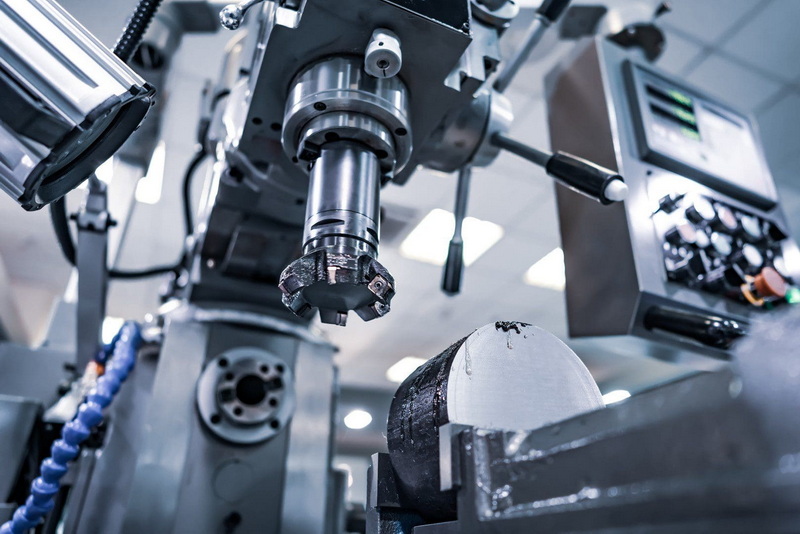
They combine cutting-edge technology, rigorous quality systems, and highly trained engineers, resulting in exceptional precision and reliability.
Yes. Many CNC Milling Services Manufacturers and Suppliers specialize in OEM/ODM solutions, including design optimization, prototyping, and serialized manufacturing.
The automotive, aerospace, semiconductor, and medical device sectors are major clients due to their need for tight tolerances and consistent part quality.
Through advanced inspection technologies such as CMM, vision measuring systems, and certified ISO processes that ensure each part meets exact specifications.
Clients provide CAD or 3D models, after which Korean engineers review the design, provide quotes, produce prototypes, and manage exporting logistics with transparent communication.


