From idea to market-ready product, our NPI solutions make every stage easier, faster. Discover How We Help

Views: 222 Author: Tomorrow Publish Time: 2025-12-15 Origin: Site


Content Menu
● The Historical Boundary Between Blue- and White-Collar Work
● The Transformation of the Machinist's Role
● Skills Required in CNC Machining
● Training and Education Pathways
● Why CNC Machining Defies Traditional Work Labels
● The Role of CNC in Industry 4.0
● Economic Impact and Career Outlook
● Workplace Environment and Collaboration
● The Psychological and Creative Dimensions of CNC Work
● Is CNC Machining Still a Blue-Collar Job?
● FAQ
>> 1. What qualifications are required to become a CNC machinist?
>> 2. Can CNC machining be considered a long-term career?
>> 3. What industries employ CNC machinists?
>> 4. Does automation threaten CNC machinist jobs?
>> 5. Are CNC machinists well-paid?
In today's rapidly evolving industrial world, the line between blue-collar and white-collar work has become increasingly blurred. The rise of Computer Numerical Control (CNC) machining—a field where computer programming meets traditional manufacturing—has proven that manual craft and digital mastery are no longer separate realms.
This raises an important question that many people, including industry professionals and job seekers, continue to ask: Is CNC machining blue-collar work?
To answer that, we must explore how the definition of labor has changed, what CNC machinists actually do, and why their role sits at the intersection of manual precision and technological expertise.
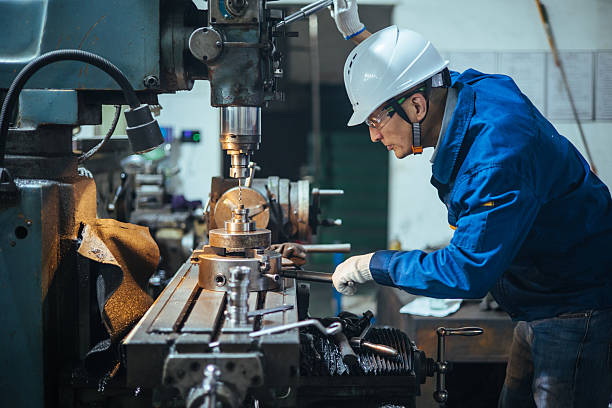
CNC machining refers to the process of using computerized systems to control machine tools such as lathes, mills, routers, or grinders. Operators enter code—known as *G-code*—into machines to dictate operating parameters such as speed, feed rate, and cutting sequences. The result is a precisely machined component that matches digital designs with incredible accuracy.
Unlike manual machining, which relies mainly on hand-eye coordination, CNC machining depends on translating 3D blueprints into executable programs. This requires mechanical, mathematical, and computer literacy, making the career more complex than many traditional trades.
In industries ranging from aerospace to medical technology, CNC machining forms the backbone of modern production. Even the smallest errors can lead to costly failures, which is why the human operator's expertise remains essential despite rising automation.
The labels “blue-collar” and “white-collar” emerged during the early 20th century to distinguish between physical laborers and office professionals. Blue-collar workers were those who worked with their hands—mechanics, welders, construction workers, and factory employees—often wearing durable blue uniforms. White-collar workers, conversely, handled administrative, managerial, or intellectual tasks, typically in office environments.
As automation advanced, however, this neat distinction began to erode. Many trades today require an impressive command of software, analytics, and system oversight in addition to physical work. CNC machining stands out as one of the clearest examples of this new era, where digital and mechanical skills coexist.
Before CNC machines became mainstream, machinists relied largely on manual dexterity and craftsmanship. They operated hand wheels, adjusted gears manually, and used calipers or gauges to ensure accuracy. The job demanded patience, intuition, and deep familiarity with machine behavior.
With the introduction of CNC systems, much of the physical control transferred from the machinist to the computer. However, this change didn't simplify the job—it expanded it. Now, machinists must understand geometry, programming languages, tool pathing, and even aspects of material engineering.
A modern CNC machinist not only operates machinery but also:
- Interprets complex technical drawings and 3D models.
- Writes and debugs G-code and M-code.
- Calibrates equipment and monitors tolerances.
- Troubleshoots performance issues using diagnostic software.
- Collaborates with engineers and designers to resolve production problems.
Thus, the machinist's evolution has mirrored the broader industrial transition from pure craftsmanship to technologically augmented intelligence.
Success in this field demands a blend of hands-on ability and technical proficiency. Machinists often possess skills that overlap multiple domains of modern industry:
- Mathematics and geometry: for calculating angles, feed rates, and dimensions.
- Programming: specifically in CNC coding languages and CAM (Computer-Aided Manufacturing) systems.
- Material science: understanding different alloys, plastics, and tolerances.
- Machine maintenance: performing preventive and corrective maintenance.
- Quality assurance: ensuring that precision components meet strict standards.
These requirements demonstrate that CNC machinists operate at a level much more advanced than traditional “button-pushing” labor. They are both operators and analysts, deeply involved in production strategy and operational efficiency.
In the past, machinists often learned entirely through apprenticeships. Today, pathways to becoming a CNC professional include vocational training, community college programs, or even university-level courses in manufacturing technology.
Standard education emphasizes:
- CAD/CAM software (like Mastercam, Fusion 360, or SolidWorks).
- Blueprint reading and geometric dimensioning.
- Machine setup and calibration.
- Tool identification and replacement procedures.
- Quality inspection using coordinate measuring machines (CMM).
Many employers also sponsor ongoing training to keep machinists updated with newer automation systems, robotics, and smart factory platforms. Continuous learning has become fundamental in staying competitive.
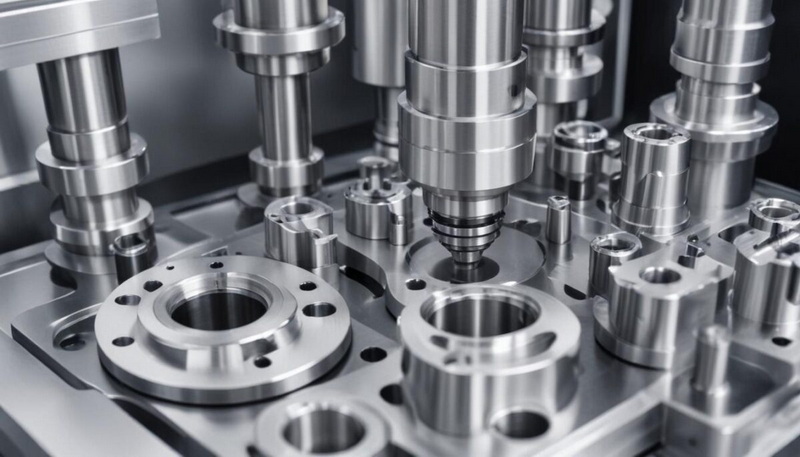
The gray-collar classification—used to describe jobs that mix manual skills with technology—accurately captures what a CNC machinist does. Working in a production environment implies blue-collar roots, yet the need to master software, coding, and data interpretation aligns closely with white-collar expectations.
CNC machinists essentially serve as production engineers at the machine level. They maintain an operational understanding of physics, computer systems, and human supervision—a fusion that pushes beyond the old cultural divide between mind and hand.
In the age of Industry 4.0, intelligent factories combine automation, data exchange, and cyber-physical systems. CNC machines have evolved to integrate with IoT (Internet of Things) networks, enabling remote monitoring, dynamic adjustment, and predictive maintenance.
A CNC machinist in this setting might not just cut materials—they might also:
- Monitor operating data from multiple machines.
- Optimize production runs through digital dashboards.
- Collaborate with AI systems to detect inefficiencies.
- Manage robotic arms that automatically load and unload parts.
This digital fluency shows how far the profession has moved beyond traditional shop labor.
CNC machining remains one of the most stable and lucrative areas in manufacturing. The global demand for skilled machinists continues to rise as companies reshore production or invest in advanced manufacturing facilities.
According to labor studies in several industrial economies, CNC machinists earn well above-average wages within the blue-collar segment. Moreover, those who develop expertise in programming or management often transition easily into roles such as:
- Process engineer.
- Manufacturing supervisor.
- CAD/CAM designer.
- Automation technician.
- Product development advisor.
This upward mobility confirms that CNC machining is not a static trade—it serves as a gateway to broader technical and engineering careers.
Although CNC machinists work in shop floors or manufacturing centers, their environment is far removed from the stereotype of greasy, noisy factories of the past. Modern facilities are clean, climate-controlled, and data-integrated. Many CNC operators spend as much time at computer consoles as at the machining center itself.
Team collaboration also plays a larger role today. CNC professionals often interact with:
- Product designers to verify component manufacturability.
- Engineers to adjust specifications or tool paths.
- Quality assurance teams to maintain consistency.
- Supply chain specialists to coordinate materials and deadlines.
This interconnected workflow further distances CNC machining from purely blue-collar dynamics and reinforces its position within the technological backbone of modern manufacturing.
A lesser-known aspect of CNC machining is its creative and problem-solving nature. While manufacturing might appear repetitive from the outside, machinists regularly confront unique challenges—unusual materials, intricate designs, or complex geometries.
Crafting a perfect part involves intuition as much as computation. The machinist must visualize the final form, anticipate stress points, adjust feed rates, and experiment with tool paths. This mental engagement transforms machining from mechanical repetition into a kind of practical artistry, where creativity meets precision engineering.
At its core, CNC machining still operates within the industrial sector—so in that sense, it inherits blue-collar characteristics like hands-on machine handling, shift work, and production responsibilities. However, it cannot be confined to that stereotype anymore.
CNC machinists use computers, mathematics, and software almost as frequently as wrenches or cutters. They bridge two worlds: the tangible world of materials and the abstract one of digital programming. As industries shift toward automation, CNC machinists are not being replaced—they are guiding and supervising the very machines that drive progress.
Thus, it's fair to view CNC machining as the embodiment of modern hybrid work, where intelligence, creativity, and technical skill coexist within a manufacturing environment.
So, *is CNC machining blue-collar?* The simple answer is: not entirely. While it retains its industrial roots, CNC machining represents a new category—a gray-collar profession—that merges manual craftsmanship with advanced digital competence.
The machinist of the 21st century is a skilled technologist, a problem solver, and a critical link between digital design and physical reality. Their expertise underpins countless industries, from aerospace to medicine, ensuring precision, safety, and innovation.
Far from being an outdated trade, CNC machining stands as one of the most forward-facing careers available. It exemplifies the modern redefinition of labor—where physical creation meets mental ingenuity, and where the distinction between blue and white collars fades into the color of progress.
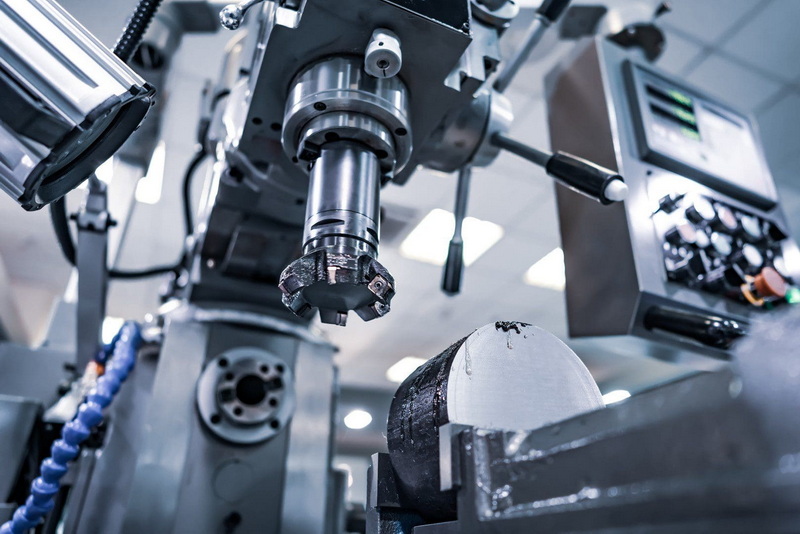
CNC machinists typically need technical training through vocational programs or community colleges. Proficiency in mathematics, machine setup, software use, and blueprint reading is essential. Many professionals gain additional certifications from associations like NIMS or SME.
Yes. With ongoing technological evolution and global production demands, CNC machining remains a stable and rewarding career path. Many machinists work their way up to supervision or engineering positions.
CNC professionals are needed in aerospace, automotive, defense, medical devices, renewable energy, and consumer electronics. Essentially, any field requiring precision manufacturing utilizes CNC expertise.
Automation enhances, rather than eliminates, machinist roles. Instead of manual control, machinists now oversee digital production systems, handle process optimization, and maintain advanced machinery.
Yes. Experienced machinists, especially those specializing in programming or multi-axis systems, often earn salaries comparable to mid-level engineering positions. Pay varies by region but generally exceeds traditional trade averages.


