From idea to market-ready product, our NPI solutions make every stage easier, faster. Discover How We Help

Views: 222 Author: Tomorrow Publish Time: 2025-12-15 Origin: Site


Content Menu
>> Key advantages of CNC machining include:
● The True Cost of CNC Machining
>> 1. Machine Time and Complexity
>> 2. Material Cost and Machinability
>> 3. CAD Modeling and Programming
>> 4. Setup and Tooling Expenses
>> 5. Surface Finish and Tolerances
● Economic and Logistical Factors
>> Labor Rates and Regional Differences
>> Machine Maintenance and Facility Overhead
● Strategies to Reduce CNC Machining Costs
>> Combine Parts or Operations
>> Collaborate Early with Suppliers
● Comparing CNC Machining with Other Processes
● When Paying More Makes Sense
● Real-World Example: Cost Breakdown
● Is CNC Machining Worth the Cost?
● FAQs About CNC Machining Costs
>> 1. How much does CNC machining typically cost per hour?
>> 2. Is CNC machining cheaper than 3D printing?
>> 3. What factors affect CNC machining quotes?
>> 4. How can I reduce CNC machining cost without losing quality?
>> 5. Why do CNC machining costs vary between suppliers?
CNC machining has become one of the most essential manufacturing technologies of the 21st century. From aerospace parts and automotive components to surgical instruments and electronic housings, CNC—or Computer Numerical Control—machining plays a central role in shaping modern products. Despite its widespread use, one question continues to puzzle engineers, designers, and business owners alike: Is CNC machining expensive?
The short answer is that it can be. CNC machining involves cutting-edge equipment, skilled operators, and precise materials—all of which add to the overall cost. However, the expense depends on multiple variables, and in many cases, CNC machining provides exceptional value compared to other production methods. To truly understand its pricing, we need to look at how the process works, what influences its cost, and what strategies can help manage those expenses effectively.
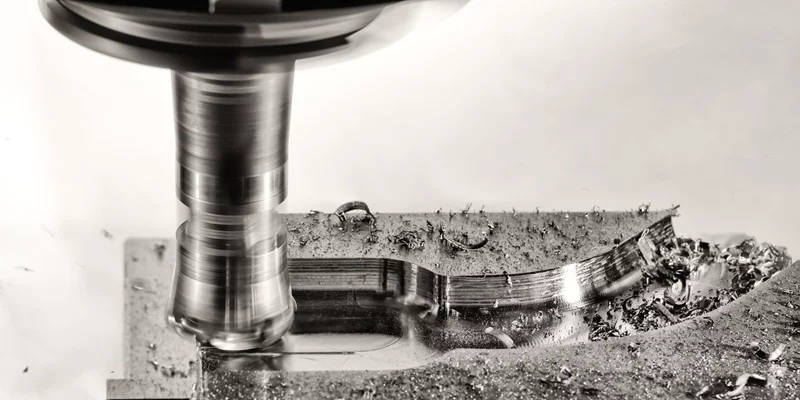
CNC machining is a subtractive manufacturing process—it begins with a solid piece of material (metal, plastic, or composite) and removes sections to create a finished part. The machine follows digital instructions derived from a CAD (Computer-Aided Design) model, executing tool paths with incredible accuracy.
CNC systems have evolved significantly over the years. Traditional 3-axis milling machines are now joined by advanced 5-axis and even 7-axis systems that can rotate parts and tools simultaneously to reach complex geometries without multiple setups. These advancements have increased productivity and precision but also added to equipment cost and operating complexity.
- High dimensional accuracy: Parts can be produced with tolerances as tight as ±0.002 mm.
- Excellent repeatability: Once programmed, machines replicate parts consistently with minimal variation.
- Material versatility: Metals, plastics, ceramics, and even composites can be precisely machined.
- Scalable production: From single prototypes to large-scale manufacturing runs.
Because CNC machining supports both rapid prototyping and mass production, it offers a flexible solution for numerous industries, even though the initial price might appear high.
Unlike consumer goods with clear price tags, CNC machining costs are derived from a combination of design requirements, material properties, operational time, and overhead factors. Understanding these elements helps clarify what contributes to the final quote.
Machine time is one of the primary cost drivers, and it directly correlates to part complexity. Every additional contour, feature, and tolerance can substantially increase runtime. Machine operators charge an hourly rate that includes not just machine depreciation but also energy consumption, maintenance, and supervision.
- 3-axis machining: Typically ranges between $35–$100 per hour.
- 4-axis or 5-axis machining: Usually $75–$200 per hour due to higher precision and complex tool paths.
- Specialized high-speed or micro-machining: Can exceed $250 per hour.
Complex parts often require multiple setups, each with unique fixtures and recalibration steps. Therefore, simplifying part geometry or combining operations can drastically reduce machine time and overall expense.
Different materials behave uniquely during machining. Soft materials like aluminum can be cut quickly, while hard alloys such as Inconel, titanium, or hardened steels wear out cutting tools quickly, leading to higher tool replacement and cooling costs.
Common material cost comparison:
| Material Type | Machinability | Approx. Material Cost | Typical Use Case |
|---|---|---|---|
| Aluminum | Excellent | Low | Aerospace, automotive, consumer products |
| Brass | Good | Moderate | Electrical fittings, instruments |
| Stainless Steel | Fair | Moderate-High | Medical and food industries |
| Titanium | Difficult | Very High | Aerospace, medical implants |
| ABS Plastic | Very Good | Low | Prototyping, electronics housings |
| PEEK Plastic | Moderate | High | High-performance engineering parts |
Since CNC is inherently waste-generating (cutting away material), waste management and raw material utilization ratio also affect final cost efficiency.
Before machining starts, engineers must convert the CAD model into a CAM (Computer-Aided Manufacturing) file that determines cutting paths, speeds, feeds, and tooling sequences. The more intricate the design, the more programming time required.
Programming costs can range from $50 to $150 per hour, depending on the complexity of calculations and simulations. For parts with organic shapes or precision-fitting surfaces, programmers might spend several days optimizing tool paths to prevent collisions and ensure surface accuracy.
Setup involves preparing machines, installing fixtures, and calibrating tools. This stage ensures accurate cutting but can take hours if the part requires multiple fixturing steps. For low-volume runs, setup time forms a large percentage of the total cost since it's distributed across fewer units.
Tooling also adds costs. Carbide end mills, drills, reamers, and inserts have limited lifespans, especially when cutting abrasive materials. Precision jigs, clamps, or custom fixtures—necessary for holding parts—may also require separate fabrication.
Different industries require different cosmetic and dimensional standards. Aerospace or medical sectors, for instance, demand ultra-smooth finishes and micron-level tolerances, which take longer to achieve.
Each additional finishing step (grinding, polishing, anodizing, plating, etc.) adds operational cost. For example, polishing a titanium component may cost 20–30% more than basic machining due to manual labor and process time.

Beyond the technical side, broader market conditions and operational logistics also shape CNC pricing.
Global commodity prices, energy costs, and shipping expenses can impact the price of metals and plastics. Sudden supply chain disruptions, as seen in recent years, have led to volatile tooling and material costs worldwide.
CNC machining in North America and Western Europe typically costs more due to higher wages and strict quality standards. In contrast, countries such as China, India, and Vietnam offer lower labor rates, making offshore production appealing despite potential quality and communication challenges.
CNC shops factor in the cost of machine depreciation, calibration, maintenance, and facility utilities. Precision machines require regular alignment and tool replacement, which indirectly influences hourly rates.
Although CNC machining can appear expensive, several practical strategies can make it much more affordable without compromising quality.
Avoid overly intricate features that add little functional value. For example:
- Replace deep pockets with shallower recesses.
- Use through-holes instead of blind holes.
- Avoid unnecessary undercuts or thin walls that need extra tool passes.
Simplified designs speed up machining time, reduce setup, and minimize tool wear.
Not all dimensions require extreme precision. Reserve tight tolerances (e.g., ±0.005 mm) only for mating surfaces or critical joint areas. Relaxing non-essential dimensions reduces both setup time and machining complexity.
Selecting machinable and affordable materials can reduce both tool wear and machining cycles. For prototypes or low-stress applications, replace stainless steel with aluminum or plastics where possible.
If several small components can be machined from a single block or fixture, setup time and material waste decrease. Modular designs often cut costs dramatically.
Larger batch runs help amortize one-time setup, programming, and fixture costs across more units. Many shops offer price breaks for higher quantities, sometimes reducing per-part cost by 50% or more.
Engage CNC machinists during the design phase. Their insight can identify manufacturing bottlenecks or suggest small adjustments that simplify production. Early collaboration often prevents costly redesigns later.
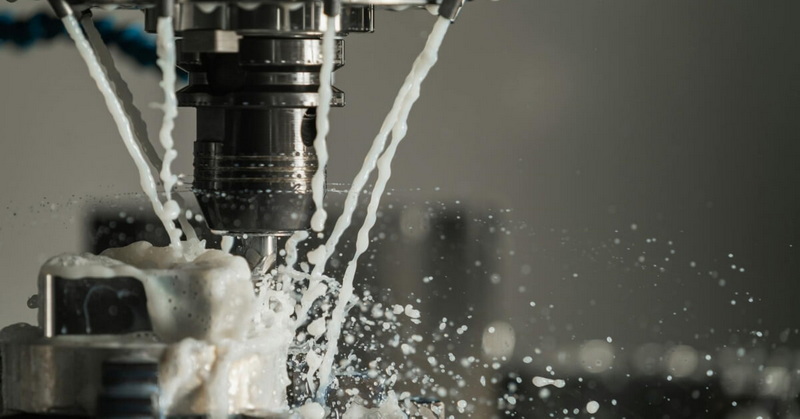
To gauge whether CNC machining is expensive, it helps to compare it with alternative manufacturing methods.
3D printing (additive manufacturing) has grown rapidly for prototypes and complex geometries. However, printed parts often lack the mechanical integrity and surface finish of machined parts. For high-strength applications or fine tolerances, CNC machining remains unmatched.
- 3D printing advantages: Lower upfront cost for prototypes, minimal waste.
- CNC advantages: Superior material strength, precision, and scalability.
Injection molding beats CNC in mass production because molds allow incredibly low per-part costs. Yet the molds themselves are expensive and time-consuming to build. CNC machining excels in low to medium volumes, where tooling costs would otherwise dominate.
Manual machining is cheaper for simple one-off parts but lacks repeatability, precision, and automation. CNC systems outperform in consistency and throughput, especially for complex geometries or repeat orders.
While everyone wants to save money, cheaper machining isn't always better. Paying more for experienced machinists or higher-end machines can yield significant long-term value.
- Fewer defects: Reduces waste and rework costs.
- Better material utilization: Advanced software optimizes cutting paths to use less material.
- Consistent quality: Important for parts that must fit into larger assemblies.
- Traceability and certification: Especially important for aerospace or medical components.
Thus, when assessing CNC machining costs, it's wise to consider *total value* rather than just *upfront expense.*
Consider a small batch of aluminum aerospace brackets measuring 100 × 50 × 30 mm.
- Material: $50 (including scrap factor)
- Programming: $100 (1 hour)
- Setup: $120 (2 hours @ $60/hour)
- Machining: $300 (4 hours @ $75/hour)
- Finishing and inspection: $80
Total: $650 for 10 brackets, or $65 per bracket.
If the order increases to 100 brackets, setup and programming costs remain the same, dropping the per-unit cost closer to $40 per bracket. This demonstrates how scaling directly impacts efficiency and pricing.
When analyzed holistically, CNC machining provides exceptional value through:
- High reliability: Ideal for safety-critical parts.
- Repeatable performance: Ensures consistent fit and function.
- Speed and flexibility: Rapid changeovers between designs or materials.
- Durability and finish: Final parts often require little post-processing.
For most industries—especially aerospace, defense, medical, and automotive—the upfront machining expense is easily justified by longevity, quality assurance, and efficiency gains.
CNC machining may initially seem expensive, but its cost structure is logical once you understand the factors involved—machine time, material selection, programming, setup, and surface finishing. When approached strategically, CNC machining can be both cost-effective and value-driven.
By optimizing design simplicity, relaxing non-critical tolerances, and increasing production volume, businesses can significantly lower expenses while maintaining the precision and reliability needed for high-quality products. In the end, CNC machining is not just a manufacturing cost—it's a strategic investment in performance, scalability, and product excellence that continues to define the modern industrial era.
The cost depends on the machine type. Standard 3-axis machines cost about $35–$100 per hour, while 5-axis or high-precision systems range between $75–$250 per hour. Complex materials or tighter tolerances may push that figure higher.
For simple prototypes, 3D printing may be cheaper. However, for durable, precise, or production-grade parts, CNC machining offers better material performance and dimensional accuracy, making it more economical at scale.
Material choice, part geometry, tolerance specifications, batch size, and finishing requirements are the primary variables. The more complex and precise a design, the higher the cost.
Simplify part design, choose machinable materials, increase batch size, and limit ultra-tight tolerances to critical areas. Consulting with machining experts during design can also reveal hidden savings.
Regional labor rates, machine technology, quality standards, and shop efficiency all influence pricing. Cheaper quotes may compromise material quality or precision, so always assess overall value—not just cost.


