From idea to market-ready product, our NPI solutions make every stage easier, faster. Discover How We Help

Views: 222 Author: Tomorrow Publish Time: 2025-12-15 Origin: Site


Content Menu
● The Evolution of CNC Machining
● Market Demand and Global Growth
● Automation and Its Impact on the Trade
● The Rise of Additive Manufacturing
● Skills Gap and Workforce Evolution
● Digitalization and the Era of Smart Factories
● Economic Pressures and Global Competition
● Sustainability and Environmental Efficiency
● The Changing Image of Manufacturing Careers
● Innovation and the Global Future of CNC
>> 1. What is CNC machining used for?
>> 2. How does CNC machining differ from 3D printing?
>> 3. Are CNC machinists still in demand?
>> 4. What technical skills are needed for future CNC machinists?
>> 5. Can CNC machining integrate with other technologies?
CNC (Computer Numerical Control) machining has been the backbone of modern manufacturing for decades. It stands as one of the most precise, efficient, and versatile methods for shaping metal, plastic, and other materials into complex components. Yet, as automation, robotics, and additive manufacturing become more prevalent, many wonder: is CNC machining a dying trade?
The truth is far more nuanced. Rather than vanishing, CNC machining is transforming—adapting to changing technologies, modern business models, and workforce expectations. Understanding this transformation requires looking at not only the technology itself but also its evolving ecosystem of skills, economics, and innovation.
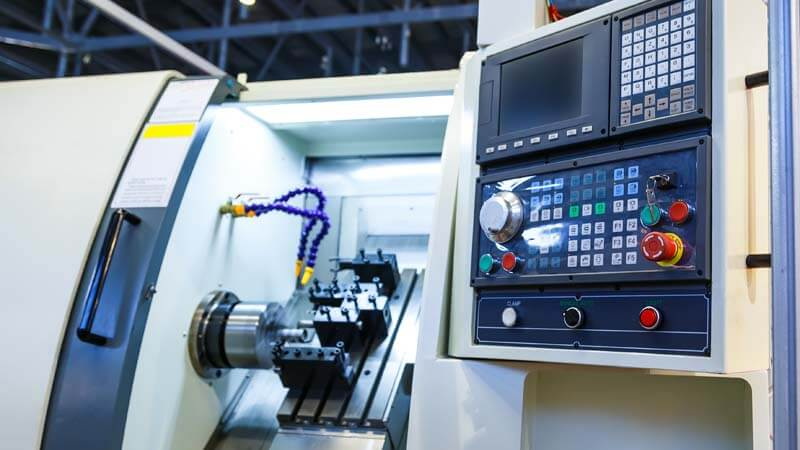
The journey of machining has always been one of progress. From manual lathes and mills operated by skilled hands to computer-driven systems executing complex tool paths, manufacturing has evolved through technological refinement. With CNC, computer algorithms control cutting tools and machines with astonishing precision, allowing parts to be reproduced thousands of times with minimal variance.
Early CNC systems in the 1950s and 1960s were slow and difficult to program. Operators had to manually write G-code for each tool movement. Today, advanced CAM software streamlines this process with digital simulations that eliminate human error before production begins. Engineers can visualize cutting sequences, control feed rates, and predict results in virtual space.
As technology advances, CNC machines have become faster, more energy-efficient, and better integrated with digital networks, making them indispensable in industries where precision and durability matter most.
Despite fears of decline, the CNC machining industry remains strong. Market analysts project continued growth, with global revenues expected to exceed several tens of billions of dollars by the 2030s. Sectors like aerospace, defense, and automotive manufacturing rely heavily on CNC processes for components that must meet strict performance standards.
Medical manufacturing has also emerged as a key growth sector. From orthopedic implants to surgical tools, high-precision CNC machining ensures safety and consistency in medical applications. Electronics manufacturers, too, depend on CNC tools for housings, connectors, and circuit enclosures.
In emerging markets, CNC machining is increasingly recognized as the foundation of industrial capability. Developing countries now invest heavily in CNC technologies to enhance local production capabilities and reduce reliance on imports. Far from dying, CNC machining continues to expand into new frontiers.
Automation is frequently cited as the reason traditional trades decline. However, in CNC machining, automation acts as an amplifier, not a replacement. Automated CNC systems reduce repetitive manual work, improve quality control, and shorten production cycles—but they still require trained minds to design, program, and maintain them.
Modern CNC workshops use robotic loading systems, automated tool changers, and in-process measurement devices. These machines can run overnight or during weekends, executing pre-set programs with minimal supervision. Yet even the most advanced machines depend on human expertise to interpret data, perform maintenance, and refine operation strategies.
The machinist's role has evolved. Where once the skill lay primarily in manual control, now it lies in interpreting data and managing digital production environments. The trade is more complex and technical—but it also offers broader opportunities for growth and intellectual challenge.
Additive manufacturing (AM), or 3D printing, has drawn attention as a disruptive technology in the manufacturing world. It allows material to be built layer by layer, creating complex geometries impossible with conventional methods. However, calling it a replacement for CNC machining oversimplifies reality.
While AM excels in creating prototypes and lightweight structures, it often can't achieve the precision, surface quality, or material strength required for production-grade parts. CNC machining remains indispensable for tight tolerances, high-strength materials, and parts subject to mechanical stress.
In fact, many companies now combine both processes. A rough component may be printed additively, then finished with CNC machining for exact dimensions and surface quality. This hybrid approach melds flexibility with precision, showcasing how machining adapts to coexist with new technologies instead of competing with them.
One of the greatest challenges CNC machining currently faces is not technological decline, but workforce shortage. Experienced machinists, many trained decades ago, are nearing retirement age. Meanwhile, fewer young people are entering the trade, often due to misconceptions that manufacturing is dirty, monotonous, or outdated.
In reality, today's machining work environments are clean, automated, and technologically advanced. The modern machinist is part engineer, part programmer, and part production manager. They interact with 3D modeling software, robotic systems, and analytical dashboards to optimize results.
To address the skills gap, many countries are investing in apprenticeships, technical education, and industry-academic partnerships. Apprentices learn how to use CNC simulators, digital twins, and advanced measurement systems. Employers seek individuals with curiosity, creativity, and adaptability—qualities that define the evolving skilled tradesperson of the future.
The global push toward Industry 4.0 has connected CNC machining to the wider digital manufacturing ecosystem. Machines that once operated independently are now integrated into networked systems that share real-time information about performance, maintenance needs, and production output.
For example, IoT-enabled CNC machines collect live data on vibration, temperature, and tool condition. This information allows predictive maintenance—fixing potential problems before they cause downtime. AI systems analyze performance patterns to optimize cutting strategies and energy consumption.
These developments have turned traditional workshops into smart factories—highly responsive environments where production adjusts dynamically to demand changes. The future machinist doesn't just operate a machine; they manage a digital production system. This integration ensures CNC machining remains central to manufacturing's digital transformation.
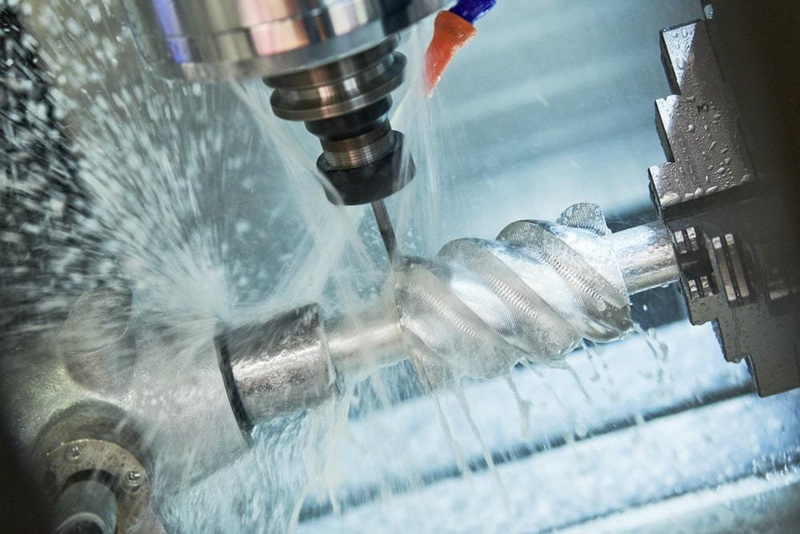
Economic trends have always influenced manufacturing. In past decades, many companies relocated machining departments to countries with lower labor costs. However, this offshoring trend is starting to reverse. Supply chain disruptions, long shipping times, and quality concerns have driven manufacturers toward reshoring and nearshoring strategies.
Automation now allows domestic production to compete effectively even in high-wage countries. By using advanced robotics and efficient processes, companies reduce labor costs while maintaining excellent quality and agility. CNC machining firms that embrace data-driven optimization can achieve competitiveness despite international price pressure.
Moreover, small and medium-sized CNC businesses are finding success in niche markets—custom components, aerospace tooling, precision medical parts, and prototype manufacturing. Instead of mass production, they specialize in flexibility, fast turnaround, and precision—areas where CNC machining continues to outperform alternative technologies.
In an era of growing environmental awareness, CNC machining is being reinvented with sustainability in mind. Traditional machining was often criticized for waste and coolant use. Today, advancements in coolant filtration, dry machining, and energy-efficient motors have significantly reduced environmental impact.
Smart software optimization reduces tool wear and optimizes cutting paths to minimize energy use. Recyclable materials and circular manufacturing models further enhance efficiency. CNC machining also plays a key role in producing components for green technologies such as wind turbines, electric vehicles, and hydrogen fuel cells.
As sustainability initiatives continue to shape industry policies, CNC machining—not as wasteful but as intelligent, optimized manufacturing—will remain a vital contributor to cleaner industry practices.
Perception is one of the major barriers preventing younger generations from entering the machining field. CNC machining is often unfairly associated with outdated stereotypes—grease, noise, and low pay. In truth, modern CNC facilities are bright, quiet, and data-driven workplaces that reward precision thinking and innovation.
Today's machinists interact with 3D modeling systems, robotic cells, and machine-learning tools. The work blends mechanical skill with analytical thinking. Forward-looking companies now brand CNC careers as “digital craftsmanship”, highlighting both the artistry and the technical sophistication involved.
By reframing the image of CNC work as high-tech and intellectually engaging, educators and firms can inspire a new generation of makers, engineers, and technicians to enter the trade.
Technological innovation continues to drive CNC machining forward. Concepts such as five-axis machining, adaptive control, digital twins, and AI-assisted tool management are redefining what's possible. Five-axis systems can handle complex curves and shapes previously unachievable, enabling faster cycle times and superior finishes.
AI integration helps machines learn from prior operations, automatically adjusting parameters for continuous improvement. Digital twins create virtual replicas of both machines and products, allowing engineers to test scenarios in real time before physical production begins. These innovations not only improve accuracy but also reduce lead time, waste, and costs.
At a global scale, innovations in software synchronization, cloud-based control, and real-time quality monitoring are merging to form CNC-as-a-Service (CaaS) models. Manufacturers can now share data and operations across continents, further blurring the line between digital and physical production spaces.
CNC machining is not a dying trade—it is an evolving and indispensable craft within modern manufacturing. While automation, robotics, and 3D printing have changed the industrial landscape, they have also expanded the potential of CNC technologies.
The future machinist is not a manual operator but a digitally empowered craftsman who merges physical precision with computational intelligence. As manufacturing continues to demand exacting standards, CNC machining will remain essential across aerospace, energy, automotive, robotics, and medical sectors.
What's changing is the skillset, not the importance. CNC machining is transforming into a data-rich, sustainable, and dynamic technology that continues to shape the world's most critical innovations.
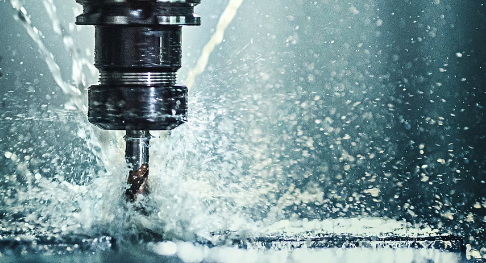
CNC machining is used to create precise and repeatable components for industries like aerospace, automotive, medical, defense, and electronics. It's ideal for producing high-strength parts requiring tight tolerances and fine surface finishes.
CNC machining removes material from a solid block (subtractive), while 3D printing adds material layer by layer (additive). CNC provides superior strength, accuracy, and surface quality, whereas 3D printing excels in rapid prototyping and complex design flexibility.
Yes. Despite fears of job loss due to automation, demand for skilled CNC machinists is high. Companies need professionals who can program machines, interpret blueprints, and combine digital tools with practical knowledge.
Modern machinists require CAD/CAM proficiency, G-code programming knowledge, understanding of automation systems, and strong problem-solving skills. Familiarity with software-driven manufacturing and robotics is increasingly valuable.
Absolutely. CNC machining often integrates with robotics, additive manufacturing, and AI-driven systems to form hybrid production processes. These collaborations optimize efficiency, reduce waste, and produce higher-quality products.


