From idea to market-ready product, our NPI solutions make every stage easier, faster. Discover How We Help

Views: 222 Author: Tomorrow Publish Time: 2025-12-16 Origin: Site


Content Menu
● What Does CNC Milling Accuracy Mean?
● Factors That Affect CNC Milling Accuracy
>> Tool Condition and Geometry
>> Thermal and Environmental Stability
>> Machine Calibration and Maintenance
>> Software Accuracy and Programming
● Typical CNC Milling Tolerances
● Measuring Accuracy in CNC Milling
● Improving CNC Milling Accuracy
● CNC Milling vs. Other Manufacturing Methods
● Advances in CNC Milling Precision
● Applications Requiring High CNC Accuracy
● FAQ
>> 1. How accurate is CNC milling compared to 3D printing?
>> 2. What factors reduce CNC milling accuracy?
>> 3. Can CNC milling achieve mirror-like finishes?
>> 4. How often should a CNC machine be calibrated?
>> 5. Which are the most precise CNC milling machines available?
CNC (Computer Numerical Control) milling stands as one of the most fundamental methods in precision manufacturing today. By combining automated motion control with advanced toolpath programming, CNC milling delivers a level of accuracy and repeatability that manual machining could never achieve. From crafting aerospace components to producing intricate medical implants, CNC milling plays a crucial role wherever dimensional accuracy determines performance, safety, or efficiency.
However, when discussing this technology, an essential question arises: how accurate is CNC milling, really? Understanding this involves more than just numbers; it requires exploring the machine design, tool condition, software precision, and environmental factors that influence the final outcome. This article dives deep into the elements that determine CNC milling accuracy, discusses typical tolerance ranges, compares it with other machining methods, and provides insights into achieving the highest possible precision.

In the context of CNC milling, accuracy describes how closely a final component matches the intended CAD (Computer-Aided Design) model. While accuracy refers to the closeness to the target measurement, repeatability measures how consistently a machine can produce identical parts under the same conditions. Ideally, a CNC milling machine should excel in both areas—consistently and precisely matching the desired geometry.
Accuracy is often quantified using tolerances, expressed as allowable variations above or below a target value. A standard tolerance might be ±0.1 mm, whereas high-precision machining can reach limits as fine as ±0.005 mm. These tiny deviations, although microscopic, can determine whether a product fits perfectly or fails to perform its intended function.
Several interrelated factors influence the degree of accuracy achieved in CNC milling. Understanding these variables helps engineers and machinists identify where improvements can be made.
The machine's construction lays the foundation for its accuracy. High-end CNC milling machines have rigid frames, solid bases, and minimal vibration. Quality ball screws and linear guides eliminate mechanical play and backlash, ensuring that tool movements correspond exactly to programmed trajectories. Multi-axis systems (particularly 4-axis and 5-axis machines) enhance accuracy by minimizing repositioning errors.
The cutting tool directly interacts with the workpiece. If the tool is dull, chipped, or incorrectly mounted, dimensional errors can occur. Sharp, well-balanced tools maintain consistent chip formation and surface quality. Proper tool geometry—such as the angle of flutes or tip shape—also affects the pressure applied during cutting, influencing precision.
Different materials exhibit varying mechanical properties. Metals like titanium, steel, or aluminum expand differently when heated. Plastics and composites may deform under cutting stress. Understanding each material's thermal conductivity, hardness, and elasticity allows machinists to adjust speeds, feeds, and coolant usage to maintain dimensional stability.
Even slight temperature changes can affect machine structure and material size. For instance, a temperature rise of just 1°C can cause measurable expansion in metal components. To minimize these effects, precision workshops often maintain climate-controlled environments. Advanced CNC machines use thermal compensation systems that automatically adjust tool positions to counter heat distortion.
Every precision system drifts out of alignment over time due to wear, vibration, or contamination. Regular calibration ensures accuracy across all machine axes. Maintenance tasks like cleaning filters, lubricating guideways, and checking spindle alignment help sustain mechanical integrity and prevent long-term accuracy loss.
The software responsible for converting CAD models to G-code instructions must handle toolpaths precisely. Any miscalculation in offsets, cutter compensation, or coordinate transformation may introduce deviations. Skilled programmers use optimized cutting strategies, minimizing acceleration or deceleration errors, to maintain consistent tool movement across complex geometries.
Even with the most advanced CNC machine, operator skill remains critical. Proper setup—such as exact material positioning, tool alignment, and clamping—prevents unwanted movement or miscuts. Experienced machinists anticipate vibration, deflection, and tool wear, adjusting parameters dynamically for best results.
CNC milling accuracy is closely linked to the type of machine, process setup, and component complexity. The general classification is as follows:
- Standard Machining: ±0.1 mm (0.004 inch)
- Precision Machining: ±0.025 mm (0.001 inch)
- Ultra-Precision Machining: ±0.005 mm (0.0002 inch)
- Micro-Machining (Specialized): ±0.0025 mm (0.0001 inch)
While such fine tolerances are technically achievable, real-world consistency depends heavily on environmental and operational discipline. Additionally, surface roughness serves as a secondary indicator of precision. A roughness average (Ra) of 1.6 µm is common for standard milling, while ultra-precision milling can achieve values below 0.2 µm, yielding mirror-like finishes.
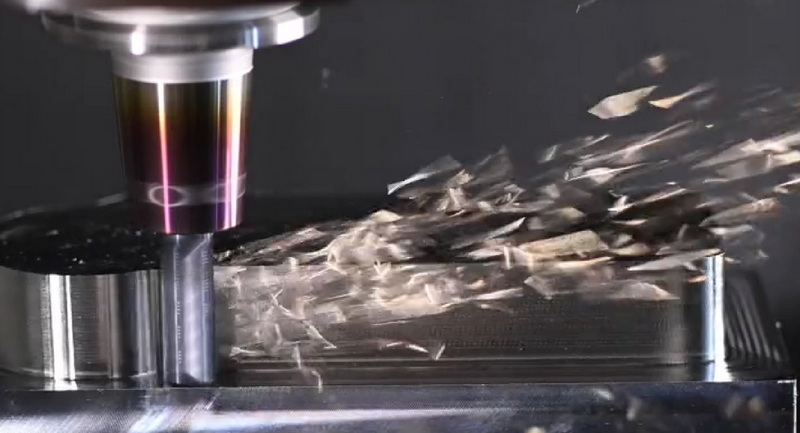
Precision measurement ensures that manufactured parts meet specification before assembly or delivery. Common methods include:
1. Coordinate Measuring Machines (CMM): Use tactile probes to capture dimensional data from multiple axes, verifying part geometry within microns.
2. Laser Scanning Systems: Provide non-contact 3D surface mapping for complex or delicate parts.
3. Optical Measurement Tools: Analyze micro-features, edges, and surface profiles at high resolution.
4. Mechanical Gauges and Micrometers: Offer quick, direct verification for specific dimensions.
Measurement itself must also occur under stable temperature and humidity conditions to prevent reading errors.
Reaching higher levels of accuracy involves a combination of machine technology, smart process control, and disciplined operation.
- Maintain tool sharpness: Replace worn tools promptly to prevent cutting irregularities.
- Use advanced toolholders: Hydraulic or shrink-fit holders reduce vibration and runout.
- Implement adaptive machining: Intelligent systems adjust feed rates and spindle speeds in real time.
- Apply in-process inspection: Automated sensors or probes can measure parts during milling, enabling immediate correction.
- Control environmental conditions: Manage temperature, humidity, and vibration levels throughout production.
- Employ simulation tools: CAM software with 3D simulation predicts tool errors before machining begins.
These practices not only enhance consistency but also extend tool life and reduce scrap rates.
CNC milling competes with several other precision production methods, each offering unique advantages and constraints.
- 3D Printing (Additive Manufacturing): Allows complex geometry creation but generally offers lower accuracy and weaker mechanical properties compared to CNC milling.
- EDM (Electrical Discharge Machining): Delivers extreme precision on conductive materials but operates slower than milling.
- Laser Cutting: Precise for thin materials but unsuitable for deep, complex geometries.
- Injection Molding: Excellent repeatability for mass production but lacks design flexibility.
CNC milling remains the most versatile when tight tolerances, strong materials, and varied geometry are essential.
Modern technological improvements continue to push CNC accuracy boundaries. Key innovations include:
- Linear Motor Drives: Eliminate mechanical backlash and deliver smoother, faster movement.
- Real-Time Data Feedback: Sensors embedded in spindles and toolholders provide continuous accuracy monitoring.
- Closed-Loop Control Systems: Constantly adjust positioning based on feedback to correct micro-deviations.
- Nano-Positioning Tables: Enable micrometer or even nanometer-level adjustments.
- AI-Assisted Programming: Algorithms analyze machining conditions and automatically optimize paths for minimal error.
Such innovations enable industries like aerospace, semiconductor production, and medical device manufacturing to demand—and achieve—unprecedented accuracy levels.
Certain industries demand levels of precision where even a 0.01 mm deviation can cause failure. Examples include:
- Aerospace: Turbine blades, brackets, and actuator housings rely on CNC accuracy to maintain aerodynamic balance and structural fit.
- Medical Devices: Surgical instruments, orthopedic implants, and dental components must conform to tight dimensional limits for safety.
- Automotive: Transmission parts, pistons, and molds require narrow tolerances for smooth mechanical function and energy efficiency.
- Electronics: Housings, connectors, and micro-chassis rely on precision milling to maintain component alignment.
- Optical Instruments: Lens mounts and optical frames require both dimensional and angular precision for proper light alignment.
While CNC milling provides exceptional accuracy, it is not without limitations:
- High Cost: Ultra-precise machines and tools demand higher investment.
- Time Consumption: Achieving very tight tolerances often increases cycle time.
- Complex Setup: Multiaxis calibration and fixture alignment require expertise.
- Thermal Drift: Despite compensation systems, prolonged operation can still cause slight deviations.
Understanding and managing these factors ensure that manufacturers balance precision requirements with production efficiency.
CNC milling delivers remarkable precision, with standard tolerances near ±0.1 mm and specialized systems achieving below ±0.005 mm under controlled conditions. Achieving such accuracy depends on machine design, material properties, environmental management, and skilled programming. Continuous technological evolution, such as thermal compensation and real-time feedback systems, keeps pushing the boundaries of what's possible.
Ultimately, CNC milling represents the perfect balance between versatility, speed, and precision—making it the manufacturing method of choice for high-value industries. Its combination of mechanical control and intelligent automation defines the modern standard for dimensional accuracy.
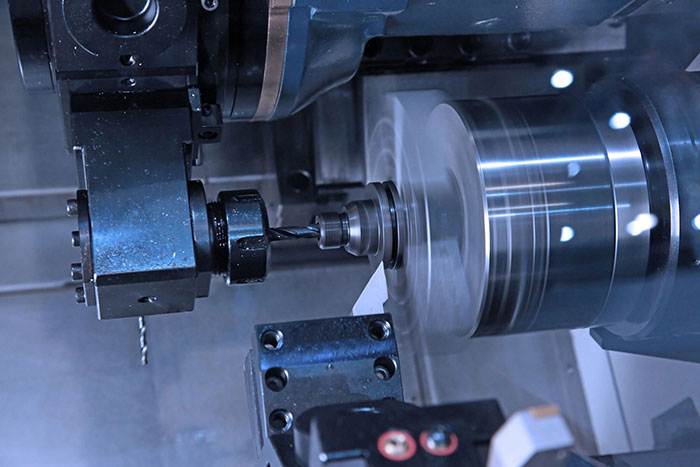
CNC milling typically achieves tolerances up to ±0.01 mm, while 3D printing hovers around ±0.1 mm. Additionally, milling produces smoother finishes and superior part strength due to subtractive cutting rather than layered deposition.
Tool wear, machine vibration, poor calibration, incorrect programming, and temperature fluctuations can reduce accuracy. Consistent preventive maintenance and environmental control are critical for maintaining precision.
Yes. By using ultra-fine cutting tools, high spindle speeds, and optimized toolpaths, CNC milling can produce near-mirror finishes, particularly on softer metals like aluminum. Additional polishing may perfect the result.
Calibration intervals depend on use and environment. For industrial production, every 6–12 months is ideal, while high-precision applications may require quarterly calibration to maintain reliability.
Premium five-axis machines from manufacturers such as DMG MORI, Makino, Haas, and Mazak can hold tolerances within ±0.002 mm, thanks to advanced control systems and thermally stable spindle designs.


