From idea to market-ready product, our NPI solutions make every stage easier, faster. Discover How We Help

Views: 222 Author: Tomorrow Publish Time: 2026-01-11 Origin: Site


Content Menu
● Understanding Rapid CNC Machining
>> Core Processes in CNC Machining
● Why Rapid CNC Machining Is Crucial for Custom Parts
● Key Industries Using Rapid CNC Machining
● Where To Find Reliable Rapid CNC Machining Services
>> 1. Online Manufacturing Platforms
>> 2. Specialized CNC Job Shops
>> 3. Regional Manufacturing Hubs
>> 4. Industry Directories and B2B Marketplaces
>> 5. Trade Shows and Manufacturing Events
● Choosing the Right CNC Machining Partner
● Cost Factors in CNC Machining
● Benefits of Online CNC Manufacturing Networks
● Emerging Trends in CNC Machining
● How To Vet a CNC Supplier Before Ordering
● FAQ
>> 1. What is rapid CNC machining?
>> 2. How fast can parts be delivered?
>> 3. What materials are suitable for CNC machining?
>> 4. How can I reduce CNC machining costs?
>> 5. Are CNC-machined parts suitable for final production?
In the dynamic manufacturing landscape of the 21st century, speed and precision are essential. Whether for start-up designers creating prototypes or large corporations producing specialized components, rapid CNC machining services play a critical role in bridging the gap between digital design and physical reality. They enable engineers to create functional parts quickly without compromising material integrity or dimensional accuracy.
As industries move toward just-in-time production and shorter innovation cycles, finding dependable CNC machining partners has never been more important. This article explores practical ways to locate quality service providers, understand selection criteria, and ensure consistent results when creating custom parts.
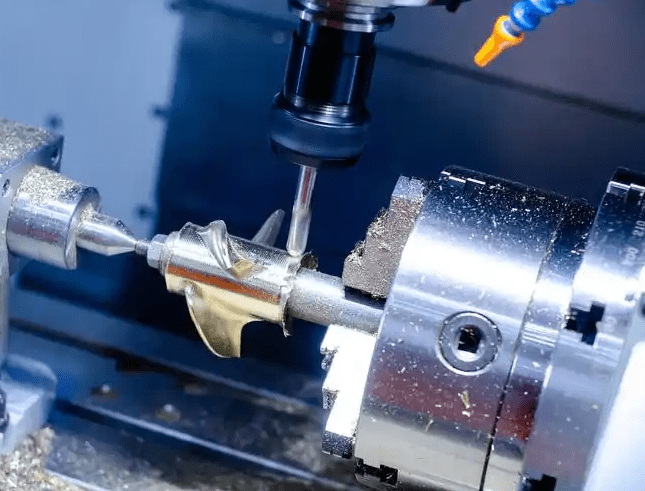
Rapid CNC machining integrates traditional computer numerical control processes with agile manufacturing principles. CNC machines follow pre-programmed software instructions derived directly from 3D CAD models. This automation allows for highly consistent production and minimizes manual errors.
The “rapid” aspect emphasizes speed in both quoting and production. Advanced digital workflows allow manufacturers to start production immediately after accepting a design. It's ideal for quick-turn prototypes, low-volume production runs, or end-use parts with shorter lead times.
1. CNC Milling: Rotating cutting tools remove material from stationary workpieces to create precise shapes, pockets, and profiles.
2. CNC Turning: Workpieces rotate while fixed tools cut away material—perfect for cylindrical or conical components.
3. EDM (Electrical Discharge Machining): Used for hard metals or intricate molds.
4. 5-Axis Machining: Allows complex geometries by moving cutting tools along five simultaneous axes.
5. Surface Finishing: Includes polishing, bead blasting, anodizing, powder coating, and laser engraving.
Each process supports different tolerances, and their combination ensures superior part quality across industries.
Customized manufacturing is becoming a necessity rather than a luxury. Modern products demand parts tailored to specific performance or design requirements. Rapid CNC machining provides four critical advantages:
- Speed: Digital workflows shorten turnaround from weeks to days.
- Flexibility: Adapts easily to design updates, supporting iterative prototyping.
- Accuracy: Maintains micron-level precision across small or large batches.
- Material diversity: Works with metals, polymers, and composites for functional versatility.
The process empowers companies to launch products faster and optimize designs before committing to tooling or large-scale production.
CNC machining underpins practically every manufacturing sector. However, several industries rely heavily on its capabilities due to strict quality and timing requirements:
- Aerospace and defense: Producing lightweight, high-strength alloy components needing extreme accuracy.
- Automotive manufacturing: Creating engine housings, manifolds, and custom brackets for performance tuning.
- Medical devices: Fabricating surgical instruments, orthopedic implants, and prosthetic components where biocompatibility is key.
- Consumer electronics: Crafting precise housings and connectors for gadgets and IoT devices.
- Industrial machinery: Building fixtures, jigs, and replacement parts essential for maintenance operations.
Each field depends on CNC technology because it delivers repeatable results within tight design tolerances.
Choosing the right supplier means balancing speed, cost, and component quality. Below are effective pathways to locate vendors who can manufacture your custom parts efficiently.
Digital manufacturing platforms allow engineers to upload CAD files and instantly receive quotations. These portals simplify procurement by connecting you with global machining networks that offer verified quality standards.
- Xometry – Provides on-demand CNC services with tolerance control, automated feedback, and multiple finishing options.
- Protolabs – Offers ultra-fast prototyping and low-volume production with domestic manufacturing capacity.
- Hubs – Enables direct comparison of suppliers based on cost, lead time, and certification.
- Fictiv – Integrates digital DFM review tools ensuring every design is manufacturable.
- RapidDirect – Provides precision machining with optional 5-axis support and transparent project tracking.
These platforms save time and reduce risk by digitizing quote validation, order tracking, and final delivery management.
Independent CNC shops often provide high precision and close collaboration between engineers and machinists. They may not be global platforms, but they deliver excellent customization and responsive service.
When evaluating a machine shop, examine:
- Machine types (multi-axis mills, Swiss lathes, or EDM)
- Certifications (ISO 9001, AS9100 for aerospace)
- Material expertise (aluminum, titanium, PEEK, Delrin, etc.)
- Inspection standards and measuring equipment
- Communication and engineering assistance
Local shops can offer on-site consultation, prototype adjustment, and faster reworks compared to offshore partners.
Certain countries and regions are known for specific strengths in CNC manufacturing:
- United States: California and Michigan excel in automotive and aerospace machining, emphasizing quality control and traceability.
- China: Centralized clusters like Shenzhen and Dongguan offer competitive rates and scalability for prototype and production volumes.
- Germany: Known for precision toolmaking and engineering innovation with advanced machinery.
- Japan: Specialized in high-precision, micro-scale machining for robotics and medical equipment.
- Canada: Focused on low-volume, high-complexity machining with excellent client communication.
Outsourcing decisions should account for time zones, shipping cost, intellectual property security, and payment transparency.
Business directories help streamline supplier discovery and comparison:
- Thomasnet – Features verified CNC service providers in North America, sortable by specialization.
- MFG.com – Allows buyers to submit designs for competitive pricing from vetted CNC shops.
- Alibaba – Connects buyers to a broad pool of international manufacturers with optional verification badges.
- Made-in-China.com – Lists suppliers categorized by machining capabilities, materials, and tolerance grades.
Such directories simplify the sourcing process by showcasing reviews, audit reports, and on-site certifications.
Networking events remain invaluable for discovering and validating suppliers:
- IMTS (International Manufacturing Technology Show) – North America's largest industrial technology exhibition.
- Formnext – Europe's primary event for additive and subtractive manufacturing integration.
- WESTEC – West Coast expo highlighting machinery, software, and machining innovations.
Meeting suppliers in person helps assess part samples, quality assurance procedures, and production scalability firsthand.
Finding a vendor isn't merely about price—it's about collaboration, reliability, and technical competency. Use these criteria to simplify decision-making:
1. Material Compatibility: The vendor must handle your selected material's properties and thermal behavior.
2. Tolerance Capabilities: Confirm their machines meet your dimensional accuracy requirements.
3. Quality Inspection: Check if they provide CMM reports, visual inspections, or digital measurement data.
4. Production Flexibility: Evaluate minimum order quantity, turnaround time, and scalability potential.
5. Communication: Effective supplier communication prevents errors and improves results.
Always request a non-disclosure agreement (NDA) before sharing proprietary designs.
Machine time and setup determine most of the cost. Variables influencing price include:
- Material hardness and cost (e.g., titanium > aluminum).
- Geometry complexity (more tool changes increase time).
- Tolerances: Tight tolerances require slower tool paths.
- Finishing processes: Coatings, anodizing, and polishing add cost.
- Volume: Larger orders reduce per-unit costs through efficiency gains.
- Lead time: Expedited delivery may include premium service fees.
By understanding these factors, you can optimize designs for manufacturability and reduce production expenses.
Cloud-based platforms transform manufacturing into a service. The advantages include:
- Automated geometry analysis: AI examines part complexity and suggests design adjustments.
- Transparent scheduling: Users track production stages and shipment status in real time.
- Consistent standards: Partner networks ensure uniform quality wherever production occurs.
- Supply chain flexibility: Multiple suppliers mitigate delays caused by regional disruptions.
This globalized approach combines convenience with scalability, making it ideal for engineering teams managing multiple product lines simultaneously.
The next wave of innovation centers on automation, sustainability, and hybridization:
- AI-driven toolpath optimization: Enhances feed rate efficiency, reducing material waste.
- Smart factories: IoT-enabled machines share operational data for predictive maintenance.
- Sustainable manufacturing: Reuse of metal scrap and eco-friendly coolants reduce the environmental footprint.
- Hybrid manufacturing: Combining CNC milling with additive processes to create lightweight yet strong parts.
- Workforce evolution: Operators increasingly focus on programming, data analysis, and machine learning integration.
Companies adopting these trends achieve shorter cycle times, better material utilization, and superior consistency.
Conduct manual due diligence beyond digital profiles:
1. Review past project images, tolerances achieved, and sample parts.
2. Request a free quotation with detailed breakdowns—avoid flat, opaque pricing.
3. Contact engineers directly to assess communication responsiveness.
4. Check compliance with ISO, RoHS, or ITAR regulations depending on application.
5. Start with a small pilot batch before scaling up to production.
A careful vetting process ensures stable, long-term partnerships and predictable quality outcomes.
Rapid CNC machining has become a cornerstone of modern manufacturing, enabling engineers to turn ideas into tangible components with unmatched speed and precision. Whether you collaborate with a local job shop, use global online platforms like Xometry or Protolabs, or browse supplier directories, your success depends on finding a partner that aligns with your quality standards and delivery expectations.
By understanding technical fundamentals, evaluating regional strengths, and leveraging digital manufacturing tools, you can transform your design workflow into a streamlined production pipeline. The right CNC machining partner doesn't just manufacture parts—they help accelerate innovation across every phase of product development.
Rapid CNC machining uses automated machines to produce precision components quickly by subtracting material from solid blocks based on CAD data. It's widely used for prototypes and functional parts.
Many vendors deliver within 24–72 hours for simple geometries. Complex multi-axis parts may require up to one week, depending on queue and finishing requirements.
Common materials include aluminum, stainless steel, brass, titanium, ABS, nylon, PEEK, and polycarbonate. Each offers varying mechanical and thermal properties.
Simplify geometries, relax unnecessary tight tolerances, choose standard materials, and batch orders to save setup costs. Optimize designs for manufacturability before submission.
Yes. Many industries use CNC-machined parts as end-use components when quantities are low or quality demands exceed casting or molding tolerances.
[1](https://help.fictiv.com/en/)
[2](https://www.protolabs.com/resources/)
[3](https://www.linkedin.com/advice/0/what-some-tips-writing-concise-unambiguous-task-paapf)
[4](https://www.slideshare.net/slideshow/writing-instructions/1694532)
[5](https://www.empoweringwriters.com/choosing-hub-guide-six)
[6](https://help.thomasnet.com)
[7](https://www.alibaba.com/product-insights/mastering-how-to-step-by-step-a-practical-approach-to-clear-and-effective-instructions.html)
[8](https://en.made-in-china.com)
[9](https://www.youtube.com/watch?v=Q-J8Ckls0Sw)
[10](https://www.slideshare.net/slideshow/writing-task-1-44062741/44062741)
[11](https://ieltsetc.com/writing-task-1/)


