From idea to market-ready product, our NPI solutions make every stage easier, faster. Discover How We Help

Views: 228 Author: Feifan Hardware Publish Time: 2026-06-28 Origin: Site


Content Menu
● Core Differences: Side‑by‑Side Comparison
● Chemical Composition and Alloy Families
>> Cast Aluminum Alloy Families
>> Forged Aluminum Alloy Families
● Manufacturing Process: What Really Happens on the Shop Floor
>> Cast Aluminum Process Overview
>> Forged Aluminum Process Overview
● Mechanical Properties, Strength and Fatigue Performance
● Cost, Volume and Lifecycle Economics
● Real‑World Application Scenarios (Expert Insights)
>> 1. Automotive Suspension Knuckle
>> 2. Industrial Motor Housing
>> 3. Aerospace Access Bracket
● How to Choose: A Step‑By‑Step Decision Framework
● UX and Design Considerations for Engineers
● How Shenzhen Feifan Supports OEM & ODM Projects
● Call to Action: Get Design Feedback Before You Lock Your Process
● FAQs: Cast Aluminum vs Forged Aluminum
As a CNC precision parts manufacturer working with global brands, I've seen hundreds of projects succeed—or fail—based on one fundamental decision: whether a critical component is cast or forged aluminum. From aerospace brackets to EV battery housings and industrial enclosures, that choice shapes everything: strength, weight, cost, lead time, and field reliability. [marketveep]
In this guide, I'll walk you through cast aluminum vs forged aluminum from an engineer's and manufacturer's perspective, so you can make confident, ROI‑driven decisions for your next project. [almcorp]
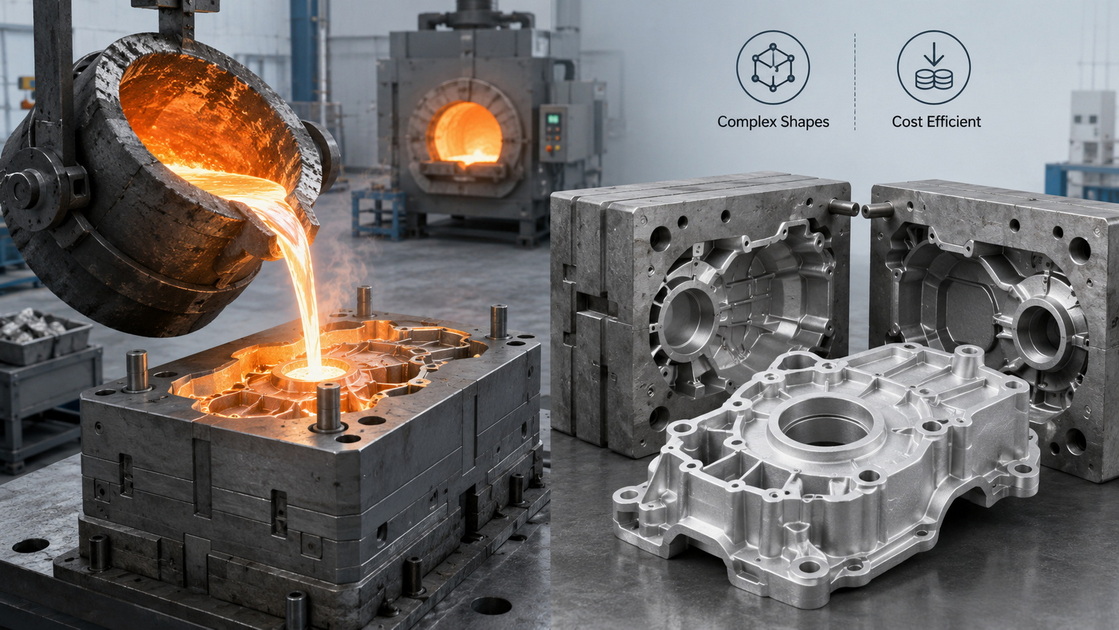
Cast aluminum is produced by melting aluminum and pouring it into a mold that matches the final part geometry. After cooling and solidifying, the casting is removed and may undergo simple machining or finishing steps. [gushwork]
Typical casting processes include die casting, sand casting, investment casting, and permanent mold casting, each with different cost and tolerance profiles. [marketveep]
Key characteristics of cast aluminum: [gushwork]
- Excellent for complex shapes and thin walls
- Highly suitable for medium to high‑volume production
- Typically lower mechanical strength than forgings
- Good corrosion resistance and machinability
Common applications include motor housings, instrument enclosures, engine pistons, cylinder blocks, fan blades, and architectural components such as window frames. [gushwork]
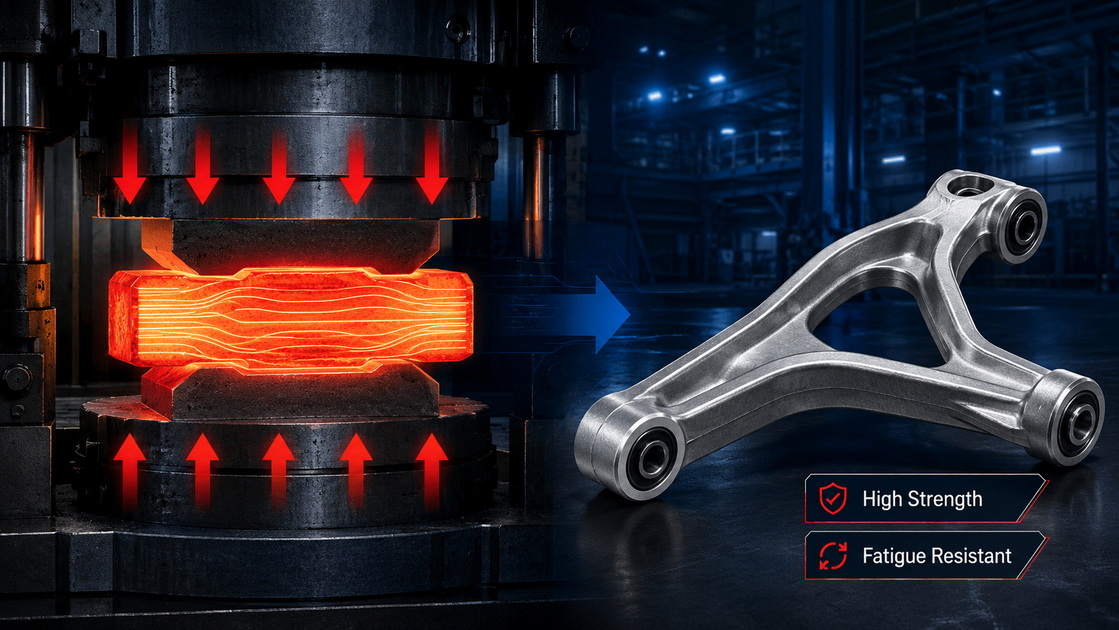
Forged aluminum is produced by heating an aluminum alloy and forming it under high pressure while it remains in a solid or semi‑solid state. This deformation refines the grain structure and eliminates defects such as porosity. [gushwork]
Popular forging alloys include 6061, 6063, and 7075, widely used in aerospace, automotive, high‑performance tools, and sports equipment. [marketveep]
Key characteristics of forged aluminum: [gushwork]
- Much higher strength‑to‑weight ratio than cast aluminum
- Superior fatigue resistance and toughness
- Excellent performance in high load, high vibration, and safety‑critical environments
- Often requires more machining and finishing, increasing per‑part cost
You will typically find forged aluminum in suspension components, structural brackets, steering knuckles, high‑stress aerospace fittings, and safety‑critical mechanical assemblies. [almcorp]
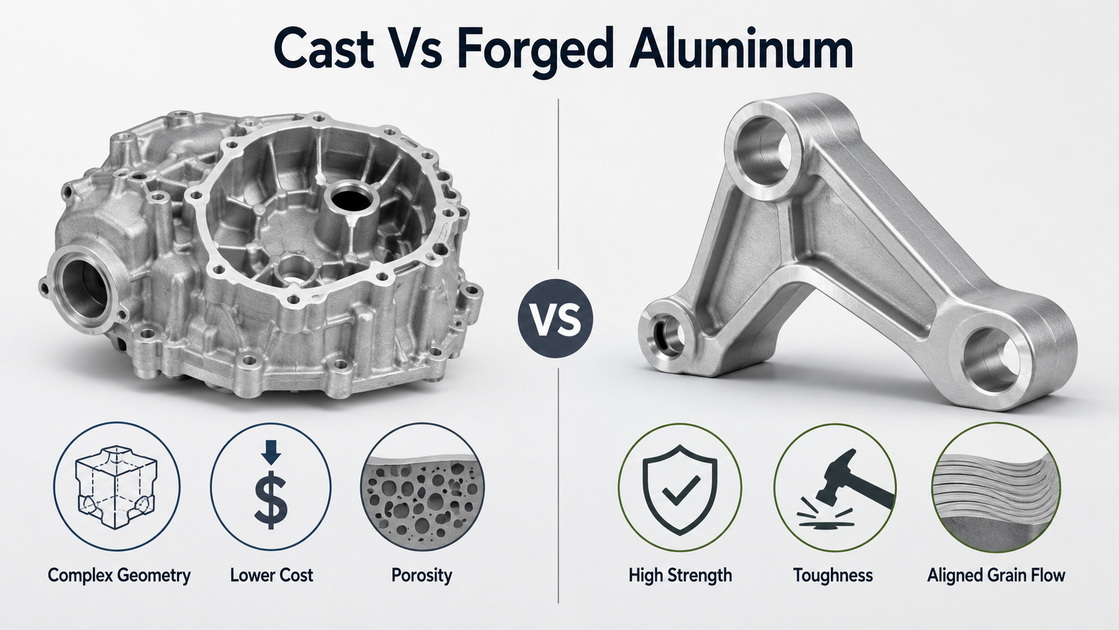
The original article compares cast vs forged aluminum across several dimensions; below is a more UX‑optimized, buyer‑focused summary table. [gushwork]
| Aspect | Cast Aluminum | Forged Aluminum |
|---|---|---|
| Process | Aluminum melted and poured into mold. gushwork | Heated alloy plastically deformed under high pressure. gushwork |
| Structural integrity | More porosity, lower fatigue strength. gushwork | Very high strength, refined grain, minimal porosity. gushwork |
| Geometry | Ideal for complex shapes, thin walls, tight detail. gushwork | Best for simpler, robust geometries; size/thickness limited. gushwork |
| Strength & toughness | Lower strength and more brittle under high stress. gushwork | Superior strength, toughness, and ductility. gushwork |
| Durability | Good for non‑critical components. gushwork | Excellent for safety‑critical, high‑load components. gushwork |
| Cost | Lower tooling and per‑part cost at low–medium loads. gushwork | Higher unit cost; cost‑effective in medium–large runs requiring high performance. gushwork |
| Surface finish | Typically close to net‑shape; minimal finishing needed. gushwork | Often requires secondary machining/finishing. gushwork |
| Flexibility | Easy to achieve intricate detail; less flexible for late structural changes. gushwork | More flexible for design optimization, but cannot handle extremely complex shapes. gushwork |
From a metallurgical standpoint, cast and forged aluminum use different alloy families, optimized for their respective processes. [gushwork]
Cast aluminum commonly falls into four major series: [gushwork]
- Al‑Si (silicon aluminum) – best combination of fluidity, casting performance, and mechanical properties
- Al‑Cu – higher strength but more prone to hot cracking
- Al‑Mg – good corrosion resistance
- Al‑Zn – used where high strength is required but process control is critical
Silicon aluminum (Al‑Si) is especially popular because it flows easily into complex molds yet maintains reasonable mechanical properties, making it ideal for housings, covers, and complex structural shapes. [gushwork]
Forged aluminum uses alloys such as Al‑Si‑Mg‑Cu and Al‑Cu‑Ni‑Fe, including grades like LD2, LD5, and LD10. These alloys typically exhibit higher density, tensile strength, and fatigue resistance compared with cast alloys. [gushwork]
In practical OEM terms, 6061‑T6 and 7075‑T6 forgings often become the default choice for critical components requiring high strength, stiffness, and long fatigue life, such as aerospace mounts or race car suspension arms. [marketveep]
Understanding manufacturing steps helps buyers and engineers anticipate lead time, quality risk, and cost drivers. [almcorp]
A typical cast aluminum workflow includes: [gushwork]
1. Mold design and fabrication (sand, steel, ceramic, or permanent mold)
2. Melting and alloying the aluminum
3. Pouring or injecting into the mold
4. Cooling, solidification, and shakeout
5. Trimming, simple machining, and finishing
This process offers high production efficiency but is more vulnerable to internal defects such as porosity and shrinkage. [gushwork]
A forged aluminum workflow is more complex: [gushwork]
1. Billet preparation with controlled alloy composition
2. Heating to forging temperature
3. Closed‑die or open‑die forging under high pressure
4. Stretching, cutting, and secondary deformation to refine microstructure
5. Heat treatment (e.g., T6) for strength
6. Precision machining and finishing
While forging is more demanding, it eliminates casting defects, stabilizes mechanical properties, and improves reliability and durability. [gushwork]
From a purely engineering perspective, the gap between cast and forged aluminum is most visible in strength, fatigue life, and failure modes. [gushwork]
- Strength and toughness: Forged parts benefit from refined grain structures and aligned flow lines, giving them higher tensile strength, toughness, and ductility. [gushwork]
- Fatigue resistance: Internal porosity in castings acts as crack initiation sites, reducing fatigue life under cyclic loads. [gushwork]
- Failure behavior: Cast parts can fail suddenly and brittle under extreme load, while forged parts usually show more ductile, progressive failure. [gushwork]
For applications like suspension arms, load‑bearing brackets, crane components, or aircraft fittings, forged aluminum is almost always recommended because fatigue and safety margins are non‑negotiable. [plantautomation-technology]
Cost is not just about per‑piece price; it is also about tooling investment, volume, failure risk, and warranty exposure. [marketveep]
- Casting cost profile:
- Lower tooling cost for sand and investment casting
- Highly competitive per‑part cost for complex geometries
- Best suited to low–medium structural demands where minor defects are acceptable [gushwork]
- Forging cost profile:
- Higher upfront die cost and per‑part processing time
- More economical for medium to large production runs where performance justifies the added expense [gushwork]
- Can significantly reduce field failure, recalls, and warranty costs in safety‑critical systems. [almcorp]
For industrial buyers, the strategic question is: "Is a small saving per part worth a potential failure in service?" For anything that touches safety, regulatory compliance, or brand reputation, most teams choose forged aluminum. [plantautomation-technology]
Drawing from projects we've supported for overseas OEM and ODM partners, here are three typical decision scenarios: [plantautomation-technology]
- Requirement: High load, dynamic fatigue, safety‑critical
- Decision: Forged aluminum, usually 6061‑T6 or 7075‑T6
- Reason: Cast knuckles may be cheaper, but the risk of fatigue cracking under millions of cycles is unacceptable. [almcorp]
- Requirement: Complex geometry, thermal management, medium load
- Decision: Cast aluminum, often Al‑Si series
- Reason: Housing requires internal channels and complex shapes; casting delivers functional geometry at significantly lower cost. [gushwork]
- Requirement: High strength‑to‑weight ratio, certification compliance
- Decision: Forged aluminum with tight process control
- Reason: Regulatory standards and fatigue requirements effectively mandate forged or wrought material with documented process control. [marketveep]
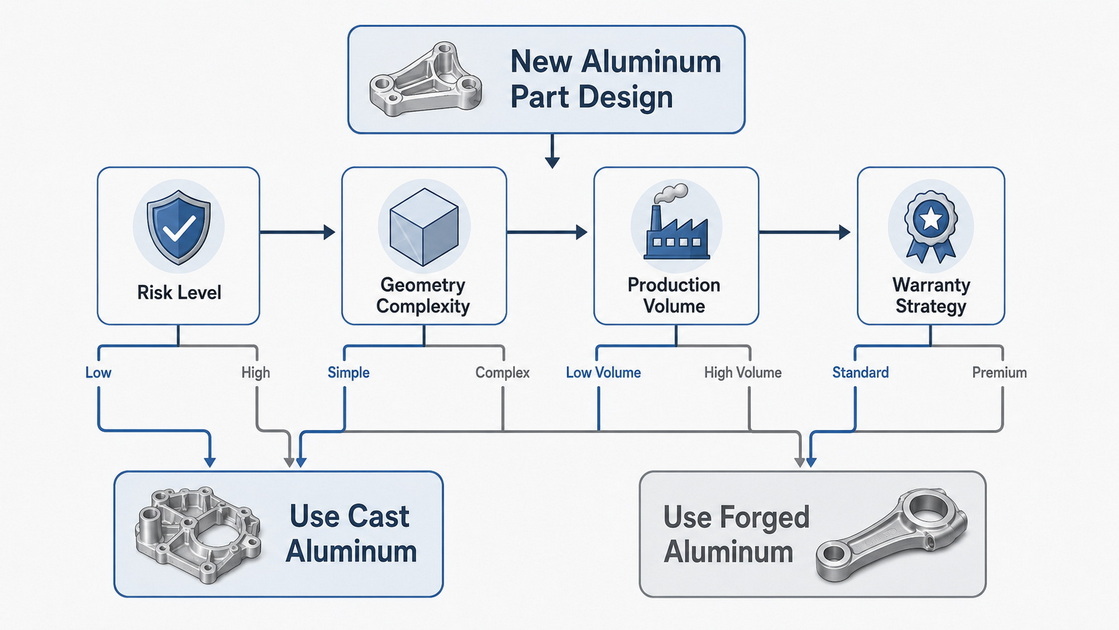
To help engineers and purchasing managers make fast, repeatable decisions, we recommend the following simple framework, which aligns with practical CNC and manufacturing SEO guides for industrial buyers. [plantautomation-technology]
1 – Define the functional risk level
- Low risk (covers, trims, non‑load parts) → Casting is usually sufficient. [gushwork]
- Medium risk (general housings, brackets) → Evaluate loading profile, vibrations, and environment.
- High risk (safety‑critical, dynamic loads) → Prefer forging or wrought material. [plantautomation-technology]
2 – Map geometry complexity
- Very complex, thin walls, intricate cavities → Cast aluminum. [gushwork]
- Simple, robust shapes with high cross‑sections → Forged aluminum. [gushwork]
3 – Check production volume and cost sensitivity
- Prototype to low volume → Casting or CNC machining from wrought stock.
- Medium to high volume with high performance requirement → Forging becomes cost‑effective despite higher initial investment. [almcorp]
4 – Align with brand and warranty strategy
- Tight warranty exposure and regulated markets (automotive, aerospace, rail) → Forging is the safer long‑term bet. [marketveep]
- Cost‑sensitive markets with non‑critical applications → Casting can provide excellent ROI. [gushwork]
Beyond raw mechanics, user experience of the final product—feel, safety, and longevity—also influences the choice. [plantautomation-technology]
- Perceived quality: Forged aluminum often feels more solid and premium in hand tools, sports gear, and structural components, reinforcing brand value. [marketveep]
- Noise and vibration: Better stiffness and damping in forged components can reduce rattling or vibration in machines and vehicles. [gushwork]
- Maintenance and inspection: Forged parts typically show more predictable wear patterns, making visual inspections and NDT more reliable over time. [gushwork]
If your product targets professional users, industrial buyers or safety‑critical environments, these UX factors can be decisive even when initial cost seems higher. [almcorp]
As a CNC precision parts manufacturer in China serving global brand owners, wholesalers, and manufacturers, we regularly help customers navigate the cast vs forged aluminum decision early in the design cycle. [plantautomation-technology]
Our typical support includes:
- Design for manufacturability (DFM) reviews for both casting and forging options
- Material and alloy selection based on load, environment, and certification requirements
- Process route proposals (forging + CNC machining, casting + machining, or purely CNC from wrought stock)
- Prototype validation and testing, including dimensional inspection and basic mechanical tests
By combining CNC machining, precision casting partnerships and OEM/ODM project management, we help overseas buyers reduce technical risk while staying competitive on cost and lead time. [gushwork]
If you're planning a new aluminum component and not sure whether it should be cast or forged, our engineering team can review your drawings and functional requirements, then recommend a clear, data‑backed path forward.
Choosing between cast and forged aluminum is not just a technical detail—it's a strategic decision that affects performance, safety, brand reputation and total cost of ownership. [almcorp]
If you are an OEM, brand owner, or industrial manufacturer working on aluminum structural or functional parts, send us:
- Your 3D models or drawings
- Basic load and environment requirements
- Target annual volumes and cost targets
Our engineers will respond with a practical recommendation (cast vs forged), a proposed process route, and indicative pricing, so you can make a confident decision before committing to tooling or certification.
1. Is forged aluminum always better than cast aluminum?
No. Forged aluminum is better for high‑load, safety‑critical parts, but cast aluminum is often the smarter choice for complex, low‑ to medium‑load components and cost‑sensitive applications. [marketveep]
2. Can I switch from cast to forged aluminum without redesigning the part?
Usually not. Forged parts need different geometries to benefit from fiber flow and avoid stress concentrations, so a re‑design or re‑optimization is typically required. [almcorp]
3. How do porosity issues in cast aluminum affect my product?
Porosity reduces fatigue life and can cause leaks or cracks under cyclic loading or pressure, which matters in hydraulic components, structural brackets, and sealed housings. [plantautomation-technology]
4. Is forged aluminum more difficult to machine?
Forged aluminum can be slightly harder and tougher, but with proper tooling and feeds, machining performance is stable and predictable in modern CNC environments. [gushwork]
5. When should I involve my manufacturer in the cast vs forged decision?
Ideally before freezing the design and certainly before investing in tooling or certification, so you can optimize geometry, alloy, and process together for performance and lifecycle cost. [plantautomation-technology]
1. Runsom Precision – "Cast Aluminum vs. Forged Aluminum: Exploring the Differences"
https://www.runsom.com/blog/cast-aluminum-vs-forged-aluminum/ [gushwork]
2. MarketVeep – "SEO for Manufacturing Companies: A Complete 2025 Guide"
https://www.marketveep.com/blog/seo-guide-for-manufacturers [marketveep]
3. Plant Automation Technology – "Impact of SEO on CNC Industry Growth"
https://www.plantautomation-technology.com/articles/how-seo-can-drive-business-growth-for-cnc-manufacturers [plantautomation-technology]
4. AthenasWC – "Accelerate Growth with These CNC Machining SEO Strategies"
https://www.athenaswc.com/resources/blog/the-heat-is-on-accelerate-growth-with-these-cnc-machining-seo-strategies/ [athenaswc]
5. Gushwork – "SEO for CNC Companies: Strategies That Drive High-Intent Leads"
https://www.gushwork.ai/blog/seo-for-cnc-companies [gushwork]


