From idea to market-ready product, our NPI solutions make every stage easier, faster. Discover How We Help

Views: 280 Author: Feifan Hardware Publish Time: 2026-07-10 Origin: Site


Content Menu
● What Makes a CNC Part "Complex"?
● Why CNC Machining Is Ideal for Complex Parts
● Cutting Axes: Matching Geometry to Machine Capability
● Cutting Tools, Materials, and Feature Design
● Tolerancing and Surface Finish: Balancing Precision and Cost
● Work Holding: The Invisible Driver of Complexity
● CNC Milling Complex Parts: Best-Practice Design
● CNC Turning and Live Tooling for Complex Geometries
● EDM for Ultra-Complex Profiles and Hardened Materials
● Practical Design-for-Manufacturability Checklist (Expert View)
● OEM / ODM Considerations for International Buyers
● How Shenzhen Feifan Supports Complex CNC Projects
● Action-Oriented Conclusion and CTA
● FAQ
Shenzhen Feifan Hardware & Electronics Co., Ltd. is a China-based CNC precision parts manufacturer specializing in complex components for international OEM and ODM customers, and this article is written from our hands-on perspective as engineers and manufacturing partners serving global brands, wholesalers, and producers in sectors such as industrial equipment, automotive, and electronics. [gushwork]
In real production environments, part complexity is one of the strongest cost and lead-time drivers. It is not just about "complicated shapes"; complexity is a combination of geometry, tolerances, material, and how the part must be held and processed on the machine. [gushwork]
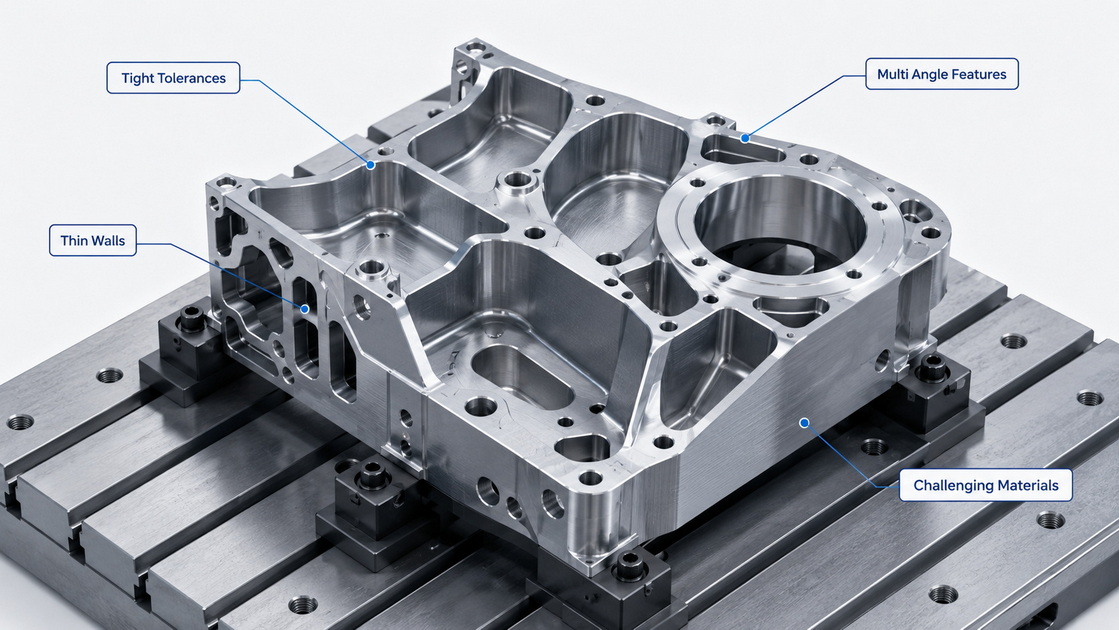
From our experience supporting European and North American OEMs, a CNC part typically becomes "complex" when several of the following factors come together: [fonzy]
- Very tight tolerances across multiple mating features.
- Thin walls, deep pockets, or long slender features that are prone to chatter or deformation.
- Non-standard or multi-directional features such as intersecting holes, undercuts, and compound curvature.
- Difficult materials (e.g., hardened steels, high-temperature alloys, or specialty aluminum and copper grades).
As a China-based precision shop, we see that buyers often underestimate complexity at the RFQ stage; for example, a compact aerospace bracket may look simple in 2D drawings, but the combination of tight tolerance bores, 5-axis contouring, and surface finish requirements can move it firmly into "complex part" territory. [athenaswc]
CNC machining remains one of the most effective ways to manufacture complex, high-value parts because modern equipment combines multi-axis motion, advanced tooling, and repeatable precision. Across 3-axis, 4-axis, 5-axis mills and CNC lathes, the technology allows shops like ours to deliver tight tolerances and superior surface finishes consistently, even on challenging geometries. [athenaswc]
Key advantages for complex parts include: [gushwork]
- Scalability from prototype to small and medium batches with minimal change to the core process.
- Stable tolerances and finishes without excessive post-processing, especially on CNC mills and lathes optimized for precision work. [gushwork]
- Digital repeatability, allowing OEM and ODM clients to replicate the same complex design across multiple sites and product generations.
For international buyers, this combination of control and flexibility is particularly valuable: once a part is proven on CNC, it can be repeated with confidence, transferred between vendors, or adapted to new variants with limited risk. [quickcreator]
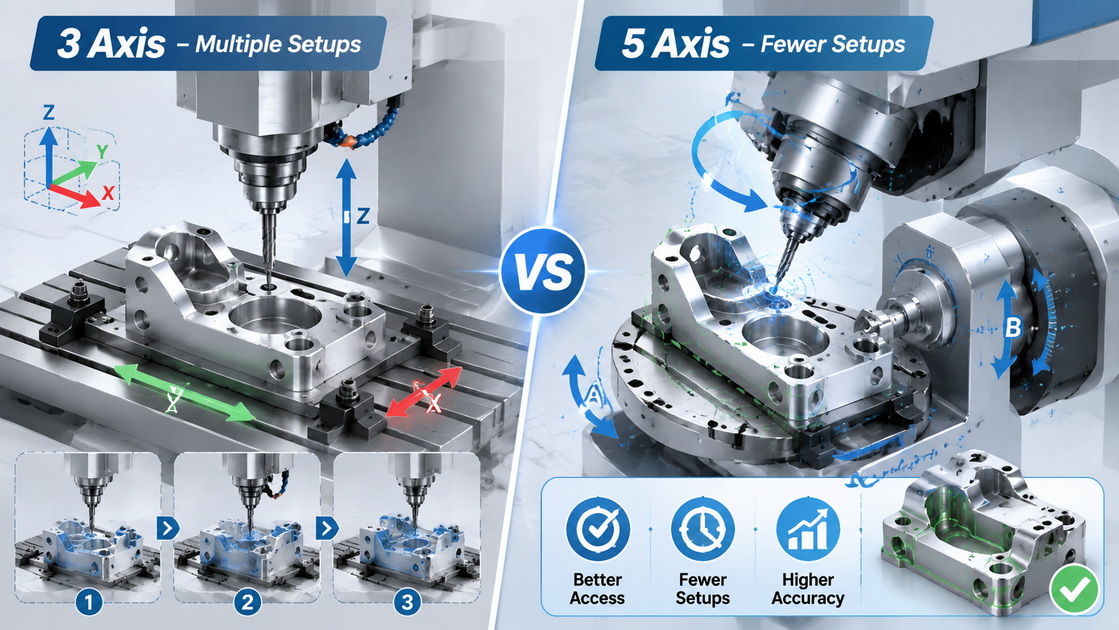
The number of cutting axes directly impacts what features can be machined, how many setups are required, and ultimately the cost structure of the part. A typical 3-axis mill can handle many basic prismatic parts, but once a design introduces steep angles, multi-plane features, or compound curves, higher-axis capability becomes essential. [gushwork]
- 3-axis milling: Ideal for flat faces, standard pockets, and simple contours, but often requires multiple setups and fixtures for complex parts. [gushwork]
- 4-axis milling: Adds rotary motion, allowing efficient machining of features around the part periphery.
- 5-axis milling and above: Enables simultaneous multi-angle machining, reducing setups and allowing direct access to difficult features. [gushwork]
In our shop, we routinely review drawings to decide whether a part should run on a 3-axis line for cost efficiency or move to 4-axis/5-axis to reduce setups and risk. For example, a medical device housing with angled ports and tight internal radii will typically go to 5-axis to avoid complicated manual repositioning that can compromise both tolerance and schedule. [fonzy]
Complex parts are not only defined by geometry; tool selection and feature design are equally important for manufacturability. Even with sophisticated multi-axis machines, using standard tooling whenever possible is a powerful way to keep costs under control and reduce risk. [gushwork]
Carbide and ceramic-coated cutters are widely used for high-speed machining and hardened materials because they maintain edge integrity and allow aggressive cutting parameters, which is especially important for deep cavities or high-strength alloys. However, these premium tools add cost, so both engineers and manufacturing partners should challenge whether each high-complexity feature is genuinely necessary. [plantautomation-technology]
Practical design choices that improve manufacturability include: [gushwork]
- Larger internal corner radii, allowing the use of standard end mills without tool changes. [gushwork]
- Consistent radii and feature sizes across the part, so the same tool can access multiple areas.
- Avoiding extremely deep narrow slots unless they are functionally critical.
At Shenzhen Feifan, we often propose simple design tweaks, such as increasing fillet radii or consolidating hole sizes, to enable more robust tooling strategies and reduce cycle time without compromising function. [fonzy]
Tight tolerances and high-end surface finishes are common drivers of complexity and cost. A typical CNC mill can hold around ±0.004 inch with a 125 micro-inch finish, which is adequate for many industrial applications and keeps stack-ups manageable. [gushwork]
However, certain sectors—such as aerospace, automotive, and precision instrumentation—frequently demand tolerances down to the low thousandths or even tenths of a thousandth on critical features. Achieving such precision requires: [fonzy]
- Stable machines and tooling with minimized vibration.
- Robust fixturing and work holding to avoid micro-movement of the part.
- Controlled cutting parameters and careful process planning.
Our rule when consulting with procurement teams is straightforward: specify tight tolerances only where they truly impact function or safety. Unnecessarily tight tolerances applied across the entire drawing can double machining and inspection effort, increasing cost and lead time without adding real value. [gushwork]
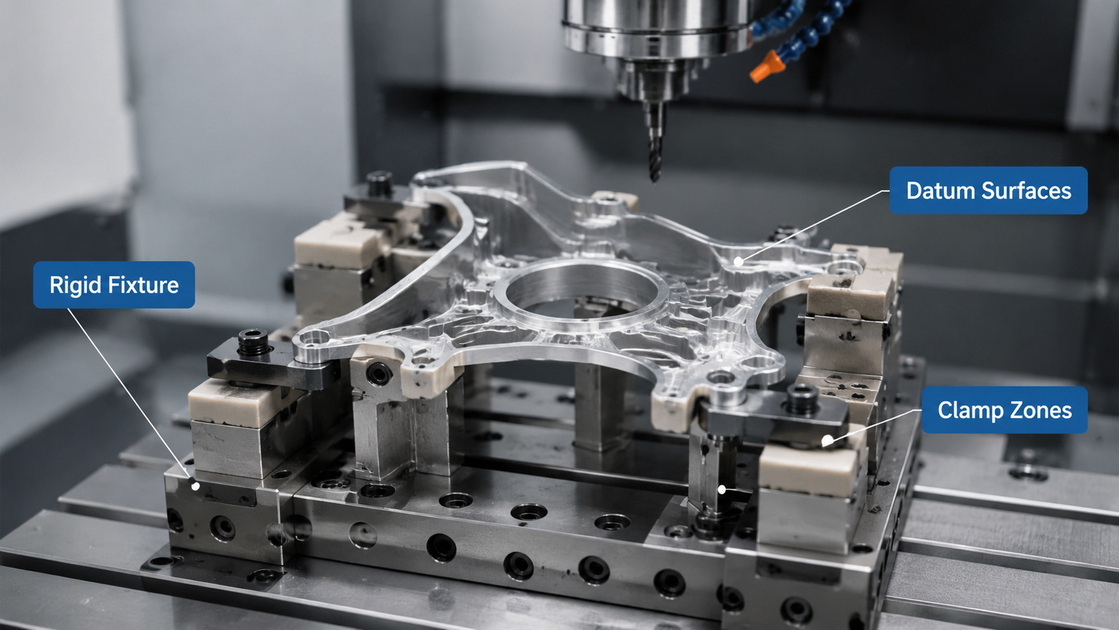
One of the less visible but critical aspects of complex CNC machining is work holding—the fixtures, jigs, and clamping methods used to secure the part. Even a well-designed geometry becomes difficult when it cannot be securely and repeatably held in the machine. [gushwork]
Effective work holding requires: [gushwork]
- Rigid fixtures that resist cutting forces and minimize deflection.
- Intelligent orientation planning so critical datum surfaces remain accessible.
- Consideration of clamping marks, deformation, and clearance for tooling paths.
In practice, we often build custom fixtures for complex OEM parts, especially when wall thickness is small or when there are multiple precision faces that must remain undistorted. Design engineers can actively support this by thinking about how the part will be held during machining and by providing clear datum and clamping zones on the drawing. [plantautomation-technology]
CNC milling uses rotating cutters and computerized control to remove material from a workpiece, and modern mills can offer up to 12-axis capability for extremely advanced geometries. While high-axis machines make complex parts appear easier, intelligent design still plays a major role in cost control and process stability. [gushwork]
For cost-effective complex milling, we recommend: [gushwork]
- Maximizing internal feature size: Larger pockets and profiles allow bigger cutters, faster material removal, and lower risk of tool breakage. [gushwork]
- Providing sufficient tool clearance around features to avoid unnecessary tool detours. [gushwork]
- Applying the depth–radius rule of thumb, where minimum internal corner radius is roughly one-quarter of the feature depth. [gushwork]
In our own production for international customers, we consistently see that a few hours of design-for-manufacturability review can save days of machining time and prevent quality issues downstream, particularly for high-mix, low-volume complex part programs. [almcorp]
CNC turning rotates the workpiece while a cutting tool advances along its surface, and it remains a core method for producing round parts such as shafts, bushings, and housings. With modern CNC lathes, tools are mounted on programmable turrets, allowing multiple operations to be performed in a single setup, which is essential for complex turned parts. [gushwork]
A major innovation has been live tooling, which integrates milling capability into the lathe and allows angular cuts and features that previously required secondary milling operations. With live tooling: [gushwork]
- Complex radial and axial features can be machined while the part stays clamped in one orientation.
- Lead times and cost drop because fewer setups and transfers are needed.
- Precision improves due to reduced repositioning and accumulated error.
For example, a hydraulic valve body with cross-holes, face grooves, and tight sealing surfaces can be efficiently produced on a live-tooling lathe, instead of splitting work between a simple lathe and a separate mill. Our shop leverages such configurations to offer competitive pricing and shorter lead times for complex rotational parts to overseas clients. [mansfield]
Electrical Discharge Machining (EDM) is fundamentally different from milling and turning because it removes material using electrical discharge and thermal energy instead of cutting forces. In conventional EDM, a tool (cathode) sends electric current through a workpiece (anode) immersed in dielectric fluid, generating sparks that vaporize material along the programmed path. [gushwork]
EDM offers several unique advantages for complex parts: [plantautomation-technology]
- It can cut hardened metals without rapid tool wear, making it ideal for high-strength and heat-treated components.
- Wire EDM can create extremely precise internal profiles, gears, splines, and keyways that are difficult or uneconomical with standard milling. [gushwork]
- Multiple parts can be stacked and cut simultaneously, reducing cycle time and unit cost. [gushwork]
With tolerances tight as ±0.0001 inch and surface finishes around 32 micro-inch, EDM provides a route to ultra-precision profiles without extensive grinding, which is especially valuable for tooling, dies, and critical power-transmission components. For certain complex features, we now routinely recommend EDM upfront rather than trying to force traditional cutting paths. [fonzy]
Based on both industry best practices and our own experience as an OEM/ODM CNC partner, we suggest engineers use the following checklist before locking complex part designs: [enstreamsolutions.wordpress]
1. Clarify functional priorities: Identify truly critical features and tolerances versus "nice-to-have" parameters.
2. Select the right process mix: Decide whether features belong on milling, turning, EDM, or grinding for best efficiency and precision.
3. Standardize wherever possible: Use common hole sizes, radii, and thread families to consolidate tooling and inspection. [gushwork]
4. Plan datum and clamping zones: Make it clear how the part should be oriented and held, reducing fixture ambiguity.
5. Engage your manufacturing partner early: A brief DFM review can eliminate costly design decisions before prototypes are cut. [athenaswc]
Shenzhen Feifan's engineering team routinely collaborates with overseas customers at the drawing stage; by sharing feedback on these points, we help buyers avoid future engineering change orders, delays, and unplanned cost increases. [almcorp]
For global brands and wholesalers, the challenge is not only how to machine complex parts, but also how to ensure they are delivered consistently and economically from overseas partners. Successful OEM/ODM programs rely on clear communication, robust quality management, and transparent capabilities. [almcorp]
Key considerations when working with a China-based CNC supplier like us include: [fonzy]
- Capabilities matrix: Confirm axis count, materials, tolerances, and finishing options aligned with your industry needs.
- Certifications and compliance: For sectors such as aerospace or medical, certifications and traceability systems should match regulatory expectations. [fonzy]
- Quality control process: Look for inspection reports, incoming material verification, and process control for complex programs.
We position Shenzhen Feifan as a long-term manufacturing partner, not only producing parts but actively supporting design optimization, cost-down programs, and platform updates across product generations. [plantautomation-technology]
As a precision CNC manufacturer headquartered in Shenzhen, we focus specifically on complex metal and plastic components for international OEM/ODM clients. Our combination of 3-axis, 4-axis, and 5-axis machining centers, CNC lathes with live tooling, and EDM capability allows us to cover a broad spectrum of part types—from compact electronics housings to heavy industrial brackets. [plantautomation-technology]
For each complex project, we typically: [fonzy]
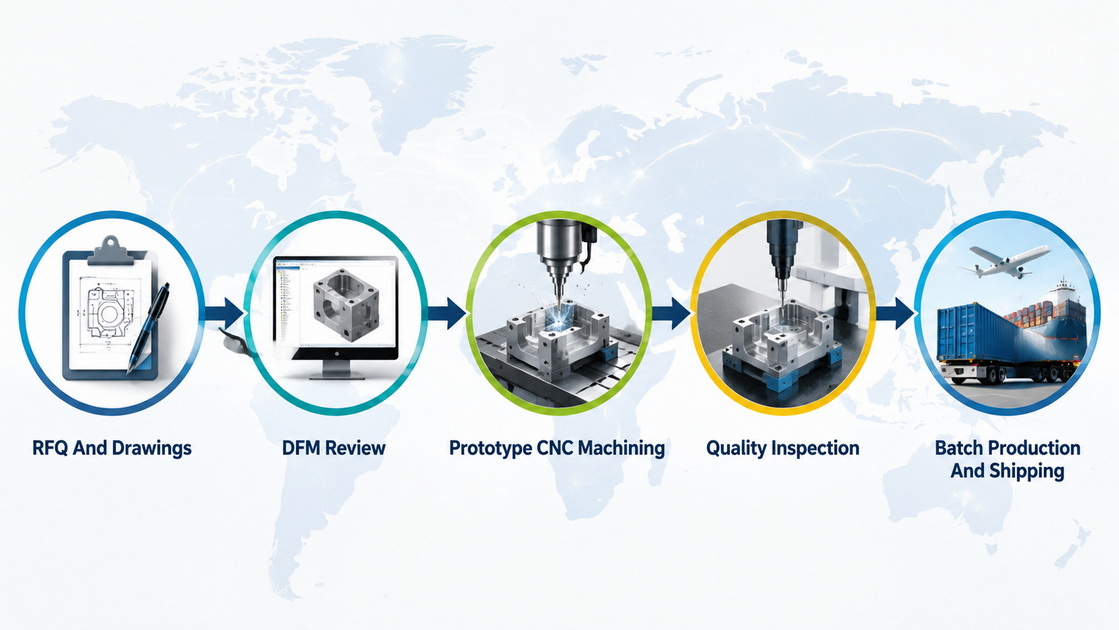
- Review 2D drawings and 3D models to identify risk areas in geometry, tolerance, and material selection.
- Propose DFM improvements to reduce setups, simplify work holding, and align tolerances with real functional needs. [gushwork]
- Provide clear lead-time and cost breakdowns so procurement teams can align part complexity with budget and schedule.
Because we operate as an OEM/ODM partner, we also support branding and assembly coordination, allowing overseas buyers to receive ready-to-integrate components or subassemblies that align with their own product roadmap. [plantautomation-technology]
Complex CNC parts are where engineering ambition meets manufacturing reality, and success depends on aligning design intent with the right processes, tooling, and partners. By focusing on axis capability, smart feature design, balanced tolerances, stable work holding, and the selective use of EDM, OEM and ODM buyers can significantly improve cost-efficiency and reliability for their most demanding components. [fonzy]
If you are an international brand owner, wholesaler, or manufacturer looking to optimize complex CNC parts, we invite you to share your drawings and specifications with Shenzhen Feifan Hardware & Electronics Co., Ltd. for a free DFM review and quotation. Our engineering team will analyze your design, recommend practical improvements, and provide a clear proposal covering cost, lead time, and quality assurance so you can move confidently from concept to production. [plantautomation-technology]
Q1: How do I know if my part is too complex for standard CNC machining?
If your part requires very tight tolerances across multiple surfaces, deep cavities, multi-angle features, or uses hardened materials, it likely qualifies as complex and may need advanced multi-axis machining or EDM support. [gushwork]
Q2: What information should I include in my RFQ for complex CNC parts?
Include full 2D drawings, 3D models, material specifications, tolerance levels on critical features, expected quantities, and any required certifications or inspection reports so your manufacturing partner can accurately assess complexity. [almcorp]
Q3: Can I reduce cost without changing the performance of my complex part?
Yes. Many cost reductions come from adjusting non-critical tolerances, standardizing radii and hole sizes, simplifying feature geometry, and consolidating operations with live tooling or higher-axis machining. [enstreamsolutions.wordpress]
Q4: When should I consider EDM instead of traditional milling?
Choose EDM when you need precise internal profiles, narrow slots in hardened materials, or extremely tight tolerances that are difficult or uneconomical to achieve with conventional cutting tools. [plantautomation-technology]
Q5: How does Shenzhen Feifan ensure consistent quality for overseas OEM/ODM customers?
We combine process planning, stable machining setups, material verification, in-process inspection, and final reports, ensuring complex parts meet both drawing requirements and functional expectations for international clients. [plantautomation-technology]
1. Fictiv – "CNC Machining Complex Parts"
https://www.fictiv.com/articles/cnc-machining-complex-parts
2. Fonzy.ai – "SEO Playbook for CNC Machining Services"
https://www.fonzy.ai/playbooks/seo/specialized-b2b/cnc-machining-services
3. Thomasnet Blog – "SEO For CNC Machine Shops"
https://blog.thomasnet.com/seo-for-cnc-machine-shops
4. Enstream Solutions – "Comprehensive SEO Strategy for Machine Shops"
https://enstreamsolutions.wordpress.com/2024/12/18/mastering-digital-marketing-the-ultimate-seo-guide-for-cnc-machine-shops-and
5. PlantAutomation-Technology – "Impact of SEO on CNC Industry Growth"
https://www.plantautomation-technology.com/articles/how-seo-can-drive-business-growth-for-cnc-manufacturers
6. Chatterbuzz Media – "Manufacturing SEO: The Complete Guide to Ranking for Industrial Companies"
https://www.chatterbuzzmedia.com/guide/manufacturing-seo
7. ALM Corp – "SEO for Manufacturing Companies: 18 Ways to Increase RFQs"
https://almcorp.com/blog/seo-for-manufacturing-companies
8. HMM Agency – "How CNC Buyers Actually Search"
https://hmm.agency/blog/seo-for-cnc
9. QuickCreator – "How to Improve SEO for Your CNC Machine Business"
https://quickcreator.io/seo/seo-for-cnc-machines-business-growth
10. Athenaswc – "Accelerate Growth with These CNC Machining SEO Strategies"
https://www.athenaswc.com/resources/blog/the-heat-is-on-accelerate-growth-with-these-cnc-machining-seo-strategies
11. Gushwork – "SEO for CNC Companies: Strategies That Drive High-Intent Leads"
https://www.gushwork.ai/blog/seo-for-cnc-companies
12. MFG Empire – "Manufacturing SEO Services"
https://mfgempire.com/manufacturing-seo
13. Mansfield – "Precision Machining Marketing | CNC Shop SEO & Leads"
https://www.mansfield.us/precision-machining


