From idea to market-ready product, our NPI solutions make every stage easier, faster. Discover How We Help

Views: 222 Author: Tomorrow Publish Time: 2025-12-30 Origin: Site


Content Menu
>> Key Components in CNC Turning Systems
● The Legacy and Growth of Pioneer Service Inc
● Technological Capabilities and Equipment
● Quality Control and Continuous Improvement
● Industries and Market Applications
>> Aerospace
>> Automotive and Transportation
>> Energy and Electrical Systems
● Commitment to Sustainability and People
● Customer Collaboration and Engineering Support
● Embracing Industry 4.0 and the Future
● FAQ
>> (1) What materials does Pioneer Service Inc work with?
>> (2) What industries does Pioneer Service serve?
>> (3) Does Pioneer Service offer prototyping services?
>> (4) What certifications does Pioneer Service hold?
>> (5) How does Pioneer Service ensure product quality?
In today's rapidly advancing manufacturing world, CNC turning has become a cornerstone technology for producing precision-engineered components. It is the process that allows companies to transform a simple piece of raw material into intricate and high-performing parts used in industries like aerospace, medical devices, and automotive engineering.
Among the firms dominating this field, Pioneer Service Inc stands out as a leader known for quality, innovation, and dedication to both technology and people. But what exactly makes CNC turning so important—and how has Pioneer Service Inc built a reputation that continues to influence the future of precision machining?
This article takes an in-depth look at the company's background, technologies, capabilities, and partnerships, illustrating how Pioneer Service has carved out a defining role in modern American manufacturing.
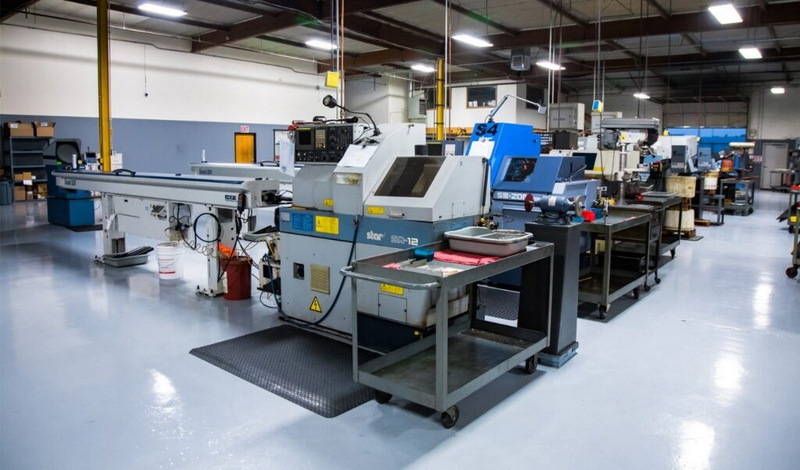
CNC turning is a machining process performed using computer numerical control systems that automate the movement of cutting tools. While traditional turning relies on manual operation of a lathe, CNC technology uses computer programs to precisely control spindle rotation, cutting depth, feed rate, and positioning.
In turning, the workpiece—usually bar stock or a cylindrical blank—rotates at high speed while a stationary cutting tool removes small amounts of material to create the desired geometry. The process is ideal for manufacturing shafts, pins, bushings, and a variety of round or symmetrical parts.
- CNC Lathe: The main machine where material rotation and cutting take place.
- Turret or Tool Post: Holds different cutting tools that can be automatically switched during machining.
- Spindle and Chuck: Secure and rotate the material accurately.
- Controllers: Interpret programmed instructions (G-code) to automate operations.
This highly repeatable process enables manufacturers to maintain consistency from the first part to the last, regardless of batch size. The technology's integration with CAD/CAM software further enhances precision by allowing digital designs to flow directly into the machining process.
Founded in 1990 in Addison, Illinois, Pioneer Service Inc began as a small precision screw machine shop. Its founder envisioned a company where craftsmanship and precision would form the foundation for long-term customer trust. Over three decades later, Pioneer Service has evolved into a fully modernized, high-tech manufacturing operation.
From its early focus on simple turned components, the company now produces complex CNC-turned and CNC-Swiss machined parts for demanding industries. This transformation came through an unwavering belief in continuous education, reinvestment in resources, and a commitment to innovation.
Milestones in the company's history include:
- Expansion into Swiss CNC machining for higher precision and smaller tolerances.
- Achievement of ISO 9001 and AS9100 certifications for quality management.
- Implementation of advanced digital manufacturing tools and process automation.
- Recognition as a champion for diversity and inclusion within the manufacturing sector.
The company's philosophy revolves around precision, partnership, and progress—three pillars that continue to guide its mission today.
Pioneer Service operates an extensive lineup of advanced equipment tailored for both high-volume production and intricate prototype runs. Their facility includes:
- Swiss Turning Centers: Designed for tight-tolerance, small-diameter parts with lengths several times their diameter.
- Multi-Axis CNC Lathes: Allow complex part geometries to be manufactured in a single operation, reducing setup times.
- Automatic Bar Feeders: Keep production continuous by supplying material without operator intervention.
- Microscopic Inspection Systems: Monitor surface finishes and dimensions invisible to the naked eye.
- High-Precision Tooling Systems: Ensure stability and repeatability under challenging machining conditions.
Every piece of machinery pairs cutting-edge mechanical precision with sophisticated digital monitoring systems. Real-time data analytics track spindle load, vibration, and temperature, enabling predictive maintenance and reducing downtime.
By investing in automation and digital infrastructure, Pioneer Service has positioned itself not only as a part maker but as a solutions-based manufacturer capable of co-developing engineering strategies with its clients.
A defining feature of Pioneer Service Inc is its relentless focus on quality assurance. Quality is not viewed as a separate department but as a process integral to every stage of production.
All raw materials undergo traceability verification, ensuring they meet industry specifications. During machining, technicians use in-process gauging to confirm tolerances, while the final inspection team verifies each component using Coordinate Measuring Machines (CMMs) and optical scanners.
Processes are guided by statistical data and constant feedback. The company continually refines its operations through tools like Six Sigma, 5S, and Lean Manufacturing—all of which focus on eliminating waste, optimizing workflow, and maximizing customer value.
Its quality policy emphasizes:
- Meeting or exceeding customer expectations every time.
- Ensuring regulatory compliance across all sectors.
- Fostering a proactive culture of continuous improvement.
- Maintaining transparency and open communication during production cycles.
This approach has earned Pioneer Service Inc long-term partnerships with companies that demand absolute reliability and repeatability in supplier performance.
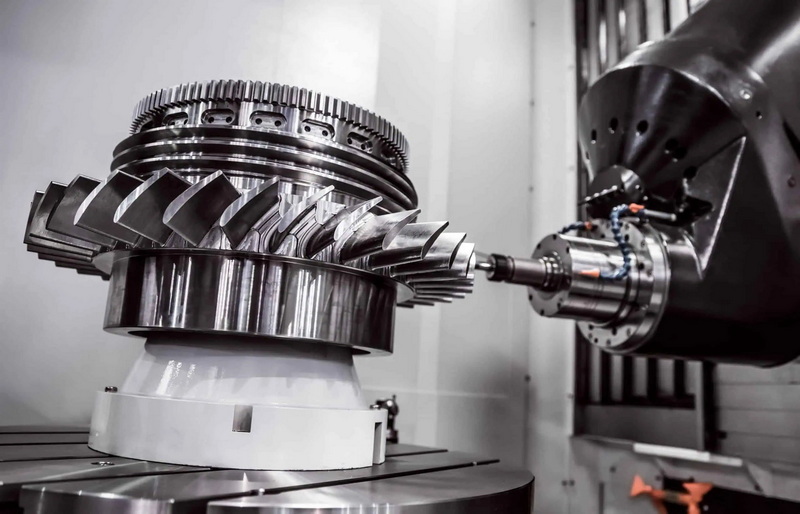
Pioneer Service's versatile capabilities allow it to serve multiple industries, each with distinct requirements for precision and compliance.
The aerospace sector depends on components built to tolerances measured in microns. Pioneer Service manufactures critical elements for aircraft instrumentation, control systems, and engine assemblies. Every part must undergo strict testing to meet FAA and AS9100 standards for performance and safety.
Medical components—such as surgical implants, orthopedic screws, catheters, and diagnostic tools—require ultra-pure materials and sterile production. Pioneer Service works closely with device engineers to ensure biocompatibility, durability, and flawless finish quality.
For the automotive industry, Pioneer Service produces components for braking systems, sensors, and fuel delivery mechanisms. These parts must endure extreme stress, corrosion, and temperature variations while maintaining precise fit and function.
In the energy industry, Pioneer Service creates machined connectors, terminal pins, and precision fittings for electrical grids and renewable energy systems. Reliability under continuous operation is a non-negotiable requirement.
Such diverse applications highlight the company's adaptability and knowledge of specialized material behaviors, including exotic alloys and engineered plastics.
Sustainability for Pioneer Service Inc is not limited to environmental stewardship—it extends to workforce wellbeing, community involvement, and ethical sourcing.
The company implements eco-efficient machining practices, including:
- Recycling metal chips and coolants.
- Using biodegradable cutting fluids.
- Reducing energy consumption through smart systems.
- Implementing air filtration to maintain healthy workspaces.
Equally important is support for its people. Pioneer Service actively recruits and trains the next generation of manufacturing professionals, with a strong emphasis on diversity and inclusion. Women hold leadership roles within the organization—a notable example in a field traditionally dominated by men.
Through partnerships with local schools, trade associations, and national groups like Women in Manufacturing (WiM), Pioneer Service encourages young talent to pursue future careers in machining, engineering, and quality control.
This dual focus—sustainability and workforce empowerment—shapes a model that is both economically viable and socially responsible.
One of the most distinctive strengths of Pioneer Service Inc lies in its collaboration with customers from concept to production. The company's engineering team provides Design for Manufacturability (DFM) consultations to ensure that clients' blueprints translate seamlessly into efficient production.
Services include:
- Reviewing CAD models for manufacturing feasibility.
- Suggesting design modifications to reduce costs.
- Recommending optimal materials for strength, weight, or corrosion resistance.
- Creating sample parts using rapid prototyping before full-scale production.
By taking a proactive, solution-oriented approach, Pioneer Service minimizes the risk of costly redesigns or delays. Clients benefit not only from precision manufacturing but also from technical guidance and transparent communication across every stage of the project.
As global manufacturing shifts toward Industry 4.0, digital transformation becomes essential for competitiveness. Pioneer Service is at the forefront of this evolution.
The company utilizes machine monitoring systems that collect performance data, enabling real-time adjustments and predictive maintenance scheduling. Advanced analytics help refine process parameters, reduce scrap rates, and increase tool longevity.
Moreover, digital documentation ensures traceability, a crucial element for highly regulated industries. From initial order to final inspection, every detail is stored in secure databases, ensuring full accountability.
Looking ahead, Pioneer Service aims to expand capacity for micro-machining—producing miniature, high-precision components for electronics and emerging medical technologies. The integration of robotic handling systems and AI-driven quality inspection will further improve throughput while maintaining consistent quality.
This forward-thinking approach shows that Pioneer Service isn't simply keeping pace with industrial change—it's actively shaping what the future of CNC turning will look like.
CNC turning represents the essence of precision manufacturing—combining digital intelligence with mechanical mastery. Pioneer Service Inc stands as one of the leading examples of how this balance can be perfected.
From its humble beginnings to its current role as a certified, technology-driven manufacturing partner, the company demonstrates what's possible when passion, innovation, and craftsmanship come together. With cutting-edge equipment, a quality-first mindset, sustainable operations, and a collaborative spirit, Pioneer Service Inc continues to define excellence in CNC turning.
Its legacy proves that American manufacturing can thrive by adapting to change while staying faithful to its core values—integrity, quality, and dedication to serving customers with unmatched precision.
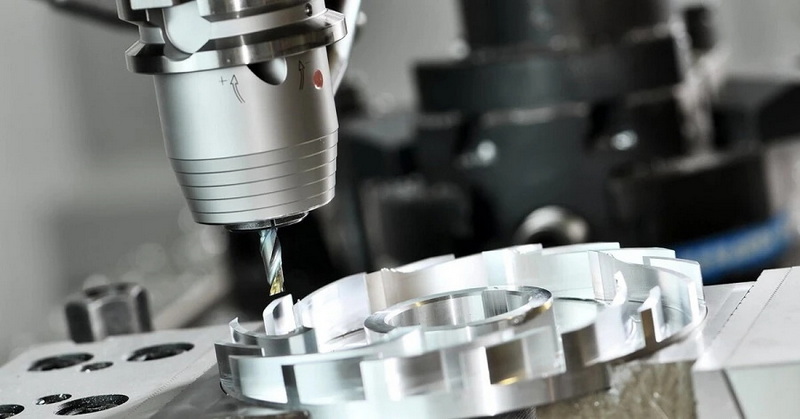
Pioneer Service Inc machines a wide variety of materials including stainless steels, carbon steels, aluminum, brass, bronze, copper, titanium, and advanced plastics like PEEK or Delrin. Each material is selected based on mechanical performance and client requirements.
The company serves aerospace, medical, automotive, energy, electronics, hydraulics, and defense markets. Each product line is tailored to meet strict industry and regulatory standards.
Yes. Pioneer Service provides rapid prototyping services that enable customers to evaluate designs, test fits, and validate performance before scaling up to high-volume production, reducing risk and saving time.
Pioneer Service Inc maintains ISO 9001 and AS9100 certifications, demonstrating compliance with global standards in quality and aerospace production. Additionally, it participates in regular audits to maintain its environmental and safety compliance.
Quality is achieved through in-process inspection, advanced metrology tools such as CMMs, and data-driven process control. Continuous improvement initiatives further refine production accuracy, ensuring top-tier consistency and reliability.


