From idea to market-ready product, our NPI solutions make every stage easier, faster. Discover How We Help

Views: 222 Author: Tomorrow Publish Time: 2025-11-22 Origin: Site


Content Menu
● What Is a CNC Vertical Milling Machine?
● Components of a CNC Vertical Milling Machine
● Technical Specifications and Performance
● Advantages of CNC Vertical Milling Machines
● Types of Vertical CNC Milling Machines
● Vertical vs. Horizontal CNC Milling Machines
● Maintenance and Best Practices
● FAQ
>> 1. What materials can a CNC vertical milling machine work with?
>> 2. How does CNC improve vertical milling operations?
>> 3. What is the difference between a turret mill and a bed mill?
>> 4. What applications are best suited for vertical milling machines?
>> 5. How do I maintain a CNC vertical milling machine for optimal performance?
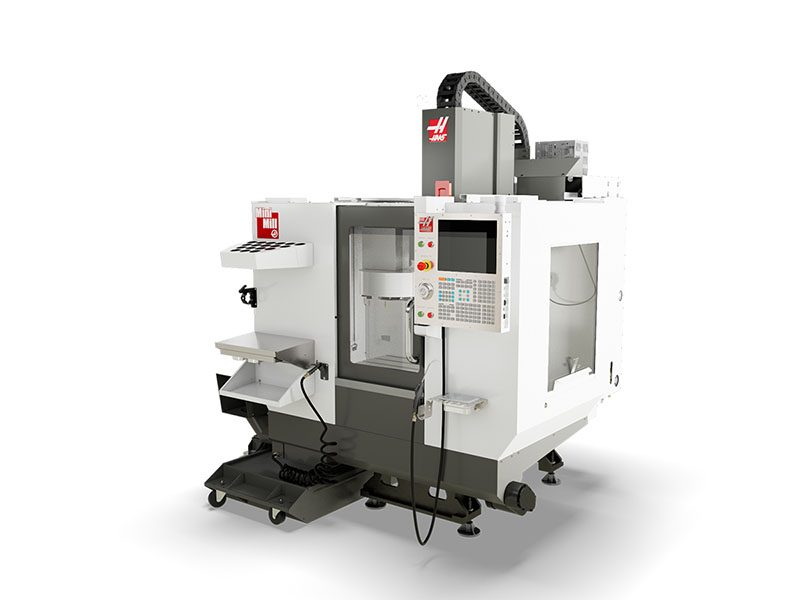
A CNC vertical milling machine is a sophisticated manufacturing tool characterized by a vertically oriented spindle that holds and rotates cutting tools. Controlled by computer numerical control (CNC) technology, it delivers precise and automated milling, drilling, and shaping operations. The vertical spindle arrangement enables the cutting tool to approach the workpiece primarily from above, making this milling machine highly versatile for machining a wide range of materials, including metals, plastics, and composites.

A CNC vertical milling machine features a spindle that moves vertically and rotates cutting tools on a vertical axis. The machine table supporting the workpiece can move on several axes — typically X, Y, and Z — allowing multi-directional machining with great precision. CNC automation allows programmed control over these movements, creating consistent, complex parts with high accuracy and repeatability. Common tasks include end milling, drilling, boring, slotting, and surface contouring.
Key components include:
- Vertical Spindle: The primary rotary cutting tool holder oriented up and down.
- Worktable: A precision platform that moves in X, Y, and sometimes Z axes to position the workpiece accurately.
- Controller: The computerized system that directs all machine operations according to programmed instructions.
- Axis Drive System: Consisting of servo motors, ball screws, and guideways, enabling smooth and precise movements.
- Cooling System: Delivers coolant to the cutting area for heat dissipation and chip removal.
- Tool Magazine (optional): Holds multiple tools and allows automatic tool changes during machining cycles.
Typical high-performance CNC vertical milling machines have the following specifications:
- Table sizes ranging from 700x400 mm up to 1400x600 mm for large workpieces.
- Travel ranges on X-axis (700 to 1200 mm), Y-axis (350 to 600 mm), and Z-axis (300 to 600 mm), allowing versatile machining volumes.
- Spindle speeds up to 8,000-12,000 rpm to accommodate different cutting demands.
- Spindle power typically ranges from 5.5 kW to 11 kW, ensuring effective cutting force.
- Positioning accuracy usually between ±0.005 mm and ±0.02 mm with repeatability around ±0.003 mm for precision work.
- Rapid traverse rates can be as high as 18,000 mm/min on X/Y axes for efficient material removal and tool positioning.
- Tool magazines often hold 15 to 16 tools with automatic tool change capabilities.
These specifications empower CNC vertical mills to perform a wide variety of operations with flexibility and precision.[1][2][4]
Operators program the CNC vertical milling machine using G-code or CAM software that instruct the machine on tool paths, speeds, feeds, and operations sequence. The vertical spindle design facilitates:
- End milling tasks for flat surfaces and intricate contours.
- Drilling and boring of precise holes.
- Slot and groove cutting in molds, dies, and mechanical parts.
- Three-dimensional shape machining with multi-axis control.
- Prototyping, production runs, and die-sinking operations used in aerospace, automotive, electronics, and general manufacturing industries.
The openness of the vertical spindle arrangement offers excellent accessibility and visibility for setup and inspection compared with horizontal mills.
- Precision: Automated controls enable consistent accuracy and repeatability on complex parts.
- Versatility: Can handle a wide variety of materials from metals to plastics.
- Ease of Setup: Good work area visibility and simple tool loading reduce downtime.
- Tooling Options: Supports various tool types including end mills, drills, taps, and specialized cutters.
- Cost-Effective: Suitable for single units or batch production with automated processes reducing labor requirements.
- Space Saving: Vertical orientation often results in a more compact footprint relative to horizontal counterparts.
- Turret Mills: Features a stationary spindle with a moveable table for operations mainly in two axes.
- Bed Mills: Contains a spindle that can move vertically and the table that may move horizontally, enhancing axis range.
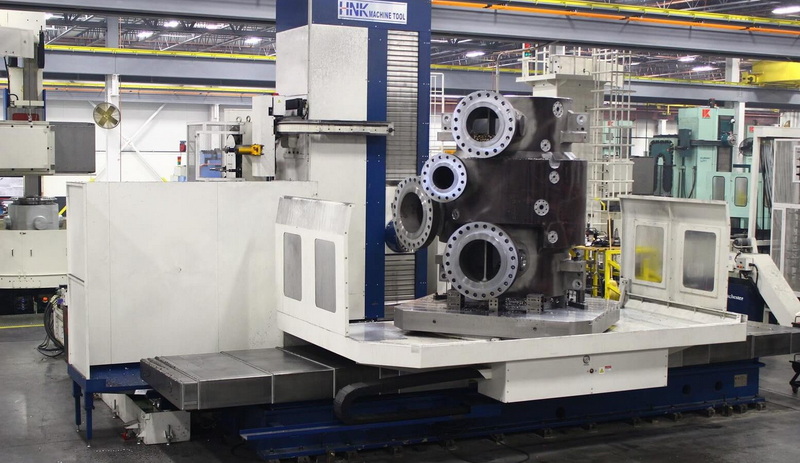
- Vertical Machining Centers (VMCs): Fully automated, multi-axis vertical mills with tool changers, high-speed spindles, and integrated probes for setup and quality control.
| Feature | Vertical Milling Machine | Horizontal Milling Machine |
|---|---|---|
| Spindle Orientation | Vertical | Horizontal |
| Cutting Tool Access | From above (top-down) | From the side |
| Ideal Operations | End milling, drilling, slotting, molds | Heavy-duty cutting, long slots, gear teeth |
| Chip Evacuation | Uses coolant flow for chip removal | Gravitational chip removal is more efficient |
| Workpiece Visibility | Easier setup and observation | More restrictive access around workpiece |
| Machine Footprint | More compact | Generally larger |
- Apply regular lubrication to guideways and ball screws to reduce wear.
- Inspect spindle bearings routinely and replace as necessary to maintain machine accuracy.
- Clean chips and debris after runs to prevent accumulation and damage.
- Use appropriate coolant delivery systems for heat and chip evacuation.
- Calibrate the machine periodically for positional accuracy and repeatability.
- Verify and tighten clamping mechanisms to ensure workpiece stability during operation.
CNC vertical milling machines are integral to modern machining, combining vertical spindle orientation with computerized control to deliver high-precision, multi-functional manufacturing capabilities. They excel in producing complex parts with tight tolerances efficiently and reliably. Understanding their technical specifications, operational principles, advantages, and maintenance ensures optimal utilization in industries ranging from aerospace to automotive and mold making. Their versatility and precision make them a cornerstone of advanced manufacturing technology.
It can machine a broad range of materials including metals such as steel, aluminum, and titanium, as well as plastics and composite materials depending on tooling used.[11][12]
CNC allows automated, precise control of tool and workpiece movements, enabling complex geometries and consistent production quality unachievable by manual machining.[13]
A turret mill has a fixed spindle with a movable table, whereas a bed mill often has both the spindle and table capable of movement, allowing greater machining flexibility.[12]
They are ideal for end milling, drilling, mold and die making, slotting, and detailed three-dimensional machining tasks.[9]
Regular cleaning, lubrication of moving parts, spindle maintenance, coolant system upkeep, and periodic calibration are essential to keep the machine operating at its best.[4][14]
[1](https://www.lzcncmachine.com/cnc-vertical-milling-machine/vmc1260-cnc-milling-machine-285.html)
[2](https://cncwmt.com/product/cnc-vertical-milling-machine-xh7136/)
[3](https://alimco.in/WriteReadData/UserFiles/file/CNC%20machine.pdf)
[4](https://www.lzcncmachine.com/vertical-machining-center/vmc1060-cnc-milling-machine-163.html)
[5](https://www.csir.co.za/sites/default/files/Documents/CNC%20Milling%20Machine%20-%20Annexure%20A%20-%20Technical%20specifications.pdf)
[6](https://alimco.in/WriteReadData/UserFiles/file/3%20axis.pdf)
[7](https://mkp.gem.gov.in/catalog_data/catalog_support_document/buyer_documents/14219908/54/78/703/CatalogAttrs/SpecificationDocument/2024/3/19/rr23_technical_spec_for_cnc_vertcal_milling_machine_2024-03-19-15-20-33_bfef5d13cff77ac54cac534ad0106fdd.pdf)
[8](https://tormach.com/machines/mills.html)
[9](https://www.sfcnclaser.com/cnc-vertical-mlling-machine.html)
[10](https://tormach.com/machines/mills/1100m.html)
[11](https://www.ardelengineering.com/cnc-vertical-milling-machines)
[12](https://www.yashmachine.com/blog/main-features-of-vertical-cnc-milling-machines/)
[13](https://landmarktools.com/blogs/guides/what-is-a-cnc-milling-machine)
[14](https://www.want.net/vertical-milling-machine-operation-essential-steps-for-accurate-machining/)


