From idea to market-ready product, our NPI solutions make every stage easier, faster. Discover How We Help

Views: 222 Author: Tomorrow Publish Time: 2025-11-22 Origin: Site


Content Menu
● What Is a CNC Milling Machine?
● How Does a CNC Milling Machine Work?
● Technical Specifications of CNC Milling Machines
● Common Applications of CNC Milling Machines
>> Aerospace
>> Automotive
>> Electronics
>> Medical
>> Energy
>> Agriculture
● Advantages of CNC Milling Machines
● Types of CNC Milling Machines
● Selecting the Right CNC Milling Machine
● Maintenance and Safety Aspects
● FAQ
>> 1. What materials can a CNC milling machine work with?
>> 2. How many axes do CNC milling machines typically have?
>> 3. What industries benefit the most from CNC milling?
>> 4. How accurate are CNC milling machines?
>> 5. Can CNC milling machines be used for prototyping?
A CNC milling machine is a powerful tool used in manufacturing to precisely cut, shape, and drill materials into complex and highly accurate parts. Utilizing computer numerical control (CNC) technology, these machines automate the milling process, allowing for consistent and repeatable production of components across diverse industries. This article explores the various applications of CNC milling machines, their benefits, technical specifications, and why they are essential in today's manufacturing landscape.

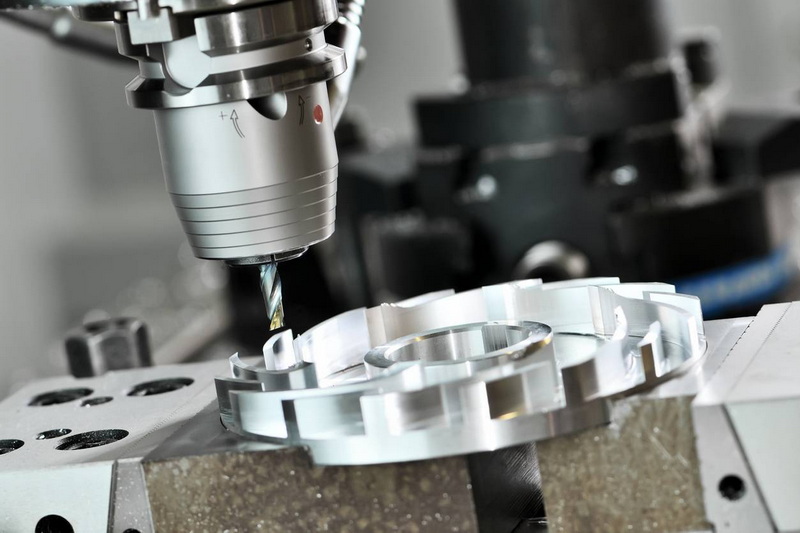
A CNC milling machine is a type of machine tool that uses rotary cutters to remove material from a workpiece. It operates through computer-controlled commands to move the cutting tool and the workpiece along multiple axes. This precision enables the creation of intricate shapes, detailed features, and tight tolerances that are often impossible to achieve manually. CNC milling machines cover various sizes and specifications designed for different production needs.
The machine follows programmed instructions, usually created with CAD/CAM software, to perform milling operations. It removes material layer by layer using rotating cutting tools. The axes of motion—typically three to five—allow for precision machining in the X, Y, and Z directions, along with rotational movements in advanced models. This controlled process produces highly accurate parts efficiently.
Typical CNC milling machines feature:
- Worktable Size: Usually ranges from 600 mm to 1200 mm or more, with T-slots for securing workpieces.
- Axis Travel: Common dimensions are about 700-800 mm in X-axis, 400-600 mm in Y-axis, and 300-600 mm in Z-axis for standard 3-axis machines.
- Spindle Speed and Power: Speed varies from 8,000 to 12,000 RPM with power ratings typically between 3 kW to 10 kW, depending on machine size and application.
- Tool Magazine: Automatic tool changers store 12 to 30 tools, enhancing machining efficiency.
- Feed Rate: Rapid feed rates can reach 20 to 30 meters per minute, improving cycle times.
- Positional Accuracy: Precision of ±0.005 mm to ±0.01 mm, guaranteeing tight tolerances.
- Control Systems: Advanced CNC controllers like Fanuc, Siemens, or proprietary systems with user-friendly interfaces and programming capabilities.
These specifications ensure CNC milling machines cater to a variety of precise and high-volume manufacturing requirements.
CNC milling machines have widespread uses across many industries due to their versatility and precision. Some of the main applications include:
Manufacturers use CNC milling to produce complex aircraft components such as turbine blades, structural parts, and housings. The high precision and repeatability ensure safety and performance standards are met.
CNC milling machines help create engine components, transmission parts, gearboxes, brackets, and customized car parts. They support prototyping as well as mass production.
In the electronics industry, CNC milling machines produce housings, connectors, printed circuit boards (PCBs), heat sinks, and other precision parts essential for devices.
The machines are instrumental in fabricating surgical instruments, orthopedic implants, prosthetics, and dental components where exact dimensions and smooth finishes are critical.
CNC milling is used to manufacture parts for renewable energy (wind turbine blades, solar panel frames), oil and gas pipelines, valves, and hydroelectric equipment.
CNC milling machines create tractor parts, irrigation components, harvesters, and other agricultural machinery parts, enhancing durability and functionality.
They are employed to fabricate molds, die casting tools, food processing equipment, and bakeware, contributing to hygiene and precision.
Additional applications include woodworking (cabinetry, furniture), prototyping, custom signage, foam cutting, stone engraving, ceramics, textiles, and rubber part manufacturing.
- Precision and Accuracy: CNC milling machines provide exact control over cutting paths and dimensions.
- Automation and Efficiency: They reduce manual labor and produce parts faster with less waste.
- Versatility: Capable of machining diverse materials such as metals, plastics, composites, wood, and foam.
- Repeatability: Once programmed, the machine can produce identical parts consistently.
- Complex Geometry: Ability to create 3D shapes, intricate details, and undercuts.
- Reduced Human Error: Automation minimizes operator mistakes.
- 3-Axis CNC Milling: Moves the cutting tool in three directions (X, Y, Z), suitable for most basic milling tasks.
- 4-Axis CNC Milling: Adds a rotary axis allowing workpiece rotation for more complex shapes.
- 5-Axis CNC Milling: Controls five axes simultaneously, enabling machining of intricate, multi-sided parts.
Factors to consider include the size of the parts, material type, required precision, production volume, number of axes, spindle speed, and tool changer options. Choosing the right machine depends on specific manufacturing needs and applications. For example, high-speed, high-precision parts may require a 5-axis machine, whereas simpler parts may be efficiently produced on a 3-axis mill.
Proper maintenance ensures longevity and optimal performance. Routine tasks include lubrication, cleaning, calibration, and software updates. Safety features often include fully enclosed guards, emergency stop buttons, and training for operators to prevent accidents during operation.
CNC milling machines are indispensable in modern manufacturing, providing high precision, efficiency, and versatility. Their use spans multiple industries from aerospace and automotive to medical devices and food processing. By automating complex milling processes, these machines ensure repeatability and quality in producing intricate parts essential for advancing technology and industry.
CNC milling machines can work with a wide range of materials including metals (aluminum, steel, titanium), plastics, composites, wood, foam, stone, and ceramics.
They usually range from 3-axis to 5-axis configurations, with higher-axis machines capable of producing more complex shapes and multi-sided parts.
Key industries include aerospace, automotive, electronics, medical, energy, agriculture, food and beverage, woodworking, and custom manufacturing.
They achieve extremely high accuracy, often within microns, depending on the machine's specifications and tooling, making them suitable for precision parts.
Yes, they are widely used for rapid prototyping due to their ability to produce complex parts quickly and with consistent quality.
[1](https://www.csir.co.za/sites/default/files/Documents/CNC%20Milling%20Machine%20-%20Annexure%20A%20-%20Technical%20specifications.pdf)
[2](https://cncwmt.com/product/xh7126/)
[3](https://milltronics.com/cnc-machines/vm3018/)
[4](https://alimco.in/WriteReadData/UserFiles/file/CNC%20machine.pdf)
[5](https://www.langmuirsystems.com/mr1)
[6](https://tormach.com/machines/mills.html)
[7](https://www.uti.edu/blog/cnc/milling)
[8](https://tormach.com/machines/mills/1100m.html)
[9](https://hppi.com/knowledge-base/cnc-machining/cnc-milling)
[10](https://milltronics.com/cnc-machines/vm8434xp/)


