From idea to market-ready product, our NPI solutions make every stage easier, faster. Discover How We Help

Views: 222 Author: Tomorrow Publish Time: 2026-03-02 Origin: Site


Content Menu
● What Is A CNC Lathe Machine?
>> Main Features of CNC Lathes
● What Is A CNC Milling Machine?
>> Main Features of CNC Milling Machines
● Differences Between CNC Lathe and CNC Milling
● How CNC Milling Works: Step-by-Step Overview
● Types of CNC Milling Machines
● Materials Suitable for CNC Milling
● Advantages of CNC Milling and Turning
● Future Trends in CNC Milling and Lathing
● FAQ
>> 1. What materials can be processed by CNC milling?
>> 2. What is the difference between 3-axis and 5-axis CNC milling?
>> 3. Can CNC milling achieve tight dimensional tolerances?
>> 4. Which is more suitable for prototypes—CNC lathe or CNC milling?
>> 5. Is CNC milling expensive compared to manual machining?
In the fast-paced world of modern manufacturing, precision, speed, and repeatability are essential. Traditional manual machining has gradually given way to computer-controlled systems that produce complex components with micron-level accuracy. Among these innovations, CNC machine lathes and CNC milling machines are two of the most vital tools in any production environment. Both serve different purposes, yet together they enable factories to manufacture high-quality parts across industries including aerospace, automotive, medical, and electronics.
This comprehensive guide explains what CNC machine lathe and milling processes are, how they differ, where each is used, and why both are fundamental to efficient production workflows.

CNC machining stands for Computer Numerical Control machining. It refers to a subtractive manufacturing process where material is removed from a solid block using precision tools controlled by computer commands. The entire operation is automated, meaning that once the parameters and instructions are entered, the machine executes each move with exceptional consistency.
CNC machining is based on digital design and automation. Engineers create part geometries using CAD (Computer-Aided Design) software, which are then converted into toolpaths through CAM (Computer-Aided Manufacturing). These toolpaths dictate the cutting motions, feed rate, and spindle speed that the CNC machine follows.
The major benefit of CNC machining lies in automation. By eliminating manual manipulation, it not only increases accuracy but also minimizes human error. Whether for aerospace turbine parts or custom aluminum housings, CNC machining ensures uniformity and quality across hundreds or even thousands of identical products.
A CNC lathe machine is built primarily for turning operations, where the workpiece rotates on a spindle while a fixed cutting tool removes material. This process is ideal for producing cylindrical or symmetrical parts such as rods, shafts, bolts, or bushings.
Whereas a traditional lathe required constant operator control, a CNC lathe functions automatically—executing programmed commands with extreme precision. The rotation speed, cutting depth, and feed rate are managed digitally, resulting in repeatable and flawless output.
- Rotating Workpiece: The material spins at high speed while cutting tools engage from multiple angles.
- High Precision Tolerances: Ideal for achieving smooth round surfaces and exact diameters.
- Turret Mounting System: Houses multiple tools for automatic switching during operations.
- Thread Cutting and Drilling: Lathes can also perform threading, grooving, and boring in one setup.
- Two or More Axes: CNC lathes typically operate along X and Z axes, though advanced machines use Y or sub-spindles for complex parts.
CNC lathes are commonly found in factories producing mechanical parts such as bearing rings, drive shafts, and hydraulic pistons. With minimal manual handling, these systems deliver not only precision but also higher throughput.
While CNC lathes rotate the part, CNC milling machines rotate the cutting tool itself. This distinction fundamentally changes the type of components that can be manufactured. CNC milling machines work along multiple axes—commonly three (X, Y, Z)—to cut, carve, and shape materials into complex forms. Advanced systems like 4-axis and 5-axis CNC milling machines can execute heavy-duty operations and access hard-to-reach angles in a single setup.
CNC milling excels in producing detailed flat surfaces, slots, threads, holes, contours, and cavities. Because of this versatility, CNC milling is used in industries where dimensional accuracy and surface finish are critical.
- Stationary Workpiece: The material is securely fixed on a table while the cutting tool moves.
- Multi-Axis Control: Tool movement in several directions allows intricate detailing.
- Automatic Tool Changer: Enables quick replacement of end mills, drills, or slot cutters.
- Versatile Material Range: Works effectively with metals (steel, aluminum, copper), plastics, and even composites.
- Software Integration: CAM programs simulate cutting paths to avoid collisions and optimize cutting speed.
From automotive gear housings to surgical implants, CNC milling is often chosen when complex shapes and tight specifications are required.
Although both machines are part of the CNC family, their design and operation differ fundamentally.
| Feature | CNC Lathe | CNC Milling |
|---|---|---|
| Primary Function | Rotates workpiece for cutting | Rotates tool for cutting |
| Axes of Motion | Usually 2 (X, Z) | 3 to 5 axes |
| Ideal for | Cylindrical or symmetrical parts | Flat or irregular surfaces |
| Tool Movement | Fixed, single-path | Multi-directional, flexible movement |
| Common Uses | Creating shafts, pipes, bushings | Milling housings, molds, or enclosures |
For example, a round metal shaft may be turned on a CNC lathe first, and later additional holes or slots might be added using a CNC milling machine. This combination ensures maximum precision with minimal handling.
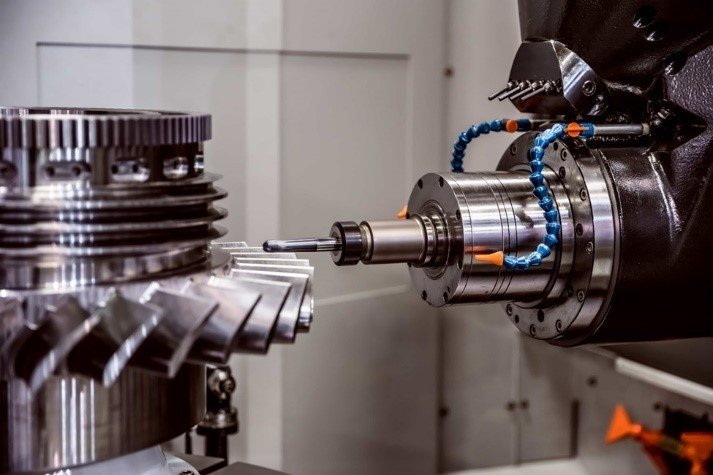
CNC milling is a detailed and sequential process designed to achieve superior dimensional accuracy. Here's how it generally unfolds:
1. Design and Modeling: Engineers use CAD software to design the desired product shape.
2. Program Conversion: The CAD file is imported into CAM software, where machining paths are programmed.
3. Machine Setup: The workpiece is clamped onto the milling table; tools are calibrated and offset positions set.
4. Toolpath Execution: The program instructs the cutting tool's movement and spindle rotation to remove material.
5. Quality Inspection: After machining, parts are inspected to ensure tolerances and finishes meet specifications.
This digital-to-physical workflow ensures that every component produced by CNC milling mirrors the exact design file.
Thanks to its extreme versatility, CNC milling serves nearly every sector of modern industry.
- Aerospace Manufacturing – Production of turbine blades, landing gear components, and lightweight structural panels.
- Automotive Industry – Milling of brake systems, gearbox housings, and custom prototypes.
- Medical Equipment – Creation of surgical tools, bone plates, and titanium implants requiring perfect biocompatibility.
- Electronics – CNC milling of precision housings, circuit supports, and connectors.
- Tool and Mold Making – Essential for crafting injection molds and die-cast tooling with meticulous surface detail.
Whether a product is made from aluminum, steel, or engineering plastics, CNC milling provides unmatched control over size, shape, and surface integrity.
CNC milling technology is not one-size-fits-all. Here are the major machine categories and their best use cases:
- 3-Axis CNC Milling Machines: The most common and affordable type, suitable for simple geometries and general purposes.
- 4-Axis CNC Machines: Include a rotary axis for accessing the sides of the workpiece, improving productivity.
- 5-Axis CNC Milling Machines: Offer rotation and tilt capabilities for cutting undercuts, contours, and curved surfaces with minimal repositioning.
- Vertical Milling Machines (VMC): The spindle is oriented vertically; excellent for precise detailing and mold manufacturing.
- Horizontal Milling Machines (HMC): The spindle lies horizontally; better chip evacuation makes this design ideal for heavy cutting.
Each configuration affects speed, accessibility, and achievable accuracy. In modern production, 5-axis CNC milling is in especially high demand for its ability to handle complex components in one continuous operation.
CNC milling supports a variety of raw materials, ranging from lightweight polymers to hardened alloys. Common categories include:
- Metals: Aluminum, stainless steel, copper, brass, and titanium.
- Plastics: Nylon, PEEK, ABS, and polycarbonate.
- Composites and Ceramics: Used in aerospace and specialized industrial applications.
Because CNC milling is governed by precision programming, even fragile materials can be processed without deformation.
The integration of CNC milling and lathe technology delivers wide-ranging benefits across all manufacturing scales.
- Unmatched Accuracy: Cuts consistently to micron-level tolerances.
- High Productivity: Continuous 24/7 operations reduce lead times.
- Design Flexibility: Easily produce prototypes, one-offs, or mass batches.
- Operational Safety: Operators monitor from outside the machining area, preventing accidents.
- Reduced Material Waste: Efficient programming ensures optimized cutting.
- Repeatability: The same program can run thousands of times, guaranteeing uniform quality.
By combining CNC milling and CNC lathe operations, factories can achieve perfect geometry, great efficiency, and reduced cost per part.
The manufacturing industry is entering a new era of *smart machining* powered by digitalization and artificial intelligence. Upcoming trends include:
- Smart Sensors: Real-time data collection enables predictive maintenance and better uptime.
- Automated Production Cells: Robots now work alongside CNC machines to load, unload, and inspect parts.
- Hybrid Manufacturing: Integration of additive (3D printing) and subtractive (CNC milling) technologies for complex, near-net shapes.
- Sustainability Goals: Modern CNC milling systems are reducing energy consumption through eco-friendly designs and toolpath optimization.
- Remote Monitoring and Cloud Control: Supervisors can now manage CNC milling processes globally via IoT platforms.
As these innovations continue to evolve, CNC machining will remain central to Industry 4.0 and future intelligent factories.
CNC machine lathes and CNC milling machines represent two pillars of digital manufacturing. The CNC lathe specializes in symmetrical, cylindrical parts through rotational cutting, while the CNC milling machine brings unmatched flexibility and precision to produce complex geometries across multiple surfaces.
Together, these machines have reshaped how industries approach mass production, product development, and custom fabrication. For any business focused on quality, automation, and scalability, mastering CNC milling and turning technologies is no longer optional—it is essential for long-term competitiveness in global manufacturing.
Contact us to get more information!
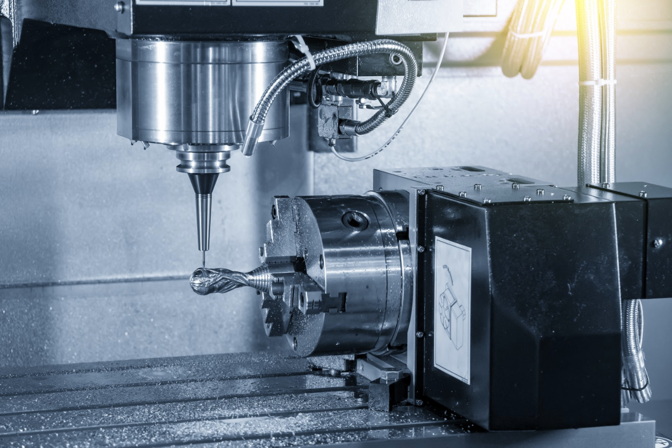
CNC milling supports a broad range of materials such as aluminum, stainless steel, brass, titanium, and plastics. Each material requires unique speed and feed rate programming to achieve the best precision and surface finish.
3-axis systems cut along X, Y, and Z directions, suitable for basic shapes. 5-axis milling adds two rotational axes, allowing more freedom for cutting angles, complex surfaces, and intricate geometries in one operation.
Yes. Advanced CNC milling machines can maintain tolerances as low as ±0.001 inches. This precision makes the process ideal for aerospace, defense, and medical equipment industries.
CNC milling is generally better for prototypes due to its flexibility with shapes and materials. CNC lathes are chosen when the prototype involves cylindrical symmetry or specific turning profiles.
Initial investment costs are higher, but long-term savings come from reduced labor, greater speed, less material waste, and high repeatability. For production or recurring jobs, CNC milling is far more cost-effective.
1. https://www.autodesk.com/solutions/cnc-machining
2. https://www.mastercam.com/solutions/milling/
3. https://www.okuma.com/cnc-lathe-machines


