From idea to market-ready product, our NPI solutions make every stage easier, faster. Discover How We Help

Views: 222 Author: Tomorrow Publish Time: 2026-02-21 Origin: Site
Content Menu
● What Does “3 Axis” Mean in CNC Milling?
● How Does 3 Axis CNC Milling Work?
● Advantages of 3 Axis CNC Milling Service
● Common Applications of 3 Axis CNC Milling
● Material Compatibility in CNC Milling
>> Metals
>> Plastics
>> Composites
● Comparison: 3 Axis vs 4 Axis vs 5 Axis CNC Milling
● Software Technology Behind CNC Milling
● Factors Affecting the Cost of 3 Axis CNC Milling
● Quality Standards and Inspection in CNC Milling
● Future Developments in 3 Axis CNC Milling
● Choosing the Right CNC Milling Service Provider
● FAQ
>> 1. What is the main purpose of 3 axis CNC milling?
>> 2. Can 3 axis CNC milling handle complex parts?
>> 3. What materials are best for 3 axis CNC milling?
>> 4. How fast is 3 axis CNC milling?
>> 5. How long do CNC milling tools last?
In modern manufacturing, CNC milling has revolutionized the way complex parts and components are produced. By combining computer technology with mechanical precision, CNC milling allows manufacturers to create intricate shapes and features in metals, plastics, and composites with unparalleled accuracy. Among the various configurations available, 3 axis CNC milling service is the most widely adopted solution for its simplicity, versatility, and cost-effectiveness.
This article explores what 3 axis CNC milling means, how it works, its advantages, material options, applications, and how it compares to other types of CNC machining. Whether you're an OEM, engineer, or production manager, understanding this technology will help you choose the right solution for your project.
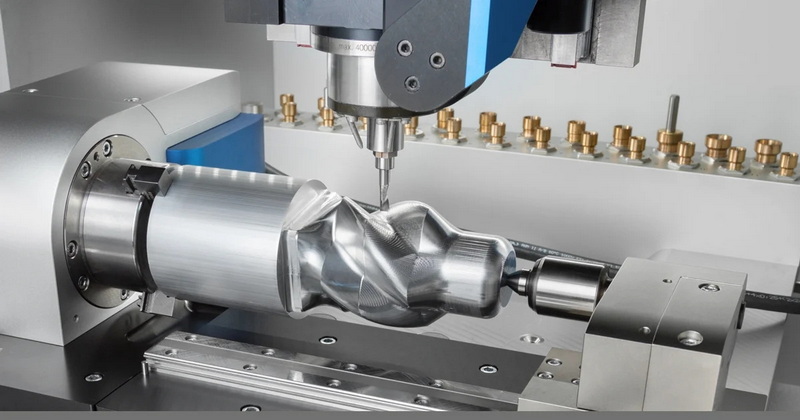
CNC milling—short for Computer Numerical Control milling—is a subtractive manufacturing process that uses precision cutting tools to remove material from a solid block, known as a workpiece. The process is fully computer-controlled, meaning that all tool movements are executed according to pre-programmed instructions.
By automating the cutting process, CNC milling guarantees consistent production quality, high repeatability, and the ability to produce complex geometries that would be extremely difficult or impossible with manual machining.
In most CNC milling services, the process begins with a digital design created in CAD software. Engineers then convert this design into a CAM program that generates toolpaths and G-code—the machine-readable set of instructions guiding every movement of the tool. The milling machine then follows the program precisely, removing material layer by layer to achieve the desired shape and finish.
The “3 axis” term refers to the three directions of movement available to the milling tool:
- X-axis: Left to right
- Y-axis: Front to back
- Z-axis: Up and down
A 3 axis CNC milling machine manipulates the cutting tool along these three axes while the workpiece remains stationary. This setup allows for accurate machining of flat surfaces, contours, slots, and holes.
Because the tool can move in three directions, 3 axis CNC milling machines can produce a large variety of simple to moderately complex parts, making this configuration highly practical for small batch production, prototypes, and custom manufacturing.
The workflow for 3 axis CNC milling involves several well-coordinated steps:
1. Part Design (CAD): The designer or engineer creates a 3D digital model defining dimensions, surface types, and tolerances.
2. Program Conversion (CAM): The CAD file is imported into CAM software, where cutting paths and strategies are developed based on the selected material and tooling.
3. Machine Setup: The machinist mounts the raw workpiece onto the milling bed and installs cutting tools such as end mills, drills, or ball mills.
4. Machining Execution: The CNC controller executes the program, guiding the spindle (tool) to remove material accurately along the X, Y, and Z coordinates.
5. Quality Inspection: After machining is completed, parts are inspected using CMMs (Coordinate Measuring Machines) or laser scanners to verify tolerances and finishes.
This structured process ensures every stage of production is controlled and repeatable, crucial for industries that require high-precision machining.
A 3 axis CNC milling service offers numerous advantages that make it one of the preferred manufacturing solutions across different industries:
- High Precision and Repeatability: Advanced computer control allows consistent results across multiple production runs, achieving tolerances as tight as ±0.01 mm.
- Efficient Prototyping: 3 axis machining enables fast prototype development, allowing engineers to test product designs quickly before full-scale production.
- Material Flexibility: 3 axis CNC milling supports metals, plastics, and composites, offering design freedom across different projects.
- Lower Cost of Setup: Compared with multi-axis systems, 3 axis milling offers affordability with minimal compromise on functionality.
- Smooth Finishes: With the correct tool selection and feed parameters, the process creates smooth surface finishes suitable for functional and aesthetic applications.
- Ease of Programming and Operation: It's less complex to program and maintain, making it ideal for quick changes and short production cycles.
Because of these benefits, manufacturers often start with 3 axis CNC milling before upgrading to multi-axis configurations as part complexity increases.
The 3 axis CNC milling process plays a crucial role in producing parts for almost every sector of global manufacturing. Typical applications include:
- Automotive: Engine casings, gearbox housings, brackets, and prototype molds.
- Aerospace: Lightweight aluminum components, turbine housings, and precision fixtures.
- Medical Devices: Surgical tools, dental implants, instrument housings, and prosthetics.
- Electronics: Custom enclosures, heat sinks, and circuit board housings.
- Industrial Equipment: Jigs, fixtures, prototypes, and assembly equipment.
In each case, 3 axis CNC milling delivers consistent results with minimal human error, ensuring dimensional accuracy even at high production volumes.
One of the defining strengths of CNC milling is its compatibility with many materials, enabling flexibility across several production demands.
- Aluminum: Lightweight, corrosion-resistant, and easy to machine—ideal for prototypes and aerospace applications.
- Steel & Stainless Steel: Tough and strong, widely used for structural components and tooling parts.
- Brass & Copper: Great for electrical components and decorative fixtures.
- Titanium: Excellent strength-to-weight ratio, commonly used in aerospace and medical scenarios.
- ABS: Durable, cost-effective for prototypes and mechanical parts.
- Nylon: Good for wear-resistant industrial components.
- Polycarbonate: Transparent and impact-resistant for housings and fixtures.
- PEEK: High-performance polymer used in medical and aerospace sectors.
- Carbon Fiber and Fiberglass: Low weight and high stiffness, perfect for advanced engineering applications.
A professional CNC milling service adjusts cutting speeds, tool geometry, and cooling systems based on material properties to ensure optimal quality and longevity of the tools.
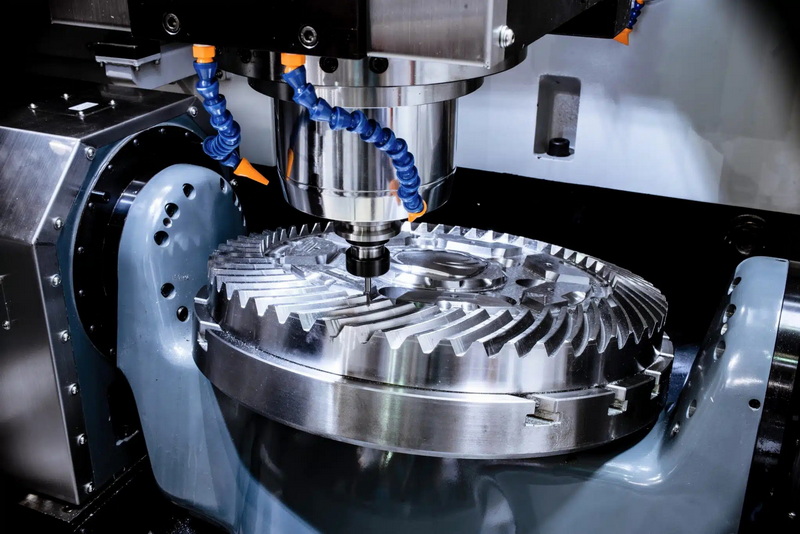
While 3 axis machining remains the backbone of manufacturing, other configurations may be more efficient for certain part geometries. Understanding the differences helps you select the best process.
| Criteria | 3 Axis CNC Milling | 4 Axis CNC Milling | 5 Axis CNC Milling |
|---|---|---|---|
| Axis Movement | X, Y, Z | X, Y, Z + rotation (A or B) | X, Y, Z + dual rotations (A & B) |
| Complexity | Basic to moderate | Intermediate | Advanced |
| Setup Cost | Low | Medium | High |
| Machining Flexibility | Limited angles | Can machine curved profiles | Full 3D contouring on complex parts |
| Typical Applications | Flat/single-face components | Cylindrical or round surfaces | Aerospace, turbine blades, molds |
For most businesses aiming for fast turnaround and controlled budget, 3 axis CNC milling strikes the best balance between capability and cost efficiency.
Modern CNC milling owes much of its precision to advanced software systems.
1. CAD (Computer-Aided Design): Engineers use programs like SolidWorks or AutoCAD to design 3D parts.
2. CAM (Computer-Aided Manufacturing): CAM tools such as Fusion 360 or Mastercam translate those models into toolpath instructions and generate G-code.
3. Simulation Systems: Virtual machining ensures no collisions, optimizing tool movement before actual cutting begins.
4. CNC Controllers: High-performance controllers like FANUC, Siemens, and Haas manage motion, speed, and data input in real time.
Integrating these software platforms allows seamless communication between design, manufacturing, and quality inspection, dramatically improving production efficiency and minimizing human error.
While 3 axis CNC milling is more affordable than multi-axis machining, several factors influence its total cost:
- Material Cost: Denser or harder materials like stainless steel take longer to machine.
- Part Geometry: Complex designs require multiple cutting passes and longer machining time.
- Batch Volume: Large runs allow economies of scale, lowering per-unit pricing.
- Tolerances: Higher accuracy requires slower feeds and longer inspection cycles.
- Surface Finish: Extra post-processing, like polishing or coating, adds cost.
- Tool Wear and Cycle Time: Certain operations consume tools quickly, increasing maintenance cost.
Smart design and consultation with experienced CNC milling service providers can optimize these elements for cost-effective production.
High-quality CNC milling services incorporate stringent quality control from start to finish.
- ISO Certification: Providers with ISO 9001 or AS9100 certifications demonstrate adherence to quality management systems.
- In-Process Inspections: Continuous monitoring of dimensions during machining prevents defects.
- CMM Measurements: Coordinate Measuring Machines assess part accuracy to microns.
- Final Surface Evaluation: Visual and tactile inspection ensures smooth finish and compliance with design intent.
By combining advanced measurement tools and expert supervision, manufacturers can ensure each CNC-milled part meets exact customer requirements.
While 5 axis systems are gaining ground, 3 axis CNC milling continues to evolve through new technologies such as:
- AI-Assisted Toolpath Optimization: Artificial intelligence helps predict tool wear and optimize cutting strategies.
- Hybrid Machining: Integrating milling and additive manufacturing for faster prototyping.
- Automated Tool Changers: Increase productivity in unmanned operations.
- High-Speed Machining (HSM): Enables faster cuts without compromising surface finish or accuracy.
- Smart Factory Integration: IoT sensors and real-time data collection allow proactive maintenance and quality assurance.
These innovations ensure that even standard 3 axis milling remains a competitive technology well into the Industry 4.0 era.
Selecting an appropriate 3 axis CNC milling service partner ensures smooth production and product success. Consider the following:
- Experience in Your Industry: Providers familiar with your product type will ensure better results.
- Equipment and Capacity: Check if they use modern machines from reliable brands like Haas, DMG Mori, or Okuma.
- Turnaround and Delivery: Fast response and short lead times are vital to maintaining project schedules.
- Technical Support: A team with design-for-manufacturing capabilities adds significant value.
- Customer Reviews and Certifications: Reliable companies can provide inspection reports, tolerance documents, and customer references.
A strong partnership can drastically reduce prototyping costs and improve time-to-market efficiency.
The 3 axis CNC milling service remains a fundamental machining solution for manufacturers who value precision, economy, and versatility. It combines high-quality material processing with fast turnaround and the ability to handle diverse parts across industries.
From metal components to plastic prototypes, the process ensures reliable dimensional accuracy and consistent surface finish. By understanding its strengths, workflow, and key cost drivers, engineers and business owners can take full advantage of CNC technology to streamline their production processes and enhance product quality in a cost-efficient way.
Contact us to get more information!
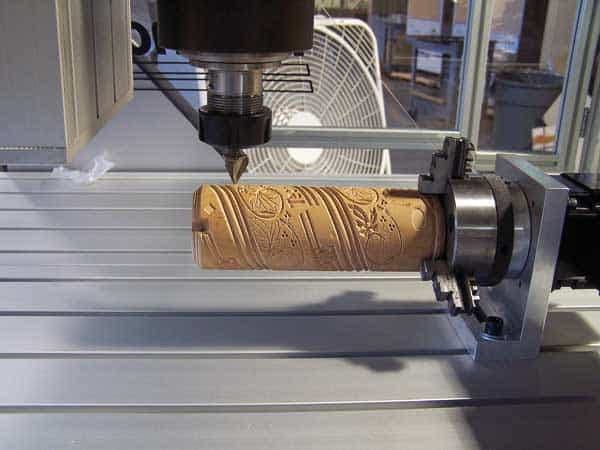
3 axis CNC milling is used to machine flat surfaces, drill holes, and mill shallow pockets with high precision. It's commonly used in creating molds, fixtures, and mechanical parts.
While it's not ideal for deep cavities or multi-angled features, it can handle moderate complexity efficiently. For higher complexity, 5 axis milling is preferred.
Aluminum, steel, brass, ABS plastic, and nylon are the most common. The choice depends on application requirements like strength, heat resistance, and surface finish.
Speed depends on material hardness, tool diameter, and spindle power. Modern 3 axis machines can operate at spindle speeds up to 10,000–15,000 RPM.
Cutting tools can last from hours to several days depending on material, feed rate, and maintenance. Regular inspection and coolant optimization extend tool life.
1. https://www.autodesk.com/solutions/cnc-machining
2. https://www.haascnc.com/machines/mills.html


