From idea to market-ready product, our NPI solutions make every stage easier, faster. Discover How We Help

Views: 222 Author: Tomorrow Publish Time: 2026-03-01 Origin: Site


Content Menu
● Understanding CNC Machining in Granite Fabrication
● Key Advantages of CNC Machining in Granite Shops
>> 1. Unmatched Precision and Accuracy
>> 2. Improved Efficiency and Higher Productivity
>> 3. Enhanced Design Flexibility and Creativity
>> 5. Greater Consistency Across Projects
>> 6. Better Safety for Operators
>> 7. Integration With Digital Design and Automation Systems
>> 8. Cost Efficiency and Long-Term ROI
● Applications of CNC Machining in Granite Shops
● Sustainability and Environmental Impact
● The Role of Skilled Operators in CNC Machining
● Implementing CNC Machining in a Granite Shop
● Future of CNC Machining in Stone Fabrication
● FAQ
>> 1. What is CNC machining in granite fabrication?
>> 2. How does CNC machining improve productivity in granite shops?
>> 3. Can CNC machines handle complex or artistic granite designs?
>> 4. What are the main financial advantages of CNC machining?
>> 5. Is CNC machining suitable for small or medium-sized granite shops?
Granite fabrication is a demanding process that requires both artistic skill and technical precision. As the market for stone countertops, flooring, and architectural elements continues to expand, fabricators face increasing pressure to deliver flawless results quickly and cost-effectively. To meet this demand, many granite shops are transitioning from manual fabrication to automated systems powered by CNC machining.
CNC machining (Computer Numerical Control machining) has completely transformed the stone fabrication industry, enabling manufacturers to achieve higher levels of accuracy, efficiency, and customization than ever before. This technology allows shops to produce intricate designs, streamline production workflows, and ensure consistent quality across all products.
In this article, we will explore in detail the major benefits of CNC machining for granite shops, its impact on productivity and sustainability, and how it positions businesses for long-term success in a competitive market.

CNC machining uses advanced computer technology to control machine tools such as routers, mills, and grinders. In granite fabrication, these machines interpret digital design files—typically created using CAD (Computer-Aided Design) software—and execute precision movements to cut, drill, polish, or engrave granite surfaces with incredible accuracy.
Unlike manual cutting or hand polishing, CNC machining follows exact digital instructions. Once a design is programmed, the machine can repeat the process perfectly, no matter how many pieces are produced. This is particularly beneficial for granite shops that serve commercial clients, where uniformity and speed are vital.
Additionally, CNC systems integrate seamlessly with CAM (Computer-Aided Manufacturing) software, which calculates tool paths, cutting depth, and speed control. This combination ensures each fabrication step is optimized for efficiency and precision.
CNC machining brings a level of precision that manual processes can rarely achieve. Each move of the cutting tool is controlled by pre-programmed computer commands, maintaining tight tolerances and precise symmetry.
Even the most skilled human operator is subject to minor variations in pressure, speed, or angle, but CNC machines consistently deliver perfect cuts and smooth surfaces. This high accuracy is critical in applications such as kitchen countertops, commercial flooring, and monument fabrication, where even a minor discrepancy can compromise the entire design.
Automation is one of the defining benefits of CNC machining. Granite shops often manage multiple orders simultaneously, and manual processing can slow down the entire production schedule. Once a CNC machine is programmed, it can run continuously with minimal human oversight.
This not only saves valuable labor time but also enables continuous operation—even overnight—with little supervision. The efficiency boost allows fabricators to take on more projects within the same timeframe, enhancing shop profitability and meeting customer deadlines more reliably.
Traditional fabrication methods limit the complexity of designs that can be achieved. CNC machining removes those limits, offering near-total design freedom. From custom-shaped countertops and sink cutouts to engraved logos, 3D reliefs, and decorative edges, CNC systems can carve virtually any digital design directly into granite.
For fabrication shops, this ability means they can cater to architects, interior designers, and homeowners looking for unique and artistic stonework. CNC machining empowers manufacturers to move beyond simple cutting—to artistically shape natural stone with remarkable precision and repeatability.
Granite is one of the most expensive raw materials in the construction and design sectors. Traditional cutting often results in significant waste due to miscuts or measurement errors. CNC machining eliminates much of this waste by using computer-optimized layouts.
Advanced nesting algorithms allow the machine to determine the most efficient way to cut slabs, minimizing offcuts and maximizing yield. This leads to better material utilization and higher profitability while also supporting more sustainable manufacturing practices.
Consistency is key when fabricating multiple pieces for large installations. CNC machining ensures that each component matches the exact specifications of the original file, with identical cuts and finishes every time.
This reliability is especially valuable when fulfilling bulk orders or producing standardized product lines. The software stores every design, allowing for easy reproduction months or even years later without any deviation in quality.
Granite fabrication is traditionally labor-intensive and can expose workers to hazards such as flying debris, dust, and heavy vibrations. CNC machining significantly reduces these physical risks by moving the operator away from direct contact with cutting equipment.
Most modern CNC machines are enclosed or partially shielded, ensuring a safer and cleaner workspace. Operators can supervise the process through computer controls, focusing on programming and quality inspection instead of manual cutting, which greatly reduces accident rates.
Many CNC machining systems integrate with 3D scanning and digital templating tools. When measuring kitchen or commercial spaces for stone installation, digital templates can be imported directly into CAD software, which then communicates seamlessly with the CNC machine.
This integration eliminates manual data entry, which reduces errors and speeds up production. Combined with automation, it forms a closed-loop system where design, programming, and fabrication flow smoothly from one stage to the next.
Although CNC machining equipment represents a substantial upfront investment, it quickly pays for itself through increased productivity and reduced manual labor. Shops can produce more pieces in less time, meet tighter deadlines, and cut down rework costs from errors.
Labor costs, which typically make up a large portion of production expenses, decline as one skilled operator can manage multiple machines. Over time, these savings significantly improve return on investment while allowing the business to scale more effectively.
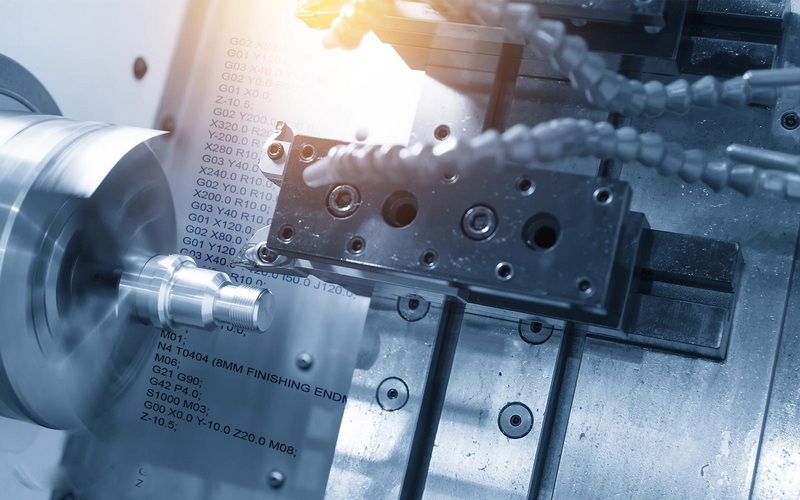
CNC machining is used across nearly every stage of granite fabrication, offering solutions for:
- Precision cutting: Creating slabs, sinks, and countertop blanks with flawless edges
- Edge profiling: Forming consistent decorative edges like ogee, bevel, bullnose, or waterfall styles
- Drilling and slotting: Producing sink and faucet holes with high accuracy
- Surface finishing: Polishing or texturing complex geometric shapes
- Engraving and carving: Adding detailed artwork, company logos, or letter inscriptions
Every workflow that relies on high-precision processing benefits from CNC automation. These machines accommodate varying stone thicknesses and hardness levels while maintaining clean finishes and controlled tool wear.
Environmental responsibility is becoming a critical component of modern manufacturing. Through CNC machining, granite shops can move toward more sustainable operations in several key ways:
- Efficient material use: Nesting algorithms minimize stone wastage.
- Water conservation: Many CNC systems recycle cooling water through closed-loop filtration.
- Energy savings: Smart machine controls optimize spindle speeds and motor loads.
- Reduced emissions: Automated dust collection and enclosure systems minimize airborne particles.
By integrating CNC machining, fabricators not only enhance their environmental credentials but also align with green building certifications and sustainability goals demanded by architects and clients.
While CNC automation reduces manual labor, the human role remains essential. Skilled programmers and operators are required to create and manage digital files, maintain equipment, and ensure accuracy through post-production inspection.
A granite shop that successfully implements CNC machining invests both in high-quality machines and skilled personnel capable of leveraging them effectively. The combination of automated hardware and human craftsmanship guarantees exceptional results.
Transitioning to CNC machining involves several key steps:
1. Assess production needs: Identify bottlenecks, error rates, and volume targets.
2. Select the right machine: Choose equipment with the capacity, cutting dimensions, and tool compatibility suited to your projects.
3. Integrate software: Adopt CAD/CAM software that supports your file formats and design workflows.
4. Train your staff: Offer programming and maintenance training to ensure safe and effective use.
5. Optimize processes: Gradually refine cutting speeds, tool paths, and material handling procedures to achieve the best performance.
A carefully planned adoption strategy ensures a smooth transition and allows fabrication shops to realize the full potential of CNC machining technology.
The future of stone fabrication lies in automation and digital connectivity. As AI and hybrid manufacturing systems evolve, CNC machining will continue to integrate with other technologies such as robotics, 3D scanning, and cloud-based production monitoring.
Emerging innovations like adaptive toolpath optimization and predictive maintenance will make machines more intelligent, autonomous, and reliable. These advancements not only elevate manufacturing efficiency but also open new possibilities for custom stone architecture and art applications.
CNC machining has redefined modern granite fabrication by merging precision, automation, and creativity. Its benefits—ranging from superior accuracy and productivity to enhanced design freedom and sustainability—make it indispensable for competitive granite shops.
By investing in CNC machining, fabricators can elevate product quality, minimize waste, and position themselves at the forefront of technology-driven manufacturing. Whether producing elegant countertops, architectural facades, or intricate memorials, CNC-equipped granite shops set a new standard for quality and innovation in the stone industry.
Contact us to get more information!
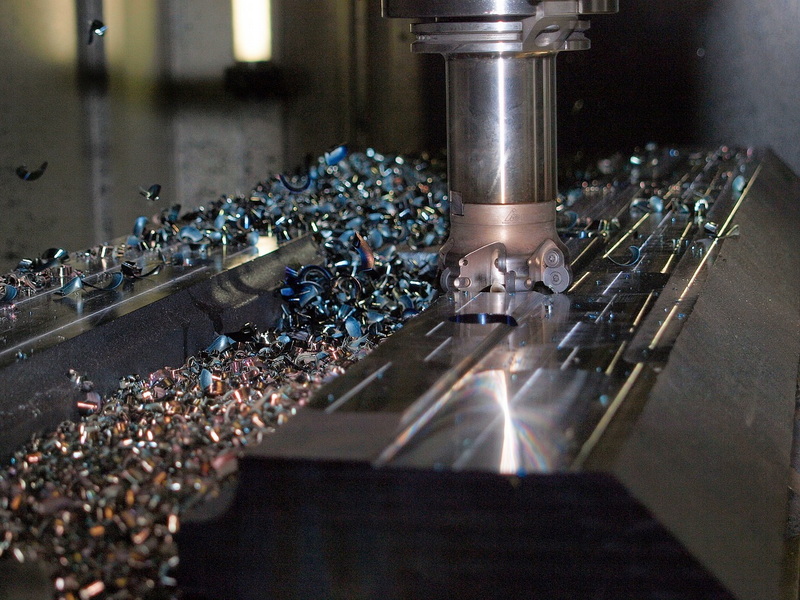
Answer: CNC machining uses computer-controlled tools to cut, drill, and polish granite surfaces according to digital design files, ensuring precision and consistent quality across all fabricated pieces.
Answer: CNC machining automates repetitive cutting and finishing tasks, allowing multiple projects to be completed simultaneously while reducing labor and material costs.
Answer: Yes, CNC machining supports complex patterns, curves, engravings, and 3D reliefs directly from CAD drawings, enabling creative and customized stone fabrication.
Answer: Key benefits include lower rework costs, reduced waste, faster production cycles, and decreased dependence on manual skill labor—leading to long-term profitability.
Answer: Absolutely. Compact CNC systems are now available with affordable pricing, allowing smaller granite businesses to harness advanced automation and compete effectively.


