From idea to market-ready product, our NPI solutions make every stage easier, faster. Discover How We Help

Views: 222 Author: Tomorrow Publish Time: 2026-02-27 Origin: Site
Content Menu
● What Is a CNC Horizontal Milling Machine?
● Major Components of a CNC Horizontal Milling Machine
● How a CNC Horizontal Milling Machine Works
● Advantages of CNC Horizontal Milling
● Applications of CNC Horizontal Milling
● CNC Horizontal vs. Vertical Milling Machines
● Maintenance and Operational Best Practices
● Advanced Features and Modern Innovations
● The Future of CNC Horizontal Milling
● FAQ
>> (1) What distinguishes a CNC horizontal milling machine from a vertical one?
>> (2) What materials can be processed on a CNC horizontal milling machine?
>> (3) How does chip evacuation improve CNC milling performance?
>> (4) Can CNC horizontal milling machines support automation?
>> (5) Are CNC horizontal milling machines worth the cost?
CNC milling is one of the most revolutionary processes in modern manufacturing, allowing for precision, speed, and efficiency that traditional machining methods cannot match. Among the many types of CNC equipment available, the CNC horizontal milling machine stands out as one of the most powerful and productive. It combines automation, accuracy, and cutting strength—making it a cornerstone of industrial production lines in automotive, aerospace, and heavy equipment sectors.
Understanding how a CNC horizontal milling machine works, its components, and its advantages over other configurations helps manufacturers make smarter decisions on process optimization, cost management, and production scaling.
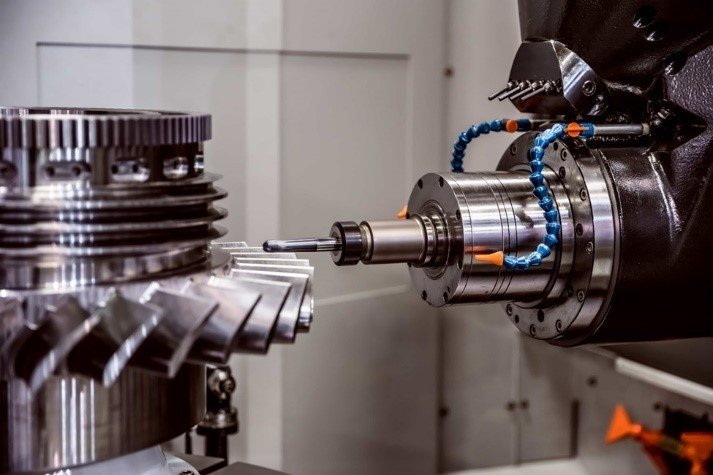
CNC milling (Computer Numerical Control milling) uses a digitally controlled setup to remove material from a solid workpiece through rotary cutting tools. The machine interprets digital design data—commonly generated by CAD and CAM software—and executes precise mechanical movements. These controlled motions allow the creation of parts with extremely tight tolerances, complex geometries, and smooth finishes.
The CNC milling process typically involves three or more axes—X, Y, and Z—enabling the tool or workpiece to move simultaneously in multiple directions. This multi-axis capability allows for intricate operations such as slot cutting, gear shaping, and contouring, which are difficult to achieve through manual machining.
CNC milling machines come in two main orientations: vertical and horizontal. The difference lies in how the spindle—the rotating component that holds the cutting tool—is positioned. Vertical milling machines feature an upright spindle, while horizontal machines mount it parallel to the work table.
A CNC horizontal milling machine is a type of CNC milling equipment with a horizontally oriented spindle. The cutting tools are typically mounted on an arbor or extension that projects from the side of the machine. Unlike vertical mills, in which chips accumulate around the workpiece, the horizontal orientation allows chips and metal debris to fall away naturally, keeping the machining surface clear and reducing the risk of tool wear or heat buildup.
This design makes horizontal mills particularly suitable for handling large, heavy blocks of material. The robust structure and cutting capacity allow these machines to remove larger volumes of material faster and more efficiently. They are widely used in production lines that require precision machining for steel, titanium alloys, cast iron, and other high-strength metals.
Every machine is designed with systems that provide stability, precision, and control. The key components include:
- Spindle and Arbor: The spindle provides the rotational motion, while the arbor supports multiple cutting tools for simultaneous operations.
- Work Table: The platform where workpieces are fixed using vises, clamps, or custom jigs. It moves along X, Y, and Z axes to guide machining.
- Column and Base: Heavy-duty frames that support the spindle assembly and the table, providing structural stability.
- Tool Magazine and Automatic Changer: These systems allow fast switching between tools for multi-step machining.
- CNC Control Panel: The digital interface that interprets G-code, controlling movements, spindle speeds, and feed rates.
Together, these parts ensure that each CNC milling operation maintains consistent accuracy and repeatable quality.
The machining process begins with programming the part geometry into suitable CNC software. The data is converted into G-code, a language the machine controller can interpret. The operator sets up the workpiece, secures it firmly in place, and initiates the machining cycle.
Once the program runs, the machine's spindle rotates the cutting tool at a predefined speed, gradually removing material layer by layer. Thanks to the horizontal spindle orientation, this type of CNC milling can apply more force with less vibration. It maintains tool stability even under heavy cutting loads.
The CNC horizontal milling machine also supports multiple pallet changers, meaning different parts or raw materials can be preloaded. As one pallet is being machined, another can be set up—eliminating downtime and boosting throughput dramatically.
The advantages of CNC horizontal milling machines have made them indispensable in high-precision manufacturing environments. Some of the most notable benefits include:
- High Rigidity and Power: The horizontal setup allows stronger clamping, resulting in greater cutting stability and reduced vibration.
- Superior Chip Evacuation: Gravity assists in chip removal, improving machining quality and reducing thermal buildup on cutting tools.
- High Production Speed: They can remove large amounts of material quickly, making them ideal for heavy-duty applications.
- Multi-Surface Machining: With rotary tables or tombstone fixtures, multiple surfaces of a part can be machined in one setup.
- Consistent Precision: Advanced CNC milling systems ensure identical parts across multiple runs, enabling seamless mass production.
For manufacturers focusing on long-run production efficiency, the horizontal configuration delivers an unmatched balance of accuracy, speed, and tool longevity.
CNC horizontal milling machines are used across nearly every major industrial sector. Their capability to produce complex parts with excellent repeatability makes them essential for:
- Automotive Industry: Production of engine blocks, gear housings, cylinder heads, and brake system components.
- Aerospace Engineering: Fabricating lightweight yet durable parts like structural frames, turbine housings, and wing panels.
- Industrial Tool Manufacturing: Creating high-precision molds, dies, and cutting tools.
- Energy and Heavy Equipment: Producing machinery bases, housings, and components for power generation and construction applications.
- Defense Technologies: Making intricate components that require exacting torsional strength and dimensional accuracy.
These use cases demonstrate the flexibility and reliability of CNC milling for both medium and large-scale production.
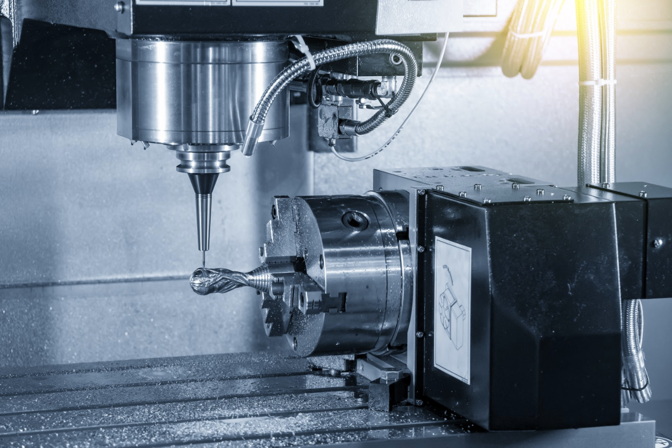
While both machine types utilize similar CNC milling principles, their performance and ideal applications differ significantly.
- Spindle Orientation: Vertical machines have upward-facing spindles suitable for surface milling and die finishing, while horizontal machines feature side-mounted spindles ideal for heavy cutting.
- Material Removal Rate: Horizontal machines achieve faster removal rates, improving the efficiency of bulk material operations.
- Setup and Cost: Vertical mills are simpler and more affordable but require frequent repositioning for complex shapes. Horizontal mills, though more expensive, can complete multi-sided machining in fewer operations.
In short, if precision, strength, and production scale are priorities, the horizontal model is typically the better investment for advanced manufacturing setups.
To maintain consistent performance, operators should perform regular inspections and prevent potential errors that could compromise machining accuracy:
- Clean the work area frequently to prevent chip accumulation.
- Check cutting tools regularly for wear and replace dull ones to prevent vibration or poor surface finish.
- Calibrate the CNC system and ensure spindle alignment is precise.
- Follow prescribed lubrication schedules for linear guides and gears.
- Maintain data backups and software updates for CNC controllers.
Goods maintenance habits lead to higher machine uptime and longer tool life, preserving both product quality and operating efficiency.
Recent advances in CNC horizontal milling focus on automation and digital integration. Key innovations include:
- Multi-Axis Machining: Modern horizontal mills offer up to five axes, enabling simultaneous cutting on complex geometries.
- Automation Integration: Pallet changers, robotic arms, and conveyor systems allow continuous operations with minimal human intervention.
- Real-Time Process Monitoring: Sensors track vibration, temperature, and load conditions, providing predictive maintenance alerts.
- AI-Powered Optimization: Artificial intelligence analyzes cutting data to fine-tune feed rates and spindle speeds automatically.
- Green Machining Practices: Coolant filtration and energy-efficient transmissions reduce environmental impact.
These features demonstrate how CNC milling is evolving into a highly intelligent, automated process central to smart manufacturing systems.
The future of CNC horizontal milling is shaped by the convergence of Industry 4.0, data analytics, and sustainable manufacturing goals. Future machines will likely include:
- Self-learning control systems that adjust cutting parameters dynamically.
- Cloud-based monitoring for global factory networks, ensuring consistent quality control.
- Hybrid systems that integrate additive manufacturing for near-net-shape component production.
- Eco-friendly operation modes to minimize energy consumption and waste.
As global production becomes more data-driven, the role of CNC horizontal milling machines will expand beyond machining—into real-time process orchestration, predictive care, and digital thread continuity across the supply chain.
The CNC horizontal milling machine represents the pinnacle of precision machining, balancing automated intelligence with mechanical power. Its versatility, rigidity, and advanced control systems make it indispensable in industries demanding accuracy and speed. By adopting horizontal CNC milling, manufacturers gain the ability to boost productivity, ensure repeatability, and meet the growing need for complex industrial parts at a global scale.
Whether in aerospace assembly, automotive production, or metal tooling, the CNC horizontal milling machine stands as a foundation of modern industrial development—efficient, innovative, and ready for the next era of intelligent manufacturing.
Contact us to get more information!
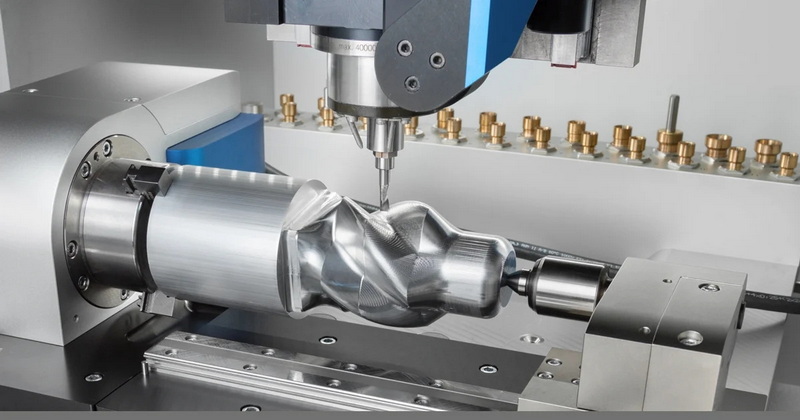
The key difference is spindle orientation. Horizontal machines have a side-mounted spindle, ideal for deep cuts and heavy operations, while vertical machines have an upright spindle for surface-level milling.
They can handle a wide range of materials, from soft aluminum and plastics to tough alloys like titanium, stainless steel, and cast iron.
Efficient chip removal prevents re-cutting of waste material, minimizes tool heat, and protects the surface finish—directly improving processing speed and accuracy.
Yes. Many modern systems include pallet changers, robotic arms, and sensor-driven automation for lights-out operation, maximizing production uptime.
Although more expensive than vertical mills, their efficiency, speed, and lower tool wear make them highly cost-effective in medium- to large-volume production runs.


