From idea to market-ready product, our NPI solutions make every stage easier, faster. Discover How We Help

Views: 222 Author: Tomorrow Publish Time: 2026-02-20 Origin: Site
Content Menu
● Understanding Macros in CNC Machining
● How Macros Operate in CNC Machining
● Types of Macros Used in CNC Machining
● Key Benefits of Using Macros in CNC Machining
● Practical Applications of Macros in CNC Machining
● Macro Programming in N CNC Machining Systems
● Advantages in Industrial-Scale CNC Operations
● Common Challenges in Macro Implementation
● Macros and Smart Manufacturing Integration
● Training and Best Practices for Macro Programming
● The Future of Macros in CNC Machining
● FAQ
>> 1. What is the main advantage of using macros in CNC machining?
>> 2. Are macros specific to certain CNC controllers?
>> 3. How do macros improve accuracy in CNC machining?
>> 4. Can beginners learn macro programming easily?
>> 5. Do macros contribute to smart manufacturing?
In today's era of advanced manufacturing, CNC machining plays a central role in shaping the products and components we use daily—from aerospace parts to precision medical tools and automotive prototypes. Every movement, angle, and tool path executed by a CNC machine is meticulously programmed to ensure accuracy and repeatability. However, as machining operations become more complex, so does the need for automation and intelligent control. This is where macros come in. In the world of CNC machining, macros provide a way to automate logical tasks, calculate variables, and handle repetitive work with minimal manual input.
Macros transform CNC machining from a static programming process into a dynamic, data-driven operation. Using logic-based coding and numerical variables, they enable machines to adapt behavior, make decisions, and perform flexible machining sequences — effectively making CNC systems smarter and more efficient.
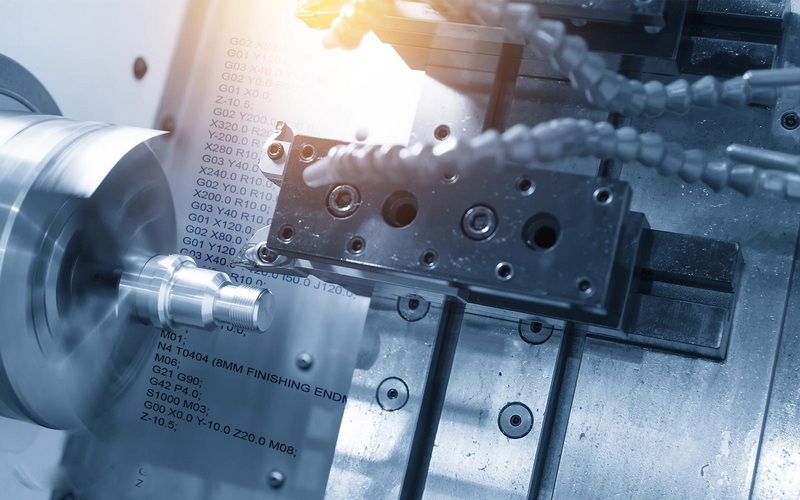
In CNC machining, a macro is a small subprogram built with variables and conditional logic that automates a series of commands. It acts like a reusable shortcut that performs repetitive or parameter-dependent functions automatically. Instead of manually writing dozens of lines of G-code, a machinist can use a macro to define parameters such as the number of parts, hole distance, or tool compensation values, and the machine will execute automatically based on the macro's logic.
For instance, if an operator needs to mill a pattern of holes spaced at equal distances, the macro can calculate each coordinate based on an initial position and a step size. As a result, programming complexity decreases dramatically, and errors related to manual input are minimized.
Macros are often built into modern N CNC machining systems, where users can define logical relationships between operations, materials, and machine tools. Through this, macro programming becomes the foundation for flexible, intelligent machining automation.
At their core, macros in CNC machining depend on variables. These variables can store values for axes coordinates, diameters, depths, offsets, feed rates, or speeds. By changing variables, you can execute the same machining process under different conditions without rewriting entire programs.
Macro operation is driven by logical operators and control structures, such as conditional branches and loops, which allow the program to evaluate conditions and execute instructions accordingly. Typical macro elements include:
- Variables identified by numbers (for example #100 or #500).
- Mathematical expressions that calculate dynamic parameters.
- IF-THEN statements that define conditional responses.
- WHILE loops that repeat commands until a certain condition is met.
- Branching and GOTO commands for executing custom routines.
Once executed, the CNC controller reads the macro, calculates the required values, and performs machining operations precisely as defined by its internal logic. This enables CNC machining operations that can handle real-time adjustments or conditional steps, such as skipping unfinished material zones or compensating for tool wear.
Macros in CNC machining are categorized by scope and functionality.
Local macros only exist within a single program session and are used for temporary calculations or limited automation. Once the program ends or the machine restarts, these variables are reset. This type is ideal for quick, job-specific logic like calculating drilling positions or temporary offsets.
Common macros are stored permanently in the controller's memory and can be accessed by multiple programs. They are valuable for repetitive operations, such as standard tool changes, tapping cycles, or probing sequences. Manufacturers often maintain a library of these common macros to save time and ensure consistency.
System macros are predefined by CNC controller manufacturers and manage critical functions of the machine itself. These include automatic tool changes, cycle starts, work offset settings, and pallet shuttling. While users cannot always modify system macros, they can call them as subroutines to enhance automation.
Macro programming amplifies both performance and flexibility in CNC machining. The main advantages include:
- Enhanced productivity: Operators save programming time by automating repeated code segments.
- Error reduction: Standardizing repetitive actions eliminates human error in manual entry.
- Programmable flexibility: Machinists can revise parts or parameters through a simple variable change rather than rewriting full programs.
- Consistency and repeatability: Identical operations can be replicated across batches effortlessly.
- Reduced setup time: Machines can automatically measure, calibrate, and begin operations with minimal manual involvement.
- Integration into smart factories: Macros link CNC machining with digital monitoring, adaptive control, and real-time production data.
As manufacturing environments adopt Industry 4.0 technology, macros become a bridge between traditional machine control and digital automation systems. They allow machines to not only execute commands but respond intelligently to dynamic conditions.
Macros are widely applied across diverse CNC machining tasks. Below are a few examples that demonstrate their versatility:
- Multi-hole drilling cycles: Macros calculate and generate hole positions automatically based on defined spacing, number of holes, and starting coordinates.
- Automatic tool compensation: Tool wear can be monitored through sensors, and macros can update tool offsets automatically when deviation is detected.
- Fixture offset setup: Macros help simplify part alignment by calculating zero positions and adjusting offsets automatically.
- Adaptive feed rate control: Processes can adjust feed and speed dynamically using macro logic tied to material hardness or spindle load.
- Part counter macros: Machines can count the number of completed parts, reset after a batch, or send completion signals to operators or ERP systems.
These applications illustrate macro programming's ability to reduce programming complexity while enhancing adaptability in production processes.
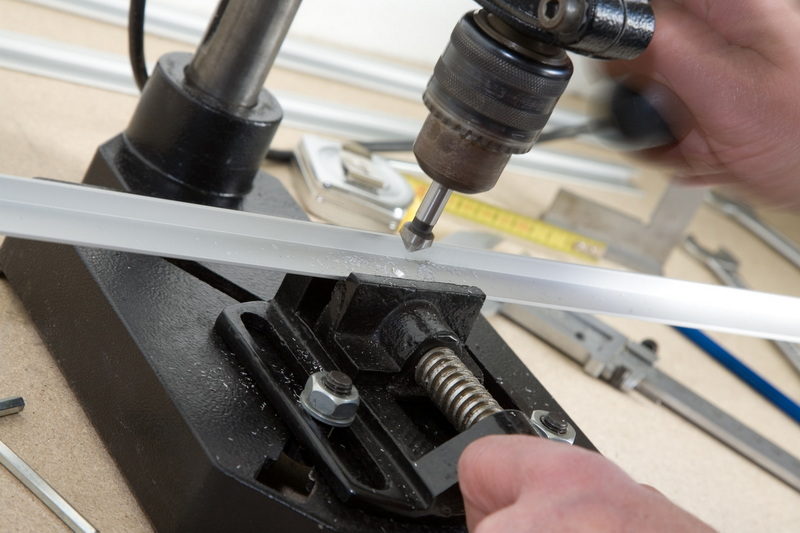
N CNC machining platforms are often designed with enhanced macro functionality, allowing operators to store, recall, and run macros efficiently. These advanced systems typically provide memory banks or directories for standardized macro storage and come with variable templates for common machining routines.
To program macros effectively within N CNC machining systems, consider the following steps:
1. Identify repetitive processes such as hole patterns, threading, or tool adjustments.
2. Define variables for parameters like depth, spacing, or tool number.
3. Use logical commands (IF, WHILE, GOTO) to create intelligent conditions.
4. Store macros as callable subroutines with descriptive identifiers.
5. Test macros through simulation before executing on actual parts.
Once programmed and verified, these macros can be reused indefinitely. In a multi-machine environment, one standardized macro library helps maintain unified machining strategies across departments and operators.
In mass production facilities, macros are essential to maintaining productivity and traceability. By integrating macros, companies benefit from:
- Standardized operational templates that guarantee identical machining results.
- Reduced downtime as fewer setups and fewer programming steps are required.
- Real-time data feedback on machine cycles, tool wear, part counts, or tolerance limits.
- Seamless process integration with quality control and IoT-based systems.
Because macro logic supports both automation and decision-making, it plays a key role in transforming conventional CNC machining into intelligent manufacturing ecosystems.
Despite their benefits, macros can introduce complications if handled incorrectly. Common issues include:
- Programming errors due to incorrect variable assignment or syntax.
- Overcomplex macros that become difficult for other operators to interpret.
- Syntax differences among various CNC controls such as Fanuc, Siemens, or Haas.
- Limited documentation causing confusion when maintaining macro libraries.
The solution lies in disciplined programming practices: clear documentation, consistent naming conventions, and extensive testing before deployment. Programmers should maintain simple, modular macros that perform one clear function and can be combined as needed — similar to building blocks.
By developing structured macro libraries, manufacturers enhance maintainability while ensuring reliability across a wide range of parts and projects.
Modern smart factories rely on real-time communication between machines, sensors, and software. Macros, when properly integrated, act as the decision-making layer between physical machines and digital data systems. They can respond to process data by adjusting machining parameters for optimized results.
For example, a macro can automatically slow spindle speed when vibration sensors detect chatter, or it can change tool offsets based on inspection results. These intelligent responses reduce defects, extend tool life, and maintain stable production quality.
As CNC machining evolves, macros are gaining the capability to connect directly with cloud monitoring systems and AI-driven predictive controls. This enables adaptive machining operations — where machines learn patterns and continuously optimize themselves for efficiency and accuracy.
Learning to write macros effectively is a skill that every CNC programmer should develop. Here are a few best practices:
- Understand G-code deeply before attempting macro automation.
- Start small by creating macros for simple repetitive tasks.
- Use descriptive comments to explain logic and variable functions.
- Simulate before execution using control software or dry runs.
- Maintain consistency in variable numbering and naming for readability.
- Document every macro to create long-term knowledge bases for the workshop.
Well-trained machinists who master macros can dramatically enhance a manufacturing team's efficiency and efficiency-to-error ratio.
Looking ahead, the role of macros in CNC machining will expand as artificial intelligence, IoT, and digital twins become commonplace in production systems. Soon, macros will not only execute coded logic but will also learn, adapt, and communicate with wider networks.
Some future developments may include:
- Integration of macro logic with machine learning for predictive tool maintenance.
- Automatic optimization of machining paths using sensor feedback.
- Deep connectivity between macro commands and enterprise-level MES/ERP systems.
- Real-time 3D visualization of the program logic for operators and engineers.
These innovations will make CNC machining more autonomous, intelligent, and energy-efficient, empowering manufacturers to produce higher-quality products with less waste.
Macros are a fundamental yet often underutilized feature that can significantly enhance CNC machining performance, flexibility, and intelligence. By automating repetitive tasks and enabling logic-based programming, macros transform standard machining into smart manufacturing.
Through the capabilities of N CNC machining systems, macros bridge traditional craftsmanship with modern digital automation. They bring consistency, adaptability, and precision into every part produced and lay the foundation for the future of intelligent manufacturing.
Mastering macros means mastering the ability to control CNC machining with greater creativity and efficiency — a core skill for every forward-thinking machinist and manufacturing engineer.
Contact us to get more information!
Macros automate repetitive or parameter-based operations, significantly reducing manual programming and improving production efficiency.
While most systems like Fanuc, Haas, and Siemens support macros, the syntax and variable structure can vary, so operators should always check the manufacturer's documentation.
By eliminating repetitive manual data entry and enabling logical corrections, macros ensure dimensional consistency and reduce machining deviations.
Yes. Once familiar with G-code, learning macro logic is straightforward. It primarily requires understanding how variables and loops operate.
Absolutely. Macros enable adaptive processes, real-time machine response, and connectivity between CNC machining and digital systems, forming a foundation for Industry 4.0 environments.


