From idea to market-ready product, our NPI solutions make every stage easier, faster. Discover How We Help

Views: 222 Author: Tomorrow Publish Time: 2026-02-14 Origin: Site
Content Menu
● Understanding Countersinking in CNC Machining
● How Countersinks Are Made in CNC Machining
● Tools and Equipment Used for Countersinking
● Materials Suitable for Countersinking in CNC Machining
● Key Benefits of Countersinking in CNC Machining
● Factors Affecting Countersink Quality
● Applications of Countersinks in CNC Machining
● Best Practices for High-Quality Countersinks in CNC Machining
● Recent Developments in Countersinking Technology
● Common Problems and Troubleshooting
● FAQ About Countersinks CNC Machining
>> 1. What is the purpose of countersinking in CNC machining?
>> 2. Which angles are most common for countersinks?
>> 3. What's the difference between counterboring and countersinking?
>> 4. Can all materials be countersunk using CNC machining?
>> 5. How do I prevent chatter during countersinking?
Countersinking is one of the most precise and widely practiced finishing operations in modern CNC machining processes. It plays a crucial role in improving both the functionality and visual quality of mechanical parts, especially in applications where fasteners must sit flush with or below the surface of a material.
Understanding how countersinks CNC machining works helps manufacturers and design engineers create parts with optimal performance, reduce assembly issues, and ensure consistent machining precision across production runs.
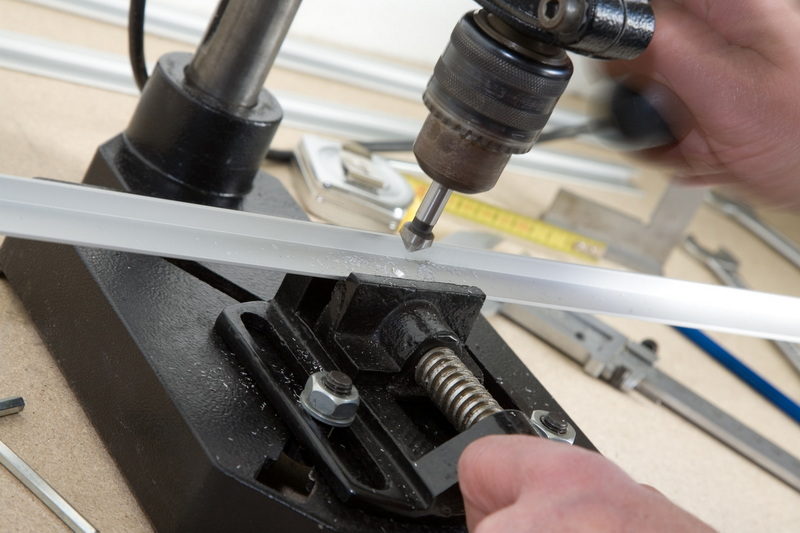
In CNC machining, countersinking refers to cutting a conical recess at the top of a pre-drilled hole. This operation enables the head of a flat-head screw, bolt, or rivet to sit perfectly level with the surface of the material, preventing protrusions that may interfere with assembly, aesthetics, or safety.
A properly machined countersink helps distribute stress evenly around the screw head, minimizing the risk of cracking or fatigue under load. The most common countersink angles are 82°, 90°, and 100°, chosen based on the screw's geometry or specific industry standards.
Countersinking differs significantly from counterboring, which creates a cylindrical recess instead of a conical one. Whereas counterboring targets depth and seating for socket-head screws, countersinking prioritizes precision angle formation and surface finish — two parameters where CNC machining excels due to automated control and repeatability.
A CNC machining system performs countersinking by using precision tools controlled through programmed instructions. The process involves several stages to ensure accuracy and uniformity:
1. Drilling or Pre-Hole Creation
The process begins with drilling the primary hole. This hole determines the screw's diameter and sets the base for the countersinking step.
2. Tool Selection
A countersink cutter with the required included angle is mounted in the CNC spindle. Depending on material and surface requirements, single-flute, multi-flute, or zero-flute countersinks may be selected.
3. Parameter Setting
CNC machinists program spindle speed, cutting depth, and feed rate to match the material's hardness and desired finish quality.
4. Countersinking Operation
The cutter gradually removes material from the top edge of the pre-drilled hole, forming a cone-shaped cavity. In precision CNC machining, this step is controlled to fractions of a millimeter.
5. Final Inspection
Measurement tools and coordinate measuring machines (CMMs) check the angle, diameter, and finish to ensure all countersinks meet tolerance specifications.
This high level of control provided by CNC equipment guarantees identical countersinks across entire production batches — critical for mass production in aerospace, automotive, and electronic component assembly.
Precision tools are the foundation of successful countersinks CNC machining operations. The primary categories include:
- Single-Flute Countersinks: Best for deburring and light cutting, especially with soft materials like aluminum and brass.
- Multi-Flute Countersinks: Commonly used for hard metals such as steel or titanium, offering smoother finishes with reduced vibration.
- Zero-Flute Countersinks: Ideal for plastics, as they minimize heat buildup and melting.
- Combination Tools: Incorporate both drill and countersink capabilities, allowing operations to be merged and improving production speed.
Tool materials also play a major role. High-speed steel (HSS) tools are economical and versatile, while carbide and cobalt tools provide superior wear resistance for high-volume CNC machining tasks. For extreme-performance applications, diamond-coated cutters are sometimes used to maintain micro-level accuracy.
CNC machining allows countersinking on a wide range of materials, from metals to plastics. Each type requires specific tooling and parameters:
- Aluminum: Soft, ductile, and easy to machine. Produces clean countersinks at high feed rates.
- Steel and Stainless Steel: Stronger materials requiring slower feed speeds and the use of carbide tools to resist wear.
- Brass and Copper: Produce mirror-like finishes and are excellent for precision applications.
- Plastics (e.g., ABS, Nylon, PEEK): Machined at low speeds to avoid deformation from heat.
- Titanium and Inconel: Require rigid setups, stable feeds, and continuous coolant supply due to high strength.
The machinist's goal is to balance cutting parameters and tool quality so that countersinks remain consistent across parts, regardless of the material's mechanical properties.
The countersinks CNC machining process enhances design performance and manufacturing efficiency in several ways:
- Improved Assembly Fitment: Screws and bolts sit neatly within the surface, eliminating interference issues.
- Enhanced Product Safety: Flush fittings prevent snagging or cutting hazards.
- Better Stress Distribution: A conical contact surface spreads load evenly, increasing joint strength.
- Improved Aesthetics: Countersunk screw heads create a smooth, professional look in visible assemblies.
- Increased Manufacturing Repeatability: CNC machining ensures consistent results across multiple components.
- Adaptability: Works for both metals and nonmetals, providing engineers design flexibility.
Countersinking is therefore not only a functional process but also a key contributor to product reliability and appearance.
Achieving the ideal countersink during CNC machining depends on several interrelated factors:
- Tool Geometry and Angle: Each tool's shape affects chip evacuation and vibration behavior.
- Cutting Speeds and Feeds: Too high a speed can cause chatter, while too low may lead to rough surfaces.
- Tool Condition: Worn tools deteriorate surface finish and precision.
- Workholding Stability: Secure clamping reduces vibration, critical for repeatability.
- Coolant Flow: Prevents excessive heat, minimizing distortion or tool damage.
Well-managed operations consider these variables together to maintain accuracy and extend tool life.
Countersinks CNC machining operations have a broad range of uses across various sectors:
- Aerospace Industry: Ensures aerodynamic flush fittings for rivets and screws on aircraft bodies.
- Automotive Manufacturing: Provides seamless assembly for interiors and exterior panels.
- Electronics and Consumer Devices: Used to mount casings and circuit boards securely without creating external protrusions.
- Medical Devices: Offers contamination-free, smooth surfaces essential for surgical equipment.
- Industrial Machinery: Helps improve mechanical alignment and assembly efficiency.
In modern production, countersinking has become a standard finishing process wherever precision fastening or streamlined design is required.
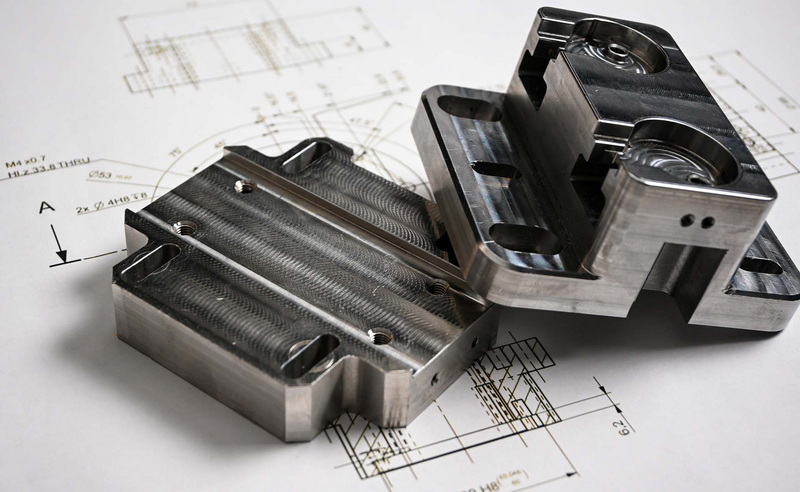
Experienced machinists follow these guidelines to optimize results:
- Select the correct angle that matches the fastener type.
- Ensure tool sharpness through regular replacement or resharpening schedules.
- Apply appropriate cutting fluids to maintain temperature control.
- Use pilot holes precisely dimensioned for screw sizes.
- Implement inspection programs such as in-cycle probing for immediate feedback during CNC machining.
The integration of AI-driven process monitoring and advanced tooling design continues to improve countersink accuracy, reducing rework and scrap rates.
New innovations in the CNC machining industry are further refining the countersinking process:
- Adaptive Toolpath Programming: Software dynamically adjusts spindle speed and feed rate for optimal surface quality.
- High-Performance Tool Coatings: Titanium aluminum nitride (TiAlN) coatings extend tool life under high thermal loads.
- Automated Tool Change Systems: CNC machines automatically switch between drilling and countersinking tools, improving throughput.
- Digital Twin Simulation: Virtual models predict cutting behavior and tolerances before physical machining begins.
These advancements enable manufacturers to reach a new level of precision and consistency, crucial for high-end applications.
Even with precise CNC machining, countersinking can present challenges. Some typical issues include:
- Chatter Marks: Caused by vibration due to incorrect feeds or loose clamping.
- Burr Formation: Often results from worn tools or excessive feed rates.
- Misalignment: Occurs when the tool and pilot hole axes are not perfectly aligned.
- Surface Roughness: Indicates improper cutting speeds or tool geometry.
Engineering teams address these problems by revising tool paths, checking spindle runout, and optimizing machining parameters.
In summary, countersinks CNC machining is a vital finishing operation that enhances both the functional and visual aspects of manufactured components. Through the precision and repeatability of modern CNC machining systems, this process ensures accurate hole geometry, improved fastening performance, and flawless surfaces.
As manufacturing demands grow for tighter tolerances and superior quality, countersinking remains an indispensable step in producing reliable, well-engineered parts across aerospace, automotive, and precision equipment industries.
Contact us to get more information!
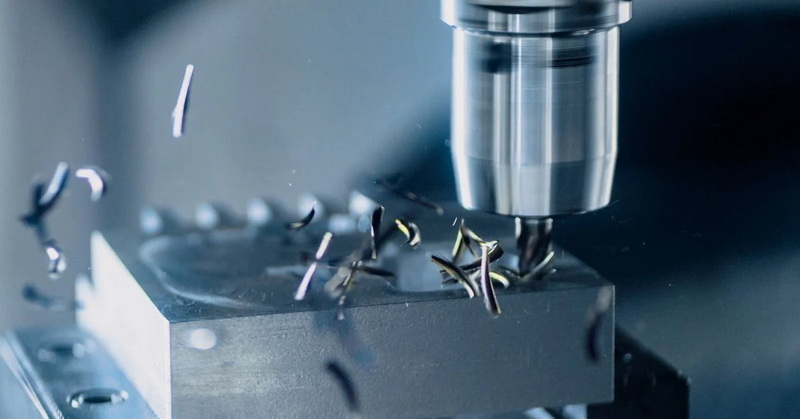
Countersinking in CNC machining provides a conical hole that allows a screw head to sit flush with the surface, improving safety and aesthetics.
The most widely used angles are 82°, 90°, and 100°, selected depending on the type of fastener and design specifications.
Counterboring creates a flat-bottomed hole, while countersinking forms a conical shape. Both can be precisely executed using CNC machining for accurate fitment.
Most metals and plastics can be countersunk effectively, provided the correct tool, speed, and feed settings are applied to the CNC machining process.
Chatter can be minimized by using sharp tools, stabilizing fixtures, applying cutting fluid, and optimizing feed rates.
1. https://www.machiningcloud.com/
2. https://www.cnccookbook.com/
3. https://www.makeitfrommetal.com/


