From idea to market-ready product, our NPI solutions make every stage easier, faster. Discover How We Help

Views: 222 Author: Tomorrow Publish Time: 2026-02-24 Origin: Site


Content Menu
● Understanding CNC Milling Technology
● What Is a 4 Axis CNC Milling Machine?
● Main Components of a 4 Axis CNC Milling Machine
>> 2. Spindle
>> 6. Coolant and Chip Management System
● How Does a 4 Axis CNC Milling Machine Work?
● Advantages of Using a 4 Axis CNC Milling Machine
● Common Industrial Applications
● 3 Axis vs. 4 Axis vs. 5 Axis CNC Milling
● Types of 4 Axis CNC Milling Machines
● Choosing the Right 4 Axis CNC Milling Machine
● Maintenance and Operation Tips
● Future Trends in 4 Axis CNC Milling Technology
● FAQ
>> 1. What is the main function of a 4 axis CNC milling machine?
>> 2. Can 4 axis CNC milling machines handle complex parts?
>> 3. What are common materials used in 4 axis CNC milling?
>> 4. How does 4 axis CNC milling improve efficiency?
>> 5. What industries benefit most from 4 axis CNC milling?
CNC milling has revolutionized modern manufacturing by enabling high-precision, automated, and repeatable machining of metals, plastics, and composite materials. From aerospace components to medical implants, CNC milling technology ensures that even the most complex designs are executed with unmatched accuracy. Among various machine configurations, the 4 axis CNC milling machine strikes a balance between flexibility, complexity, and cost-effectiveness.
In this article, we'll explore in depth what defines a 4 axis CNC milling machine, how it works, its components, applications, advantages, and why it remains a vital tool for industrial production.
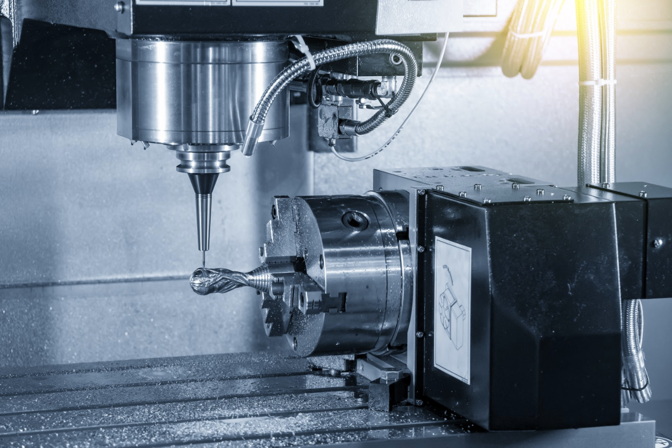
To truly grasp the concept of a 4 axis CNC milling system, it helps to start with the basics of CNC machining itself.
CNC milling stands for Computer Numerical Control milling — a subtractive manufacturing process that removes material from a solid workpiece through controlled rotational tool motion. Machine operators or engineers program tool paths using CAD (Computer-Aided Design) and CAM (Computer-Aided Manufacturing) software. The CNC controller translates this digital model into actual movements, commanding the cutting tools and worktable with precise timing.
Traditional milling machines required manual operation, repositioning, and operator skill to ensure product accuracy. CNC milling replaced that human dependency with automation, producing components with consistent tolerances down to microns.
Every CNC milling machine works along multiple linear axes — typically X (horizontal), Y (vertical), and Z (depth). A 4 axis or 5 axis machine adds rotational freedom, improving access to multiple sides of a workpiece without manual adjustment.
A 4 axis CNC milling machine is an advanced version of the standard 3-axis configuration. It not only moves along X, Y, and Z directions but adds an additional rotational axis, called A-axis, which rotates around the X-axis.
This fourth axis allows the workpiece to rotate during machining, enabling the tool to cut from different angles or sides automatically. The result is improved accuracy, reduced setup time, and the ability to machine features on cylindrical or curved surfaces that are impossible on a regular 3-axis system.
Think of a 4 axis CNC milling machine as a bridge between basic 3-axis and high-end 5-axis systems — more affordable than the latter, yet far more capable than the former.
Although it resembles traditional milling setups, the inclusion of an extra axis means additional components that handle rotational motion.
The base supports the weight of the machine and absorbs vibration during milling. The vertical column houses the motor, spindle system, and control mechanisms that move the headstock along the Z-axis.
This is the rotating mechanism that holds the cutting tool. In 4 axis CNC milling, spindle speed and torque must be precisely controlled to ensure accurate engagement with the workpiece.
The defining part of a 4 axis milling machine, the rotary table, enables workpiece rotation around the X-axis. It allows machining from multiple angles, performs incremental positioning, and supports continuous rotation when required.
Automatic Tool Changers (ATCs) switch tools during machining, improving production speed. A typical 4 axis CNC milling machine may carry 10 to 40 tools depending on its size and controller type.
The controller interprets digital G-code and coordinates all axis movements. High-end control systems support simultaneous 4-axis interpolation, meaning all four axes can move at once for complex geometries.
Efficient coolant delivery and chip evacuation are essential for continuous production, especially when machining metals like titanium or stainless steel.
The operation of a 4 axis CNC milling system follows a systematic workflow that blends software programming with mechanical precision.
1. Design Creation – The process begins with a 3D CAD model designed using software such as SolidWorks, AutoCAD, or Fusion 360.
2. Tool Path Generation – CAM software converts the 3D design into a toolpath and generates corresponding G-code commands that specify how the cutting tool should move.
3. Setup and Calibration – The operator loads the workpiece into the machine, clamps it onto the rotary table, and sets the zero point reference for each axis.
4. Machining Process – As the spindle rotates the cutting tool, the X, Y, Z, and A axes move simultaneously or sequentially to achieve the desired geometry.
5. Inspection and Finishing – Once machining is complete, parts are measured using coordinate measuring machines (CMM) or optical scanners to confirm tolerances.
This fully automated workflow allows CNC milling systems to run unattended for extended periods, reducing labor costs and production time.
Opting for a 4 axis milling configuration provides several practical and financial benefits.
- Reduced Setup Time: The ability to machine multiple surfaces without repositioning saves considerable time during production runs.
- Improved Accuracy: Elimination of human repositioning reduces risk of error and ensures dimensional consistency.
- Complex Part Capability: Ideal for parts that require angled holes, slots, or grooves, such as turbine blades and prototype housings.
- Superior Surface Quality: Continuous rotational motion creates smooth surface finishes on cylindrical or contoured components.
- Capable of Continuous 4-Axis Machining: The rotary table allows synchronized motion for helical engraving, curve contouring, or circular pocketing operations.
- Higher Productivity: Automation and reduced downtime boost output in both small-batch and high-volume production environments.
By combining the efficiency of automation with multi-axis precision, 4 axis CNC milling delivers exceptional manufacturing performance.
The use of 4 axis CNC milling machines spans various industries where intricacy, durability, and precision are mandatory.
- Aerospace Engineering: Producing fan blades, impellers, and turbine shafts that require symmetry and tight tolerances.
- Automotive Industry: Machining complex engine blocks, exhaust ports, and cam housings.
- Medical Sector: Manufacturing orthopedic implants and dental components with organic contours.
- Tool and Die Making: Creating molds with undercuts or sides that need angled machining.
- Electronics Manufacturing: Milling housings, aluminum enclosures, and connector components with delicate features.
In each sector, 4-axis CNC milling eliminates repetitive setups and improves throughput while maintaining strict dimensional precision.
To choose the best machine for your operations, it's helpful to understand how each configuration differs.
| Axis Type | Number of Movements | Features | Ideal Use |
|---|---|---|---|
| 3 Axis | X, Y, Z | Basic milling, simple flat features | Entry-level and basic operations |
| 4 Axis | X, Y, Z + A (rotation around X) | Machining on multiple sides, holes around cylinders | Medium complexity, general manufacturing |
| 5 Axis | X, Y, Z, A, B | Simultaneous rotation on multiple planes, complex contours | Aerospace, medical, high-end precision work |
A 4 axis system adds versatility without the steep cost of a 5 axis setup, making it ideal for mid-level manufacturers seeking efficient workflow automation.
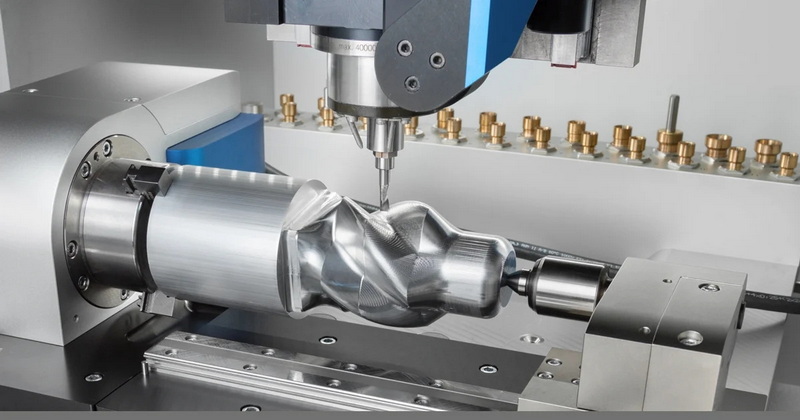
Depending on design and configuration, there are mainly two types of 4-axis setups:
This configuration integrates a motorized rotary table onto the bed of a 3-axis milling system. It's commonly used for smaller components and prototype work where full 4-axis synchronization is not always needed.
This advanced design features a tilting and rotating table built directly into the machine's structure, offering superior rigidity and high-speed capability. Trunnion-style machines are preferred for heavy-duty or continuous machining cycles.
Each configuration offers unique benefits depending on part geometry, production scale, and material type.
Before investing in a new CNC milling system, several factors should guide your decision:
1. Material Compatibility: Check machine rigidity and spindle power for tougher materials like steel or titanium.
2. Table Size and Load Capacity: Match the rotary table size to your workpiece dimensions.
3. Spin Speed and Torque: Higher speed allows faster cutting, but torque ensures power on heavy cuts.
4. Accuracy and Repeatability: Review machine tolerance ratings to confirm they meet your production goals.
5. Software Integration: Make sure the machine is compatible with your CAD/CAM system.
6. Maintenance Support: Availability of local service centers is vital for long-term operation.
Considering these factors ensures your purchase delivers optimal productivity and return on investment.
Routine maintenance is essential to keep your 4 axis CNC milling machine in top working condition.
- Clean after every run: Remove chips, dust, and coolant residues.
- Lubricate moving parts: Prevent friction and wear on guide rails and ball screws.
- Check spindle alignment and tool length offsets: Regular calibration maintains machining precision.
- Inspect belts, hoses, and couplings: Replace worn parts promptly.
- Monitor control software: Update regularly for improved performance and bug fixes.
A preventive maintenance schedule reduces downtime and extends machine service life.
The world of CNC machining continues to evolve with new technologies that make systems smarter, faster, and more connected.
- AI-Powered Toolpath Optimization: Artificial intelligence analyzes machining data in real-time to reduce cutting time and extend tool life.
- Industry 4.0 Integration: IoT sensors and cloud connectivity allow predictive maintenance and performance monitoring.
- Hybrid Manufacturing: Combining CNC milling with additive manufacturing for complex hybrid parts.
- Eco-Friendly Coolant Systems: Modern designs reduce oil use and improve energy efficiency.
Future 4 axis CNC milling machines will focus not only on speed and accuracy but also on sustainability and digital integration.
A 4 axis CNC milling machine represents an important innovation in the manufacturing industry — providing the right balance between flexibility, speed, and cost. By adding a rotational motion to the traditional linear axes, it enables complete machining of a workpiece in a single setup.
For industries like aerospace, automotive, and medical technology, adopting 4 axis CNC milling means fewer setups, superior accuracy, and higher throughput. As technology continues to advance, these machines will become even more automated, connected, and indispensable for precision production worldwide.
Contact us to get more information!
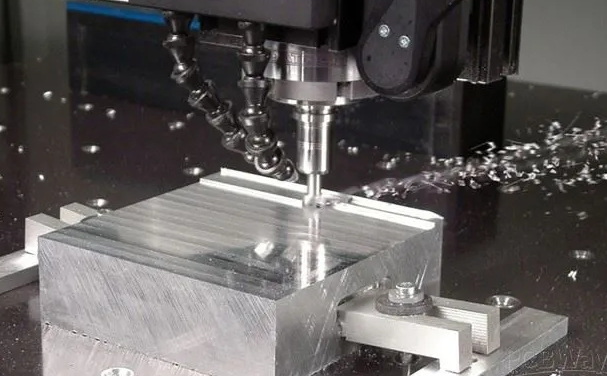
It allows the workpiece to rotate around one axis (A-axis), enabling cutting from multiple angles and reducing manual repositioning.
Yes. The additional rotational movement enables the machining of intricate cylindrical or contoured designs efficiently.
Common materials include aluminum, stainless steel, brass, copper, titanium, plastics, and carbon fiber composites.
The rotational axis reduces setup time, increases precision, and allows multi-surface machining in a single operation.
Aerospace, automotive, medical, and mold manufacturing are the main sectors leveraging 4 axis CNC milling for advanced production.
1. https://www.autodesk.com/solutions/cnc-machining/overview
2. https://www.mastercam.com/solutions/milling/
3. https://www.hurco.com/en-us/machines/milling/4-axis
4. https://www.omnibearingcnc.com/blog/what-is-4-axis-cnc-milling-machine


