From idea to market-ready product, our NPI solutions make every stage easier, faster. Discover How We Help

Views: 222 Author: Tomorrow Publish Time: 2026-02-18 Origin: Site


Content Menu
● Understanding CNC in Milling
● The Basics of CNC Milling Operation
● Key Components of a CNC Milling Machine
● Types of CNC Milling Machines
>> 1. Vertical CNC Milling Machines
>> 2. Horizontal CNC Milling Machines
>> 3. Multi-Axis CNC Milling Machines
>> 4. Gantry and Bridge-Type Milling Machines
● Common Materials Used in CNC Milling
● CNC Milling Applications Across Industries
● How CNC Milling is Programmed
● Maintaining CNC Milling Machines
● CNC Milling and Automation Integration
● FAQ
>> 1. What is CNC milling used for?
>> 2. How does CNC milling differ from manual milling?
>> 3. What materials can be machined by CNC milling?
>> 4. What's the advantage of multi-axis CNC milling?
>> 5. How accurate is CNC milling?
CNC milling is one of the most impactful processes in today's manufacturing industry. The term CNC, meaning Computer Numerical Control, refers to using computerized systems to operate machining tools automatically with high precision. When applied to milling, CNC technology allows manufacturers to cut, shape, and form materials into exact specifications faster and more accurately than ever before.
With the ongoing evolution of manufacturing, CNC milling has become synonymous with productivity and precision. It has revolutionized how industries produce parts, from aerospace turbine blades to custom medical implants, offering consistency and repeatability that manual operations simply cannot achieve.

CNC in milling transforms the traditional manual approach into an automated process controlled by digital instructions. The fundamental idea is that a computer directs the milling machine's movements based on G-code commands. These codes specify tool paths, depth of cut, feed rate, spindle speed, and tool changes, ensuring every step is executed according to the digital design.
This process eliminates much of the guesswork associated with manual machining. Instead of relying on operator skill for every dimension, the precision of CNC milling depends on the quality of the digital programming and the calibration of the machine itself. As a result, manufacturers can create identical parts in large volumes without variation in quality.
The integration of CNC has also made milling more flexible. Adjusting a machine for a new project simply requires modifying the program — an advantage that saves time and allows faster turnaround for custom orders or prototypes.
Every CNC milling operation begins with a CAD model (Computer-Aided Design). The designer creates a precise 3D model of the part, which is then processed through CAM software (Computer-Aided Manufacturing). CAM translates the design into digital instructions readable by the CNC milling machine. Once the G-code file is uploaded, the machine automates the entire cutting sequence.
Typical CNC milling operations include:
- Face milling: Flattening the surface of a workpiece for smooth finishing.
- Peripheral milling: Shaping the outer edges or profiles of a part.
- Slot milling: Cutting grooves, slots, and keyways.
- Pocket milling: Creating cavities or recesses within the material.
- Drilling and tapping: Making holes and internal threads with exact depth control.
With CNC milling, these operations can be combined into a single working cycle, reducing the need for manual intervention and achieving superior efficiency. The accuracy and repeatability of CNC systems also minimize waste, a critical advantage in expensive materials such as titanium or aerospace-grade aluminum.
A typical CNC milling system consists of several core components working together under computer control:
- Spindle: Rotates the cutting tool at variable speeds.
- Tool changer: Automatically swaps cutting tools as required.
- Worktable: Holds the material securely during machining.
- Axes system (X, Y, Z): Controls movement in three dimensions; advanced systems add A and B axes for 5-axis machining.
- Controller: The machine's brain that interprets G-code data.
- Coolant and lubrication system: Maintains temperature stability and improves cutting life.
The synergy between these components allows CNC milling machines to deliver fine detail, tight tolerances, and smooth finishes, even on complex geometric surfaces.
Depending on configuration and application, CNC milling machines can be categorized into several main types:
These machines feature a vertically oriented spindle. Common in most workshops, vertical mills are known for their ease of use, high accuracy, and cost efficiency. They are ideal for creating intricate parts, surface finishes, and mold components.
Here, the spindle is positioned horizontally. Horizontal mills are more powerful, removing larger amounts of material quickly. They're often used for heavy-duty parts like engine blocks, aerospace brackets, and large molds.
4-axis and 5-axis machines provide advanced motion flexibility. By rotating or tilting the workpiece, they can machine nearly all sides in one setup. This reduces repositioning time, improving productivity and accuracy in complex component manufacturing.
These large machines handle oversized parts, especially in industries such as shipbuilding and energy equipment production. Their strong, stable frameworks deliver consistent precision even with heavy materials.
CNC milling offers numerous benefits that make it indispensable in modern production environments:
- Exceptional accuracy: Parts can be produced within tight tolerance levels, often as fine as ±0.001 inches.
- Repeatability: Every part matches the last, ensuring product uniformity in large production runs.
- Improved speed: Automated tool changes and high spindle speeds shorten machining times.
- Reduced labor cost: Fewer operators are needed to supervise multiple machines.
- Enhanced safety: Limited human interaction reduces exposure to hazardous cutting conditions.
- Design versatility: CNC milling supports a wide range of materials and complex geometries.
Because of these advantages, CNC milling has overtaken manual milling in almost every high-precision industry.
CNC milling works with materials ranging from lightweight plastics to hardened metals. The selection depends on the application's strength, durability, and cost requirements.
- Aluminum: Lightweight and corrosion-resistant, perfect for automotive and aerospace components.
- Steel and Stainless Steel: Very strong and durable, used in industrial tools and mechanical systems.
- Brass and Copper: Excellent electrical conductivity and easy to machine, ideal for electronics.
- Titanium: Extremely strong yet lightweight, a favorite in aerospace and medical applications.
- Engineering Plastics: Economical and resistant to chemicals; often used for prototypes or low-load parts.
Modern CNC milling machines use advanced coatings and cutting tools to efficiently handle all these materials, minimizing wear and extending tool life.
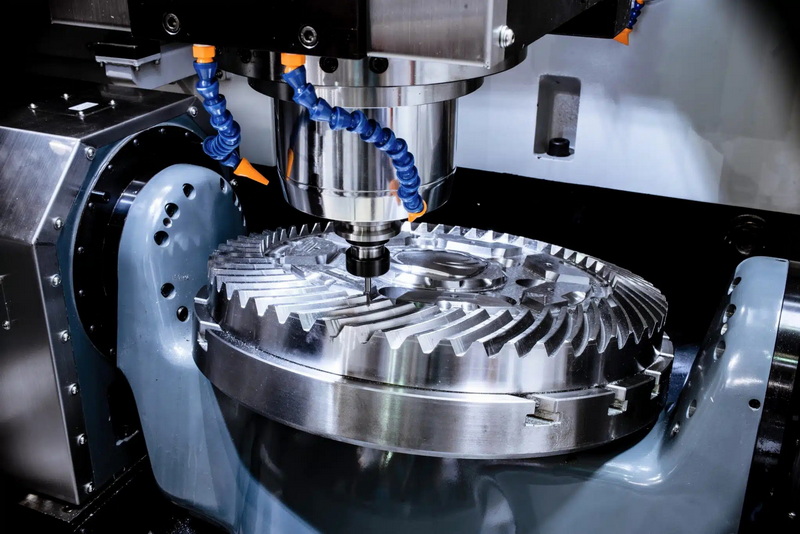
CNC milling is used in dozens of industrial sectors. Some major examples include:
- Aerospace and Defense: Producing engine casings, landing gear, and precision turbine blades.
- Automotive: Creating custom molds, gear housings, and metal prototypes for electric vehicles.
- Medical and Dental: Milling artificial joints, surgical instruments, and dental crowns with biocompatible materials.
- Electronics: Machining heat sinks, circuit housings, and precision enclosures for consumer devices.
- Construction and Energy: Producing machined components for turbines, pumps, and heavy infrastructure equipment.
The combination of speed, precision, and flexibility allows CNC milling to adapt to the specific tolerances and design requirements of each field.
Programming is the heart of CNC milling. Operators or engineers use CAM software to generate G-code, the universal language of CNC machines.
Each command directs a specific movement or action — for instance, controlling feed rate (F), spindle speed (S), or axis movement (X, Y, Z). The machine interprets these commands line by line to create the desired shape.
Modern systems allow for simulation before production. Engineers can preview the toolpath digitally, detecting collisions or inefficiencies early, saving both time and materials. Automation has also advanced into adaptive milling, where sensors detect load or vibration changes and adjust the process in real time for optimal cutting.
Proper maintenance ensures consistent accuracy and machine longevity. Routine care includes:
- Lubricating linear guides and bearings.
- Calibrating spindle alignment and tool offsets.
- Replacing worn cutting tools or inserts.
- Cleaning chips and debris from the enclosure.
- Ensuring coolant levels and cleanliness.
Neglecting maintenance can lead to part inaccuracies, equipment wear, and costly downtime. Companies that adopt predictive maintenance — using sensors to monitor vibration, temperature, and load — significantly extend their equipment's lifespan.
CNC milling technology increasingly interacts with robotics and artificial intelligence. Automated robotic arms can load and unload materials, perform inspections, or even replace tools autonomously.
AI-driven systems analyze production data to optimize toolpaths or predict when parts need replacing. The result is “smart milling”, a data-informed manufacturing environment that enhances efficiency while minimizing waste.
Some manufacturers now integrate CNC milling into complete automated cells, allowing lights-out manufacturing — continuous, unattended operation overnight. This development drastically improves productivity while reducing labor dependency.
The future of CNC milling lies in greater intelligence and connectivity. With the rise of Industry 4.0, CNC milling machines will communicate within networks, providing real-time performance data and remote diagnostics.
Innovations like hybrid manufacturing—combining additive manufacturing (3D printing) with subtractive CNC milling—enable unprecedented design flexibility. 3D printing creates the base form, while precision milling delivers tight tolerances and fine finishes.
As software continues to evolve, programming will become more intuitive, and processes like automated toolpath generation, machine learning optimization, and cloud-based control will make CNC milling even faster and smarter.
CNC milling, therefore, will continue to shape the foundation of smart factories where machines self-correct and production remains consistent around the clock.
So, what does CNC means in milling? It represents the marriage of computer automation and mechanical precision. CNC milling has redefined modern manufacturing by removing human limitations from machining. Through high-speed execution, superior accuracy, and adaptability across materials and design complexities, CNC milling forms the backbone of the industrial world. From automotive molds to surgical implants, it enables innovation, repeatability, and perfection in production.
Contact us to get more information!
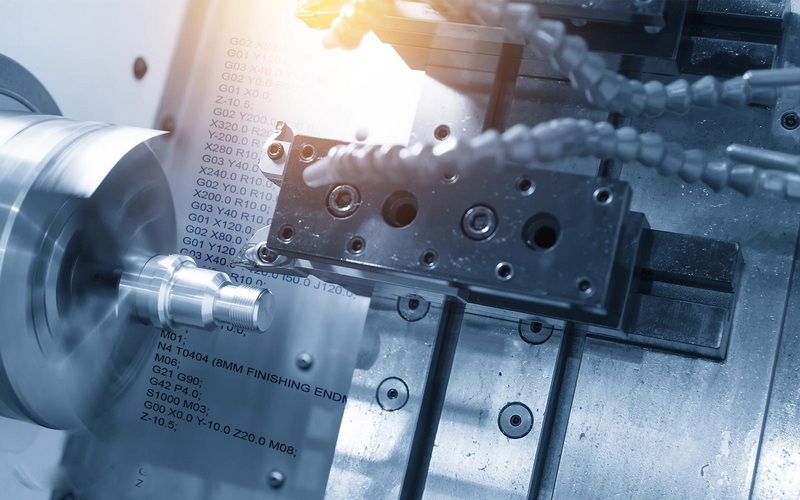
CNC milling is used to shape and machine materials into precise components for industries such as automotive, aerospace, medical, and electronics sectors.
CNC milling uses computer commands to control movement and cutting, ensuring high repeatability and efficiency. Manual milling relies on an operator's skill, making it slower and less consistent.
CNC milling is suitable for metals like aluminum, steel, titanium, and non-metals such as plastics and composites. The material choice depends on project requirements.
Multi-axis milling can rotate the part or tool in several directions, reducing setup time and achieving complex geometries with higher accuracy.
Modern CNC milling machines achieve accuracy levels of up to ±0.001 inches (±0.025 mm), depending on equipment calibration, material properties, and programming precision.
1. https://www.autodesk.com/solutions/cnc-machining
2. https://www.haascnc.com/machines/mills.html
3. https://www.machinemfg.com/what-is-cnc-milling
4. https://www.engineering.com/story/understanding-cnc-milling


