From idea to market-ready product, our NPI solutions make every stage easier, faster. Discover How We Help

Views: 222 Author: Tomorrow Publish Time: 2026-02-12 Origin: Site


Content Menu
● Understanding CNC Milling for AK Receivers
● Key Features Required for AK Receiver CNC Milling
● Types of CNC Milling Machines for AK Receivers
>> 2. Vertical Machining Centers (VMC)
● Material Considerations in CNC Milling AK Receivers
● Recommended CNC Machines for AK Receiver Milling
● CNC Milling Software for Receiver Design
● Workholding and Tooling Techniques
● Feed Rates, Speeds, and Cutting Parameters
● Safety and Legal Considerations
● Common Errors in CNC Milling AK Receivers
● Practical Tips for High-Quality AK Receiver Milling
● FAQ
>> 1. What material thickness is best for CNC milling an AK receiver?
>> 2. What is the difference between a 3-axis and 5-axis CNC mill for receiver milling?
>> 3. How long does it take to CNC mill an AK receiver?
>> 4. Can beginners operate CNC machines for firearm fabrication?
>> 5. How can I maintain consistent accuracy during long milling runs?
CNC milling has revolutionized the manufacturing of firearm components, offering unmatched precision, repeatability, and efficiency. Among firearm enthusiasts, one common question arises: What CNC for AK receiver milling is truly the best option? The AK receiver is the backbone of the iconic AK rifle, demanding precise geometry, tight tolerances, and strong material properties. Selecting the right CNC milling setup determines not only machining performance but also the receiver's safety and functionality.
This article explores how CNC milling applies to AK receiver fabrication, which machines deliver the best results, recommended materials and software, and practical setup guidance. Whether you are a professional gunsmith or a dedicated hobbyist, understanding the details of CNC milling ensures you achieve top-quality receiver builds.

CNC milling is a subtractive manufacturing process where a computer-controlled spindle rotates cutting tools to remove material from metal stock. For an AK receiver, this involves contouring the receiver walls, drilling pin holes, and shaping internal cavities that support the firearm's operating system. Every detail — from tool selection to machine rigidity — directly impacts the outcome.
The AK receiver must meet precise mechanical tolerances to ensure smooth cycling and accurate assembly. Since the firing action generates significant stress, even a slight dimensional deviation can cause functional failure or misfeed. This is why high-accuracy CNC milling equipment with stable control systems is essential.
When evaluating what CNC for AK receiver milling to use, several critical performance factors must be considered:
- Machine stiffness: Reduces chatter and maintains cutting precision during heavy cuts in steel or aluminum alloys.
- Spindle speed and torque: Effective milling of metals requires a spindle that can handle low-speed, high-torque operations for steel, and high-speed cutting for aluminum.
- Axis accuracy: Linear guides and ball screws should support positional accuracy of ±0.001 inch or better for consistent receiver geometry.
- Work envelope: The AK receiver blank typically measures around 10 inches, so the table travel should comfortably accommodate that length.
- Tool changer and coolant system: For production or batch milling, an automatic tool changer and flood coolant improve efficiency and extend tool life.
Selecting a CNC milling machine that optimizes these qualities ensures receiver machining precision while minimizing tool wear and rework.
The choice of CNC milling machine type depends on your budget, available workspace, and technical skill level.
Benchtop mills are compact yet powerful enough for small-scale workshop use. Many entry-level gunsmiths choose models like the Tormach 770M or SYIL X5, which provide industrial-grade performance in a space-saving format. They can machine both steel and aluminum when equipped with proper tooling and cutting fluids. These machines typically operate on single-phase power, making them easy to set up at home workshops while still supporting CAD/CAM integration.
For higher precision and production scalability, a Vertical Machining Center (VMC) is ideal. These full-size CNC systems are built for continuous operation with rigid frames, automatic lubrication, and advanced servo drives. Brands such as HAAS, Mazak, and DMG Mori manufacture VMCs that can handle all receiver types. Their multi-tool capacity and stability make them perfect for machining hardened or stainless steel receivers that require consistent finish quality.
Machinists who enjoy customization often perform CNC conversions on manual mills like the Grizzly G0704 or Bridgeport Series I. A quality conversion with precision stepper or servo motors, ball screws, and a control interface such as Mach3 or LinuxCNC can rival factory CNC machines in accuracy. This approach costs less but demands assembly skills, electrical wiring knowledge, and software calibration.
Choosing the right material determines not only machinability but also the receiver's strength and longevity.
- Mild Steel (A36): Offers strong durability and hardness for functional receivers. It requires slower spindle speeds and adequate coolant.
- Aluminum (6061-T6 or 7075-T6): Favored by home machinists due to light weight and ease of cutting. Produces clean tool paths and fast removal rates.
- Stainless Steel (304 or 416): Provides corrosion resistance and premium finish but demands rigid fixtures and carbide tooling.
Always balance mechanical performance with machining difficulty. Aluminum AK receivers, for instance, may not match the durability of steel, but they provide lightweight prototypes ideal for testing.
Let us review several recommended machines that align well with firearm-grade CNC milling requirements:
- Tormach 1100MX – Renowned for its balance between cost and precision. Capable of machining full-size steel receivers with toolpath consistency.
- HAAS Mini Mill 2 – Compact industrial-grade CNC offering outstanding rigidity and automated operation, suitable for firearm parts.
- SYIL X7 – Known for its cast-iron frame, vibration resistance, and stable accuracy, perfect for aluminum and steel AK components.
- Grizzly G0704 CNC Conversion – A popular option among hobbyist gunsmiths who want flexibility and reasonable setup costs.
- Bridgeport Series I CNC Retrofit – Built for heavy-duty machining, an upgraded control system makes it excellent for long-term firearm fabrication projects.
Each model varies in power, precision, and price, but all can deliver reliable CNC milling performance when properly maintained.
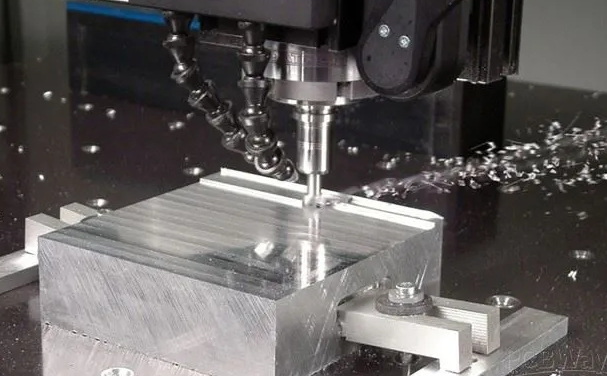
No CNC setup is complete without capable design and toolpath programming software. The right CAD/CAM solution directly affects efficiency, machining time, and part accuracy.
- Autodesk Fusion 360 combines 3D modeling, simulation, and CAM operations, making it excellent for firearms prototyping and iterative design.
- SolidWorks CAM enables parametric modeling, allowing designers to make precise dimension adjustments for AK receiver blueprints.
- Mastercam specializes in high-speed machining strategies and toolpath optimization for complex geometries.
- Mach3 and LinuxCNC are control software platforms commonly used in small workshops and conversion setups for direct G-code operation.
For best results, create solid models with accurate receiver dimensions, verify toolpaths via simulation, and export G-code compatible with your chosen machine controller.
Strong workholding setups are crucial for achieving precise AK receiver results during CNC milling. Because of the receiver's elongated shape, mechanical stability prevents vibration during slot cutting or drilling.
- Precision vises and clamps are recommended to hold receiver blanks rigidly across multiple operations.
- Soft jaws are customizable inserts that grip curved or irregular receiver profiles without damaging the surface.
- T-slot tables give flexible positioning for jigs and fixtures, allowing consistent re-alignment during multi-pass cuts.
For tooling, carbide end mills with TiAlN coating are ideal for steel, while uncoated or polished end mills suit aluminum. Use finishing tools with fine flute geometry to achieve smoother surfaces on the final part.
Optimizing cutting performance when CNC milling receivers involves adjusting feed rate and spindle speed. For example:
- Steel: Run at 800–1200 RPM with a moderate feed of 3–5 inches per minute (IPM) using carbide tools.
- Aluminum: Increase spindle speed to 4000–6000 RPM and use feeds between 8–12 IPM for efficient chip evacuation.
- Coolant: Maintain constant lubrication with water-soluble coolant or mist spray to prevent thermal distortion.
Paying attention to chip load, depth of cut, and tool wear ensures consistent surface finish and prevents breakage.
A properly tuned CNC milling machine yields consistent firearm-quality output. Regular maintenance enhances accuracy and extends machine life.
- Daily inspections: Clean chips and residual oil after milling to avoid component misalignment.
- Lubrication: Apply spindle and bearing grease per manufacturer guidelines.
- Machine calibration: Use dial indicators and lasers to verify alignment along X, Y, and Z axes.
- Tool replacement: Dull tools lead to chatter and dimensional errors—replace end mills promptly.
A well-maintained CNC mill can sustain tight tolerance control for years of service in firearm manufacturing.
Firearm fabrication falls under controlled regulations. In the United States, personal receiver CNC milling is allowed for private, non-commercial use, but laws vary by state. It's prohibited to sell or distribute self-machined receivers without proper federal licensing. Always consult local laws before proceeding.
From a machining safety standpoint, operators must wear protective eyewear, avoid loose clothing, and keep guards in place at all times. Regularly checking spindle speed and tool clamping reduces risks during long milling sessions.
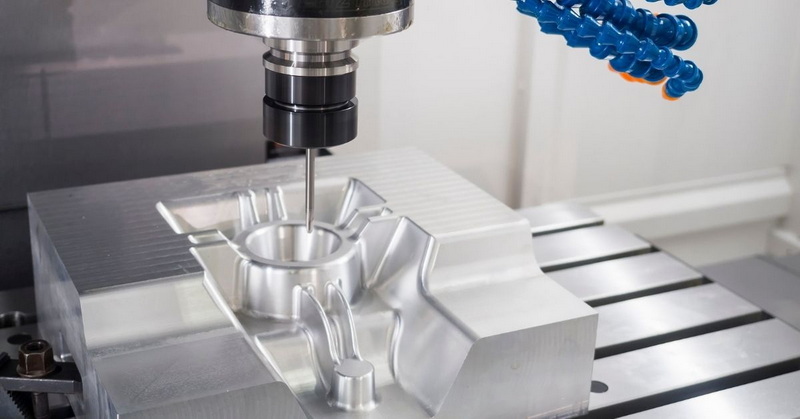
Beginners often encounter issues when first engaging in CNC milling for firearms. Typical mistakes include:
- Incorrect feed speeds leading to tool breakage.
- Insufficient rigidity in workholding setups causing visible dimensional drift.
- Poor toolpath planning resulting in uneven surface finishes.
- Lack of coolant supply, which causes metal warping under heat.
To avoid these, thoroughly simulate cutting operations before executing them live, and always measure machined dimensions using a micrometer or coordinate measuring device.
Achieving professional-level quality depends on a disciplined setup process:
- Always perform a dry run simulation to confirm clearances and movement limits.
- Use fine flute end mills for finishing operations to enhance surface precision.
- Implement adaptive roughing toolpaths to reduce cutting stress and lengthen tool life.
- Keep records of tool pressure, spindle loads, and past cutting conditions to fine tune future jobs.
- Include an inspection stage after each milling operation to maintain dimensional conformity.
Consistency in these practices separates average results from expert-grade CNC milling outcomes.
Determining what CNC for AK receiver milling fits your needs depends on multiple technical factors—machine rigidity, spindle capability, software integration, and operator expertise. Hobby machinists may find compact CNC mills perfect for limited-space workshops, while professionals benefit from VMC-level precision and automation.
Whether the machine is a Tormach, SYIL, or HAAS, mastering the fundamentals of CNC milling—tool selection, feed optimization, and software control—transforms raw metal blanks into reliable, functional AK receivers. The blend of modern CNC technology and mechanical craftsmanship continues to advance small-scale firearm manufacturing into a new era of accuracy and innovation.
Contact us to get more information!
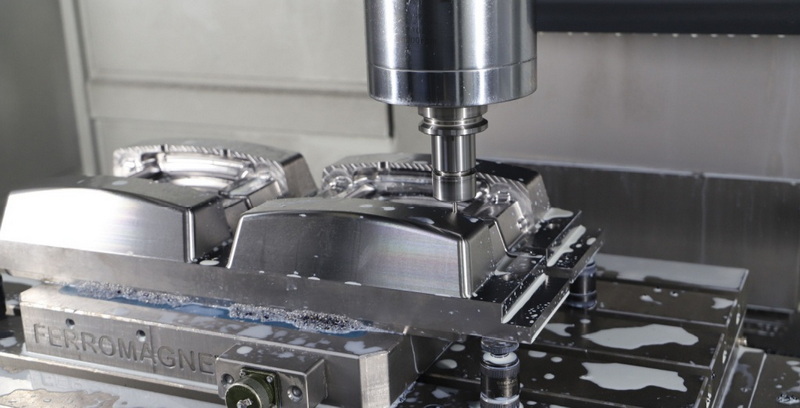
Receiver blanks typically range from 1.5 to 2.0 mm thick steel or aluminum. Thicker materials offer strength but require more torque and tool wear consideration.
A 3-axis mill handles standard receiver shapes, while a 5-axis system allows complex contouring and undercut machining for advanced designs or lightweight skeletonized receivers.
Depending on material and machine speed, a single receiver may take 4–6 hours, including setup, roughing, finishing, and inspection.
Yes, but beginners should start with aluminum blanks, use slower feed rates, and thoroughly simulate toolpaths before running live machining.
Keep the machine environment stable in temperature, inspect the spindle for runout, and re-zero the work coordinate system frequently to prevent drift.


