From idea to market-ready product, our NPI solutions make every stage easier, faster. Discover How We Help

Views: 222 Author: Tomorrow Publish Time: 2026-02-26 Origin: Site


Content Menu
● Understanding CNC Vertical Machining Center
● 3. Electronic Equipment Industry
● 4. Mold and Die Manufacturing
● 5. Medical Equipment Manufacturing
● 6. Precision Tooling and Components
● 7. Energy and Power Generation Industry
● 8. Construction Machinery and Heavy Equipment
● 9. Defense and Military Manufacturing
● 10. Marine and Shipbuilding Industry
● Advantages of CNC Vertical Machining Centers Across Industries
● FAQ
>> 1. What materials can a CNC vertical machining center process?
>> 2. How does a vertical machining center differ from a horizontal one?
>> 3. Can CNC machining produce complex 3D parts?
>> 4. What are the main benefits of CNC machining over manual machining?
>> 5. Is CNC machining cost-effective for small batch production?
In modern manufacturing, CNC machining has reshaped how products are designed, fabricated, and assembled. By integrating digital precision with automated control, CNC machining delivers efficiency, accuracy, and repeatability unmatched by traditional machining methods. Among the various CNC equipment types, the CNC Vertical Machining Center (VMC) has become one of the most versatile and popular tools used by manufacturers worldwide.
This article explores the core concept of CNC vertical machining centers, their working principles, and—most importantly—their major application fields across industries such as aerospace, automotive, electronics, medical equipment, and more.

A CNC vertical machining center is a type of computer-controlled milling machine where the spindle is oriented vertically. This design allows the cutting tool to move vertically along the Z-axis, while the workpiece moves horizontally on the X and Y axes. The entire machining process is controlled automatically through pre-programmed computer instructions.
By using CAD (Computer-Aided Design) and CAM (Computer-Aided Manufacturing) software, engineers can design, simulate, and execute complex machining operations with extremely high degrees of precision.
- High precision and repeatability: CNC machining ensures dimensional accuracy and uniformity, even when producing thousands of identical parts.
- Multi-functional capability: The machine integrates milling, drilling, tapping, thread cutting, and contouring into a single system.
- Computerized automation: Reduces human error, increases productivity, and enhances measurement accuracy.
- Tool change and optimization: Equipped with automatic tool changers (ATC) and tool magazines, VMCs minimize downtime between operations.
- Material flexibility: CNC vertical machining centers can process metals (such as aluminum, steel, titanium), alloys, and engineering plastics.
- Low maintenance and stability: Modern VMCs include rigid structures, linear guides, and cooling systems for continuous, reliable operation.
The aerospace sector is one of the most demanding fields for CNC machining due to the extremely tight tolerances required. Aircraft and spacecraft components—such as turbine blades, landing gear elements, and bracket assemblies—must endure high stress, temperature variations, and fatigue conditions.
CNC vertical machining centers play a significant role in producing:
- Engine turbine blades and compressor parts
- Structural supports, wing spars, and ribs
- Avionics housings and actuator covers
- Interior cabin elements and fastening systems
Aerospace materials often include heat-resistant superalloys, aluminum, and titanium. CNC machining ensures not only dimensional precision but also excellent surface integrity, critical for aerodynamic performance. Additionally, the multi-axis control available in advanced VMCs allows complex curved surfaces to be machined efficiently, reducing assembly time and increasing aircraft safety.
The automotive industry relies heavily on CNC machining to deliver precision, repeatability, and mass-production capability. The CNC vertical machining center is used for a wide variety of car components, improving both manufacturing consistency and fuel efficiency.
Common applications include:
- Cylinder blocks, cylinder heads, and camshaft housings
- Transmission and gearbox components
- Steering system brackets and brake system parts
- Suspension elements and chassis structures
- Lightweight EV (electric vehicle) battery casings and motor enclosures
As vehicles evolve toward electrification and automation, CNC machining becomes indispensable for producing lightweight yet durable parts. The level of automation in VMCs allows auto plants to run production 24/7, maintaining tight quality standards while reducing human labor costs. Furthermore, CNC machining improves traceability—each component can be digitally tracked from raw material to final assembly, strengthening quality control and sustainability compliance.
In the electronics industry, precision, miniature scale, and surface finish are vital. A CNC vertical machining center provides the fine detailing necessary for micro-components and intricate housings.
Typical applications include:
- Aluminum and copper heat sinks
- Structural frames for computers, routers, and smartphones
- Connector brackets and port housings
- Control panel casings and device shells
With the rapid evolution of consumer technology, new designs require quick turnaround and high precision. CNC machining allows for rapid prototyping, meaning manufacturers can create early samples for testing before mass production. This drastically shortens development cycles in an industry that updates products every year.
Moreover, CNC machining ensures excellent surface texture and dimensional consistency, contributing to device durability and improved thermal management in high-performance electronics.
In mold and die manufacturing, precision determines the quality of every product that follows. Molds for injection plastic, die casting, or stamping are used to replicate thousands of parts—thus accuracy, symmetry, and surface smoothness are non-negotiable.
CNC vertical machining centers are ideal for producing mold bases, cores, cavities, and ejector plates because they:
- Allow deep cavity and complex contour machining
- Support 3D surface programming for freeform designs
- Maintain tight tolerances essential for mass production
- Reduce polishing and rework time by improving surface finish
CNC machining reduces lead times dramatically by integrating roughing, finishing, and engraving into one setup. Industries that depend on mold manufacturing include packaging, electronics, consumer goods, and automotive plastics.
The medical device industry demands strict compliance, precision, and biocompatibility. CNC machining enables manufacturers to produce parts that maintain hygiene standards while meeting custom specifications.
Applications include:
- Orthopedic implants such as hip joints, spinal screws, and bone plates
- Dental components, prosthetics, and surgical tools
- Diagnostic instrument housings and medical imaging frames
- Laboratory automation systems and micro-pumps
The ability to handle medical-grade metals like titanium and stainless steel with tight tolerances ensures reliability and patient safety. CNC machining also supports personalized medicine, where implants and prosthetics are custom-fitted based on 3D body scans.
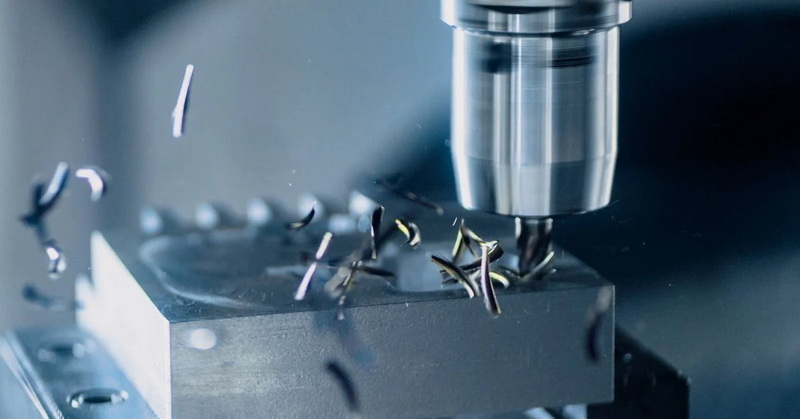
Every industry relies on precise tooling to ensure manufacturing accuracy. CNC vertical machining centers are widely used for creating jigs, gauges, and fixtures tailored for specific machining operations. The accuracy of these tools directly affects productivity and product quality on the factory floor.
CNC machining offers several benefits for toolmaking:
- Simplified programming for repetitive designs
- Reduced setup time for different jobs
- Long-term dimensional stability under repeated use
Precision tooling produced through CNC machining enhances the quality of products in heavy machinery, electronics, and consumer goods manufacturing.
The energy and power sector, including oil, gas, nuclear, and renewable energy, depends on CNC machining for producing durable, large-scale components. CNC vertical machining centers can process heavy materials such as stainless steel and high-nickel alloys for use in harsh environmental conditions.
Key applications include:
- Turbine blades and rotor shafts
- Gear housings and hydraulic valve components
- Heat exchanger plates and sealing flanges
- Parts for solar panels, wind turbines, and hydroelectric generators
In renewable energy fields, CNC machining enhances the structural efficiency of turbines and solar mounts, enabling them to withstand high rotational and environmental forces. The advancement of CNC machining contributes to making energy infrastructure safer and more efficient.
For construction, mining, and agricultural machinery, CNC machining delivers robust and reliable parts. These components often experience high loads and continuous wear, so machining accuracy is essential for performance and safety.
Examples include:
- Excavator booms and pivot joints
- Hydraulic pistons and connection rods
- Gear components and bearing housings
- Engine casings for bulldozers and loaders
CNC vertical machining centers provide the rigidity and precision required for such heavy-duty applications, ensuring that each assembly fits perfectly and performs consistently even in extreme operating environments.
In defense and military applications, CNC machining must achieve the highest level of precision and secrecy. The CNC vertical machining center is used extensively in producing weapon components, communication systems, radar assemblies, and armored structures.
CNC machining ensures accurate alignment, ballistic integrity, and modular compatibility for parts like:
- Firearm receivers and parts
- Vehicle armor plating and turret housings
- Missile and drone components
- Optical and sonar device structures
The computer-controlled accuracy allows defense manufacturers to achieve better durability, reduced assembly weight, and improved equipment reliability under combat conditions.
In the marine sector, CNC vertical machining centers assist in manufacturing complex engine parts, pump housings, and navigation systems. Since corrosion resistance and sealing precision are crucial, CNC machining provides exact tolerances for optimal performance in saltwater conditions.
Applications include:
- Propeller shafts and sealing flanges
- Gearbox and pump casings
- Structural brackets and control housings
For shipbuilding, CNC machining reduces maintenance downtime and ensures standardization across large fleets, improving long-term operational efficiency.
- Unmatched accuracy: Achieving tolerances as tight as a few microns.
- Enhanced automation: Capable of continuous 24-hour operation with minimal oversight.
- Material adaptability: Suitable for metals, composites, plastics, and experimental materials.
- Improved efficiency: Shorter setup and machining times, enabling lean production.
- Cost savings: Less downtime, reduced tooling wear, and minimal material waste.
- Digital integration: Modern CNC machines connect with IoT systems and smart factories for production monitoring and predictive maintenance.
The CNC vertical machining center has cemented its position as one of the most essential tools in modern manufacturing. Its ability to deliver consistent precision, adaptability to multiple materials, and suitability for various industries—from aerospace to medicine and renewable energy—makes it a cornerstone technology.
As CNC machining continues to evolve with innovations like AI-driven optimization, cloud monitoring, and simulation-based control, its role will expand further. Whether producing intricate prototypes or high-volume industrial components, CNC vertical machining centers ensure that today's manufacturing standards continue to push the limits of efficiency and excellence.
Contact us to get more information!
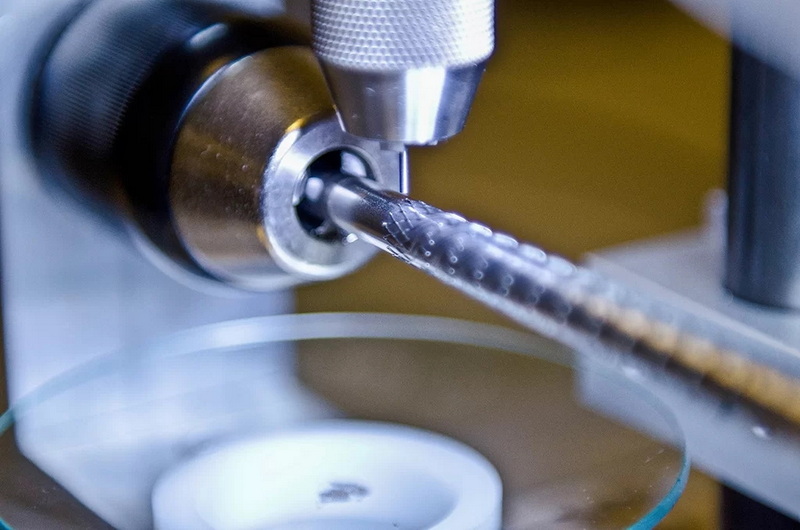
CNC machining handles numerous materials, including aluminum, stainless steel, copper, titanium, brass, engineering plastics, and carbon fiber composites, depending on the application's strength and heat resistance needs.
In a vertical machining center (VMC), the spindle is vertically aligned, which simplifies chip removal for flat or smaller parts. In contrast, a horizontal machining center (HMC) holds tools horizontally, best suited for heavier workpieces and multi-face machining.
Yes. Modern CNC vertical machining centers with multi-axis controls can produce complex 3D geometries, molds, turbine blades, or parts with intricate contours directly from digital 3D models.
CNC machining provides higher accuracy, consistency, and production speed. It minimizes operator error, allows automation, and supports detailed design replication for mass production.
Definitely. Despite high initial setup costs, CNC machining's flexibility and automation make it ideal for both prototypes and short-run production, ensuring predictable quality and reduced waste.
1. https://www.autodesk.com/solutions/cnc-machining/overview
2. https://www.haascnc.com/machines/vertical-mills.html
3. https://www.okuma.com/technologies/cnc-machining
4. https://www.dmgmori.com/products/milling/vertical-machining-centers
5. https://www.cnccookbook.com/what-is-cnc-machining-center/


