From idea to market-ready product, our NPI solutions make every stage easier, faster. Discover How We Help

Views: 222 Author: Tomorrow Publish Time: 2026-02-23 Origin: Site
Content Menu
● Understanding PVs in CNC Machining
● Why PVs Matter in CNC Machining
● The Three Most Important PVs in CNC Machining
● How the Three PVs Interact in CNC Machining
● Auxiliary Factors That Affect PV Optimization
● Techniques for PV Optimization in CNC Machining
● Advantages of Correct PV Implementation
● Common Errors in PV Selection
● FAQ
>> 1. What does PV mean in CNC machining?
>> 2. How do I choose the right spindle speed?
>> 3. What happens if feed rate is too high?
>> 4. How can I optimize cutting depth?
>> 5. Are PV settings universal across CNC machines?
CNC machining has revolutionized modern manufacturing by enabling precision, automation, and efficiency across industries. From aerospace turbine blades to automotive engine parts and intricate medical implants, CNC machining ensures consistent quality and repeatable results. However, the output quality of any CNC machining process depends primarily on certain process variables (PVs) that must be monitored and adjusted with precision.
So, what are the three most important PVs in CNC machining? In most cases, experts emphasize spindle speed, feed rate, and cutting depth as the critical parameters that define the success of a machining operation. Optimizing these three PVs can significantly enhance tool life, surface finish, accuracy, and productivity.

In CNC machining, process variables are operational settings controlled by the machinist or programmed within the CAM software. These PVs determine how the cutting tool interacts with the workpiece. When properly configured, they balance efficiency, heat generation, material removal rate, and tool wear.
A CNC machine executes programmed commands precisely, but if the PVs are set incorrectly, even advanced machines can produce defective parts. Understanding how each PV influences the process enables machinists to achieve consistent quality even in complex geometries or high-volume production.
Every CNC machining operation involves three key forces: cutting, friction, and thermal energy. Incorrectly balanced PVs increase these forces, causing vibration, chipping, or reduced tool lifespan.
Efficient PV settings deliver multiple operational advantages:
- Consistent dimensional accuracy for every part.
- Lower energy consumption and reduced heat buildup.
- Extended tool life, minimizing replacement costs.
- Improved surface smoothness and reduced polishing requirements.
Since CNC machining often deals with expensive materials like titanium or stainless steel, optimizing PVs ensures fewer rejects and faster turnaround times.
Spindle speed measures how fast the cutting tool or workpiece rotates, expressed in revolutions per minute (RPM). It determines the linear speed of the cutting edge against the material surface. The correct spindle speed is fundamental to achieving efficient and accurate machining.
Too high a spindle speed may cause tool overheating, melting, or rapid wear—especially when working with hard metals or poor cooling. On the other hand, if the spindle speed is too low, it can lead to tool chatter, uneven chip formation, and rough surfaces.
Factors affecting spindle speed include:
- The hardness and composition of the material.
- The tool material (carbide, HSS, or diamond-coated tools).
- Whether the operation is roughing or finishing.
- Coolant type and flow rate, which control temperature stability.
Example:
When machining aluminum, typical spindle speeds range from 6000 to 12000 RPM due to the metal's softness and high thermal conductivity. In contrast, hardened steel usually requires a lower range, between 800 and 2500 RPM, to prevent tool failure.
Selecting the optimum spindle speed ensures the right balance between cutting efficiency and tool endurance, making it the first and most influential PV in CNC machining.
Feed rate measures the linear speed at which the cutting tool moves across the workpiece. It is generally expressed in millimeters per minute (mm/min) or inches per revolution (IPR).
Feed rate optimization is vital because it controls the balance between machining time, tool load, and surface quality. Increasing feed rate reduces cycle time but raises cutting force and heat generation. Decreasing it improves surface finish but extends machining time and may cause rubbing instead of cutting.
Key variables influencing feed rate:
- The tool geometry and diameter.
- The workpiece stiffness and rigidity of machine setup.
- The number of cutting edges on the tool.
- Whether the machining operation is roughing (high feed) or finishing (low feed).
For example, roughing operations on aluminum might use a feed rate of 2000–4000 mm/min, while fine finishing could require only 200–600 mm/min.
A balanced feed rate ensures efficient chip removal, better texture, and minimal vibration, which collectively lead to smoother CNC machining outcomes.
Cutting depth defines how deep the tool penetrates the material per pass. It directly affects the material removal rate and the mechanical load on both the tool and the spindle.
A deeper depth of cut increases material removal per pass and reduces total machining time. However, it also raises mechanical stress, potentially causing tool deflection or even breakage. Conversely, too shallow a depth results in longer cycles and excessive wear due to increased friction with little cutting effect.
Factors influencing cutting depth:
- Material hardness: Soft metals can tolerate deeper cuts.
- Tool rigidity and holder stability: Heavier setups permit greater depths.
- Machine horsepower and torque: High-powered spindles can maintain deeper cuts at stable speeds.
- Type of machining stage: Roughing operations typically use deeper cuts; finishing requires minimal depth for high accuracy.
In most CNC machining applications, the roughing depth ranges between 2 and 6 mm, while finishing passes remain under 0.5 mm. This ensures both dimensional precision and surface uniformity.
Although spindle speed, feed rate, and cutting depth are distinct, they are interrelated. Adjusting one parameter inevitably affects the others. When spindle speed increases, feed rate often must rise proportionally to prevent excess tool rubbing. Similarly, deeper cuts demand slower speeds and lower feeds to avoid overloading the cutter.
Understanding this correlation allows machinists to locate the “sweet spot”—the set of conditions that maximizes material removal without compromising surface finish or tool life. Advanced computer-aided manufacturing (CAM) software now uses dynamic simulations to visualize heat generation and tool load, enabling machinists to select the most efficient PV combination before production begins.
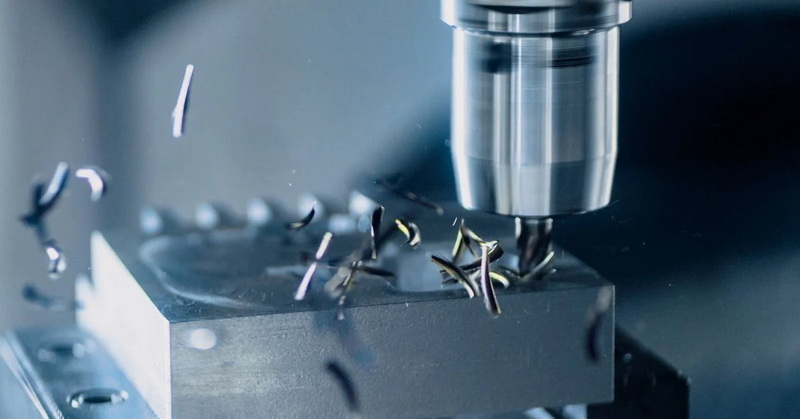
Besides the three main PVs, several external variables influence CNC machining performance:
- Coolant and lubrication: Proper coolant flow reduces heat accumulation, allowing higher spindle speeds.
- Tool coatings: Titanium nitride or diamond-like coatings extend tool life under aggressive PV conditions.
- Machine stability: Well-calibrated machines can sustain more demanding PV combinations safely.
- Material consistency: Variations in alloy batches can slightly alter optimal PVs.
Integrating these considerations ensures consistent quality even in mass production environments.
1. Preliminary Testing: Always run initial cuts on sample materials to define realistic performance boundaries.
2. Tool Wear Monitoring: Inspect cutting tools regularly to prevent poor results caused by dull edges.
3. Real-Time Feedback Systems: Some modern CNC machines use sensors to automatically adjust PVs based on temperature or vibration.
4. Data Logging and Analysis: Record all cutting parameters to build a reliable reference database for future projects.
5. Use of CAM Simulation: Advanced software can predict tool engagement and optimize PVs before machining begins.
6. Coolant Optimization: Controlled coolant delivery at the cutting zone lets machinists safely increase feed or speed.
These strategies reduce uncertainty, enhance process control, and lead to more predictable CNC machining performance.
When the three main PVs are set accurately, manufacturers can expect:
- Higher precision with minimal dimensional errors.
- Reduced machining time and improved productivity.
- Lower tool replacement costs, thanks to controlled wear.
- Superior surface finishes, reducing polishing steps.
- Energy efficiency, since optimal PVs minimize wasted motion and friction.
In industries where tolerance levels are measured in microns, every small improvement in PV accuracy translates directly into competitive advantage.
Even seasoned CNC machinists occasionally select suboptimal PVs. The most frequent mistakes include:
- Relying solely on manufacturer's base recommendations without compensating for tool wear.
- Using the same PVs across different materials and tool types.
- Neglecting spindle load feedback when selecting speeds.
- Applying roughing PVs during finishing operations.
- Ignoring machine vibration or fixture stability, which leads to incorrect interpretations of tool performance.
Avoiding these mistakes ensures stable CNC machining processes and consistent project quality.
The future of CNC machining lies in adaptive control systems that automatically tune PVs in real time. Using AI, sensors, and machine learning algorithms, these systems monitor spindle power, temperature, and vibration to adjust speed, feed, and depth continuously.
This approach leads to self-optimizing CNC machines capable of maintaining constant cutting conditions, even when tool wear or material variation occurs. It reduces downtime, improves reliability, and enables smart factories to produce high-precision parts with minimal human intervention.
To achieve peak performance in CNC machining, understanding and mastering the three most important PVs—spindle speed, feed rate, and cutting depth—is essential. These PVs determine every aspect of machining output, from surface finish to production efficiency and tool longevity.
A systematic approach that considers material properties, machine capabilities, and cooling methods leads to consistent and efficient results. As CNC technology continues to evolve toward automation and AI-driven optimization, precise control of these PVs will remain at the heart of advanced manufacturing.
Contact us to get more information!
PV stands for *Process Variable*, referring to controllable machining parameters such as spindle speed, feed rate, and cutting depth that influence the quality and efficiency of CNC machining operations.
Determine spindle speed based on the material's hardness, cutting tool diameter, and manufacturer recommendations. Modern CAM systems can automatically calculate ideal RPM values for each operation.
Excessive feed rates can cause chatter, tool breakage, or poor surface finishing. Always balance feed rate with spindle speed and cutting depth for stable performance.
Perform multiple passes—roughing first at higher depths, followed by finishing passes at minimal depth—to preserve accuracy and minimize stress on the tools.
No. Each machine model has unique torque, rigidity, and power capacities. Always calibrate PVs according to specific machine performance and job requirements.
2. https://www.cnccookbook.com
3. https://www.sandvik.coromant.com


