From idea to market-ready product, our NPI solutions make every stage easier, faster. Discover How We Help

Views: 222 Author: Tomorrow Publish Time: 2026-03-04 Origin: Site


Content Menu
● Overview of Iran's 3D Printing Landscape
● Why Consider Iran for 3D Printing Services
● Top 3D Printing Services Manufacturers and Suppliers in Iran
>> 2. Medical‑Focused Additive Manufacturing Company (Material‑Peak 3D Printer)
>> 3. Industrial Additive Manufacturing Providers (3DFAST, Mada Technology, Ayhan AM Co.)
● Technology and Application Focus in Iran
● How Overseas Buyers Can Work with Iranian 3D Printing Suppliers
● Challenges and Risk Considerations
● FAQs About 3D Printing Services Manufacturers and Suppliers in Iran
>> 1. How mature is Iran's 3D printing industry?
>> 2. What technologies do leading Iranian 3D printing suppliers use?
>> 3. Can foreign OEMs and brand owners work directly with Iranian 3D printing companies?
>> 4. What should I check before choosing an Iranian 3D printing supplier?
>> 5. Which industries benefit most from Iranian 3D printing services?
Iran is becoming an important regional hub for 3D Printing Services Manufacturers and Suppliers, driven by strong research output, a growing base of technology companies, and government support for additive manufacturing. For international OEM buyers, brand owners, and wholesalers looking for reliable 3D Printing Services Manufacturers and Suppliers in the Middle East, Iran now offers a mix of service bureaus, printer OEMs, and specialized materials providers. [tehrantimes]

Iran ranks second among Islamic countries for the number of scientific publications on three‑dimensional printing, with 606 publications recorded between 2014 and 2023, placing it 22nd globally. This academic strength has translated into a fast‑growing ecosystem of 3D Printing Services Manufacturers and Suppliers covering polymers, metals, ceramics, and bioprinting applications. [3dprint]
Around 30 domestic companies have been active in producing 3D printers in Iran, supported by a 10‑year national plan that targets about 760 million USD in 3D‑printing‑related product sales by 2025. Key end‑use industries for 3D Printing Services Manufacturers and Suppliers include automotive, healthcare, aerospace, education, and cultural heritage restoration. Government initiatives and innovation programs are also encouraging exports of Iranian‑made 3D printers and services into African and Southeast Asian markets. [wanaen]
International buyers searching for cost‑effective 3D Printing Services Manufacturers and Suppliers can find several advantages in Iran's market. [ifpnews]
- Competitive manufacturing costs: Domestic equipment and material production help reduce total service prices for parts and prototypes. [ensun]
- Broad technology coverage: Leading 3D Printing Services Manufacturers and Suppliers in Iran use FDM, DLP, SLM, SLS, SLA, and bioprinting technologies for both rapid prototyping and functional parts. [3d-bio]
- Strong engineering talent: Universities such as University of Tehran and Amirkabir University of Technology are major contributors to 3D‑printing research, feeding skilled engineers into local companies. [islamicvoice]
- Growing export orientation: Policy roadmaps explicitly mention exporting 3D‑printing technology and services, creating opportunities for cross‑border OEM partnerships. [irangov]
At the same time, buyers should be aware that sanctions and import‑export restrictions may affect access to some advanced materials and components, which can indirectly influence lead times and technology choices among 3D Printing Services Manufacturers and Suppliers. Careful partner selection, clear technical specifications, and transparent communication about compliance are therefore essential. [ensun]
Below is a focused look at some of the most notable 3D Printing Services Manufacturers and Suppliers in Iran that are visible to international buyers and widely referenced in industry and media sources. (The list is illustrative rather than exhaustive; company capabilities may evolve over time.) [kemalmfg]
Sizan Company is widely recognized as one of the first Iranian manufacturers of 3D printers and a pioneer in offering professional 3D printing services in the country. The company produces FDM and DLP 3D printers, scanners, and raw materials such as ABS and PLA filaments, positioning itself as a vertically integrated provider among 3D Printing Services Manufacturers and Suppliers. [3dprint]
Sizan serves top universities, research institutes, and industrial customers in Iran, and operates what has been described as the first online 3D printing service in the country. Its printer lineup ranges from compact desktop systems to industrial‑scale machines like the Sizan 2 Plus, which offers a 40 × 40 × 40 cm build volume for larger prototypes and functional parts. For foreign OEMs seeking 3D Printing Services Manufacturers and Suppliers that can also help with local machine installation, training, and filament supply, Sizan's combined hardware‑and‑service model can be attractive. [3dprint]
A knowledge‑based Iranian company highlighted in regional news has developed the "Material‑Peak 3D Printer," an industrial system designed for personalized medical implants for the neck, jaw, facial structure, and skull. The same company operates one of the largest 3D printing service workshops in Iran, offering a wide range of materials and processes for healthcare and industrial clients. [wanaen]
This workshop provides comprehensive 3D printing services from design through production, with capabilities tailored to complex, safety‑critical components such as customized implants. For international buyers in the medical device and healthcare sectors looking for specialized 3D Printing Services Manufacturers and Suppliers, this type of provider offers high‑value niche expertise, especially in biocompatible materials and patient‑specific part production. [3d-bio]
Several Iranian companies focus on industrial‑grade additive manufacturing and are listed by international B2B intelligence platforms as key 3D Printing Services Manufacturers and Suppliers in the country. [kemalmfg]
- 3DFAST specializes in additive manufacturing services, 3D modeling, and scanning, with applications in electrical and electronic sectors and broader industrial part production. [ensun]
- Mada Technology offers a wide range of 3D printing services using Selective Laser Melting, Binder Jetting, Selective Laser Sintering, Stereolithography, and Fused Deposition Modeling to produce complex components from metals, ceramics, and other materials. [ensun]
- Ayhan AM Co. focuses on commercial additive manufacturing with printers for metals, polymers, and composites, and holds a global patent related to metal 3D printing, which enhances its profile among advanced 3D Printing Services Manufacturers and Suppliers. [ensun]
These firms often support industrial customers in sectors such as automotive, aerospace, and general machinery, offering customization, design optimization, and serial production of end‑use parts. For foreign brand owners seeking 3D Printing Services Manufacturers and Suppliers capable of handling high‑performance materials and complex geometries, these providers represent strong candidates for shortlisting. [ana]

3D Printing Services Manufacturers and Suppliers in Iran work with a wide portfolio of technologies that mirror global trends in additive manufacturing. [wanaen]
Common technologies include:
- Fused Deposition Modeling (FDM) for low‑cost prototyping, jigs, fixtures, and basic functional parts. [3dprint]
- Digital Light Processing (DLP) and Stereolithography (SLA) for high‑detail components in jewelry, dentistry, and design models. [3dprint]
- Selective Laser Melting (SLM) and other metal 3D printing techniques for aerospace, medical, and high‑performance industrial parts. [ana]
- 3D bioprinting for experimental medical and tissue engineering applications, developed by advanced labs and startups. [3d-bio]
Typical applications served by Iran‑based 3D Printing Services Manufacturers and Suppliers include automotive components, architectural models, customized medical implants, dental appliances, jewelry, and restoration of cultural heritage artifacts. The diversity of applications reflects both domestic demand and the export ambitions of these companies. [ana]
International OEMs and distributors looking for 3D Printing Services Manufacturers and Suppliers in Iran should follow a structured approach when building partnerships. [ifpnews]
1. Define technical requirements clearly
Specify materials (e.g., stainless steel, titanium, ABS, PLA, biocompatible resins), mechanical properties, surface finish, and applicable standards before sending RFQs to 3D Printing Services Manufacturers and Suppliers. [wanaen]
2. Check certification and compliance
Ask shortlisted suppliers for documentation on quality management systems, relevant medical or aerospace certifications, and export compliance, especially for regulated sectors. [ana]
3. Start with pilot projects
Begin with small‑batch prototype or trial orders to validate dimensional accuracy, repeatability, and communication efficiency with 3D Printing Services Manufacturers and Suppliers. [3dprint]
4. Evaluate logistics and legal constraints
Review shipping routes, customs rules, and any applicable sanctions that may affect cross‑border collaboration, and ensure all parties adhere to legal and regulatory frameworks. [ifpnews]
5. Build long‑term engineering collaboration
The most successful relationships with 3D Printing Services Manufacturers and Suppliers involve co‑development of parts, design for additive manufacturing (DfAM) optimization, and continuous feedback to improve performance and cost. [ensun]
For foreign buyers that also run precision machining or conventional production lines, integrating Iranian 3D printing services as an upstream prototyping and small‑batch partner can reduce development lead time and tooling costs while expanding design freedom. [3dprint]
While Iran presents promising opportunities, there are also challenges that buyers must consider when working with local 3D Printing Services Manufacturers and Suppliers. [ifpnews]
- Technology access constraints: International sanctions and trade limitations can restrict access to certain high‑end machines, powders, and composite materials for Iranian providers. [ifpnews]
- Supply chain volatility: Fluctuations in currency, logistics routes, and customs procedures can affect delivery times and pricing stability for cross‑border projects. [ifpnews]
- Regulatory complexity: Different jurisdictions have varying requirements for medical devices, aerospace parts, and safety‑critical components, requiring careful documentation and certification from 3D Printing Services Manufacturers and Suppliers. [wanaen]
Nonetheless, many Iranian companies operate as knowledge‑based enterprises under government support programs, which encourages continuous improvement and alignment with global standards in additive manufacturing. Structured due diligence, including audits and sample testing, can help mitigate most operational risks for international buyers. [islamicvoice]
Iran's ecosystem of 3D Printing Services Manufacturers and Suppliers combines strong academic foundations, government‑backed technology development, and an expanding base of industrial and medical applications. Companies such as Sizan, specialized medical additive manufacturing firms, and industrial providers like 3DFAST, Mada Technology, and Ayhan AM Co. give foreign buyers a range of options from basic prototyping to advanced metal and bioprinting solutions. [tehrantimes]
For overseas brand owners, wholesalers, and manufacturers, Iran offers competitive pricing, broad technology coverage, and growing export capabilities among its 3D Printing Services Manufacturers and Suppliers, provided that projects are structured with clear technical requirements and full regulatory compliance. As global demand for customized manufacturing and rapid prototyping continues to grow, Iranian suppliers are likely to play a more visible role in regional and niche international value chains in additive manufacturing. [islamicvoice]
Contact us to get more information!
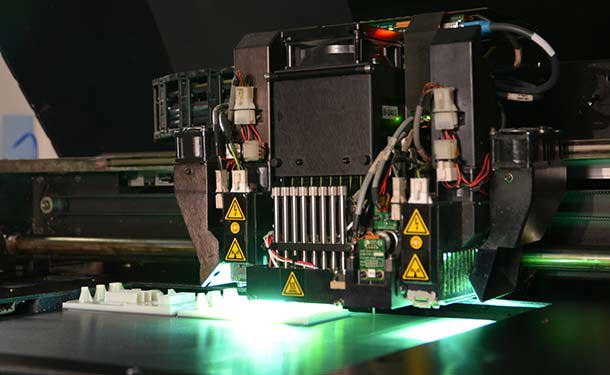
Iran's 3D printing industry is still emerging but has strong momentum, supported by a high volume of academic publications, national development plans, and around 30 domestic 3D‑printer producers. This foundation enables a growing number of professional 3D Printing Services Manufacturers and Suppliers that can serve both domestic and selected international clients. [tvbrics]
Leading 3D Printing Services Manufacturers and Suppliers in Iran work with FDM, DLP, SLA, SLS, and metal 3D printing processes such as Selective Laser Melting, along with emerging bioprinting capabilities. This technology mix allows them to handle polymer prototypes, high‑detail resin parts, metal functional components, and in some cases medical or tissue‑engineering applications. [3d-bio]
Yes, many 3D Printing Services Manufacturers and Suppliers in Iran are open to international collaboration, especially in sectors like automotive, healthcare, electronics, and education. However, buyers must carefully evaluate legal, customs, and sanctions‑related constraints and ensure all transactions and shipments comply with relevant regulations. [wanaen]
Before partnering with 3D Printing Services Manufacturers and Suppliers in Iran, buyers should assess process capabilities, material options, quality certifications, and references from existing clients. Running small pilot projects and requesting dimensional inspection reports is an effective way to validate supplier performance and communication quality. [ana]
Industries that particularly benefit from Iranian 3D Printing Services Manufacturers and Suppliers include automotive, aerospace, jewelry, cultural heritage restoration, and healthcare (especially dental and orthopedic applications). Educational and research institutions also rely heavily on these services to support prototyping, experimental studies, and training in additive manufacturing. [6wresearch]
1. Tehran Times – "Iran ranks second in 3D printing publications among Islamic nations." [tehrantimes]
2. 3DPrint.com – "As Iran's 3D Printing Industry Grows, Sizan Company is Leading the Way." [3dprint]
3. WANA – "Iranian Company Develops 3D Printer for Personalized Medical Implants." [wanaen]
4. 6Wresearch – "Iran Automotive 3D Printing Market (2025–2031)." [6wresearch]
5. IFP News – "Iranian 3D Printers To Be Exported To World Markets." [ifpnews]
6. Additive Manufacturing Laboratory (DURA) – Company website and services overview. [dura]
7. TV BRICS – "Iran ranks second among Islamic nations for publications on 3D printing." [tvbrics]
8. Islamic Voice – "Iran: A Leader in 3D Printing and Advanced Technologies Among Muslim Nations." [islamicvoice]
9. MAPNA PARTO – "Additive Manufacturing" capability description. [mapnablade]
10. 6Wresearch – "Iran 3D Printing in Emerging Economies Market (2025–2031)." [6wresearch]
11. Ensun – "Top 10 3D Printing Companies in Iran (2026)." [ensun]
12. 3D‑Bio – Iranian 3D bioprinting company overview. [3d-bio]
13. Iran Government Portal – "Iran Develops 3D Printers on Par with European Samples." [irangov]
14. ANA – "Iranian Company Produces Complex Parts for Medical, Aerospace Industries with 3D Printers." [ana]
15. Kemal Manufacturing – "8 Best 3D Printing Companies in Iran." [kemalmfg]


