From idea to market-ready product, our NPI solutions make every stage easier, faster. Discover How We Help

Views: 222 Author: Tomorrow Publish Time: 2026-02-15 Origin: Site


Content Menu
● Types of CNC Milling Machines
● What CNC Milling Machines Create
>> 1. Industrial Components and Precision Machinery
>> 3. Automotive and Motorsport Parts
>> 4. Medical Devices and Implants
>> 5. Electronics and Telecommunications Equipment
>> 6. Tooling, Fixtures, and Molds
>> 7. Architecture, Art, and Custom Production
● Materials Used in CNC Milling
● The Role of CAD/CAM Software in CNC Milling
● Common Challenges in CNC Milling
● FAQ
>> 1. What is CNC milling used for?
>> 2. What materials can CNC milling machines handle?
>> 3. How accurate is CNC milling?
>> 4. Why choose CNC milling over 3D printing?
>> 5. What industries rely most on CNC milling?
CNC milling has transformed modern manufacturing through its ability to produce precise, consistent parts with minimal human intervention. Today, CNC milling machines are indispensable in creating products across countless industries—from aerospace turbines to surgical implants and custom electronics housings. But what exactly do CNC milling machines create, and why are they so essential to engineering and manufacturing?
This article explores what CNC milling machines produce, how they work, the materials involved, and why they remain the foundation of modern production technology. Through this, you'll understand how CNC milling supports innovation, accuracy, and sustainability across industrial applications.
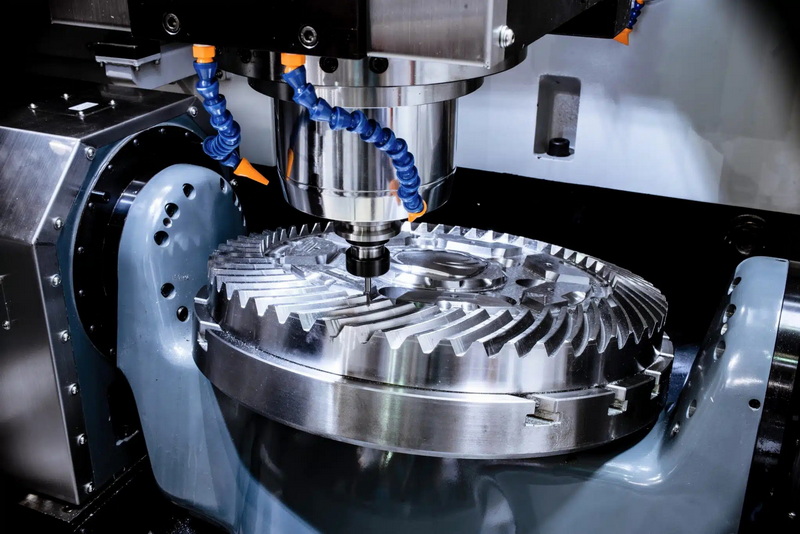
CNC milling is a subtractive machining process that shapes a solid block of material into a finished part by cutting away unwanted sections. The “CNC” in CNC milling stands for Computer Numerical Control, which means the machine's movements are precisely guided by computer programming. Machinists use CAD (Computer-Aided Design) software to design a part and CAM (Computer-Aided Manufacturing) software to convert that design into toolpaths the milling machine follows.
During operation, the cutting tool rotates at high speed along multiple axes to remove material. CNC milling machines typically operate on three to five axes:
- 3-axis milling: The basic setup moves the cutting tool along X, Y, and Z coordinates.
- 4-axis milling: Adds rotational movement to enable cylindrical part machining.
- 5-axis milling: Incorporates full rotational movement, ideal for complex geometries used in aerospace and medical engineering.
CNC milling stands out because of its precision and repeatability. Once the milling machine is programmed, it can reproduce parts with exceptional accuracy, even in large batches. This precision has made CNC milling fundamental to industries demanding efficiency, accuracy, and scalability.
Different manufacturing needs require different milling configurations. Here are the main types of CNC milling machines used today:
- Vertical CNC Milling Machines: The spindle axis is vertically oriented, making them perfect for milling flat surfaces, slots, and cavities. Common in mold making, electronics housing fabrication, and precision dies.
- Horizontal CNC Milling Machines: Here the spindle orientation is horizontal, improving chip removal and enabling high-speed, heavy-duty cutting. Ideal for machining larger metallic parts such as engine casings and structural components.
- Gantry CNC Milling Machines: Commonly used in machining large sheets or molds, these machines provide superior stability for large-format parts.
- 5-Axis CNC Milling Machines: These offer full freedom of movement, allowing the cutting tool to approach the material from any direction. They are used extensively in industries requiring intricate or curved parts like turbines, orthopedic implants, and aerospace components.
Each type contributes to what CNC milling machines create—everything from large aerospace components to delicate medical instruments.
CNC milling machines are versatile tools, enabling the creation of countless components. Below is a detailed breakdown of what they produce across different industries.
CNC milling is pivotal in manufacturing mechanical components such as gears, shafts, bushings, and housings. These parts often demand high-strength materials like stainless steel or titanium and precision within microns. Heavy equipment, robotics, and automation systems rely on CNC-milled parts for movement, stability, and function.
For instance, machine bases, mechanical linkages, and clamping fixtures are commonly CNC milled to ensure proper alignment and rigidity during assembly. Whether producing a prototype or scaling up to full industrial production, CNC milling ensures repeatability and accuracy for every component.
Aerospace engineering is among the most demanding fields for CNC milling. Aircraft and spacecraft components must be lightweight yet durable, often made from high-performance alloys such as titanium or Inconel. CNC milling machines produce turbine blades, brackets, wing ribs, structural frames, and landing gear parts that withstand extreme flight conditions.
5-axis CNC milling's ability to handle intricate shapes ensures aerodynamics and balance. Even small imperfections in aerospace components can lead to inefficiency or failure, making CNC milling indispensable in this high-precision field.
CNC milling machines produce engine blocks, cylinder heads, brake systems, chassis components, and molds for plastic parts. In motorsports, precision CNC milling helps improve vehicle performance and reliability. The computerized approach allows rapid design iteration, from concept models to full-scale production.
CNC milling also facilitates after-market customization—creating billet components, custom brackets, and specialized performance parts tailored to different car models. This flexibility allows automakers and designers to innovate faster and maintain strict quality standards.
The medical sector relies heavily on CNC milling for precision instruments and implants. Common CNC-milled products include surgical tools, orthopedic implants, dental crowns, and spinal plates. These products must meet biocompatibility requirements while maintaining extremely tight tolerances for safe use inside the human body.
Materials such as titanium, cobalt-chromium, and PEEK (Polyetheretherketone) are commonly machined because they combine strength and biocompatibility. CNC milling's precision ensures every piece meets the exact dimensions necessary for medical safety and performance.
CNC milling is often used in producing aluminum or plastic enclosures, heat sinks, circuit board frames, and connectors. The process ensures accurate fitting of electronic components and proper heat management. In consumer electronics, CNC milling helps manufacture sleek, durable shells for laptops, smartphones, and control panels.
Additionally, manufacturers use CNC milling to create components for telecommunications infrastructure—such as antenna frameworks, protective casings, and customized support brackets.
Tool and die making depend largely on CNC milling. Precision molds for injection molding, die casting, and stamping are created using high-rigidity CNC machines. These molds form millions of identical components for sectors ranging from automotive to consumer goods.
CNC milling tools are also used to create the jigs and fixtures that hold other parts in place during manufacturing. Their exact dimensions ensure stability and consistency on production lines, improving efficiency and accuracy.
Beyond industrial applications, CNC milling extends to creative design fields. Architectural models, signage, furniture components, and sculptures often use CNC milling to achieve perfect precision. Designers and artists can input digital 3D designs and achieve consistent replication across different materials such as wood, acrylic, or metal.
Today, small-scale CNC milling is also popular in makerspaces and custom product design studios, giving creators access to industrial-grade precision at an affordable scale.
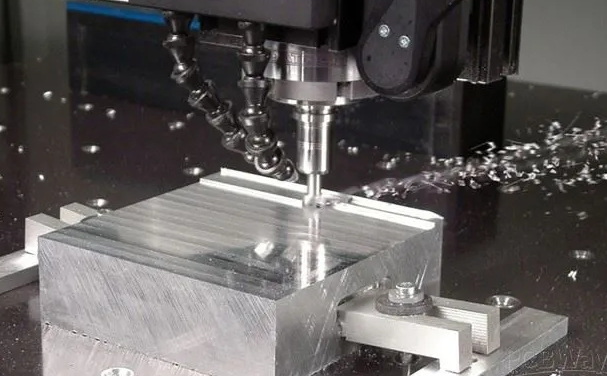
One reason for the versatility of CNC milling is its capability to work with a wide variety of materials. Some common material categories include:
- Metals: Aluminum, stainless steel, brass, copper, titanium, magnesium, and tool steels.
- Plastics: Nylon, polycarbonate, ABS, PEEK, and PTFE.
- Composites: Carbon fiber and fiberglass-reinforced plastics, often used for lightweight strength.
- Other materials: Ceramics, wood, and even wax, often used for prototypes and visual models.
The choice of material influences the design, machining speed, and cost. Metals are preferred for high-stress or high-temperature parts, while plastics offer economy and corrosion resistance. CNC milling allows rapid switching between these materials without compromising precision.
The integration of CAD and CAM software is the foundation of efficient CNC milling. Engineers begin by designing the 3D model using CAD software, specifying dimensions, features, and tolerances. Then CAM software converts this digital model into a toolpath—a precise sequence of machine operations that remove material from the workpiece.
This digital workflow not only ensures consistent accuracy but also allows simulation before production begins. Engineers can preview tool movement, material removal rates, and potential collisions. This simulation phase saves money, time, and materials by eliminating human error. The resulting synergy between digital design and machining has made CNC milling one of the most reliable processes in manufacturing.
CNC milling offers countless advantages that drive its adoption across industries:
- Exceptional Accuracy: Tolerances as low as ±0.01 mm ensure microscopic precision.
- Consistency and Repeatability: Perfect replication for every production batch.
- Complex Geometries: Ideal for intricate contours, cavities, and surfaces.
- Automation and Speed: CNC programs run continuously, reducing lead times and labor costs.
- Reduced Waste: Efficient toolpath planning minimizes material waste.
- Flexible Production: Suitable for both one-off prototypes and high-volume manufacturing.
Combining these benefits, CNC milling remains central to achieving efficiency and precision in modern engineering.
CNC milling continues to evolve through digitalization, automation, and sustainable innovation. The future points toward smart milling ecosystems featuring features like:
- Artificial Intelligence (AI) integration for predictive maintenance and adaptive toolpath adjustment.
- Machine Learning to analyze historical production data and optimize cutting conditions.
- Internet of Things (IoT) connectivity, offering real-time monitoring and automatic feedback systems.
- Sustainable manufacturing, emphasizing coolant recycling, reduced energy consumption, and eco-friendly materials.
- Hybrid manufacturing, combining milling and additive (3D printing) processes for maximum flexibility.
These advancements are making CNC milling smarter, faster, and more sustainable—setting the stage for fully autonomous factories where digital twins communicate directly with machines.
Even with its sophistication, CNC milling faces certain challenges:
- Tool wear and replacement: Continuous cutting causes gradual degradation, requiring consistent tool monitoring.
- Programming complexity: Designing optimal toolpaths still requires expertise and simulation.
- Cost of equipment: While cost-effective long-term, initial investment in CNC milling machines can be high.
- Material variability: Different materials respond uniquely to heat and friction, needing careful calibration.
Addressing these issues through advanced monitoring and automation keeps CNC milling efficient and sustainable.
CNC milling machines create an astonishing variety of products—from heavy mechanical equipment to delicate surgical implants and intricate artistic designs. Their combination of precision, repeatability, and digital control has made CNC milling one of the cornerstones of global manufacturing. By enabling designers and engineers to transform digital ideas into physical products with microscopic precision, CNC milling continues to shape the future of innovation and production worldwide.
CNC milling doesn't just cut materials—it cuts the path to technological progress.
Contact us to get more information!
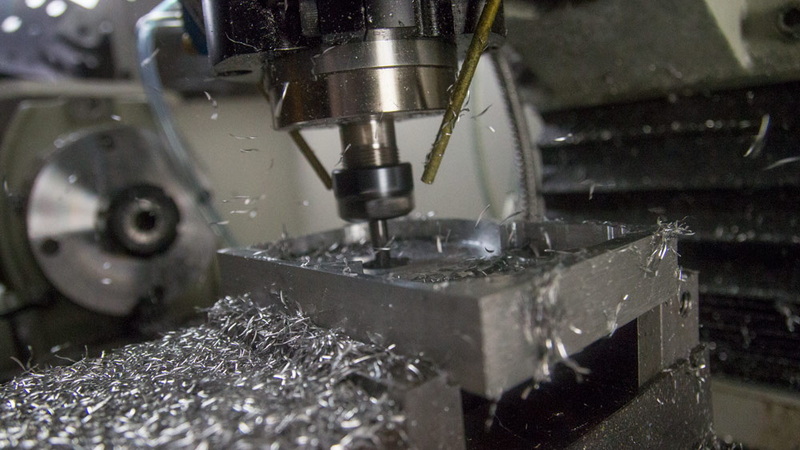
CNC milling is used to precisely shape materials into parts or components by removing material through rotating cutting tools controlled by a computer.
CNC milling can process metals, plastics, composites, and even ceramics, depending on the machine's capability and cutting tool selection.
Modern CNC milling machines achieve tolerances within microns, ensuring dimensional precision ideal for aerospace, medical, and automotive industries.
While 3D printing builds objects layer by layer, CNC milling produces parts with superior strength, surface finish, and accuracy—especially for industrial applications.
Industries such as aerospace, automotive, medical, electronics, and defense depend heavily on CNC milling for manufacturing mission-critical, precision components.
1. https://www.autodesk.com/solutions/cad-cam
2. https://www.machinemfg.com/what-is-cnc-milling/
4. https://www.thomasnet.com/articles/machinery-tools-supplies/types-of-cnc-machining/
5. https://www.xometry.com/resources/machining/what-is-cnc-milling/


