From idea to market-ready product, our NPI solutions make every stage easier, faster. Discover How We Help

Content Menu
● The Strengths of CNC Milling
● Geometric Limitations of CNC Milling
>> Internal cavities and enclosed structures
>> Overhangs and complex undercuts
● Material Limitations in CNC Milling
>> Extremely soft or elastic materials
>> Brittle or layered composites
>> Precious and expensive materials
● Design Constraints That Affect CNC Milling
>> Thin walls and delicate features
>> Highly organic or sculptural shapes
● Economic Limitations: When CNC Milling Isn't the Best Investment
● Technical Constraints and Tooling Challenges
>> Positional accuracy and machine limitations
>> Fixturing and part alignment
● When CNC Milling Falls Short Compared to Other Processes
● Integrating CNC Milling with Other Technologies
● Environmental and Sustainability Considerations
● FAQ
>> 1. Can CNC milling produce enclosed internal cavities?
>> 2. Why are sharp internal corners impossible to mill?
>> 3. What materials are unsuitable for CNC milling?
>> 4. How large can CNC milling parts be?
>> 5. When is CNC milling too expensive?
CNC milling has become one of the most powerful and reliable methods for manufacturing metal and plastic parts with exceptional accuracy. It has replaced many manual machining processes and plays a critical role in industries such as aerospace, automotive, electronics, and medical device manufacturing. CNC milling offers automated precision, repeatability, and the ability to produce complex geometries quickly.
However, despite its remarkable strengths, CNC milling is not a universal solution. There are certain materials, geometries, and conditions where CNC milling struggles — or becomes inefficient. Understanding what CNC milling can't do is essential for engineers, designers, and manufacturers who want to optimize production strategies and select the right processes for each project.
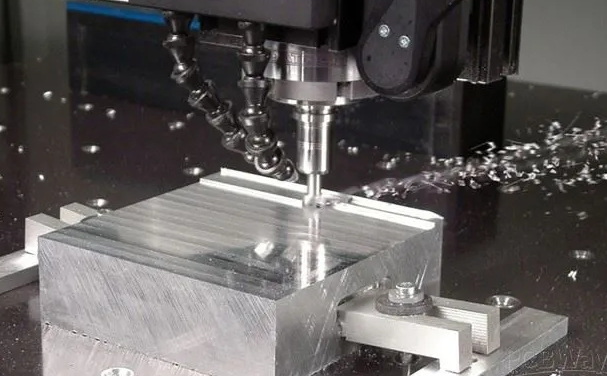
CNC milling is a subtractive manufacturing process that removes material from a solid block (called a workpiece) using rotating tools. The motion of the cutting tool and the workpiece is precisely controlled by computer numerical code, known as G-code.
Depending on the machine configuration, CNC mills may have 3, 4, or 5 axes of motion, each providing varying degrees of freedom. A 3-axis machine can move the cutting tool along the X, Y, and Z planes, while 5-axis machines can tilt and rotate both the tool and the part, allowing complex surfaces to be milled in a single setup.
While this versatility allows CNC milling to produce an enormous variety of parts, mechanical, physical, and economic factors still impose practical boundaries.
Before diving into limitations, it's helpful to recognize the advantages of CNC milling that make it such a cornerstone of modern manufacturing:
- Excellent precision and repeatability: Capable of tolerances as tight as ±0.002 mm.
- Material flexibility: Works with metals, plastics, composites, and even wood.
- Automation: Once programmed, parts can be produced with minimal human error.
- High-quality surface finish: Milling achieves superior surface textures without requiring extensive polishing.
- Prototyping advantages: Suitable for small batches and prototypes that demand dimensional accuracy.
Despite these capabilities, CNC milling is not a one-size-fits-all technique. The next sections explore its limits from geometric, material, and economic perspectives.
CNC milling relies on rotary tools that remove material through direct physical contact. This introduces several geometric challenges.
Milling tools must enter the material from an open side. As a result, fully enclosed internal cavities, tunnels, or lattice-like structures cannot be made. Even with multi-axis setups, there will always be areas the tool cannot physically reach. Additive manufacturing excels in these cases, as it builds parts layer by layer instead of cutting from a solid block.
Since milling cutters are round, sharp internal corners are impossible to create. Each inside corner will have a fillet radius equal to the cutter's size. Designers needing sharp transitions or 90-degree internal edges must redesign parts or use Electrical Discharge Machining (EDM), which removes material using a wire electrode.
When cutting narrow channels or deep slots, the tool length becomes a limiting factor. Long end mills can bend or chatter, reducing accuracy and surface quality. This makes deep internal pockets or tall, thin walls extremely challenging to machine.
Some detailed geometries, such as inward undercuts or hidden grooves on the underside of surfaces, are inaccessible to straight milling cutters. Multi-axis machines can handle some of these features, but not all. Complex overhangs may require custom tooling or secondary machining from different angles.
The choice of material directly affects cutting behavior, tool wear, and machining cost.
Materials like advanced ceramics, hardened steels, and tungsten carbide exceed the practical limits of CNC tools. They generate extreme friction and heat during cutting, which wears down even carbide end mills quickly. In such cases, grinding or EDM delivers better results.
Rubber, silicone, foam, and certain polymers are too flexible to resist tool pressure. When milling, these materials can bend or drag along the tool path instead of cutting cleanly, resulting in rough or inaccurate finishes. Specialized cutting techniques or molding processes are better alternatives.
Composites like fiberglass and carbon fiber can delaminate or fray during milling. Their mixture of soft resin and hard fibers causes uneven tool wear. Using proper tool coatings and high-speed strategies can help, but CNC milling is more suitable for homogeneous materials.
Because CNC milling removes large volumes of material, it can generate significant waste. For costly materials such as titanium or gold alloys, additive manufacturing often offers a more efficient approach with minimal material loss.
Even when a material is machinable, poor design can make the milling process inefficient or impossible.
Features thinner than 0.5 mm tend to vibrate during milling, which causes distortion and tool marks. A delicate part may even break under cutting pressure. CNC milling works best when wall thickness and feature size are proportionate to tool dimensions.
CNC milling machines are confined by their working envelope—the maximum block size that can fit on the table. For very large items such as structural panels, wind turbine hubs, or bridge fixtures, machining them as a single piece is not feasible. Instead, modular construction or casting methods are used.
CNC milling can reproduce smooth curves, but for complex organic surfaces or biomimetic structures, additive manufacturing excels. Milling such shapes requires numerous tool paths and reorientations, consuming excessive time.
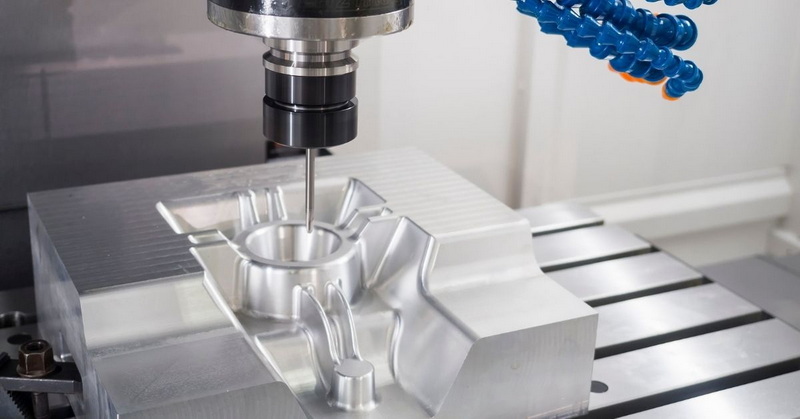
CNC milling can be costly depending on the production volume, material, and complexity.
- Tooling and setup costs: Each design requires programming, fixture building, and calibration, which are time-intensive for small batches.
- Material waste: Being a subtractive process, much of the original block ends up as chips. This waste quickly adds up with expensive metals.
- Production speed: Milling intricate surfaces or removing large amounts of material can take hours, while casting or forming completes faster.
- Energy consumption: Prolonged cutting operations on hard metals consume considerable energy, adding to cost and environmental impact.
For mass production of non-critical parts, casting, stamping, or extrusion often deliver better cost-performance ratios.
Every milling tool must balance reach against stiffness. The longer and thinner a tool is, the more it deflects under cutting force. This makes micro-scale precision difficult in deep geometries. Shorter tools improve accuracy but limit access to deeper regions.
Even top-tier CNC machines suffer from slight inaccuracies due to mechanical backlash or temperature expansion. Tiny deviations may accumulate across multi-step operations, affecting tolerance-critical applications like aerospace assemblies.
Every workpiece must be securely held during machining. Irregularly shaped parts may need custom fixtures, which adds design and setup time. Repositioning the part for multi-sided milling introduces potential alignment errors unless advanced coordinate systems are used.
Each manufacturing process has unique strengths. Knowing where CNC milling lags helps decide when to transition to other technologies.
- 3D printing (Additive): Ideal for internal cavities, lattice structures, and low-waste production.
- EDM (Electrical Discharge Machining): Excels in producing sharp corners, deep slots, and cutting hard materials.
- Laser cutting: Faster for 2D shapes in thin sheets and offers high-speed precision.
- Turning (Lathe): More efficient for round, cylindrical components than milling.
- Casting: Better for high-volume production of large or complex shapes.
By combining these methods strategically, manufacturers can overcome the limitations of any single technology.
To address its weaknesses, modern manufacturing often merges CNC milling with complementary approaches:
- Hybrid additive–subtractive manufacturing: 3D print the base component, then finish precision surfaces using CNC milling.
- Post-processing stages: Milling is used alongside surface finishing, polishing, and coating for final refinement.
- EDM or grinding partnerships: Complex dies often start with milling, followed by EDM for corners and fine detailing.
This multi-process integration delivers higher accuracy, faster cycles, and lower material consumption.
CNC milling's subtractive nature means material waste is unavoidable. Chips and coolant fluids must be properly recycled to reduce environmental impact. Modern CNC facilities are implementing:
- Chip reclaim systems to recycle metals for reuse.
- Coolant filtration and reuse technologies to reduce liquid waste.
- Optimized tool paths to minimize unnecessary cutting passes.
While CNC milling can't eliminate waste entirely, sustainable practices make it more energy-efficient and environmentally responsible.
Advances in software, tool materials, and machine design continue to expand what CNC milling can achieve. Key trends include:
- AI-driven adaptive control systems that optimize feeds and speeds in real time.
- Diamond-coated tools and ceramic cutters for extended tool life and faster machining.
- Micro-CNC systems enabling miniature component production in electronics and medical fields.
- Digital twin simulation for accurate prediction of tool deflection and heat buildup before machining.
While these innovations reduce limitations, the fundamental geometry and physics of milling remain unchanged. Milling will always rely on tool access and physical cutting, and thus cannot fully replace additive or formative manufacturing processes.
CNC milling remains the foundation of precision machining worldwide. Yet, no single process does everything. CNC milling cannot handle fully enclosed geometries, sharp internal corners, superhard or soft materials, or oversized parts beyond a machine's travel limits. It can also become uneconomical for mass production or shapes that involve heavy material removal.
Understanding what CNC milling can't do allows designers to optimize part geometry and select complementary methods—such as 3D printing, EDM, or casting—to achieve better results. By using CNC milling where it excels and combining it with other technologies where it doesn't, manufacturers can unlock efficiency, precision, and sustainability in equal measure.
Contact us to get more information!
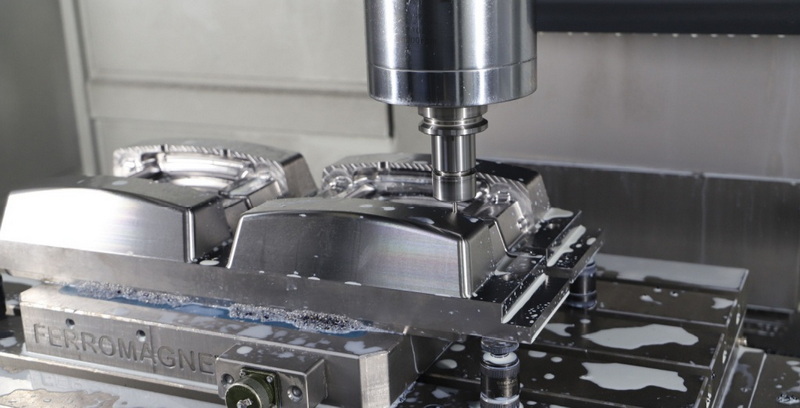
No. CNC milling requires tool access from at least one direction, so completely sealed or internal voids are impossible to machine directly.
Because milling tools are round, inner corners always have some radius. Processes like EDM can produce sharp internal angles if required.
Extremely hard metals (like tungsten carbide) and very soft materials (like rubber or silicone) are not well-suited to milling due to tool wear and deformation.
Size depends on machine capacity. While some aerospace mills handle parts over a meter long, extremely large components are manufactured by casting or assembling in sections.
For mass production or shapes that waste large amounts of metal, CNC milling becomes uneconomical. Alternative processes such as die casting or extrusion reduce cost and material waste.
1. https://www.autodesk.com/solutions/cnc-machining
2. https://www.hubs.com/knowledge-base/what-is-cnc-milling
3. https://www.xometry.com/resources/cnc-machining
4. https://makezine.com/projects/what-is-cnc-milling
5. https://www.engineering.com/cnc-milling-guide


