From idea to market-ready product, our NPI solutions make every stage easier, faster. Discover How We Help

Views: 222 Author: Tomorrow Publish Time: 2026-02-11 Origin: Site


Content Menu
● What Is a CNC Gantry Type Machining Center?
● Structural Composition and Key Components
● Working Principles of Gantry Type CNC Machining
● Types of Gantry CNC Machining Centers
● Spindle Technology in Gantry Machining
● Advanced Control and Software Integration
● Advantages of CNC Gantry Type Machining Centers
● Applications Across Industries
● Comparison With Other CNC Machining Equipment
● Accuracy Control and Quality Assurance
● Energy Efficiency and Environmental Considerations
● Maintenance and Operational Safety
● FAQ
>> 1. What makes gantry CNC machining different from other CNC systems?
>> 2. Can gantry CNC machining centers handle multi-axis operations?
>> 3. How is accuracy maintained in large gantry systems?
>> 4. What industries benefit most from gantry CNC machining?
>> 5. How can manufacturers improve productivity using gantry CNC machining centers?
In modern industrial production, precision, efficiency, and automation define success. Among all manufacturing technologies, CNC machining has revolutionized the way components are produced, leading to tighter tolerances and higher consistency. Within this field, CNC gantry type machining centers play a critical role in handling large, heavy, and intricate parts that conventional machines cannot easily process.
Built around advanced mechatronic systems and robust architectures, these machines have transformed production across aerospace, shipbuilding, energy, automotive, and construction sectors. The combination of a powerful spindle, rigid gantry frame, and intelligent control system allows manufacturers to perform multi-axis operations with superior accuracy and minimal manual intervention.

A CNC gantry type machining center is a large-scale, high-precision CNC machining system characterized by a bridge-like gantry structure consisting of two vertical columns and a crossbeam. The spindle moves along the crossbeam while the table remains fixed or moves slightly during machining operations.
This configuration offers a stable platform that resists vibration and deformation during heavy-duty cutting. It is ideal for large and long parts such as molds, dies, and structural components. The entire machining process—milling, drilling, boring, and tapping—can be completed within one setup, ensuring both accuracy and efficiency.
Unlike standard vertical machining centers, which rely on a moving worktable, the gantry type structure allows for superior stability, accommodating parts that can weigh several tons without loss of precision.
A modern CNC gantry type machining center consists of the following major elements:
- Gantry frame: Provides mechanical rigidity and supports the crossbeam for tool movement in the X and Y directions.
- Crossbeam/Bridge: The horizontal beam where the spindle head travels, offering smooth and synchronized motion.
- Spindle and tool head: Houses the cutting tool, driven by high-torque motors for high-speed CNC machining operations.
- Worktable: The stationary or movable base that holds large workpieces. It's commonly made from heat-treated cast iron to resist warping.
- CNC control system: The brain of the machine that executes pre-programmed instructions with micrometer-level precision.
- Automatic tool changer (ATC): Stores multiple tools and automatically switches between them during machining.
- Cooling and lubrication systems: Maintain optimal temperature and prolong tool and machine life.
- Chip disposal and dust collection units: Remove metal chips and debris, ensuring clean and safe operations.
Each of these systems functions under carefully controlled conditions to enable consistent, high-accuracy CNC machining even in demanding industrial environments.
At its core, a CNC gantry type machining center operates using computer-numerical control logic. The process begins with CAD (Computer-Aided Design) models that define the geometry of the component. These models are translated into tool paths through CAM (Computer-Aided Manufacturing) software, which generates machine-readable G-code instructions.
Once loaded into the CNC system, microprocessors and servo motors interpret each line of code to perform movements on multiple axes — typically X, Y, and Z. The tool path defines the exact cutting position and depth, while sensors constantly monitor the operation to maintain consistency and prevent collisions.
Because of its rigid mechanical design, the gantry structure minimizes vibration and tool deflection, which is vital for achieving tight tolerances during heavy-cutting CNC machining.
There are several types of CNC gantry machining centers, differentiated by design and motion capabilities:
- Fixed beam type: The beam remains static while the table moves longitudinally.
- Moving beam type: The beam moves vertically while keeping the worktable stationary.
- Moving gantry type: The entire gantry moves along linear guides for maximum flexibility.
- Double column type: Features two massive columns and a high crossbeam to ensure excellent rigidity for ultra-heavy workpieces.
Each type has its advantages depending on application requirements such as part size, cutting depth, or accuracy level.
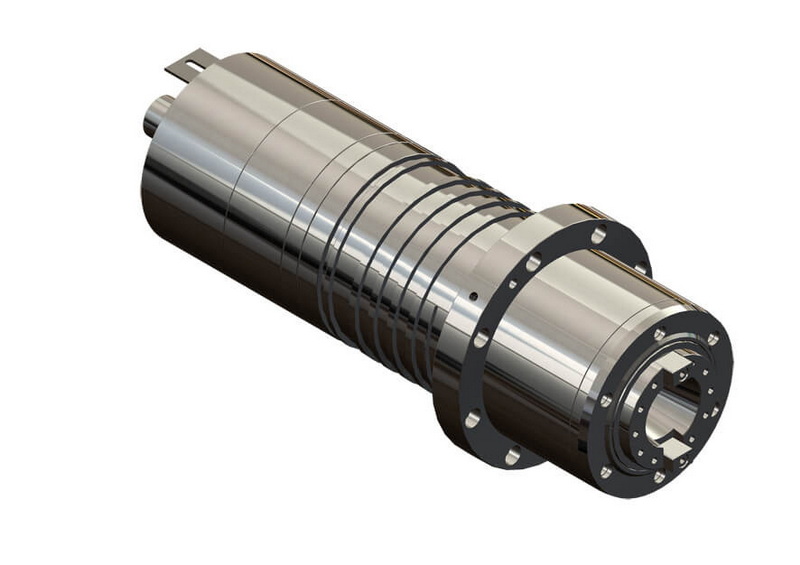
The spindle is the heart of the CNC machining process, directly affecting cutting capability and surface finish. Modern gantry machines employ:
- High-speed electric spindles for lightweight aluminum and composite materials.
- High-torque spindles for tough metals like titanium or stainless steel.
- Liquid-cooled systems to maintain consistent temperature and dimensional stability.
- Automatic balancing systems that reduce vibration and prolong tool life.
The integration of torque sensors and adaptive speed control systems further enhances overall stability during aggressive cutting operations.
CNC control units have evolved dramatically over the past decade. Today's CNC machining centers come equipped with intelligent features, including:
- Multi-axis synchronization (up to 5 or 6 axes).
- AI-driven path optimization that dynamically adjusts tool feed rates.
- Real-time vibration monitoring and correction systems.
- Digital twin technology enabling virtual simulation before actual cutting.
- IoT connectivity for data collection, maintenance tracking, and efficiency analytics.
These innovations not only improve machining accuracy but also reduce setup time, making production more cost-effective and scalable.
CNC gantry machines bring tremendous value to industrial manufacturing through:
- High precision and rigidity: Ideal for heavy-duty and ultra-precise parts.
- Large work envelope: Perfect for oversized components.
- Multi-process integration: Performs roughing and finishing in one fixture setup.
- Excellent efficiency: Automated tool handling and rapid traverse speeds increase throughput.
- Enhanced reliability: Structural symmetry stabilizes the machining environment, benefiting long production runs.
These combined advantages make CNC gantry type machining centers a cornerstone of advanced manufacturing operations worldwide.
The unique capabilities of CNC gantry machining make it indispensable in multiple industries:
- Aerospace: Used to machine wing frames, fuselage molds, and landing gear housings.
- Marine engineering: For propeller blades, hull sections, and mechanical shaft bases.
- Energy sector: Machining generator housings, wind turbine hubs, and pressure vessel flanges.
- Automotive and heavy equipment: Producing automotive dies, press molds, and heavy vehicle frames.
- Construction machinery: For components like excavator arms and structural beams.
These applications all benefit from CNC machining's precision, consistency, and ability to process high-performance materials.
| Feature | Gantry Type CNC Machining Center | Vertical Machining Center | Horizontal Machining Center |
|---|---|---|---|
| Worktable movement | Stationary or limited | Moves vertically | Moves horizontally |
| Best for | Large workpieces | Medium parts | Multi-face machining |
| Rigidity | Very high | Moderate | High |
| Precision | Excellent | High | High |
| Typical industries | Aerospace, energy, shipbuilding | Tooling, die-casting | Automotive, machinery |
This table shows that CNC gantry type machining centers dominate when processing large, complex, or heavy components demanding extreme stability.
The most critical factor in CNC machining is accuracy control. Manufacturers maintain precision through:
- Temperature compensation technology that offsets thermal expansion.
- Laser and ball-bar calibration systems ensuring geometric accuracy.
- Closed-loop feedback systems detecting and correcting position errors instantly.
- Tool wear monitoring that prevents dimensional deviation.
Through these quality control methods, gantry machines routinely achieve sub-micron accuracy levels, meeting even the most demanding aerospace or die-making requirements.
Although CNC gantry machining centers are large and power-intensive, modern equipment features energy-saving solutions such as:
- Regenerative drives that recycle braking energy.
- Smart cooling that adjusts coolant flow based on cutting temperature.
- Chip recycling systems reducing material waste.
- Low-noise spindle motors improving the work environment.
Such green manufacturing principles align with today's sustainability goals and global environmental standards.
Proper maintenance ensures that a CNC gantry machining center operates reliably for years. Key maintenance steps include:
- Daily cleaning of coolant filters, tool magazines, and guide rails.
- Weekly spindle inspection and lubrication.
- Monthly ball screw alignment checks.
- Quarterly calibration and software updates.
Additionally, safety features such as automatic collision detection, emergency stop systems, and protective enclosures safeguard both operators and equipment during machining.
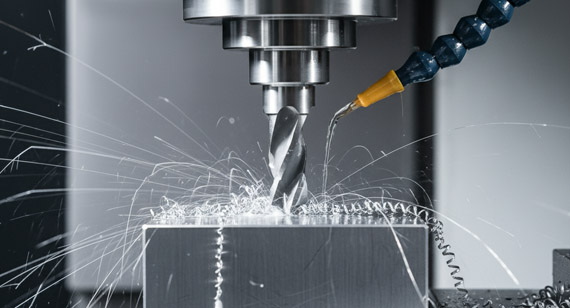
The future of CNC gantry machining will likely focus on smarter, faster, and greener operations. Key directions include:
- Integration with AI for predictive maintenance and process optimization.
- Hybrid machining systems combining CNC cutting and additive manufacturing.
- Ultrasonic and laser-assisted machining for composite and hardened materials.
- Automation with robotic loading systems for 24/7 production.
These ongoing innovations will ensure that CNC gantry type machining centers remain at the forefront of industrial advancement.
CNC gantry type machining centers are the ultimate expression of industrial precision machinery. Their robust gantry structure, integrated control systems, and multi-function adaptability make them indispensable in large-part production. Through consistent innovation and smart automation, they continue to reshape global manufacturing efficiency standards.
Whether producing aircraft components, turbine housings, or heavy molds, gantry CNC machines guarantee accuracy, speed, and reliability—an unbeatable combination in the evolving world of CNC machining.
Contact us to get more information!
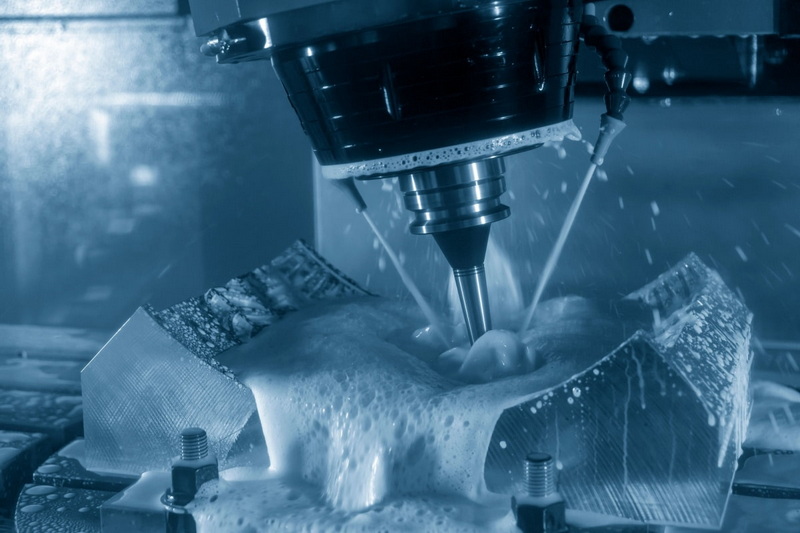
The unique gantry design allows the tool head to move while keeping the heavy workpiece stationary. This gives higher stability and precision for very large components compared to smaller vertical or horizontal machines.
Yes. Most advanced models support 5-axis or even 6-axis CNC machining, enabling complex contours, angled drilling, and precise surface finishing in a single operation.
Through laser calibration, temperature compensation, and closed-loop servo control, the system automatically corrects positional errors to preserve high accuracy even over large distances.
Industries such as aerospace, shipbuilding, renewable energy, mold manufacturing, and heavy machinery rely heavily on gantry systems for their ability to process oversized and complex geometries efficiently.
By integrating automation, using high-speed spindles, optimizing tool paths through CAM software, and scheduling predictive maintenance via IoT tools, manufacturers can achieve round-the-clock precision CNC machining.
1. https://www.okuma.com/en/machining-centers/gantry
2. https://www.fanucamerica.com/solutions/cnc
3. https://www.hurco.com/EN-US/machines/Pages/CNC-Machining-Centers.aspx
4. https://www.siemens.com/global/en/products/automation/sinumerik.html


