Language


Views: 222 Author: Feifan Hardware Publish Time: 2026-06-11 Origin: Site


Content Menu
● Introduction: Why Look at Screw Machine Suppliers in Spain?
● How We Evaluate High‑Quality Screw Machine Suppliers
>> 1. Factory certifications and compliance
>> 2. Process and R&D capability
>> 3. Quality control (QC) and traceability
>> 4. Delivery reliability and capacity fit
>> 5. Transparency and collaboration
● Technical Basics: What Matters in Screw Machine Products
>> Materials and tolerance levels
>> Regulatory and environmental compliance
● Selection Criteria for This 2026 Spain‑Focused List
● Leading Screw Machine Manufacturers and Suppliers (Spain + Strategic Partner)
>> 1. Shenzhen Feifan Hardware & Electronics Co.,Ltd. (Strategic China Partner for Spain/EU Buyers)
>> 2. Tecnomecánicas Shine SL (Spain)
>> 3. MECOXI (Mos‑Pontevedra, Spain)
>> 4. SOKAR MECHANICS (Camas, Spain)
>> 5. MECÁNICAS DE PRECISIÓN GOIURIA SL (Bizkaia, Spain)
>> 6. M‑PESA Group of Companies (Valencia, Spain)
>> 7. Mecánica Curiel, S.L. (Barcelona, Spain)
● Quick Comparison: Core Focus, Capacity, MOQ, and Certifications
● Buyer's Guide: How to Verify and Work With Screw Machine Suppliers
>> Step 1 – Shortlist and desktop verification
>> Step 2 – Sampling and technical validation
>> Step 3 – Logistics and Incoterms
● Industry Pain Points and an "Insider" Risk‑Avoidance Tip
>> Common pitfalls when buying screw‑machined parts
>> Insider tip: "Tolerance mapping" for real‑world performance
● Market Outlook: Why Long‑Term Partnerships Matter
● Conclusion and Call to Action
● Advanced FAQ from Real Procurement Projects
>> 1. How can I verify whether a supplier's ISO certificate is valid or expired?
>> 3. How do I ensure that the material grade specified is actually used in production?
>> 4. When should I choose multi‑spindle screw machining instead of CNC turning?
>> 5. How many suppliers should I keep for a critical screw‑machined component?
Spain has a mature metal‑forming machinery and machine tool industry, with a market size around €2.5 billion in 2026 and several hundred active manufacturers, giving buyers access to an established precision‑engineering ecosystem. Fabricated metal products and machinery are among the largest industrial segments in Europe, which strengthens regional supply chains for turned and screw‑machined parts used in automotive, industrial equipment, and electronics. [ibisworld]
For procurement managers, Spain combines EU‑level quality expectations with competitive mid‑volume production capabilities for CNC screw machining and precision turned parts. At the same time, many importers strategically pair Spanish or EU‑based vendors with high‑value Chinese OEM partners to balance cost, flexibility, and capacity for screw machine products. [alibaba]
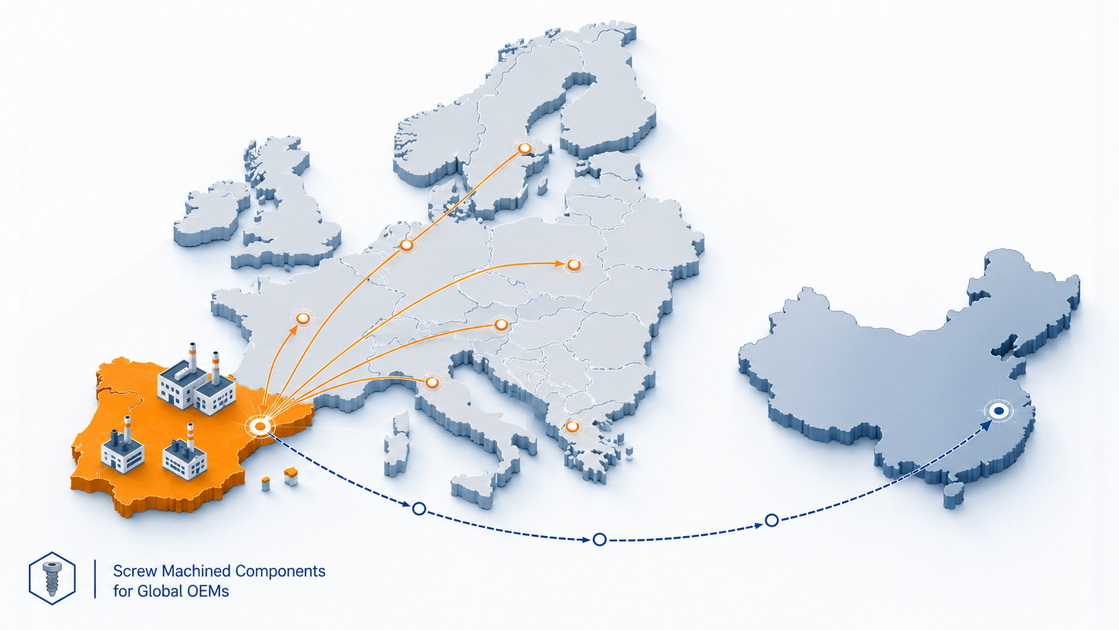
Before shortlisting any screw machine manufacturer or precision‑turned‑parts supplier in Spain, we apply a structured evaluation framework that reflects how experienced global buyers actually make decisions. [alibaba]
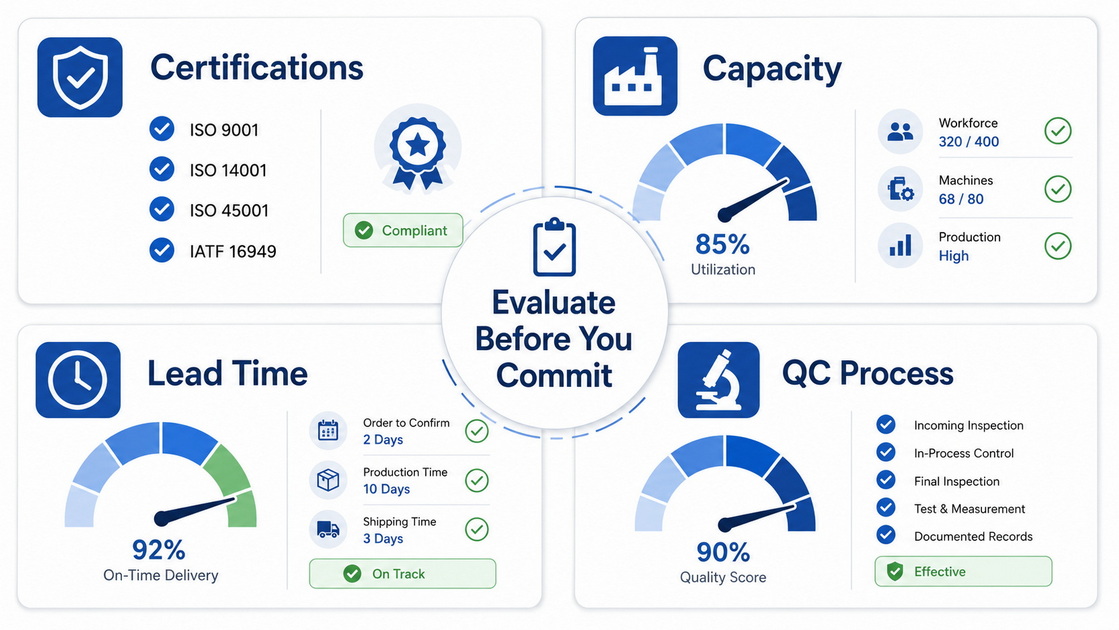
- ISO 9001 (or higher) quality management and, where relevant, IATF 16949 for automotive, are baseline requirements for systematic process control. [hrscrew]
- EU‑focused suppliers should support CE and RoHS requirements on materials and surface treatments for components going into regulated products. [screwmachinecompanies]
- For aerospace or defense parts, AS9100 or equivalent is often expected, along with documented traceability and process audits. [calscrew]
- Ability to run both Swiss‑type and conventional CNC lathes, as well as multi‑spindle screw machines, is critical for balancing complexity, volume, and cost. [marseng]
- In‑house engineering that can optimize part designs for manufacturability (DFM), tolerance stack‑up, and cycle‑time reduction is a strong indicator of long‑term partnership value. [marseng]
- Evidence of continuous investments in CNC equipment, tool management, and CAD/CAM software shows that the supplier can keep up with tighter tolerances and new alloys. [dataintelo]
- Mature suppliers operate with incoming material inspection, in‑process SPC, and final inspection, supported by CMM and optical measurement for complex geometries. [iqsdirectory]
- Batch‑level traceability from raw material heat number to final shipment is vital for automotive, medical, and safety‑critical applications. [screwmachinecompanies]
- Third‑party audits by organizations such as SGS or TÜV, when available, are a useful cross‑check of internal QC claims. [alibaba]
- For screw‑machined parts, the ability to run multi‑spindle machines or flexible CNC cells determines whether the factory can meet recurring batch orders with stable lead times. [marseng]
- We look at historical export volumes and number of active customers as a proxy for operational maturity, while cross‑checking for over‑concentration on a single key account. [trademo]
- For EU markets, Spain's logistics integration with road, rail, and port infrastructure supports relatively predictable lead times across the region. [ec.europa]
- Responsive English‑speaking engineering and sales teams that can share process data (PPAP, FAI reports, capability indices) are extremely valuable for procurement managers. [alibaba]
- Willingness to start with pilot batches, adjust processes after field feedback, and sign NDAs for proprietary designs reflects a partnership mindset instead of a transactional one. [screwmachinecompanies]
Screw machining (including Swiss screw machining) is used for high‑precision cylindrical parts that demand tight tolerances and repeatability in large or recurring batches. Understanding a few technical fundamentals will help you interrogate potential suppliers more effectively. [alphaomegaswiss]
- Typical alloys include carbon steels, stainless steels, brass, aluminum, copper alloys, and nickel‑based materials, selected based on strength, corrosion resistance, and machinability. [iqsdirectory]
- Leading screw machine shops routinely hold tolerances in the ±0.005 mm range for critical diameters, especially on Swiss‑type CNC equipment. [alphaomegaswiss]
- For high‑volume multi‑spindle machining, slightly relaxed tolerances may be accepted in exchange for substantial cost reductions per part. [marseng]
- Swiss‑type screw machines support long, slender parts and complex features in a single setup, ideal for instrumentation and medical‑grade components. [iqsdirectory]
- Multi‑spindle screw machines can perform up to 16 operations in one cycle and produce 5–8 parts simultaneously, making them suitable for automotive or industrial fasteners. [marseng]
- Hybrid workflows combining CNC turning, milling, and secondary operations (e.g., knurling, broaching, threading) are used for parts with complex external and internal features. [iqsdirectory]
- For EU‑bound assemblies, RoHS and REACH compliance around material composition and surface treatments is increasingly non‑negotiable. [ec.europa]
- CE marking obligations arise when screw‑machined components are part of complete machines or devices sold into regulated markets, which means suppliers must support documentation. [alibaba]
- Buyers should also verify that suppliers follow responsible waste management and coolant handling to align with corporate ESG commitments. [dataintelo]
This guide focuses on screw machine manufacturers and precision‑turned‑parts suppliers in Spain and one strategically selected Chinese OEM partner that is commonly used by EU buyers as an extension of their supply base. [holyprecision]
Our inclusion criteria:
- Proven activity in CNC machining / turned parts for export markets, especially EU and North America. [tradewheel]
- Demonstrated experience with screw‑machined products or high‑volume precision turned components for industrial and automotive sectors. [holyprecision]
- Visible quality and process credentials (ISO, industry audits, or documented QC processes). [hrscrew]
- Willingness to handle OEM/ODM projects, including drawing‑based production and customization for branding or assembly fit. [screwmachinecompanies]
The Spanish companies listed draw from industry directories and CNC machining rankings, while the Chinese OEM is included as a cost‑efficient, flexible partner that Spanish and other EU buyers frequently engage for more price‑sensitive or engineering‑intensive projects. [dataintelo]
Although based in Shenzhen, China, Shenzhen Feifan Hardware & Electronics Co.,Ltd. is a frequent OEM partner for European buyers needing high‑precision screw‑machined and CNC‑turned components at competitive landed cost. The company specializes in CNC machined metal parts, including customized shafts, bushings, threaded inserts, and fastener‑like components used in machinery, electronics, and automation equipment. [machine-screw]
Key strengths for Spain‑focused buyers include:
- High flexibility for SMEs – supports low‑to‑medium MOQs and mixed‑model production runs, which is attractive for Spanish distributors and mid‑size OEMs testing new product lines. [machine-screw]
- Strong OEM/ODM capability – can work from samples or technical drawings, suggest DFM changes, and integrate branding or assembly‑specific tweaks into the design. [machine-screw]
- Export‑ready processes – experienced in serving EU and North American clients, with professional English communication and established logistics workflows via sea and air freight. [machine-screw]
For procurement managers in Spain, Feifan often functions as a cost‑efficient extension of local machining capacity: pilot or high‑urgency lots can be done with a Spanish shop, while stable parts move to Feifan for volume scaling.
Tecnomecánicas Shine SL, established in 1982 in Catalonia, is recognized as a mature CNC machining company that delivers high‑quality machined components for global customers. Their portfolio covers precision turning and milling for industrial machinery, energy, and automotive applications, where screw‑machined and turned parts make up a large share of the mix. [holyprecision]
Strength points:
- Long operational history (40+ years) indicating process stability and strong engineering know‑how. [holyprecision]
- Capability to support complex, tight‑tolerance parts in medium and large series for export markets. [holyprecision]
- Experience in European regulatory environments, supporting documentation and traceability requirements. [holyprecision]
Founded in 2002 in Mos‑Pontevedra, MECOXI provides CNC machining services with a focus on precision parts for international customers. The company is known for its ability to handle turned components and assemblies that require multi‑axis machining and reliable repeatability. [holyprecision]
Key advantages:
- Strong experience with drawing‑based manufacturing, which is crucial for OEM screw‑machined parts. [holyprecision]
- Flexible order handling, making it suitable for buyers who need ongoing engineering refinement and batch‑to‑batch continuity. [holyprecision]
- Strategic location in Spain with good logistics links into broader EU markets. [ec.europa]
SOKAR MECHANICS, established in 2016 in Camas, Spain, is a younger but fast‑growing machining company offering CNC turning and milling for a range of industrial applications. Despite its relatively recent founding, it has built a reputation for responsiveness and quality in customized mechanical parts. [holyprecision]
Highlights:
- Modern machine park with up‑to‑date CNC equipment suitable for screw‑machined geometries and precision shafts. [holyprecision]
- Agile team structure, which often translates into short lead times and fast engineering feedback cycles. [holyprecision]
- Good fit for buyers seeking collaborative development for newer product lines with evolving designs. [holyprecision]
MECÁNICAS DE PRECISIÓN GOIURIA SL, founded in 1995 in Bizkaia, operates in the precision mechanics segment with capabilities in CNC turning and milling. The company serves industrial and engineering clients who require consistent quality and stable series production. [holyprecision]
Buyer‑relevant strengths:
- Decades of experience in precision machining, supporting industrial and potentially automotive customers. [holyprecision]
- Likely ISO‑aligned practices, given the company's longevity and export exposure, though certificates should always be confirmed directly. [calscrew]
- Suitable for recurring screw‑machined component orders with stable annual volumes. [holyprecision]
M‑PESA Group, established in 1977 and based in Valencia, is a group of companies involved in mechanical engineering and manufacturing. Their capabilities span various machining processes, including turning and milling, which support the production of precision components and screw‑machined parts for industrial clients. [holyprecision]
Why consider M‑PESA:
- Long‑standing market presence, implying robust supplier and customer networks. [holyprecision]
- Able to address projects that combine machining with broader fabrication or assembly services. [holyprecision]
- Good candidate when you need a single supplier to handle multiple process steps in the value chain. [holyprecision]
Mecánica Curiel, S.L., founded in 1972 in Barcelona, is a well‑established precision machining company with extensive experience serving different industrial sectors. Its machining capabilities make it a relevant option for buyers seeking screw‑machined components alongside other precision parts. [holyprecision]
Key features:
- Very long track record, reflecting resilience across economic cycles and technology shifts. [holyprecision]
- Experience working with demanding industrial customers requiring repeatability and thorough documentation. [holyprecision]
- Barcelona location provides advantageous logistics for EU trade and integration into regional manufacturing clusters. [ec.europa]
The table below compares typical characteristics based on public information and common industry patterns; always verify details directly with suppliers during RFQ and audit phases. [hrscrew]
| Supplier | Country / Region | Typical focus for screw‑machined parts | Indicative MOQ range | Likely certifications / QC focus |
|---|---|---|---|---|
| Shenzhen Feifan Hardware & Electronics Co.,Ltd. | China (Shenzhen) | High‑precision CNC turned and screw‑machined parts for OEM/ODM, mixed metals. alibaba | Flexible; low–medium MOQ for SMEs and custom runs. alibaba | ISO‑oriented export shop, supports RoHS/CE‑related documentation on request (verify during audit). alibaba |
| Tecnomecánicas Shine SL | Spain (Catalonia) | Medium–high volume CNC machining and turning for industrial and automotive customers. holyprecision | Medium MOQ, optimized for series production. holyprecision | EU‑grade QC systems; ISO 9001 or equivalent expected (confirm directly). hrscrew |
| MECOXI | Spain (Mos‑Pontevedra) | Drawing‑based CNC turning and milling for export markets. holyprecision | Small–medium production batches. holyprecision | Structured QC for international clients; ISO alignment likely. hrscrew |
| SOKAR MECHANICS | Spain (Camas) | Agile CNC machining for customized components, including turned parts. holyprecision | Lower MOQ, suited to development and mid‑size runs. holyprecision | Modern QC practices; documentation improving with growth (check during audit). holyprecision |
| MECÁNICAS DE PRECISIÓN GOIURIA SL | Spain (Bizkaia) | Precision turning and milling for industrial parts. holyprecision | Medium MOQ, stable series. holyprecision | Mature QC culture; ISO 9001 or similar expected (verify). hrscrew |
| M‑PESA Group | Spain (Valencia) | Multi‑process mechanical components and assemblies. holyprecision | Medium–large batches. holyprecision | Group‑level quality processes; confirm for each site and line. holyprecision |
| Mecánica Curiel, S.L. | Spain (Barcelona) | Long‑experience precision machining, turned components. holyprecision | Series production with negotiated MOQ. holyprecision | Established QC; likely multiple certifications due to age and clientele. hrscrew |
- Use industry directories and trade data tools to identify Spanish suppliers exporting screw‑machined and turned parts to markets similar to yours. [trademo]
- Check for ISO 9001 and any sector‑specific certifications on the supplier's website, then validate certificate numbers with issuing bodies to avoid expired or falsified credentials. [calscrew]
- For non‑EU suppliers like Shenzhen Feifan, ensure they have a track record supplying into EU or North American clients with relevant compliance documentation. [machine-screw]
- Request samples produced on the same machines and with the same process flow intended for mass production, not "golden" prototypes from a different setup. [alibaba]
- Run dimensional checks, surface‑finish inspection, and functional tests under realistic operating conditions, preferably at both room and elevated temperatures if the parts see thermal cycling. [iqsdirectory]
- Use First Article Inspection (FAI) and, for automotive‑grade parts, a PPAP‑style package to confirm process stability before placing large orders. [screwmachinecompanies]
- For Spanish suppliers, standard EU road freight and parcel networks usually keep lead times predictable; you can also consider consignment models for fast‑moving parts. [ec.europa]
- When sourcing from China, plan around longer sea‑freight transit times and select Incoterms (FOB, CIF, DAP) that align with your internal logistics capabilities and risk appetite. [alibaba]
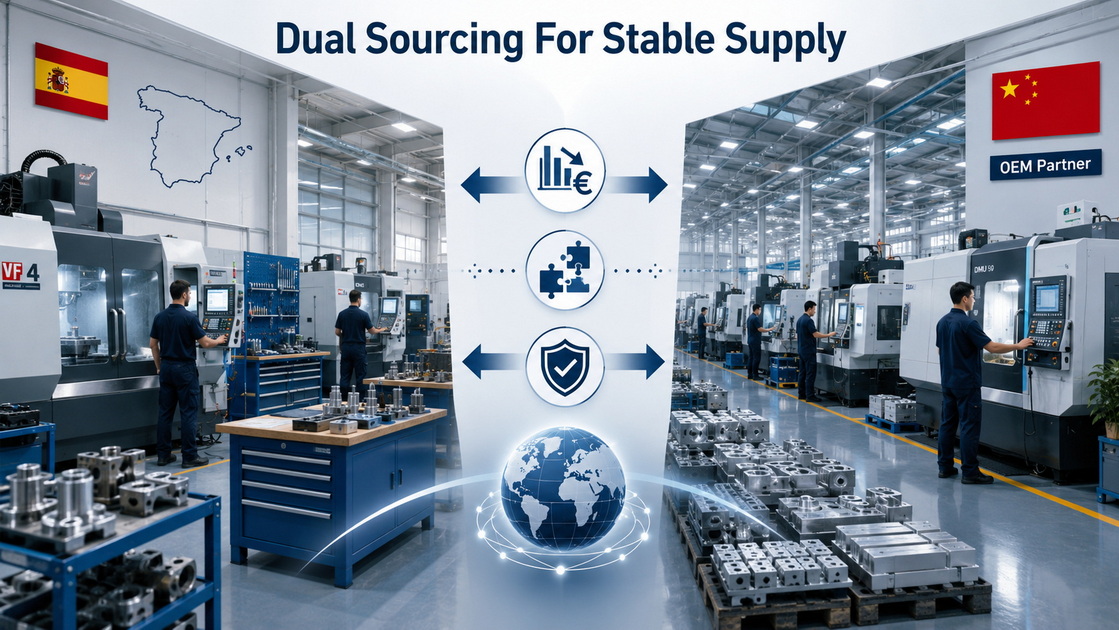
- Consider dual‑sourcing: one Spanish supplier for urgent replenishment and one Chinese partner like Feifan for cost‑optimized replenishment, to balance cost and continuity. [dataintelo]
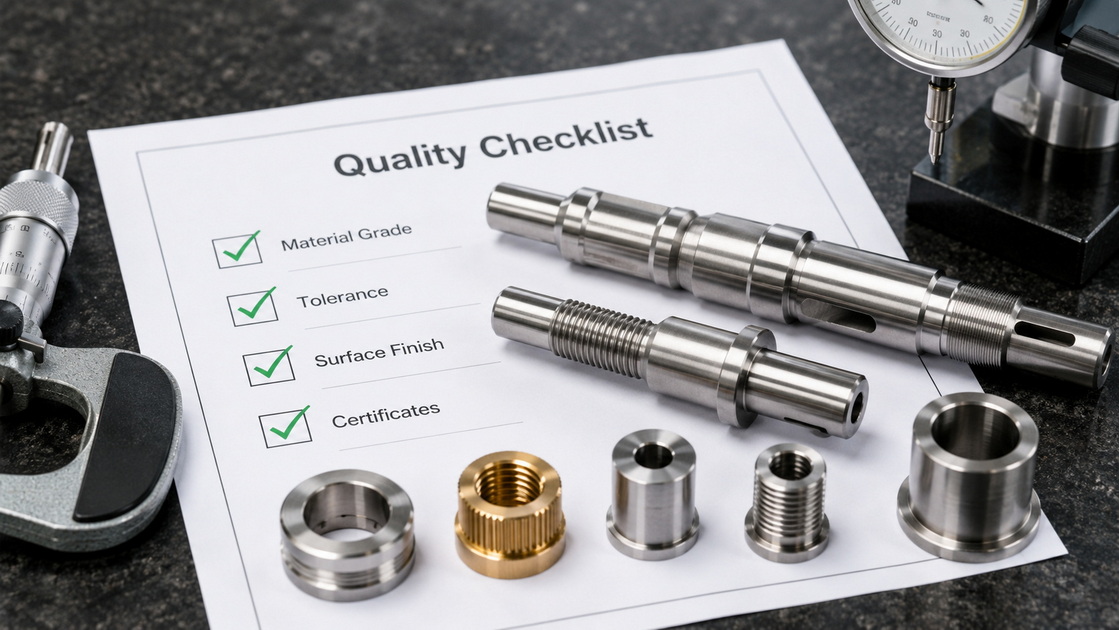
- Material downgrading – substituting lower‑grade steel or brass without clear disclosure can lead to premature wear, corrosion, or failure in the field. [screwmachinecompanies]
- Hidden secondary operations – some quotes exclude deburring, cleaning, or surface treatment, resulting in higher "true" cost and last‑minute surprises. [screwmachinecompanies]
- Tool‑wear drift – suppliers without robust SPC may ship parts within spec during sampling, but drift to the edge of tolerance over longer runs. [iqsdirectory]
One widely known but rarely written‑about tactic among experienced buyers is "tolerance mapping" across multi‑batch deliveries. Instead of checking only if each lot is within drawing tolerance, you track where within the tolerance band the supplier tends to ship (centered, high limit, or low limit) batch‑by‑batch. [iqsdirectory]
If you see a consistent shift toward one boundary, this often signals tool‑wear practices or unoptimized offsets; it may still be "in spec" but will reduce interchangeability and can cause assembly drift in complex products. Suppliers willing to adjust their process to center parts within the tolerance band—rather than just stay barely compliant—are usually the best partners for long‑term screw‑machined component programs. [marseng]
The global precision machining market was valued at about 72.4 billion USD in 2025 and is projected to reach roughly 121.8 billion USD by 2034, with a CAGR of 5.9%. Asia‑Pacific accounts for close to 40% of global precision machining revenue, but Europe remains a major consumer and producer, especially in automotive, machinery, and high‑value industrial systems. [dataintelo]
Screw‑machined parts sit at the intersection of these trends, as they are core to hydraulic systems, connectors, and mechanical assemblies across industries. Building stable relationships with both regional (Spain/EU) and strategic overseas partners (such as Shenzhen Feifan) gives procurement managers options to respond to demand spikes, cost pressure, and regulatory changes without compromising on quality. [dataintelo]
Spain offers a solid base of precision machining and screw‑machined parts suppliers, anchored in a broader EU metal‑forming and machinery cluster with a growing market outlook. At the same time, integrating a proven Chinese OEM such as Shenzhen Feifan Hardware & Electronics Co.,Ltd. into your supplier portfolio can significantly improve cost structure and flexibility for screw machine products, especially when you need deep OEM/ODM support and competitive pricing. [ibisworld]
If you are currently evaluating screw machine manufacturers in Spain, a practical next step is to shortlist 3–5 Spanish machining companies alongside a strategic partner like Shenzhen Feifan, then run parallel RFQs and pilot batches using the evaluation framework in this guide. This structured approach will help you benchmark quality, cost, and responsiveness—and ultimately secure a balanced, resilient supply base for your screw‑machined components. [dataintelo]
Ask for a copy of the ISO 9001 (or other) certificate, then check the certificate number, scope, and expiry date directly on the issuing body's website or via the IAF CertSearch database. If your supplier resists sharing a clear, legible copy, treat it as a red flag and request an independent audit or move on. [hrscrew]
Normalize all quotes to landed cost per 1,000 pcs under the same Incoterms, and include all secondary operations (deburring, cleaning, surface treatment, packaging) plus expected scrap rates. Then account for lead‑time risk, buffer stock requirements, and any duties or compliance costs for importing into the EU. [ec.europa]
Require mill test certificates (MTC) for each heat lot, cross‑check the material grade and chemical composition, and tie them to your purchase order and batch number. For high‑risk applications, consider random third‑party spectrographic tests on delivered parts to confirm alloy content. [alibaba]
Multi‑spindle screw machines are ideal when you have stable, high‑volume demand and relatively consistent part designs, as they can produce 5–8 parts simultaneously and perform up to 16 operations in one cycle. For lower volumes, frequent design changes, or complex GD&T requirements, flexible CNC turning and Swiss‑type machines remain more appropriate. [alphaomegaswiss]
Many mature buyers maintain a dual‑sourcing strategy: one regional supplier (e.g., in Spain) for agility and fast response, and one overseas partner (e.g., Shenzhen Feifan) for cost optimization and capacity resilience. The exact number depends on annual spend and risk tolerance, but having at least two qualified sources reduces the impact of disruptions in any single region. [dataintelo]
1. IQS Directory – Screw Machine Product Manufacturers and Suppliers. [iqsdirectory]
2. ScrewMachineCompanies.com – Screw Machine Products Manufacturers Suppliers (industry overview). [screwmachinecompanies]
3. H & R Screw Machine Products – ISO 9001:2015 Certification Example (ISO validation approach). [hrscrew]
4. California Screw Products – Accreditations and QC practices (ISO / AS9100 example). [calscrew]
5. Eurostat – Industrial production statistics, including fabricated metal products and machinery in EU and Spain. [ec.europa]
6. IBISWorld – Metal‑Forming Machinery & Machine Tool Manufacturing in Spain (market size and outlook). [ibisworld]
7. Dataintelo – Precision Machining Market Research Report 2034 (global market size and CAGR). [dataintelo]
8. Alpha Omega Swiss – Screw Machine Products (Swiss vs. conventional screw machining basics). [alphaomegaswiss]
9. Multi‑Spindle Screw Machining – MarsEng article (multi‑spindle productivity and operations). [marseng]
10. Holy Precision – Top 10 CNC Machining Parts Manufacturers and Suppliers in Spain (includes Tecnomecánicas Shine, MECOXI, SOKAR, GOIURIA, M‑PESA, Mecánica Curiel). [holyprecision]
11. Alibaba / B2B sourcing guide – How to Find and Evaluate High‑Quality Screw Machine Manufacturers (evaluation framework). [alibaba]
12. Machine‑Screw.com – Custom Screw Machining Services (capability example for Shenzhen‑based machining). [machine-screw]
13. Yahoo Finance – Instrumentation Precision Parts Research Report 2025 (sector growth context). [finance.yahoo]


