From idea to market-ready product, our NPI solutions make every stage easier, faster. Discover How We Help

Views: 222 Author: Tomorrow Publish Time: 2026-01-14 Origin: Site


Content Menu
● What Is CNC Turning and Why It Matters
● Why Turkey Is Emerging as a CNC Turning Hub
● The Evolution of the CNC Industry in Turkey
● Top CNC Turning Services Manufacturers And Suppliers in Turkey
>> 1. TEKNOMAK CNC Precision Manufacturing
>> 2. METALIS Industrial Solutions
>> 3. CENGIZ Engineering & CNC Manufacture
● Advanced Capabilities of Turkish CNC Turning Suppliers
● Key Industries Supported by Turkish CNC Turning Manufacturers
● Quality Control and Certification Standards
● Choosing the Right CNC Turning Partner in Turkey
● Export Strength and Market Reach
● Integration with Global Supply Chains
● Technological Innovation and Future Trends
● Frequently Asked Questions (FAQ)
>> Q1: What materials can CNC turning suppliers in Turkey process?
>> Q2: Do these suppliers provide OEM and custom projects?
>> Q3: What are the standard lead times for CNC machining?
>> Q4: Are Turkish CNC manufacturers certified to international standards?
>> Q5: How do suppliers ensure quality and consistency?
The increasing global demand for CNC Turning Services Manufacturers And Suppliers in Turkey demonstrates both the nation's remarkable industrial progress and the growing trust international clients place in Turkish engineering. With excellent geographical positioning, robust manufacturing capabilities, and competitive pricing, Turkey has become a significant hub for precision machining and OEM component production.
This comprehensive guide highlights Turkey's top CNC turning manufacturers and suppliers, explores the machining technologies they use, and offers practical insights into why Turkey's industrial ecosystem continues to attract global customers from Europe, North America, and the Middle East.
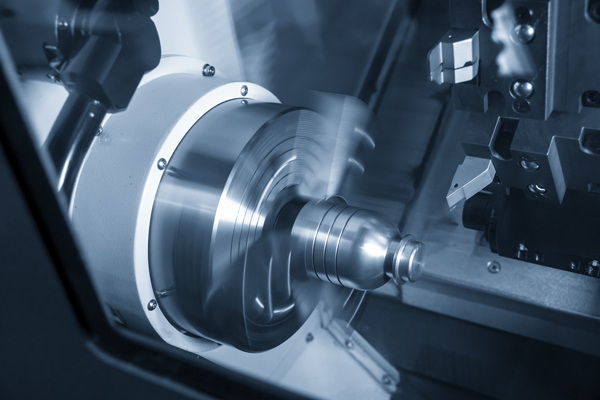
CNC (Computer Numerical Control) turning is one of the most widely used precision manufacturing methods in modern industry. The process uses computer-programmed lathes to shape raw materials—often metal rods or bars—by rotating them while a cutting tool forms the desired geometries.
This level of automation eliminates human error and allows the mass production of identical parts with extraordinary accuracy. From a business perspective, CNC turning reduces waste, minimizes turnaround time, and guarantees consistent product quality.
For industries requiring high performance and dimensional stability, CNC Turning Services Manufacturers And Suppliers play an essential role. They produce crucial parts such as bushings, screws, shafts, and threaded fittings used across automotive assemblies, robotic systems, and aerospace engines.
Turkey's rise as a manufacturing destination is no accident—it is the result of steady modernization, decades of industrial training, and a favorable business ecosystem that encourages export-oriented production.
Several factors make Turkey particularly advantageous for sourcing CNC Turning Services:
1. Technological Modernization: Turkish manufacturers consistently invest in advanced CNC machinery such as Mazak, Okuma, Haas, and Doosan systems.
2. OEM Expertise: A large number of suppliers specialize in providing OEM and ODM services, meaning they not only manufacture per customer requirements but also assist in design optimization.
3. Strategic Location: Turkey lies at the intersection of Europe and Asia, offering logistical efficiency for export trade.
4. Quality at Competitive Costs: The cost of production is typically lower than European averages, giving businesses strong value without compromising precision quality.
5. Trained Workforce: Turkey's technical schools and industrial regions continuously produce skilled machinists familiar with European standards of production and inspection.
Over the last two decades, Turkey has shifted from traditional mechanical machining to fully automated and digitalized manufacturing processes. Many Turkish factories are now equipped with integrated CAD/CAM systems and robotized production cells, enabling real-time monitoring and automatic correction during machining.
Government initiatives supporting technology investment have also accelerated the country's CNC transition. Programs under the Ministry of Industry and Technology encourage SMEs to adopt automation and energy-efficient equipment, allowing CNC Turning Services Manufacturers And Suppliers to compete globally in terms of precision, reliability, and sustainability.
Below are some of the most respected and reliable CNC turning companies in Turkey. Each has built a strong reputation through technical excellence, strict quality control, and international partnerships.
Located in Bursa, TEKNOMAK provides high-precision CNC turning services for automotive, machinery, and industrial OEMs. The company operates with both Japanese and European equipment and applies detailed inspection throughout the machining process. TEKNOMAK's strength lies in producing stainless steel and aluminum parts for international clients who demand perfect dimensional consistency.
METALIS combines CNC turning, milling, and fabrication services under one roof. Their quality system follows ISO 9001:2015, ensuring traceability of each component. With advanced bar feeders and high-speed turning centers, METALIS can accommodate complex, high-volume production orders efficiently. They also provide post-machining operations like coating, marking, and assembly.
Based in Istanbul, CENGIZ Engineering is well-known for supporting OEM clients through the entire product development cycle—from prototype design to small and medium batch production. The company offers reverse engineering capabilities and CAD/CAM programming that streamline custom part manufacturing. They also provide heat treatment and surface finishing to meet specific mechanical property requirements.
ANADOLU MACHINING focuses on export-driven CNC turning production for industrial buyers in Europe. They specialize in custom shafts, couplings, housings, and bolts, all manufactured under tight tolerance control. The company's machines can handle diameters up to 400 mm, offering versatility for a wide range of industrial equipment parts.
YILMAZ CNC Solutions, headquartered in Konya, uses multi-spindle CNC turning centers and automatic feeding systems to ensure both speed and uniformity. The factory serves clients in energy, defense, and automation sectors and supports secondary processes such as grinding, anodizing, and powder coating for complete part readiness.
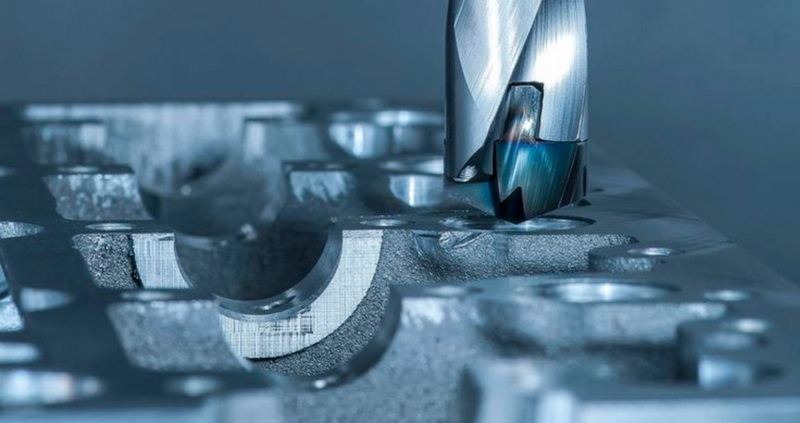
Modern Turkish CNC suppliers don't merely rely on traditional machining—they integrate technology to optimize every phase of production. Their capabilities often include:
- 5-Axis CNC Turning: Enables highly complex parts to be machined from multiple angles in a single setup.
- Bar Feeder Integration: Ensures continuous, unmanned production runs with minimal downtime.
- Prototyping and 3D Design Support: Many factories provide computer-based modeling to preview and correct potential design flaws before machining.
- Tolerances Up to ±0.005 mm: Advanced measurement systems allow for ultra-precise finishes used in medical and aerospace industries.
- Comprehensive Quality Checks: Every finished product undergoes dimensional testing, surface roughness checks, and hardness verification.
The versatility of CNC turning allows Turkish manufacturers to support a wide selection of sectors. Below are several key industries that heavily rely on CNC machining:
- Automotive Industry: Turkey is among Europe's largest vehicle and parts producers. CNC turning is used in the fabrication of engine parts, drive shafts, spacers, and custom fasteners.
- Aerospace: The high accuracy of CNC turning is critical for components that require lightweight materials like titanium and aluminum.
- Medical Devices: CNC-turned parts such as orthopedic implants, instrument handles, and dental tools require great precision and biocompatibility.
- Electronics: CNC turning helps fabricate miniature parts and connectors in electronic and communication devices.
- Heavy Machinery and Construction: Large-scale CNC turning supports the manufacturing of shafts, joints, and hydraulic components used in construction equipment.
Maintaining reliability is critical in machining. Turkish CNC Turning Services Manufacturers And Suppliers adhere to internationally recognized standards such as ISO 9001, ISO 14001, and TS16949. Many factories also perform 100% inspection on critical components, using the following methods:
- Coordinate Measuring Machines (CMM) for dimensional analysis.
- Surface roughness testers for precision evaluation.
- Hardness and tensile strength testing.
- Statistical Process Control (SPC) for ongoing consistency monitoring.
This dedication to quality ensures that exported parts from Turkey meet or exceed European and North American expectations.
To select the best CNC machining partner, businesses should evaluate both technical capacity and customer service quality. Here's what to consider:
1. Machinery and Capacity: Check whether the supplier operates advanced CNC lathes and modern CAD/CAM software.
2. Experience and Portfolio: Review references, previous export clients, and the company's specialization areas.
3. Quality Assurance Process: Inquire about certifications, inspection stages, and traceability systems.
4. Production Flexibility: Assess whether they can manage both prototype and volume production runs.
5. After-Sales Support: A responsive service team ensures continuous communication and technical assistance.
The best CNC Turning Services Manufacturers And Suppliers in Turkey will provide transparency, quick quotation responses, and consistent production quality.
Turkey's CNC turning industry focuses strongly on export performance. The majority of manufacturers ship parts to countries like Germany, the United Kingdom, the Netherlands, and Italy. In addition, they also supply growing markets such as the UAE, Qatar, and the United States.
The Turkish government supports these exporters through incentives, trade fairs, and export credits, creating a favorable environment for long-term cooperation between Turkish suppliers and international brands. This export resilience also contributes to Turkey's stable global reputation as a precision manufacturing hub.
As the global manufacturing network evolves, collaboration between different production regions becomes essential. Many European brands now partner with both Turkish and Chinese manufacturers to optimize cost and logistics.
China's large-scale production capabilities combined with Turkey's strategic location and flexibility create a hybrid supply model ideal for global OEMs. As a Chinese precision parts manufacturer, we also supply OEM and custom CNC turning solutions worldwide, including partnerships with Turkish factories to offer multi-location production advantages.
This integration guarantees fast lead times, stable prices, and diverse sourcing options for international clients who value both efficiency and risk diversification.
The CNC turning industry in Turkey continues to evolve through automation and innovation. Industry 4.0 has reshaped how factories interact with machines, introducing:
- AI-driven Quality Control: Real-time monitoring detects tool wear and automatically adjusts machining parameters.
- IoT-enabled Production Systems: Digitally connected machines communicate data for predictive maintenance and process optimization.
- Sustainable Manufacturing: Green machining technologies help reduce energy consumption and recycling waste materials for environmental compliance.
- Additive and Subtractive Integration: Some suppliers combine CNC turning with 3D printing to produce hybrid prototypes faster.
These advancements are solidifying Turkey's position among the most technologically equipped CNC Turning Services Manufacturers And Suppliers in the global market.
Turkey has evolved into one of the most dynamic centers for CNC Turning Services Manufacturers And Suppliers in the world. Backed by advanced machinery, skilled expertise, and competitive pricing, Turkish suppliers serve industries ranging from automotive to aerospace with exceptional precision and reliability.
Their growing export network and strategic position at the heart of Eurasian trade make Turkey a key alternative to traditional manufacturing bases. Combined partnerships between Chinese and Turkish OEM producers also open new opportunities for global buyers to achieve high efficiency, stable quality, and balanced costs.
For any company seeking durable, accurate, and globally competitive CNC-turned components, Turkey's precision machining manufacturers represent a smart and sustainable choice for long-term cooperation.
A1: Turkish manufacturers can process steel, stainless steel, brass, copper, titanium, aluminum, and engineered plastics like PEEK or Delrin.
A2: Yes. Most leading CNC Turning Services Manufacturers And Suppliers in Turkey specialize in OEM manufacturing, offering design, prototyping, and confidential development.
A3: Depending on order size and complexity, standard lead times range between 2 and 6 weeks, with prototype orders usually finished in under 10 days.
A4: Absolutely. Many hold ISO 9001, ISO 14001, ISO 45001, or TS16949 certifications for quality, environmental, and occupational safety management.
A5: Factories use advanced metrology equipment, CMM inspection systems, and SPC processes to maintain consistent precision across every batch of production.


