From idea to market-ready product, our NPI solutions make every stage easier, faster. Discover How We Help

Views: 222 Author: Tomorrow Publish Time: 2026-01-17 Origin: Site
Content Menu
● Understanding CNC Turning Services
● The Industrial Base for CNC Turning in Thailand
>> Government Support and Incentives
>> Skilled Workforce and Competitive Cost Advantage
● Leading CNC Turning Services Manufacturers and Suppliers in Thailand
>> 1. Thai Precision Engineering Co., Ltd.
>> 2. Micron Machining Co., Ltd.
>> 3. JJ CNC Engineering Thailand
>> 4. Bangkok Precision Casting Co., Ltd.
>> 6. Rayong Machtech Engineering
>> 7. Advance Turntech Engineering (ATE)
● Core Advantages of Partnering with Thai CNC Turning Manufacturers
>> Cost Efficiency with Quality Assurance
>> Skilled Labor and Technical Expertise
>> Advanced Machine Technology
>> Flexible OEM & ODM Production Models
● Selecting a Reliable CNC Turning Partner in Thailand
● Thailand's Integration in the Global Supply Chain
● Emerging Trends in Thailand's CNC Turning Industry
>> 1. Digitalization and Smart Factory Systems
>> 2. Rise of Multi-Material Machining
>> 3. Environmentally Sustainable Production
>> 4. Advanced 5-Axis and Swiss-Type Turning Centers
>> 5. Closer China-Thailand Industrial Cooperation
● FAQs About CNC Turning Services in Thailand
>> 1. What materials do Thai CNC turning suppliers commonly use?
>> 2. Are Thai CNC turning services suitable for small-batch production?
>> 3. How do Thai manufacturers ensure quality control?
>> 4. What is the average production lead time for CNC turning parts in Thailand?
>> 5. Can Thai CNC suppliers assist with design or prototyping?
In recent years, Thailand has emerged as one of Southeast Asia's most dynamic manufacturing hubs. Its precision engineering sector, particularly CNC turning services manufacturers and suppliers, has witnessed remarkable growth. As global supply chains seek alternatives to China and cost-efficient partners in Asia, Thailand's advanced production capability, skilled workforce, and favorable policies make it a competitive choice.
From precision automotive components to high-end aerospace fittings and medical implants, Thai factories now serve international clients with exceptional precision and competitive pricing. In this article, we'll explore the leading CNC turning services manufacturers and suppliers in Thailand, their advantages, selection strategies, and future trends shaping this specialized industry.
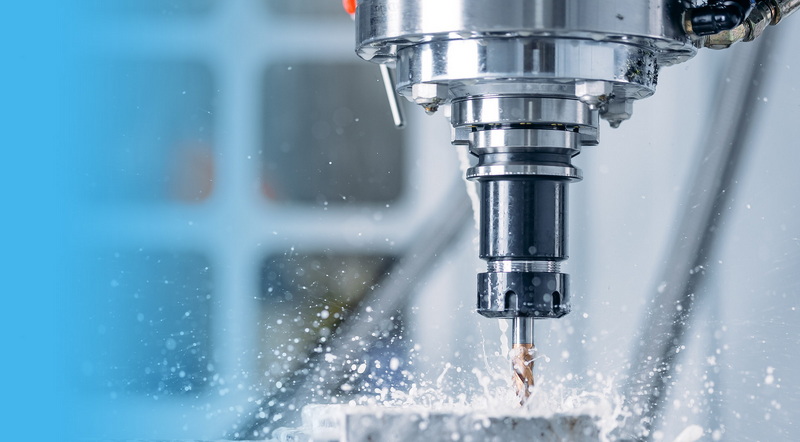
CNC turning refers to a subtractive manufacturing method that uses computer-controlled lathes to cut, shape, and finish raw materials into precise cylindrical components. The CNC system — or Computer Numerical Control — guides machine tools based on pre-programmed commands derived from CAD/CAM software.
In Thailand, the CNC turning services manufacturers and suppliers handle a wide range of jobs, such as:
- Manufacturing metal and plastic bushings, flanges, and shafts.
- Producing small-batch, high-precision parts for industrial equipment.
- Offering OEM and ODM machining services for international customers.
- Supporting prototype development and production scaling.
Modern facilities across Thailand utilize multi-axis CNC turning centers and automated inspection equipment to achieve tight tolerances and uniform product quality.
Thailand's manufacturing infrastructure is among the most sophisticated in Southeast Asia. Established automotive and electronics ecosystems have laid the foundation for robust precision engineering sectors. Key industrial zones in Bangkok, Chonburi, Rayong, Samut Prakan, and Chiang Mai host many of Thailand's best CNC turning service manufacturers and suppliers.
These regions offer a fully integrated supply chain — from raw materials and tool suppliers to plating and thermal treatment partners — ensuring efficient, coordinated production cycles.
The Thai government's “Thailand 4.0” initiative emphasizes smart manufacturing, automation, and digitalization. This policy has prompted CNC machinery upgrades, the adoption of IoT monitoring systems, and the widespread implementation of quality certification programs.
The Board of Investment (BOI) provides additional support for foreign and domestic CNC machining companies through tax incentives, import duty exemptions, and infrastructure access — fostering continuous growth in Thailand's precision machining market.
Thailand maintains a significant pool of skilled engineers and machinists trained in mechanical design, metrology, and CAD/CAM programming. Technical institutes collaborate with industries to enhance competencies in digital manufacturing. Combined with Thailand's moderate labor and facility costs, these elements create a strong cost-performance balance that appeals to international OEM clients.
Below is an overview of the most reputable CNC turning service providers that demonstrate Thailand's industrial capability and commitment to global standards.
Thai Precision Engineering (TPE) is renowned for manufacturing high-accuracy components for the automotive and industrial equipment sectors. Established in the late 1990s, the company emphasizes automation and lean workflow management to lower production costs and enhance speed-to-market.
- Capabilities: Multi-axis CNC turning, rapid prototyping, surface finishing.
- Main Products: Automotive shafts, gear housings, spindle assemblies.
- Certifications: ISO 9001, ISO/TS 16949.
- Industries Served: Automotive, construction, and general machinery.
Micron Machining provides multi-material precision machining with a strong focus on aluminum, brass, and stainless steel parts. The company is well known for its commitment to customization, supporting small to mid-volume OEM production.
- Capabilities: CNC turning, milling, and polishing; CAM-based optimization.
- Key Strength: Quick response time and flexible order fulfillment.
- Industries Served: Aerospace components, sensors, instruments, and optics.
JJ CNC Engineering has become a reliable supplier for international customers in Europe and the U.S. The firm delivers advanced CNC turning and milling solutions using the latest automation technology for repeatable accuracy.
- Main Products: Industrial connectors, robotic components, precision housings.
- Equipment: High-speed turning centers, automated inspection systems.
- Specialization: Rapid production for customized orders.
While primarily a pressure die-casting manufacturer, Bangkok Precision Casting complements its production lines with post-processing CNC turning and machining operations. This integration supports complete production cycles from casting to finishing.
- Products: Die-cast aluminum housings, shafts, and brackets.
- Advantages: In-house toolmaking, mass production, and tight tolerance finishing.
- Industries: Automotive, heavy machinery, energy systems.
Siam CNC Metal Works operates from Bangkok and specializes in precision small-part manufacturing. Their assets include digital inspection lines capable of micrometer-level measurement accuracy.
- Capabilities: Multi-axis CNC turning, drilling, deburring, and polishing.
- Core Focus: Small-batch custom machining, quick iteration, and toolmaking.
- Service Concept: Collaborative product design and DFM (Design for Manufacturability).
Serving energy, marine, and aerospace clients, Rayong Machtech Engineering is a prime example of how Thai companies are integrating automation and digital monitoring for consistent performance.
- Strengths: 24-hour machining operation and strict process control.
- Products: Flanges, threaded couplings, turbine shaft components.
- Value Added Services: Assembly, finishing, and logistics support.
ATE stands out for its commitment to sustainable precision manufacturing. The company invests in renewable energy to power CNC operations while maintaining an emphasis on zero-defect quality.
- Capabilities: Turning of high-tolerance titanium and stainless steel components.
- Industries Served: Medical implants, food-processing machinery, aerospace tools.
- Certifications: ISO 13485 for medical manufacturing standards.
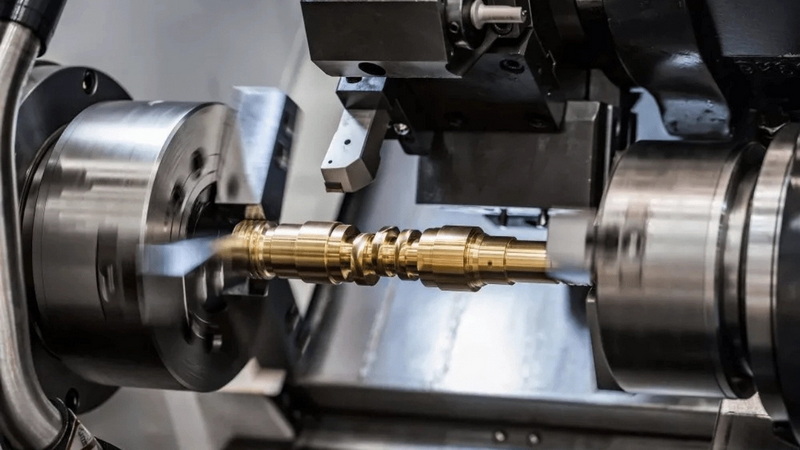
Thailand's industrial ecosystem allows foreign companies to enjoy reduced costs without compromising quality. Competitive labor wages, advanced local tooling industries, and government incentives provide a strategic advantage to international OEM buyers.
Thailand's long involvement in automotive and electronics industries has created a base of highly skilled machinists familiar with precision component manufacturing. The professionalism of Thai technicians ensures that CNC turning services manufacturers and suppliers deliver parts that meet global performance standards.
Most established Thai CNC suppliers utilize 3-axis to 7-axis CNC turning centers, CMM (Coordinate Measuring Machines), and high-speed spindles. Automated tool changers, digital process monitoring, and real-time quality tracking further enhance consistency.
Many Thai manufacturers can provide development-to-delivery solutions, supporting every phase from 3D modeling and prototyping to assembly and packaging. This flexibility helps global customers reduce development timelines and communications overhead.
Situated in the heart of Southeast Asia, Thailand offers immediate logistical access to regional markets such as Malaysia, Vietnam, and Indonesia, along with well-established shipping routes to Europe, Japan, and North America.
Foreign companies can maximize project success by following these guidelines when evaluating CNC turning services manufacturers and suppliers:
1. Verify certifications to ensure compliance with ISO or industry-specific standards.
2. Request capability lists detailing equipment brands (e.g., Mazak, DMG Mori, or Okuma) and part tolerances.
3. Visit facilities virtually or in person, if possible, to assess production flow.
4. Ask for initial prototypes to test accuracy and tolerance alignment.
5. Analyze lead time and supply stability for long-term contracts.
6. Review documentation systems including inspection records and material traceability reports.
7. Clarify communication channels, ensuring English-speaking engineers and transparent project updates.
By following these steps, companies can establish long-term partnerships with trusted CNC service providers in Thailand.
Thailand's precision machining industry has become increasingly internationalized. Many CNC turning services manufacturers and suppliers now export over 70% of their components to regions such as Europe, Japan, and the U.S. The country's network of industrial suppliers supports this export orientation through coordinated logistics, customs efficiency, and reliable quality assurance.
Additionally, joint ventures between Thai and foreign investors have strengthened local R&D and innovation potential. Collaborative projects often focus on lightweight alloys, hybrid materials, and next-generation machining techniques.
The Thai CNC turning sector continues to evolve rapidly with technological integration and increased digital connectivity. Here are the key trends defining the industry's future:
CNC facilities are adopting IoT sensors, AI-driven machine learning, and cloud-based process control. These technologies minimize downtime and predict tool wear — increasing output and reliability.
The demand for lightweight parts is pushing Thai manufacturers to specialize in hybrid machining of metal-plastic combinations, composite materials, and titanium alloys.
With Thailand's growing focus on sustainability, CNC factories are implementing recycling of coolants, energy-efficient systems, and waste reduction programs to meet international ESG standards.
Companies are investing in multi-axis and Swiss-type lathes to handle complex geometries for aerospace, optical, and medical components requiring utmost precision and surface finish quality.
Chinese manufacturers increasingly collaborate with Thai CNC partners to create hybrid supply chains that combine mass production capability from China with precision, small-batch flexibility from Thailand — creating ideal conditions for global buyers seeking diversification.
Thailand's CNC turning industry represents a balanced combination of reliable quality, cost efficiency, and high technical standards. The nation's skilled labor force, robust infrastructure, and strategic geographic position make it an attractive manufacturing destination for global brands seeking OEM and precision part production.
Working with Thai CNC turning services manufacturers and suppliers offers foreign companies access to world-class engineering, dependable communication, and flexible manufacturing solutions that align with modern global supply chain dynamics. As Thailand accelerates toward Industry 4.0, its precision machining industry is poised for even greater influence on the international stage — delivering advanced, efficient, and sustainable CNC turning solutions to the world.
Contact us to get more information!
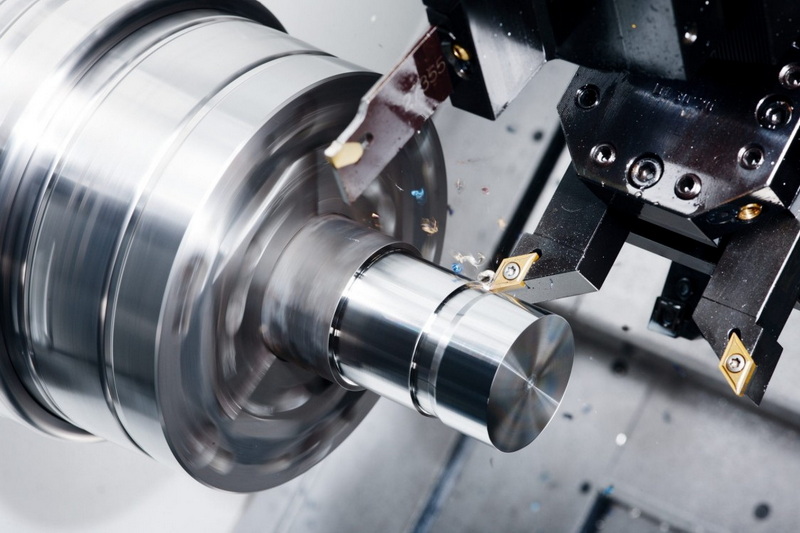
Thailand's manufacturers work with a variety of materials including steel, aluminum, brass, titanium, and engineering plastics like POM, PEEK, and nylon, depending on customer design and strength requirements.
Yes. Many Thai factories accommodate low-volume and prototype orders, especially for international OEMs that prioritize precision over quantity.
Most factories utilize digital inspection systems, CMMs, and SPC (Statistical Process Control) to maintain consistent quality in CNC turning operations.
Typical lead times range from 2–6 weeks, depending on design complexity, finishing processes, and order quantities.
Yes. Many CNC turning services manufacturers and suppliers in Thailand provide CAD/CAM design assistance, DFM consultation, and prototype validation before mass production.
1. Thailand Board of Investment (BOI)
2. Thai Subcontracting Promotion Association (SUBCON Thailand)
3. Thailand Industrial Manufacturing Expo (Intermach)
4. Micron Machining Co., Ltd.
5. Thai Precision Engineering Co., Ltd.
6. Rayong Machtech Engineering
7. Siam CNC Metal Works


