From idea to market-ready product, our NPI solutions make every stage easier, faster. Discover How We Help

Views: 222 Author: Tomorrow Publish Time: 2026-01-17 Origin: Site


Content Menu
● Understanding CNC Turning in Modern Manufacturing
>> The Role of CNC Turning in Swiss Industry
● Why Switzerland Leads the CNC Turning Industry
>> 1. Precision as a National Identity
>> 2. Highly Skilled Workforce
>> 3. Integration of Innovation
>> 5. Sustainability and Efficiency
● Leading CNC Turning Services Manufacturers and Suppliers in Switzerland
>> 1. Tornos SA
>> 5. Swiss Precision Machining GmbH
● Key Advantages of Working with Swiss CNC Turning Companies
>> Comprehensive Engineering Support
>> Global Supply Chain Compatibility
>> Stable and Long-Term Partnerships
● Collaboration Between Swiss and Chinese CNC Turning Manufacturers
● Technology Trends in Swiss CNC Turning Services
>> Automation and Robotic Integration
>> Additive and Hybrid Manufacturing
● How to Select the Best Swiss CNC Turning Supplier
● Frequently Asked Questions (FAQs)
>> 1. What industries primarily use Swiss CNC turning services?
>> 2. Do Swiss manufacturers accept small or prototype orders?
>> 3. How do Swiss CNC turning suppliers ensure quality control?
>> 4. Can Chinese OEM companies work with Swiss CNC turning suppliers?
>> 5. What makes Swiss CNC turning globally competitive?
Switzerland stands as one of the most respected centers of global precision manufacturing. The country's long-standing dedication to accuracy, engineering excellence, and technological innovation has made it a world leader in CNC turning services. From luxury watch components to aerospace parts and complex industrial fittings, Swiss companies have earned a reputation for impeccable craftsmanship and reliability.
This article provides a detailed overview of the Top CNC Turning Services Manufacturers and Suppliers in Switzerland, exploring what makes them unique, the technologies they use, and how international buyers—especially OEM companies—can benefit from Swiss partnerships.

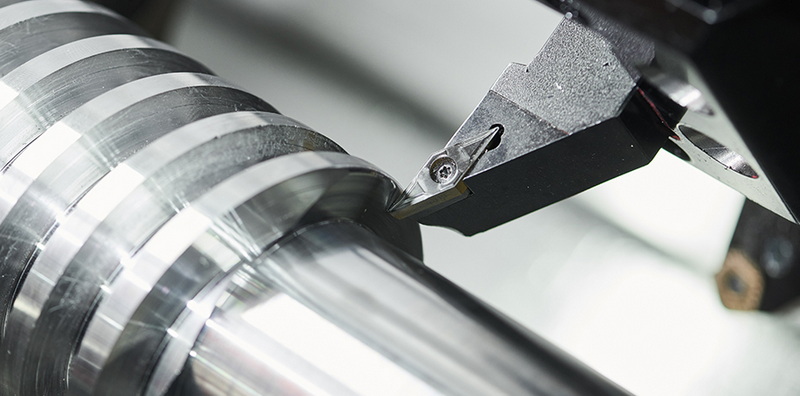
CNC turning is a machining process in which a workpiece rotates while a cutting tool removes material to create a precise, typically cylindrical shape. Controlled by computer programs, modern CNC lathes can achieve micron-level tolerances and perfect surface finishes.
The technology's flexibility makes it suitable for multiple applications, including the production of threads, flanges, shafts, precision pins, and fasteners—all vital to mechanical, automotive, and electronic systems.
Switzerland's precision machining industry forms the backbone of its manufacturing economy. CNC turning plays a dominant role in:
- Medical equipment manufacturing: Swiss CNC machining ensures the biocompatibility and durability of implants, screws, and surgical tools.
- Watchmaking: Small-scale CNC turning achieves unmatched detail and repeatability, essential for luxury timepieces.
- Aerospace and automotive engineering: High-strength yet lightweight turned parts guarantee safety, reliability, and efficiency.
- Micro-electronics and sensors: CNC turning allows the creation of miniature metallic components for advanced electronic devices.
Swiss manufacturers combine tradition with artificial intelligence, automation, and multi-axis technology to remain ahead in global competition.
Precision defines Swiss manufacturing. The same mindset that drives its clockmaking excellence fuels its CNC industry. Every product is tested for tolerance, roughness, balance, and exact dimensioning. Many workshops employ automated microscopes and coordinate-measuring machines to ensure accuracy as fine as one micron.
Switzerland's vocational training system continuously produces elite machinists and engineers. Employees often undergo years of technical apprenticeships combined with university-level education. This skill depth gives Swiss companies a competitive edge in complex machining.
The top CNC Turning Services Manufacturers and Suppliers in Switzerland continually invest in automation technology, CAD/CAM integration, and predictive maintenance. The use of digital twins enables them to simulate part designs before actual production, minimizing waste and ensuring perfect execution.
Swiss suppliers offer unmatched consistency. Most are ISO 9001, ISO 13485 (medical), and AS9100 (aerospace) certified. Each product is delivered with complete traceability—from raw material certifications to dimensional test reports.
Environmental responsibility is embedded in Swiss industrial culture. Many CNC turning manufacturers use renewable energy, oil-free coolant systems, and chip recycling technologies. This sustainability adds long-term value for eco-conscious global clients.
Location: Moutier, Switzerland
Tornos SA is one of the most iconic names in Swiss precision machining. Established over a century ago, Tornos pioneered “Swiss-type” lathes—a design now used worldwide. Their advanced sliding headstock machines are designed for continuous operation with exceptional repeatability.
Core Services:
- High-precision multi-spindle CNC turning
- Small and medium batch production
- OEM/ODM custom manufacturing solutions
Industries Served: Watchmaking, electronic connectors, medical parts, and high-performance automotive components.
Location: Steffisburg, Switzerland
Fritz Studer AG is globally recognized for its grinding and turning expertise. Its CNC turning services combine hard turning with precision grinding, enabling customers to achieve optimal shape and surface accuracy in a single process line.
Core Services:
- CNC precision turning and finishing
- Grinding-integrated machining solutions
- Tooling and process optimization
Industries Served: Aerospace, renewable energy, automotive gear manufacturing, and heavy machinery.
Location: Delémont, Switzerland
Willemin-Macodel focuses on advanced turning and multi-axis machining solutions. The company specializes in small, complex, and high-precision components that require unparalleled quality and consistency.
Core Services:
- 5-axis CNC turning and milling
- Micro component manufacturing
- Industrial automation systems
Industries Served: Dental and surgical implant manufacturing, fine watch mechanisms, and defense applications.
Location: Bévilard, Switzerland
With over a century of history, Schaublin Machines is a trusted brand for CNC lathes and turning services. The company has evolved from producing manual machines to fully digital solutions with remote control monitoring.
Core Services:
- CNC sliding/fixed headstock turning
- Prototyping and small-series production
- Maintenance and system retrofitting
Industries Served: Aeronautics, luxury watchmaking, and precision energy systems.
Location: Zurich, Switzerland
Swiss Precision Machining GmbH serves domestic and export markets with high-accuracy CNC turning parts. Its modern machining floor integrates robotic handling, tool management systems, and strict dimensional validation.
Core Services:
- OEM and custom component production
- Surface treatment and coating services
- CAD/CAM-assisted product development
Industries Served: Energy, electronics, automation, and industrial robotics.
Location: Rümlang, Switzerland
Horn SA is primarily known for its cutting tools, but it also delivers leading CNC turning and tooling services. Their facility blends precision tool production with contract machining to ensure rapid response to industry needs.
Core Services:
- CNC turning with custom carbide tooling
- Tool design, production, and part manufacturing
- Process consulting for complex materials
Industries Served: Automotive electronics, heavy industry, and precision tooling markets.
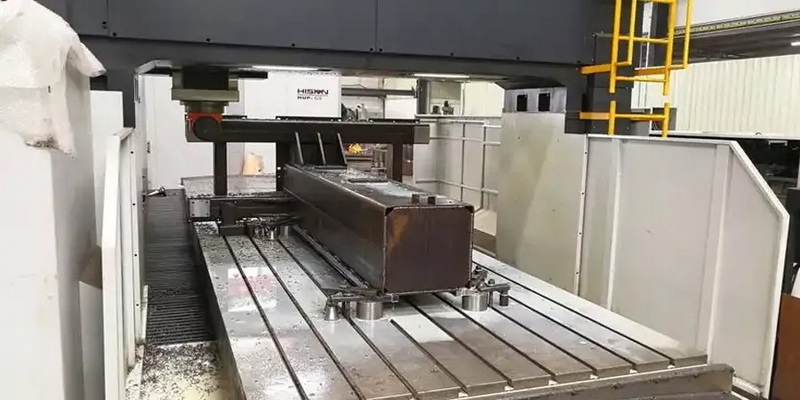
All Swiss CNC turning suppliers emphasize exact dimensions, often reaching tolerances as fine as ±0.002 mm. Such precision ensures interchangeability and guarantees optimal performance.
Most companies offer collaborative engineering assistance. OEM clients can send designs, discuss adjustments, and receive expert guidance on materials and machining strategies.
Swiss CNC service providers are experienced in international logistics, export documentation, and compliance with industry-specific regulations, allowing seamless cooperation with foreign brands and factories.
Working with Swiss suppliers means dependable quality and consistent communication. Many clients maintain collaborations that last decades, resulting in continuous innovation and trust.
The globalization of manufacturing has led to strong cooperation between high-tech Swiss workshops and Chinese OEM manufacturers. This combination allows for cost-effective production without compromising quality.
Swiss companies often design and prototype high-precision parts, while their Chinese counterparts perform volume manufacturing and finishing at competitive rates. This approach allows clients to reduce lead times, maintain quality standards, and achieve scalability for large orders.
As a professional Chinese OEM precision parts manufacturer, our factory collaborates closely with Swiss and European partners. By following Swiss-grade standards on CNC turning, inspection, and surface finishing, we deliver components that meet international expectations for durability, accuracy, and consistency.
This win-win model strikes a perfect balance: Swiss precision for design and quality control, and Chinese efficiency for mass production and cost optimization.
CNC turning services in Switzerland now utilize smart sensors and IoT monitoring, allowing real-time oversight of cutting conditions, vibration levels, and temperature. The result is improved process stability and reduced machine downtime.
Automated part feeders, robotic arms, and material shuttles work alongside CNC machines, ensuring 24/7 production. Automation not only increases throughput but also enhances safety and uniformity.
Swiss researchers and machine builders are exploring hybrid systems that combine traditional turning with additive manufacturing. This allows parts to be built up layer by layer and then finished to tight tolerances.
For electronics, optics, and medical implants, Swiss companies now machine parts smaller than a grain of rice. Using diamond-coated tools and specialized lathes, they achieve ultra-fine detail and perfect geometry.
Recycling metal chips, reducing coolant usage, and reusing processed heat are common practices. Swiss firms are leading Europe's movement toward carbon-neutral manufacturing operations.
Choosing the ideal manufacturing partner from Switzerland's competitive CNC landscape involves careful assessment. Consider the following factors:
1. Equipment and Software – Ensure the company uses the latest CNC lathes, such as multi-axis or Swiss-type machines.
2. Certifications – Verify ISO, AS, or medical-grade certifications appropriate for your project.
3. Material Expertise – Choose suppliers experienced in your required metals like titanium, stainless steel, brass, or exotic alloys.
4. Flexibility – The best suppliers handle both prototype and mass production efficiently.
5. Process Transparency – Reliable manufacturers provide machining reports, tolerance documentation, and full material traceability.
6. Communication and Support – Clear communication channels and responsive customer service indicate professional management.
Switzerland's CNC turning sector is positioned for continued growth. With global industries demanding ever-higher precision, Swiss expertise will remain essential.
Emerging technologies such as AI-assisted machining, laser-aided turning, and predictive maintenance will further refine part quality and reduce waste. Additionally, cross-border collaborations—particularly between Swiss and Asian partners—are expected to accelerate innovation while lowering costs.
As digital manufacturing expands, Swiss CNC Turning Services Manufacturers and Suppliers will continue to define global standards, not only through perfection in craftsmanship but also through their commitment to sustainability and partnership.
Switzerland remains a powerhouse of technological excellence, home to some of the world's best CNC Turning Services Manufacturers and Suppliers. Their precision expertise, automation integration, and dedication to perfection make them trusted partners for industries across the globe.
Whether you are an OEM company, distributor, or production manager seeking consistent, high-quality turned components, Swiss manufacturers can deliver solutions that balance performance, reliability, and long-term value. With expanding partnerships between Swiss and Chinese manufacturers, the global CNC turning industry continues to evolve—uniting the best of precision engineering and efficient manufacturing for the modern industrial world.
Contact us to get more information!
Swiss CNC turning suppliers cater to aerospace, medical, watchmaking, electronics, automotive, and industrial automation sectors.
Yes. Many Swiss companies specialize in short production runs and prototypes, ideal for new product development or limited edition components.
They use in-process inspection, coordinate measuring machines, laser scanners, and statistical process control systems to maintain consistent quality.
Yes, collaboration is increasingly common. Swiss firms handle design and prototyping, while Chinese partners offer mass production at reduced cost.
A blend of exceptional precision, advanced automation, skilled labor, transparent standards, and sustainable operations has cemented Switzerland's leadership in CNC manufacturing.
1. (https://www.tornos.com)
2. (https://www.studer.com)
3. (https://www.willemin-macodel.com)
4. (https://www.schaublin.ch)
5. (https://www.horn-group.com)
6. (https://www.swissprecisionmachining.com)


