From idea to market-ready product, our NPI solutions make every stage easier, faster. Discover How We Help

Views: 222 Author: Tomorrow Publish Time: 2026-01-14 Origin: Site


Content Menu
● Understanding CNC Turning Services
● Why South Korea Excels in CNC Turning Services
● Major Industries Relying on Korean CNC Turning
>> Electronics and Semiconductor Equipment
>> Energy, Marine, and Robotics
● Leading CNC Turning Services Manufacturers in South Korea
>> 1. Daeil Precision Co., Ltd.
>> 3. Kyung In Precision Machinery
>> 4. Dongseo Precision Industry Co.
● Strengths of Korean CNC Turning Services
● Evaluating the Right CNC Partner in South Korea
● Technological Trends in Korean CNC Machining
● Opportunities for Foreign OEMs and Distributors
● Future Outlook: Expanding Partnerships in Asia
● FAQs About CNC Turning Services in South Korea
>> Q1: What makes Korean CNC turning companies stand out globally?
>> Q2: Can Korean suppliers handle complex custom parts for specific industries?
>> Q3: How quickly can Korean CNC suppliers deliver OEM orders?
>> Q4: What quality certifications do Korean CNC companies usually hold?
>> Q5: Are small-volume orders accepted by Korean manufacturers?
In today's fast-changing global manufacturing landscape, CNC turning services manufacturers and suppliers play a crucial role in producing precision-engineered components that meet the growing demands of automation, robotics, and high-performance machinery. South Korea, known for its advanced industrial base and technological innovation, has become a key market for precision machining services. From high-end automotive parts to semiconductor components, Korean companies have developed strong reputations for accuracy, quality, and global collaboration.
This in-depth article explores South Korea's top CNC turning companies, their advantages, the industries they serve, their technological capabilities, and what makes them reliable partners for international OEMs and wholesalers.

CNC turning is one of the most fundamental and efficient machining processes used in modern manufacturing. In this process, a cylindrical piece of material is rotated while a stationary cutting tool removes material to achieve the desired shape and dimensions. The operation is controlled by computer numerical control (CNC), which ensures a high degree of accuracy and repeatability.
The technique is widely used by CNC turning services manufacturers and suppliers for producing components like shafts, sleeves, bushings, pins, hubs, and precision fasteners. Common materials include aluminum, brass, copper, stainless steel, titanium, and high-performance plastics like PEEK and nylon.
One major advantage of CNC turning is the process's flexibility. CNC machines can perform multiple operations—such as facing, taper turning, threading, drilling, and grooving—in a single setup. This capability reduces cycle times and improves production efficiency, making it ideal for both mass production and customized small-batch fabrication.
South Korea's manufacturing sector has long been recognized for its combination of innovation, precision, and smart manufacturing systems. The government's push toward the “Manufacturing 4.0” model has accelerated the adoption of robotics, artificial intelligence, and predictive analytics in production environments.
Several factors explain why South Korea is home to world-class CNC turning services manufacturers and suppliers:
- Advanced Automation Integration: Korean factories often use high-speed, multi-axis CNC machines connected to real-time quality monitoring systems. This level of automation minimizes defects and maximizes throughput.
- Engineering Expertise: Decades of collaboration with industries like automotive and semiconductors have cultivated deep technical knowledge among Korean engineers and machinists.
- Strong Industrial Supply Chains: Suppliers of cutting tools, raw materials, and measurement systems are clustered regionally, reducing lead times and ensuring consistent supply quality.
- Commitment to R&D: Korean companies invest heavily in research and development to enhance CNC machining accuracy, surface finishing, and energy efficiency.
- Global Export Experience: South Korea's CNC companies have built solid reputations in North America, Europe, and Southeast Asia, handling OEM and ODM projects with ease.
CNC turning touches nearly every industrial sector. However, certain industries depend especially heavily on Korean CNC turning services manufacturers and suppliers, benefiting from precision and innovation.
Korea's automotive sector, home to world-famous brands like Hyundai and Kia, demands high-performance mechanical components. CNC turning services produce engine shafts, valve components, and precision bushings that maintain tight tolerances under extreme operational conditions.
The aerospace and defense industries require components made from strong, lightweight materials. Korean machinists deliver turbine components, actuator housings, and control-system parts that meet international standards such as AS9100.
Medical device manufacturers depend on precise, contamination-free machining for products such as surgical instruments, orthopedic implants, and diagnostic equipment components. Korean CNC facilities comply with ISO 13485 and maintain sterile production environments.
With South Korea being a global leader in semiconductors, CNC turning services manufacturers and suppliers produce micro-level precision parts for chip fabrication tools, heat sinks, and sensor housings—ensuring reliable performance at microscopic tolerances.
South Korean CNC companies also serve renewable energy, marine engineering, and robotics systems, delivering components that must perform under high stress, vibration, or environmental exposure.
Below are some prominent CNC turning companies in South Korea recognized for their innovation, professionalism, and strong export performance.
Daeil Precision offers full-service CNC turning and milling with a focus on high-accuracy industrial components. Their advanced multi-axis equipment allows concurrent machining operations, reducing both production time and waste. Daeil's quality assurance department follows ISO 9001 and ISO/TS16949 standards.
Hansol Tech specializes in small and medium-sized metal and plastic parts, offering OEM production for international clients. With precision machining centers and strict quality control systems, they ensure every part meets the exact drawing specifications.
Kyung In operates a diverse machine fleet including Swiss-type lathes and vertical machining centers. Their engineering team provides design optimization, helping clients reduce production costs while improving functionality.
This firm has built long-term relationships with clients across Europe, Japan, and the U.S. Their machining strength lies in multi-axis and high-speed automatic lathes used to manufacture automotive and hydraulic parts with superior consistency.
Koreel Engineering's CNC turning services cover small, medium, and heavy components. Their facilities are equipped for grinding, surface treatment, and assembly. The company is also involved in aerospace projects that demand zero-defect manufacturing.
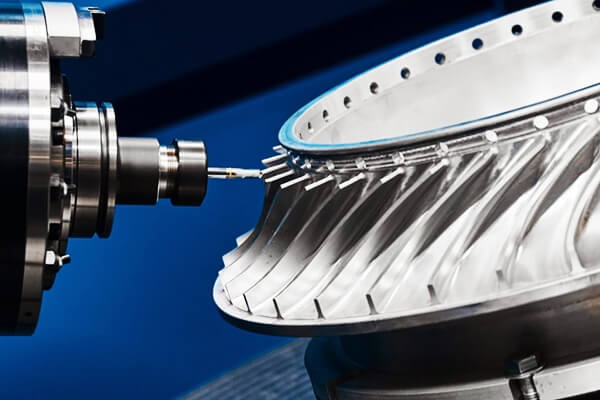
South Korean CNC manufacturers combine technical precision with business agility, making them top choices for foreign buyers.
- Ultra-High Precision: Korean CNC lathes achieve repeatable tolerances of ±0.002 mm.
- Robust Quality Management: Stringent inspection procedures using Coordinate Measuring Machines (CMM), laser scanning, and surface profiling guarantee consistent part quality.
- OEM/ODM Flexibility: Korean suppliers offer complete OEM development cycles—from CAD drawing verification and prototyping to full-volume production.
- Global Trade Capability: Their logistics and documentation systems are built for export efficiency, ensuring smooth international cooperation.
- Rapid Response Time: Smaller to medium-sized CNC workshops are remarkably responsive, adjusting tooling or production schedules quickly based on customer feedback.
Choosing the best CNC turning services manufacturers and suppliers involves technical assessment and strategic partnership thinking. Here are five factors to focus on:
1. Machining Range and Material Expertise: Assess whether the supplier can handle your required material grade (stainless steel, brass, titanium, etc.) and part size tolerances.
2. Certifications and Compliance: Verify if the supplier complies with ISO, RoHS, or specific industry certifications like IATF 16949 for automotive or ISO 13485 for medical.
3. Tooling and Process Capability: Ask about spindle speed, tool life management, and machine type (multi-axis or Swiss-turning) to understand efficiency levels.
4. Communication and Support: Korean firms with bilingual engineering teams provide easier communication during technical discussions and problem-solving.
5. After-Sales and Quality Warranty: Reliable CNC partners offer traceability reports, maintenance records, and post-shipment support for long-term reliability.
South Korea's CNC industry continues to evolve rapidly under the influence of Artificial Intelligence (AI) and the Internet of Things (IoT). Here are notable trends shaping the next generation of CNC turning services manufacturers and suppliers:
- Smart Factory Automation: Machine sensors deliver live status updates, enabling predictive maintenance and energy optimization.
- AI-Driven Process Optimization: Algorithms assess cutting forces and tool wear patterns to automatically adjust machining parameters.
- Digital Twin Simulation: Virtual machining environments allow engineers to test designs before physical cutting, reducing costly errors.
- Sustainable Machining: Korean factories are transitioning to eco-friendly coolants and power-saving CNC systems to reduce their carbon emissions.
- Cross-Industry Collaboration: CNC turning is increasingly integrated with additive manufacturing, precision casting, and surface treatment to provide "one-stop" production solutions.
Global buyers seeking precision and consistency find Korean CNC suppliers reliable and technologically advanced. Partnering with Korean CNC turning services manufacturers and suppliers provides several strategic benefits:
- Immediate access to advanced machining technologies without capital investment.
- Competitive pricing while maintaining strict quality control.
- Proximity to other East Asian manufacturing hubs such as China and Japan, ideal for global supply chain integration.
- Fast prototyping and engineering collaboration for customized product development.
Chinese OEM producers—like our company—often collaborate with Korean CNC service providers to combine manufacturing excellence with cost-effectiveness. Through joint OEM projects, foreign customers can leverage Korea's precision capability with China's scalability to achieve optimal results across various industrial applications.
The future for South Korean CNC turning services manufacturers and suppliers looks promising. As electric vehicles, robotics, and renewable energy systems continue to expand, the demand for custom-machined parts will grow substantially. Korean CNC companies are already upgrading automation lines, training digital engineers, and expanding international networks to support these industries.
Moreover, the collaboration between Korean and Chinese machining enterprises is poised to become a trend in the coming decade. Such partnerships create hybrid supply chains that maximize precision, cost efficiency, and production flexibility—aligning perfectly with global manufacturing needs.
South Korea's rise as a high-precision manufacturing nation reflects its commitment to innovation, quality, and industrial excellence. The country's CNC turning services manufacturers and suppliers combine cutting-edge technology, robust quality control, and global business acumen to meet the demands of virtually any industry—from automotive to aerospace, from medical to electronics.
For international OEMs, importers, and distributors, collaborating with Korean CNC suppliers opens opportunities for superior product quality, shorter lead times, and long-term cost efficiency. By integrating Korea's precision with other regional resources, global buyers can establish a stable, high-performing supply network for the future.
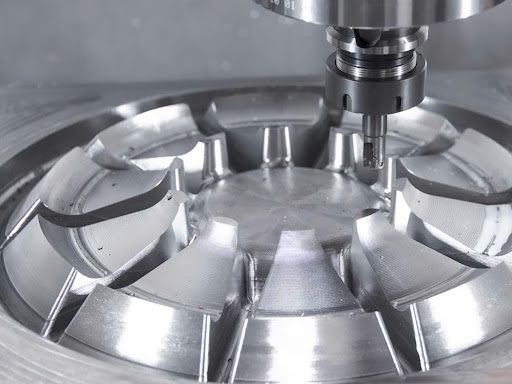
A1: Korean manufacturers combine precision machining technology, automation, and strong quality management systems, offering both reliability and competitive pricing.
A2: Yes, most CNC turning services manufacturers and suppliers are equipped to handle complex geometries and multi-material jobs for aerospace, medical, and electronics sectors.
A3: Typical turnaround ranges from 7 to 25 business days, depending on project complexity and inspection requirements.
A4: Common certifications include ISO 9001, IATF 16949, ISO 13485, and AS9100, covering automotive, medical, and aerospace standards.
A5: Yes. Many companies welcome prototype and small-batch orders to support R&D or pilot production before mass manufacturing.


