From idea to market-ready product, our NPI solutions make every stage easier, faster. Discover How We Help

Views: 222 Author: Tomorrow Publish Time: 2026-01-14 Origin: Site


Content Menu
● The Rise of CNC Turning in Russia
● Advantages of Partnering with Russian CNC Turning Service Providers
>> 1. Exceptional Technical Expertise
>> 2. European Standard Production at Competitive Pricing
>> 3. Comprehensive OEM and ODM Support
>> 4. Diverse Material Capabilities
>> 5. Strong Export and Logistics Support
● Top CNC Turning Services Manufacturers and Suppliers in Russia
>> 4. Ural Precision Components
● Technological Innovation in Russian CNC Turning Industry
● Challenges and Future Outlook
● Key Industries Served by CNC Turning Services in Russia
● Partnering with Chinese OEM CNC Suppliers
● Quality Assurance and Standards
● Sustainability in CNC Turning Production
● Frequently Asked Questions (FAQ)
>> 1. What industries rely most on CNC turning services in Russia?
>> 2. Do Russian CNC manufacturers support international OEM projects?
>> 3. How do Russian suppliers ensure quality?
>> 4. Can Russian CNC shops provide small-batch prototyping?
>> 5. What materials are commonly used in CNC turning processes?
>> 6. How do Russian suppliers handle global shipping?
Russia's manufacturing landscape has undergone a significant transformation over the past decade, with high-precision machining and automation driving its industrial competitiveness. Among these advancements, CNC (Computer Numerical Control) turning services have become essential to modern production processes. For global buyers seeking consistent quality, fast turnaround, and fair cost, CNC Turning Services Manufacturers and Suppliers in Russia present a promising solution.
This article explores Russia's top CNC turning manufacturers and suppliers, their industry strengths, and how they position themselves as valuable partners for global OEM, ODM, and wholesale clients.
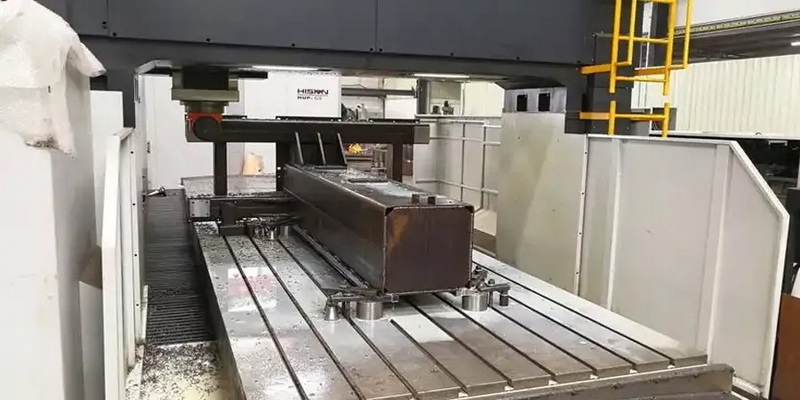
CNC turning, a process where cutting tools shape rotating materials into precise components, has revolutionized industrial part manufacturing. From simple shafts and bushings to complex aerospace fittings, CNC turning enables extraordinary repeatability and precision.
Russia's industrial modernization has been fueled by both domestic innovation and foreign technology integration. Many Russian machining companies have updated their equipment to include multi-axis lathes, live-tooling centers, and robotic loading systems. These advancements help Russian CNC Turning Services Manufacturers and Suppliers consistently meet international quality and performance standards.
Russian producers have also adopted digital monitoring systems—incorporating AI-driven production tracking, CAD/CAM integration, and automated inspection units. The result is a more intelligent, efficient workflow designed to meet stringent precision standards in industries like automotive, defense, and energy.
Choosing the right supplier involves evaluating a mix of technical, economic, and logistical factors. Russian CNC turning providers deliver an appealing balance of these elements, making them an increasingly popular choice for international procurement.
Russian machinists possess decades of industrial experience, enhanced by modern technical education. Many factories employ engineers with backgrounds in mechatronics, material science, and mechanical engineering. Combined with advanced machinery, this expertise translates into exceptional product precision and performance.
One of the greatest advantages of CNC Turning Services Manufacturers and Suppliers in Russia lies in their ability to offer European-grade quality at more affordable pricing. Their cost structure—supported by local resource availability and optimized production practices—enables clients to save without sacrificing tolerances or surface finish quality.
Russian manufacturers often engage in OEM partnerships with global companies, producing private-label components for sectors like automotive, energy, and medical devices. These suppliers follow client-specific drawings, materials, and packaging instructions, guaranteeing confidentiality through NDAs and IP protections.
Russia's machining centers work with an extensive variety of materials, including:
- Carbon steel, stainless steel, aluminum, and titanium alloys.
- Copper and brass fittings for electronics and fluid systems.
- Advanced engineering plastics such as POM, PEI, and PTFE.
This flexibility allows CNC Turning Services Manufacturers and Suppliers to adapt to the needs of different industries efficiently.
With geographic access to Europe and Asia, Russian manufacturers are well connected via rail, sea, and air. Shipping through Saint Petersburg and Vladivostok ports ensures efficient transit routes to Western and Eastern markets. Many suppliers also maintain long-term logistics partnerships, helping foreign clients manage import documentation and customs clearance smoothly.
Below are leading companies known for reliability, innovation, and quality machining services across Russia.
Kirov Machine Works has established a solid reputation for producing high-precision industrial parts using advanced CNC lathes. Their specialization in rotational components for turbines, valves, and pumps has positioned them as a trusted OEM partner across Europe and Asia.
Highlights:
- Certified ISO 9001:2015 and ISO/TS 16949 for automotive quality.
- In-house material testing and non-destructive inspection labs.
- Advanced 5-axis CNC turning systems with integrated quality tracking.
Among the leading CNC Turning Services Manufacturers and Suppliers in Russia, Prommash Tech Group stands out for its mass production capacity and dedication to export projects. Their factories operate dozens of high-speed turning centers ideal for long-run production.
Expertise:
- Automotive and railway fasteners.
- Precision connectors for electric systems.
- Medical instrument components.
The company's advanced automation ensures steady quality control even in continuous 24-hour operations, enhancing reliability for large OEM contracts.
MegaSteel Engineering is widely respected in the oil, mining, and power generation industries. Their heavy-duty CNC turning systems produce large and complex parts used in high-pressure equipment. They maintain full in-house capabilities—from design engineering to surface treatment and packaging.
Advantages:
- CNC machining for oversized diameters up to 1,200 mm.
- Coating and heat treatment lines for corrosion resistance.
- Strong export record to Germany, UAE, and India.
Located in Yekaterinburg, Ural Precision Components specializes in aerospace, robotics, and energy-sector components. Their production floor includes hermetically sealed environments with precision climate control—essential for airframe and satellite parts.
Key strengths:
- Tight-tolerance machining up to ±2 microns.
- Multi-axis simultaneous turning and milling.
- Collaborative R&D programs with research institutions.
BaltTech Machinery provides small and medium-batch CNC turning services for engineering and industrial customers. Their efficient project management, digital production tracking, and just-in-time logistics make them attractive for streamlined international sourcing.
Specializations:
- CNC turning of aluminum and brass components.
- Prototyping and small-batch production for startups.
- Automated inspection and digital CPK analysis.
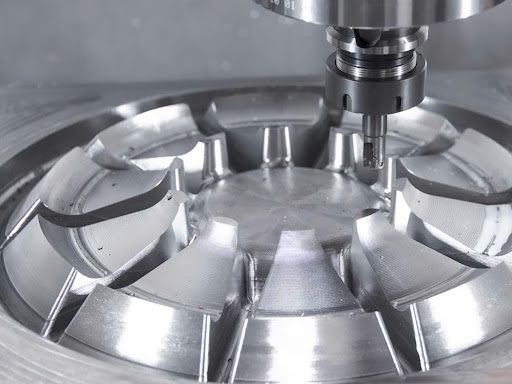
The Russian turning industry is rapidly integrating Industry 4.0 concepts. Manufacturers now use sensors, IoT devices, and real-time analytics to monitor machine performance and predict maintenance needs. This shift ensures minimal downtime and consistent product output.
Furthermore, digital twin technology allows CNC Turning Services Manufacturers and Suppliers to simulate machining processes before physical production begins. This innovation improves efficiency, reduces material waste, and accelerates delivery timelines.
Automation has also extended into quality control, where AI-based visual inspection systems automatically detect microscopic surface inconsistencies and geometric errors—reducing human error rates and improving product yield.
While Russia's CNC machining sector is growing quickly, it still faces several challenges in competing at scale with Western European production hubs. Currency fluctuations, import dependencies for high-end tooling, and variable energy costs can affect long-term pricing stability.
However, the future outlook remains positive. Increasing government support for technology upgrades, tax relief for exporters, and stronger ties with Asian supply networks will continue to strengthen the Russian machining landscape. The country's dedication to precision engineering and sustainability ensures its CNC Turning Services Manufacturers and Suppliers remain globally relevant in the coming decade.
Russian CNC turning manufacturers cater to a wide range of industries with strict dimensional accuracy and production flexibility:
- Automotive and transportation: Engine components, steering parts, gears, and couplings.
- Aerospace and defense: Airframe adapters, connectors, mounting rings, and hydraulic system fittings.
- Oil and gas: Valve housings, adaptors, and precision pipe fittings.
- Medical devices: Surgical instruments, dental components, and orthopedic fasteners.
- Renewable energy: Wind turbine connectors and solar panel brackets.
- Machinery and robotics: Shafts, joints, and functional mechanical parts requiring synchronized movement.
The adaptability of CNC Turning Services Manufacturers and Suppliers in Russia allows them to meet both mass-market and niche product needs while maintaining consistent output quality.
A notable trend is the collaborative partnership between Russian companies and Chinese CNC manufacturers. Many Russian factories outsource part of their machining or tool production to specialized CNC Turning Services Manufacturers and Suppliers in China, ensuring faster prototyping and cost flexibility.
This hybrid model benefits global clients by merging Russian technical engineering and European quality assurance with China's efficiency in production speed and component diversity. For example, complex precision parts may be designed and tested in Russia, then produced in volume at a Chinese partner factory before final QA and assembly back in Russia.
Such international collaboration reflects a smarter, multilayered supply chain beneficial to both ends of the global CNC ecosystem.
Reliable CNC Turning Services Manufacturers and Suppliers in Russia maintain strict quality control across every stage of production. Their processes typically include:
- Incoming material verification: Metallographic and hardness testing for raw materials.
- In-process inspection: Precision gauging and CMM measurement during machining.
- Final inspection: 3D scanning and dimensional certification reports.
- Traceability: Digital records that connect each part number with production data.
Many suppliers also implement Six Sigma management methods to continuously reduce tolerances, production errors, and waste.
Sustainability is gaining attention within the Russian CNC manufacturing industry. Companies increasingly apply eco-friendly coolants, energy-efficient machine tools, and recycling programs for scrap metals. CNC automation itself reduces waste by maximizing material efficiency, since cutting paths and tool movements are optimized by software simulations.
Some CNC Turning Services Manufacturers and Suppliers also employ closed-loop cooling and energy recovery systems that further lower operational carbon footprints. This green manufacturing mindset not only meets regulatory expectations but strengthens brand value among global clients that prioritize sustainability.
Russia has firmly established itself as a rising powerhouse in precision manufacturing. The growing network of CNC Turning Services Manufacturers and Suppliers in Russia merges long-standing engineering tradition with cutting-edge automation, robust quality systems, and strong OEM collaboration.
Their capacity to combine advanced machining technology with competitive pricing has positioned them as valuable partners for global brands, importers, and manufacturers. Whether you require aerospace-grade precision parts, automotive fittings, or custom prototypes, Russia's CNC turning service providers deliver the performance and trust demanded by international clients.
For companies seeking balance between precision, flexibility, and value, sourcing from Russian CNC turning manufacturers is not only strategic—it's a forward-looking investment in the future of global manufacturing.
The main sectors include automotive, aerospace, oil and energy, medical devices, and general machinery manufacturing.
Yes. Most leading CNC Turning Services Manufacturers and Suppliers in Russia offer full OEM and ODM services with strong confidentiality protections.
They operate under international standards such as ISO 9001 and ISO/TS 16949, using advanced metrology and inspection systems to guarantee product precision.
Absolutely. Many manufacturers have dedicated departments for rapid prototyping and short-run production support.
Steel, aluminum, titanium, and brass are most common, along with plastics like POM and nylon for lightweight applications.
With efficient logistics networks and cooperation with freight forwarders, parts are shipped by sea or air through major ports and arrive with proper export documentation.


