From idea to market-ready product, our NPI solutions make every stage easier, faster. Discover How We Help

Views: 222 Author: Tomorrow Publish Time: 2026-01-20 Origin: Site


Content Menu
● Understanding CNC Turning Services
● Growth of CNC Turning Manufacturing in Iran
● Major Industries Using CNC Turning Services in Iran
>> Automotive and Transportation
>> Oil, Gas, and Petrochemical
>> Medical Equipment and Biotechnology
>> General Manufacturing and Industrial Machinery
● Representative CNC Turning Manufacturers in Iran
>> Pars Precision Components Co.
>> Fars Industrial Machining Solutions
>> Aras CNC Manufacturing Group
>> Mashhad Metal Forming Industries
● Why International Buyers Choose Iranian CNC Turning Suppliers
>> Comprehensive Material Capabilities
● How to Select the Right CNC Turning Partner in Iran
● OEM Customization and Production Services
● Iran's Position in the Global CNC Machining Market
● Technological Innovation and Future Prospects
● FAQs About CNC Turning Services Manufacturers and Suppliers in Iran
>> 1. Are Iranian CNC turning suppliers capable of meeting international standards?
>> 2. Do suppliers provide OEM and ODM services?
>> 3. What materials can Iranian CNC shops handle?
>> 4. How competitive are prices compared to China or India?
>> 5. Which industries use these services most?
Iran has emerged as a rising hub in the field of precision engineering and manufacturing. Over the past decade, local factories and workshops have embraced advanced machining technologies to serve a diverse range of industries — from automotive and oil & gas to aerospace and medical equipment. Among these high-precision fields, CNC Turning Services Manufacturers and Suppliers in Iran play a decisive role in modern industrial development, helping both local and international clients achieve superior quality at a highly competitive cost.
As global production networks seek new reliable and cost-effective partners, Iranian CNC manufacturers are steadily gaining recognition for their technical expertise, production flexibility, and ability to deliver exacting custom components under international standards.

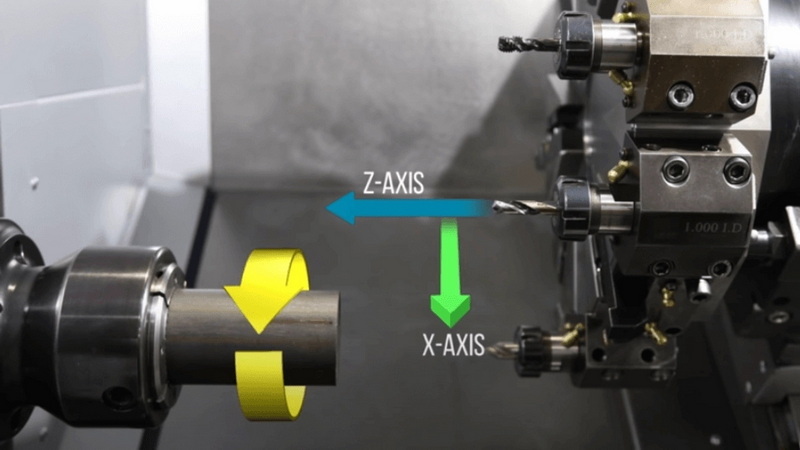
CNC (Computer Numerical Control) turning is one of the most fundamental and widely applied machining processes. In this method, a workpiece is rotated while a cutting tool precisely removes material to shape the desired design. The process is computer-controlled, ensuring consistent performance, tight tolerances, and repeatable accuracy.
Common products manufactured through CNC turning include:
- Shafts, bushings, bolts, nuts, flanges, and housings
- Couplings, sleeves, rings, connectors, and spacers
- Components for engines, pumps, and hydraulic systems
Modern CNC Turning Services Manufacturers and Suppliers in Iran rely on sophisticated machinery equipped with multi-axis lathes, automatic tool changers, high-speed spindles, and real-time quality monitoring systems. This level of technology allows them to produce extremely precise parts from various materials such as stainless steel, aluminum, titanium, copper, and engineering plastics.
The precision and repeatability of CNC turning make it indispensable in industries that demand safety, reliability, and exact mechanical function.
Iran's manufacturing base has been evolving rapidly, supported by a new generation of educated engineers and industrial investors. While traditional machining still exists, the shift toward computer-controlled production has accelerated. Key reasons behind the growth of CNC Turning Services Manufacturers and Suppliers in Iran include:
- Technological modernization: Over the last decade, many machining centers have imported multi-axis CNC lathes from Europe, Japan, and China to update production capabilities.
- Government incentives: Industrial development programs encourage the adoption of digital manufacturing infrastructure.
- Trained workforce: Engineering programs and technical institutes graduate thousands of CNC specialists annually.
- Export orientation: Iranian manufacturers are increasingly aligning with global quality standards to attract foreign customers.
These trends mark the foundation for a modern precision engineering ecosystem capable of competing on the international stage.
The versatility of CNC turning makes it integral to almost every production sector. In Iran, several major industries depend heavily on CNC-turned parts for their success and competitiveness.
Iran's automotive industry is one of the largest in West Asia and North Africa. Local automakers depend on domestic CNC shops to produce essential components such as pistons, gear shafts, fasteners, and braking components. Many CNC Turning Services Manufacturers and Suppliers in Iran also export OEM automotive parts to Turkey, India, and Eastern Europe.
Oil and gas industries form the backbone of Iran's economy. CNC machining ensures production of corrosion-resistant and pressure-rated components such as valve bodies, drill collars, couplings, and sealing parts. Because of the country's high expectations for safety and performance, Iranian workshops have developed advanced testing and inspection capabilities.
Aerospace manufacturing requires unparalleled precision and material reliability. Iranian CNC engineers produce titanium alloy and high-performance aluminum parts with extremely tight tolerances, meeting rigid performance criteria for aviation, UAV systems, and defense products.
The growing healthcare manufacturing sector depends on micro turning and small-part machining to create surgical instruments, orthopedic screws, implants, and dental components. CNC turning's ability to produce complex geometries on small scales provides a perfect combination of accuracy and consistency.
Iran's domestic machinery, construction, and pump equipment industries all require high-quality turned components. CNC Turning Services Manufacturers and Suppliers in Iran serve as key partners, providing replacement parts, maintenance spares, and precision assemblies for various mechanical systems.
Iran's machining industry features numerous companies capable of producing precision components to international standards. Below are some excellent examples recognized for their abilities and professionalism.
Based in Isfahan, Pars Precision Components Co. specializes in multi-axis CNC turning and milling services. The company supplies machined components to European clients in the automotive and heavy-equipment industries. Its workshop is equipped with CNC lathes, machining centers, and CMM inspection equipment to ensure global quality compliance.
A pioneer among CNC Turning Services Manufacturers and Suppliers, Tehran Machine Works Ltd. serves both domestic and regional markets with custom metal components. Their engineers provide design consulting, prototype development, and serial production solutions based on customer drawings.
Fars Industrial Machining Solutions operates from Shiraz, producing highly complex OEM parts for energy, aerospace, and defense applications. They emphasize strict process supervision, material traceability, and surface treatment options such as anodizing and polishing.
Located in Tabriz, Aras CNC Manufacturing Group focuses on flexibility and rapid production. They maintain cost-effective pricing while offering technical support and on-demand sampling to meet international client expectations.
This full-service machining supplier combines CNC turning, heat treatment, and finishing technologies to serve heavy industry customers. Their engineers emphasize quality control and dimensional accuracy for large-scale mechanical products.
These companies collectively represent Iran's capacity to deliver professional-grade machining services for demanding clients worldwide.
Iran's CNC machining industry offers several advantages for global buyers seeking trusted OEM or custom-part producers:
Operating costs are substantially lower compared to suppliers in Europe, Japan, or North America. This allows buyers to optimize budgets without sacrificing quality.
Technical teams are highly experienced in CAD/CAM system operations and can quickly translate 3D designs into functional prototypes and production parts.
Most CNC Turning Services Manufacturers and Suppliers support both OEM customization based on client drawings and ODM development for proprietary component design.
Iran's domestic raw material market includes access to quality steel, aluminum, copper, and titanium. This local sourcing advantage reduces lead time and material cost.
Leading CNC workshops are ISO 9001 and IATF 16949 certified. Dimensional verification, non-destructive testing (NDT), and precision inspection ensure consistent output quality.
For companies seeking a cost-effective yet technically skilled alternative to conventional manufacturing countries, Iran presents an appealing outsourcing destination.
Choosing an appropriate supplier is critical for successful procurement. To make an informed decision, international buyers should:
1. Assess machining capabilities: Review the supplier's equipment list, ranging from two-axis lathes to sophisticated five-axis CNC stations.
2. Request sample parts: Always test the output through pilot runs before mass production.
3. Evaluate quality management systems: Confirm the availability of process documentation, calibration certificates, and inspection reports.
4. Review communication quality: Excellent English communication ensures smooth design iterations and fast response to feedback.
5. Consider logistics solutions: Many suppliers offer export packaging, customs documentation, and freight forwarding support.
Taking these steps helps form sustainable partnerships with reliable CNC Turning Services Manufacturers and Suppliers in Iran.
An essential advantage of the Iranian machining market lies in its customization strength. Most manufacturers provide end-to-end OEM support including:
- Part design analysis and optimization
- Prototyping and low-volume trial production
- Batch manufacturing for global distribution
- In-house surface finishing such as polishing, plating, or coating
- Individual part marking and product traceability
With these capabilities, Iranian exporters deliver full-service solutions for foreign brands, component distributors, and equipment assemblers looking to outsource production.
As supply chains diversify geographically, Iran is positioning itself as a reliable manufacturing ally. Though often overshadowed by Asian giants like China or India, Iranian suppliers are attracting global clients with:
- Stable pricing compared to volatile labor markets
- Access to rich metallurgical resources
- Skilled technicians with multilingual technical support
- Growing adoption of digital manufacturing practices
By balancing quality with affordable cost, Iran's CNC Turning Services Manufacturers and Suppliers provide global importers with an excellent base for long-term cooperation.
The next decade is likely to bring transformative changes to Iran's CNC machining industry. A few emerging developments include:
- Automation integration: Robotic-assisted lathes and pallet systems are improving production speed and reducing downtime.
- Data-driven manufacturing: Smart factory platforms enable real-time monitoring, predictive maintenance, and process optimization.
- Material advancements: Expanding the use of titanium alloys, carbon-fiber composites, and heat-resistant superalloys.
- Eco-friendly machining: Adoption of recycled materials and energy-efficient cooling systems to meet sustainability goals.
- Global collaboration: Strategic partnerships with European distributors and engineering firms are helping Iranian companies adopt new technologies and certifications faster.
Such trends underline Iran's commitment to innovation and its strategic ambition to become a recognized player in global precision manufacturing.
Iran's CNC turning industry stands at the intersection of technology, craftsmanship, and economic opportunity. Supported by skilled machinists, modern equipment, and a growing export orientation, local manufacturers deliver world-class quality across a wide range of products and materials.
For international buyers looking to balance precision, cost, and reliability, Iranian CNC Turning Services Manufacturers and Suppliers provide a compelling option. Whether it's designing precision components for OEM automotive applications, producing industrial machinery parts, or creating prototypes for energy systems, Iranian companies are well-positioned to serve as dependable, long-term partners.
With continued modernization and collaborative openness to global markets, Iran is set to become one of the most promising CNC machining destinations in the coming years.
Contact us to get more information!
Yes. Many factories operate under ISO 9001 and IATF 16949 systems with advanced multi-axis equipment and metrology instruments.
Nearly all leading CNC manufacturers in Iran offer both OEM custom machining and ODM design assistance to meet diverse customer requirements.
Typical materials include steel, stainless steel, aluminum, brass, copper, titanium, and industrial plastics like POM, PTFE, and nylon.
Prices are generally comparable or lower, with added value from responsive service, engineering cooperation, and rapid prototyping.
Automotive, oil & gas, aerospace, defense, medical devices, and mechanical equipment manufacturing are the primary sectors.
1. https://www.tradewheel.com
2. https://www.alibaba.com
3. https://www.globalsources.com
4. https://www.made-in-iran.com
5. https://www.export.gov.ir


