From idea to market-ready product, our NPI solutions make every stage easier, faster. Discover How We Help

Views: 222 Author: Tomorrow Publish Time: 2026-01-10 Origin: Site


Content Menu
● What Makes German CNC Turning Services Unique
● Understanding the CNC Turning Process
>> 1. Automotive Manufacturing
>> 5. Heavy Machinery and Robotics
● Leading CNC Turning Services Manufacturers and Suppliers in Germany
>> 2. GILDEMEISTER Drehmaschinen GmbH
>> 3. Spinner Werkzeugmaschinenfabrik GmbH
>> 4. INDEX-Werke GmbH & Co. KG
>> 5. EMCO GmbH
>> 6. Hermle AG
>> 7. Weiler Werkzeugmaschinen GmbH
● Selecting the Right German CNC Turning Partner
● The Role of Industry 4.0 in Modern CNC Turning
● Collaboration Between German and Global Manufacturers
● Sustainability and Green Manufacturing
● Challenges in the CNC Turning Industry
● Future Outlook of CNC Turning in Germany
● Frequently Asked Questions (FAQ)
>> Q2: Do German CNC turning companies accept custom projects or small-batch production?
>> Q3: How do German suppliers ensure consistent quality?
>> Q4: Can overseas buyers collaborate remotely with German suppliers?
>> Q5: How do German CNC Turning Services Manufacturers and Suppliers remain sustainable?
Germany is globally recognized as a hub of engineering brilliance and industrial precision. With decades of innovation and craftsmanship, it has established itself as one of the top destinations for CNC Turning Services Manufacturers and Suppliers. Companies in this sector are known for delivering consistent, high-quality machined components used in demanding fields such as automotive, aerospace, medical technology, and industrial machinery.
For international clients—especially OEMs, wholesalers, and production companies—Germany offers a robust manufacturing ecosystem combining time-tested accuracy with cutting-edge digital infrastructure. Every component produced in German CNC workshops reflects precision engineering, technical integrity, and efficient production management.

The stamp “Made in Germany” symbolizes exceptional craftsmanship, strict quality management, and engineering mastery. German CNC Turning Services Manufacturers and Suppliers are pioneers in mechanical innovation, backed by strong research institutions and significant investment in automation technology.
Key differentiators include:
- Advanced Automation: Most production lines use CNC turning centers equipped with robotic arms and AI-integrated software for optimized efficiency.
- Stringent Quality Systems: Components must meet rigorous inspection standards using coordinate-measuring machines (CMM), laser scanning, and non-destructive testing.
- Innovation and R&D: German turning companies constantly refine their processes through partnerships with universities and technology institutes.
- Skilled Workforce: Operators, engineers, and quality inspectors receive extensive technical training and certification under national systems such as the German Chamber of Industry and Commerce (IHK).
- Sustainability Commitment: German CNC Turning Services Manufacturers and Suppliers invest in eco-friendly solutions—using recycled materials, renewable electricity, and closed-loop coolant systems.
As a result, clients worldwide trust these suppliers not just for reliability and precision, but also for sustainable and transparent production models.
CNC (Computer Numerical Control) turning is a subtractive manufacturing method that shapes rotating workpieces through controlled cutting operations. Using precise coordinates programmed into the CNC machine, every motion of the cutting tool is predetermined, enabling part accuracy within microns.
Modern German turning centers feature:
- Multi-axis capability (3–9 axes): Allows simultaneous turning, drilling, and milling on complex geometries.
- Live tooling and sub-spindles: Reduce setup times and improve productivity for intricate parts.
- Automation and pallet systems: Ensure high throughput with minimal operator intervention.
- Digital monitoring: Built-in sensors track temperature, torque, and vibration to maintain constant process conditions.
Materials frequently processed by CNC Turning Services Manufacturers and Suppliers in Germany include hardened steels, titanium, aluminum alloys, brass, copper, and thermoplastic polymers.
Every step—from billet loading to tool change—follows digital traceability protocols, ensuring each finished part can be tracked back to its raw material batch and inspection results.
The German CNC turning industry supplies thousands of companies across multiple sectors:
Germany is home to world-leading automotive brands that depend on CNC-turned parts such as gear shafts, housing rings, piston pins, and transmission components. Suppliers delivering to this sector comply with IATF 16949 and VDA 6.3 standards.
Lightweight titanium and Inconel parts, including turbine inserts and fasteners, require the precision and certification expertise offered by German machining companies.
Surgical instrument handles, orthopedic screws, and dental implants demand biocompatible materials and ultra-tight tolerances. ISO 13485 compliance ensures that German CNC Turning Services Manufacturers and Suppliers meet the quality benchmarks of global health industries.
Turned components such as connectors, plug housings, and fuel system elements are vital for renewable energy equipment and electronic systems.
Custom shafts, couplings, and bearing sleeves are produced for use in factory automation, robotics, and heavy construction equipment.
This dynamic industrial base allows international customers to collaborate with German suppliers in both high-volume production and specialized one-off prototyping.
DMG MORI is one of the dominant forces in Germany's machining landscape. Known for integrating IoT-driven CNC control systems, the company excels in both high-performance machine tool manufacturing and customized turning services. Their facilities in Bielefeld and Pfronten produce parts with extreme accuracy for industries ranging from aerospace to medical devices.
Renowned for innovation, GILDEMEISTER specializes in high-precision turned components for automotive and energy clients. Their production lines employ hybrid lathes and automated inspection systems, which ensure remarkable repeatability and minimal scrap generation.
Spinner focuses on flexible small-part machining for suppliers that need both precision and agility. The company serves as a trusted partner for OEMs across Europe, delivering finished components and offering on-demand manufacturing capacity as part of its full-service package.
Based in Esslingen am Neckar, INDEX is widely respected for complex multi-spindle turning centers. They specialize in highly sophisticated CNC operations supporting fluid technology, hydraulic systems, and automotive safety components.
Combining German and Austrian engineering, EMCO's CNC turning solutions emphasize user-friendly programming and automation compatibility. Their contract manufacturing division provides ready-to-install parts with consistent dimensional integrity.
While Hermle is primarily a milling expert, its hybrid machining facilities include integrated turning operations. This dual capability allows production of complex aerospace and power generation components in a single setup, improving efficiency and quality.
Founded in 1938, Weiler has grown into one of the most respected mid-sized precision machine vendors in Germany. Besides OEM machine tool production, Weiler also provides professional CNC turning services for bespoke engineering firms and R&D institutions.
These CNC Turning Services Manufacturers and Suppliers represent Germany's unmatched machining prowess and commitment to continuous innovation.
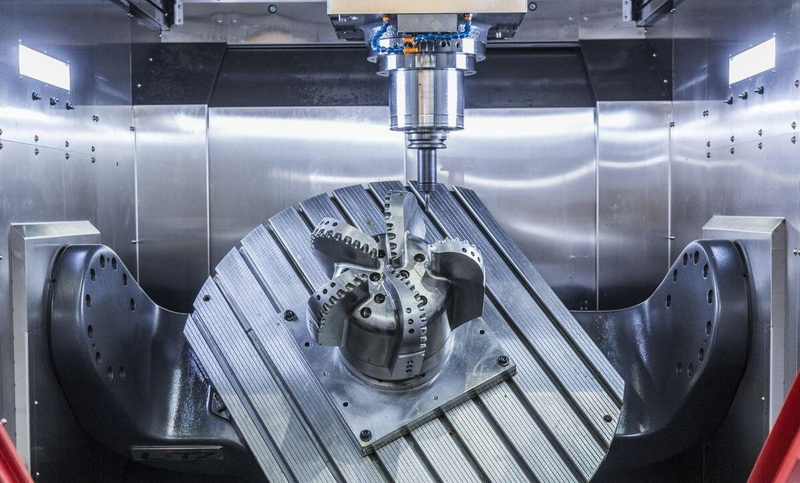
Working with the right supplier determines not only product quality but also overall project success. To identify the ideal partner among German CNC Turning Services Manufacturers and Suppliers, consider these essential points:
1. Certification & Compliance – Ensure your supplier holds relevant quality and environmental certifications: ISO 9001, ISO 14001, ISO 13485, or IATF 16949.
2. Machinery and Capability Range – Assess maximum and minimum turning diameters, axes, and tool capacities to confirm compatibility with your component design.
3. Material Mastery – Experience in machining specialized materials like titanium, inconel, or engineering plastics ensures longer tool life and higher tolerances.
4. Supply Chain Flexibility – Look for just-in-time delivery options and production scalability to support varying demand.
5. Digital Transparency – Many German companies use ERP-integrated systems giving clients real-time production status and quality reports.
6. Communication and Collaboration – English-speaking project managers and transparent documentation make cooperation with international clients smooth and efficient.
Partnering with German machining experts gives OEMs from China, the U.S., and Europe a unique opportunity to integrate top-tier engineering quality into their global production chains.
Germany, often referred to as the birthplace of “Industry 4.0,” has deeply integrated smart manufacturing technologies into CNC machining. Real-time monitoring, cloud computing, and machine-to-machine communication are now standard in the production environment.
Modern CNC Turning Services Manufacturers and Suppliers leverage data analytics to predict tool wear, optimize spindle speeds, and enhance production stability. Smart systems prevent downtime and automatically adjust machining parameters based on sensor feedback.
Another breakthrough is the rise of Digital Twin technology—a virtual simulation of each machining process that allows engineers to pre-test designs and refine tool paths before physical production. This innovative approach reduces errors, saves material, and ensures consistent quality across thousands of units.
An important trend is the growing collaboration between German CNC Turning Services Manufacturers and Suppliers and precision part producers in Asia, including China. Such partnerships allow a combination of strengths—Germany provides leading-edge design, engineering, and process verification, while Asian partners contribute flexible pricing and rapid mass production.
For example, a Chinese OEM specializing in precision metal parts might partner with a German supplier for prototype validation and technical support. Once the design is approved and quality standards are set, production can scale across multiple regions, ensuring steady supply and global competitiveness.
These transnational alliances encourage knowledge exchange, sustainable technology transfer, and better responsiveness to international market demands.
Sustainability has become a cornerstone of modern manufacturing in Germany. Leading CNC Turning Services Manufacturers and Suppliers adopt circular economy principles by:
- Using renewable energy sources, such as solar or wind, to power workshop operations.
- Recycling aluminum chips and re-melting leftover metal scrap into new billets.
- Implementing coolant filtration systems that extend fluid life and reduce waste discharge.
- Applying dry machining techniques when possible, lowering dependency on oil-based lubricants.
These eco-conscious initiatives not only protect the environment but also help global clients meet their own ESG (Environmental, Social, and Governance) goals, making German suppliers appealing partners in sustainable production networks.
Despite technological excellence, the German CNC turning industry faces challenges that require continuous adaptation:
- Labor Shortages: The aging skilled workforce limits the availability of CNC programming experts, pushing automation adoption further.
- High Energy Costs: Growing utility expenses influence production pricing, especially for energy-intensive turning of hard metals.
- Global Competition: Asian markets present strong cost advantages, requiring German giants to emphasize efficiency and value-added engineering.
- Regulatory Pressure: Tightening EU environmental laws necessitate ongoing investment in cleaner production equipment.
Nevertheless, these challenges motivate innovation. Many German CNC Turning Services Manufacturers and Suppliers now implement AI-driven scheduling systems and robotics to offset workforce limitations and maintain competitiveness.
The future of CNC turning in Germany lies in continued innovation and digital evolution. Upcoming trends include:
- Hybrid Manufacturing Integration: Combining CNC turning with additive manufacturing (3D printing) for near-net-shape parts.
- Connected Supply Chains: Real-time synchronization between suppliers and customers through blockchain-based logistics.
- AI-Enhanced Tool Management: Predictive algorithms that calculate lifespan and auto-optimize toolpath selection.
- Sustainability-First Production: Expansion of net-zero carbon machining facilities by 2030.
- Cloud Manufacturing Platforms: Facilitating remote order placement and instant fabrication quotes through online interfaces.
Such developments reinforce Germany's position as the global leader in precision manufacturing and make its CNC turning sector a cornerstone of modern industrial innovation.
Germany's CNC turning industry stands as a global benchmark for precision, innovation, and reliability. From multi-axis automation to AI-driven smart factories, the nation's CNC Turning Services Manufacturers and Suppliers embody excellence in every detail. Clients around the world value their expertise, quality assurance, and commitment to cleaner manufacturing.
As global supply chains evolve, collaboration between German and international OEMs creates unparalleled potential for efficiency, technology exchange, and sustainable growth. Whether producing prototypes or large-scale batch parts, German CNC turning companies continue to represent the highest standard of engineering craftsmanship in the 21st century.
A: OEMs, technology startups, automotive producers, and industrial machinery companies all gain from Germany's precision machining expertise, quality assurance, and dependable lead times.
A: Yes. Many firms specialize in custom prototypes, low-volume runs, and engineering development while maintaining the same quality standards as large-scale projects.
A: Through advanced process control, closed-loop feedback systems, and 100% inspection for critical components using automated metrology tools.
A: Absolutely. Many companies offer secure online portals for file exchange, real-time production monitoring, and multi-language project communication.
A: They adopt clean manufacturing practices—energy-efficient machines, recyclable materials, and waste reduction programs—to promote green production.


