From idea to market-ready product, our NPI solutions make every stage easier, faster. Discover How We Help

Views: 222 Author: Tomorrow Publish Time: 2025-12-20 Origin: Site


Content Menu
● What Are CNC Milling Services?
● Advantages of Choosing Malaysian CNC Milling Manufacturers
>> 1. Technological Sophistication
>> 4. Quality and Certification
● Leading CNC Milling Service Providers in Malaysia
>> 1. Advance Pacific Machinery Sdn. Bhd.
>> 2. LH Precision Engineering (M) Sdn. Bhd.
>> 3. Nam Lee Precision Engineering
>> 4. ZS Engineering Sdn. Bhd.
>> 5. Weng Seng Engineering Corporation
>> 6. Allied Precision Engineering Malaysia
>> 7. HT Precision Engineering
● Core Capabilities of Malaysian CNC Milling Suppliers
● Industry Applications of CNC Milling Services
>> 3. Electronics and Semiconductors
>> 6. Renewable Energy Components
● Quality Assurance and Technology Standards
● Sustainability and Environmental Responsibility
● How to Choose the Right CNC Milling Supplier in Malaysia
● The Future of CNC Milling in Malaysia
● Frequently Asked Questions (FAQs)
>> 1. What industries benefit most from CNC milling services in Malaysia?
>> 2. How do Malaysian CNC milling suppliers maintain quality?
>> 3. Are these suppliers capable of OEM/ODM production?
>> 4. What is the standard lead time for CNC milling projects?
>> 5. Can Malaysian suppliers handle large export orders?
Malaysia has rapidly advanced into one of Southeast Asia's leading precision engineering and manufacturing centers. With a solid foundation in industrial technology, a skilled workforce, and cost-effective operations, Malaysia has become a global destination for CNC milling services manufacturers and suppliers.
These companies serve clients from the automotive, aerospace, electronics, and medical industries, offering high-quality OEM (Original Equipment Manufacturing) and ODM (Original Design Manufacturing) services. Whether for complex prototypes or mass production, Malaysia's machinists deliver components that meet tight tolerances, superior finishes, and international quality benchmarks.
This article explores some of the top CNC milling services manufacturers and suppliers in Malaysia, the industries they serve, and the reasons behind their increasing global demand.
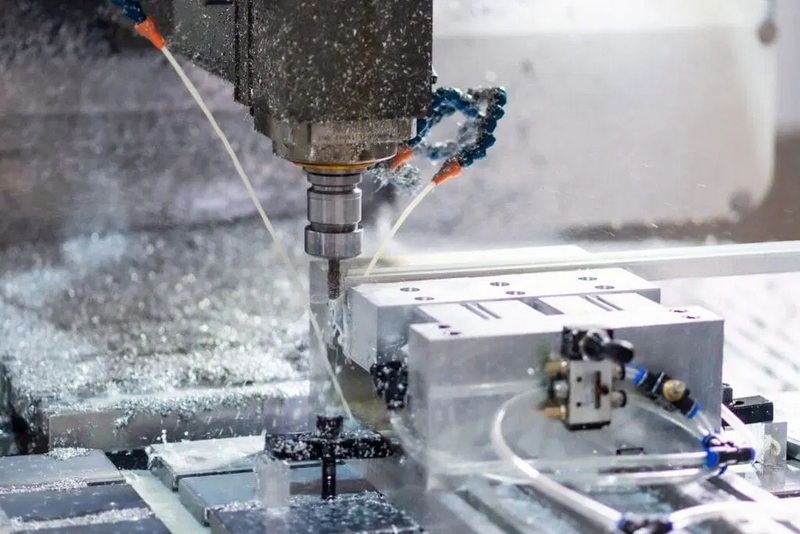
CNC milling is a computer-controlled process used to shape solid materials—such as metal, plastic, or composite—into specific designs and dimensions. The “CNC” in the name stands for Computer Numerical Control, meaning machine movements are guided by coded instructions rather than manual operation.
CNC milling allows for:
- High precision and repeatability
- Complex 3D geometries
- Rapid prototyping and fast turnaround
- Reduced waste compared to conventional machining
CNC milling services manufacturers and suppliers use multi-axis machines (ranging from 3-axis to 5-axis systems) to produce parts like engine brackets, valve housings, and surgical device components. The level of automation and precision ensures consistency across multiple production runs, making it ideal for OEM clients who need thousands of identical components.
The Malaysian government's commitment to developing advanced manufacturing—through initiatives such as Industry 4.0 and the National Policy on Advanced Manufacturing—has created an environment that supports innovative machining companies. Several factors contribute to Malaysia's growing reputation as a destination for CNC milling services:
Many Malaysian suppliers operate world-class machining centers equipped with Mazak, Haas, or DMG MORI machines, enabling micro-tolerance and high-speed machining.
The workforce is deeply technical, with many engineers trained in Japan, Germany, and Singapore. Their expertise allows for seamless communication with global OEM clients.
Production and labor costs in Malaysia are lower than those in Japan or Singapore, yet the final precision output matches international standards. This creates excellent cost-to-quality ratios for buyers.
Most top CNC milling services manufacturers and suppliers are ISO 9001 or IATF 16949 certified, ensuring parts meet strict quality management systems for global industries.
Situated between China, Thailand, and Singapore, Malaysia offers global logistics advantages for export-oriented projects.
Let's look at several highly reputed CNC milling services manufacturers and suppliers that exemplify Malaysia's expertise in precision machining.
Advance Pacific Machinery focuses on aerospace, defense, and high-performance auto components. The company operates a state-of-the-art facility in Selangor and supports both small and large-volume production runs.
Highlights:
- 5-axis precision milling
- Rapid prototyping and complex assembly
- Aerospace-grade quality management
Specializing in high-accuracy CNC milling services, LH Precision Engineering offers machining for automotive tooling, electronic casings, and machine parts. Clients often commend their ability to maintain consistency across repeated orders.
Highlights:
- 4- and 5-axis milling centers
- Advanced CAD/CAM programming
- Quick lead times and competitive costs
A pioneer in electronic and automation component machining, Nam Lee provides everything from design consultation to post-production finishing. Their versatility covers metal, plastic, and hybrid materials.
Highlights:
- Small-batch and high-mix production
- Specialized in aluminum and copper machining
- Stringent in-process inspections
ZS Engineering serves semiconductor, oil & gas, and tooling industries with full-service CNC milling and turning facilities. Their engineers collaborate with clients from the design stage, minimizing rework in production.
Highlights:
- End-to-end design support
- High-speed milling for tight tolerances
- Mold and die manufacturing expertise
With over three decades of experience, Weng Seng Engineering delivers durable machining solutions for automotive molds and industrial equipment parts. Its global exports reach Europe and the Middle East.
Highlights:
- Full mold base fabrication
- ISO-certified and eco-friendly processes
- Strong customer-focused engineering team
Known internationally for their advanced machinery and digital inspection workflows, Allied Precision Engineering serves clients in the medical device and semiconductor industries.
Highlights:
- Automated inspection and measurement systems
- Multi-axis micromachining capabilities
- OEM design and component modification
HT Precision Engineering's specialty lies in fabricating aluminum, brass, and stainless steel components for electronics and instrumentation systems. The firm has a reputation for reliability and consistent product accuracy.
Highlights:
- Custom OEM component design
- Flexible prototyping and material optimization
- Quality-centered production lines
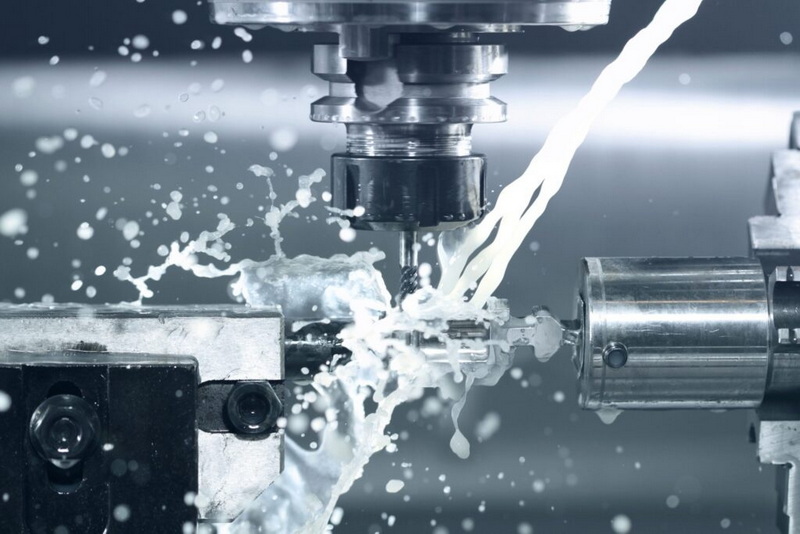
Top CNC milling services manufacturers and suppliers in Malaysia provide a complete spectrum of manufacturing solutions, ensuring that clients can manage entire production lifecycles within one facility.
Common capabilities include:
- 3-, 4-, and 5-axis CNC Milling for complex parts and high-accuracy requirements.
- CNC Turning & EDM services for intricate internal and external geometries.
- CAD/CAM Engineering support for design verification and material performance analysis.
- Prototyping & Low-volume Production ideal for start-ups and R&D projects.
- Surface Finishing such as anodizing, powder coating, sandblasting, and plating.
- Inspection and Testing through coordinate measuring machines (CMMs) and laser calibration.
By combining these functions, Malaysian CNC machining firms streamline production, reduce vendor management time, and deliver higher efficiency and accuracy.
CNC milling services manufacturers and suppliers in Malaysia play essential roles in multiple industries, each with unique tolerance, durability, and finish requirements.
Producing titanium brackets, actuator assemblies, and lightweight housings for high-performance systems.
Milling high-durability parts like gear casings, engine holders, brake components, and transmission housings.
Crafting precision aluminum housings, heat sinks, and enclosures used in electronic devices and circuit board supports.
Fabricating stainless steel medical instruments, surgical components, and diagnostic housings under ISO 13485 specifications.
Manufacturing valves, adaptors, and tool housings resistant to high pressure and corrosion.
Producing wind turbine brackets, solar panel frames, and electric vehicle parts.
These diverse applications demonstrate Malaysia's manufacturing flexibility and capacity to serve both traditional and emerging industries.
One consistent trait among Malaysia's top CNC milling services manufacturers and suppliers is their emphasis on quality assurance. They adhere to international certifications and employ rigorous inspection processes throughout every production stage.
Common certifications include:
- ISO 9001:2015 – Standard for quality management systems.
- AS9100D – Aerospace manufacturing quality certification.
- IATF 16949 – Automotive sector standard.
- ISO 13485 – Medical device manufacturing standard.
Inspection tools such as Coordinate Measuring Machines (CMMs), optical scanners, and digital micrometers verify each part's dimensional accuracy before shipment. Real-time monitoring and predictive maintenance systems ensure every CNC machine operates at optimal precision.
Modern CNC milling services manufacturers and suppliers in Malaysia are increasingly adopting sustainable practices to minimize environmental impact. This includes:
- Waste reduction via near-net-shape machining.
- Energy-efficient tooling and recycling of metals and coolants.
- Compliance with RoHS and REACH directives for safer materials.
- Investment in renewable energy sources for plant operations.
These eco-conscious initiatives not only attract environmentally aware clients but also align with Malaysia's national sustainability goals under its Green Technology Master Plan.
Selecting the ideal supplier depends on your project size, complexity, and industry requirements. Here's what to focus on when evaluating potential partners:
1. Technological capability – Ensure access to advanced 4- and 5-axis machines for high-complexity parts.
2. Industry Experience – A supplier familiar with your sector ensures smoother communication and faster problem-solving.
3. Production Flexibility – The ability to scale production volumes as needed.
4. Material Expertise – Knowledge of metals, plastics, and composites relevant to your component design.
5. After-Sales Support – Post-delivery assistance and engineering consultations to optimize your next project.
Engaging with Malaysian CNC milling services manufacturers and suppliers gives international clients a combination of professionalism, precision, and cost competitiveness unmatched in many other regions.
The future of CNC milling services manufacturers and suppliers in Malaysia is strongly tied to digital transformation. Industry 4.0 technologies such as artificial intelligence (AI), robotics, and IoT-based monitoring systems are revolutionizing machining practices.
Key trends shaping the sector include:
- Smart machining and automation to reduce downtime.
- Cloud-based monitoring systems that share production data with clients in real time.
- Integration of 3D printing for hybrid manufacturing workflows.
- Adoption of eco-materials and energy-efficient machining for sustainability.
These innovations are elevating Malaysia's position as a leading hub for precision manufacturing in Asia. The convergence of technology, talent, and global trade accessibility ensures that Malaysian CNC milling will remain competitive well into the next decade.
Malaysia's CNC milling services manufacturers and suppliers embody a blend of innovation, cost-efficiency, and reliability that appeals to global businesses. They have successfully leveraged technology, skilled manpower, and international partnerships to become global leaders in high-precision machining.
Whether you need custom prototypes, small-batch production, or complex OEM assemblies, Malaysian CNC milling companies provide advanced engineering support and globally competitive pricing. As the industry evolves under the influence of digital manufacturing and sustainable development, Malaysia is set to remain a cornerstone in the international precision machining landscape.
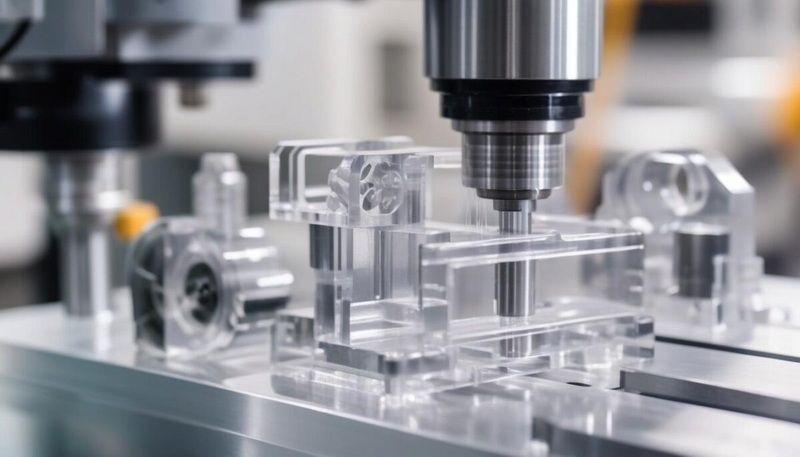
Industries such as aerospace, medical devices, automotive, and semiconductors heavily rely on CNC milling for the production of high-precision, durable, and complex parts.
By adhering to internationally recognized certifications like ISO 9001 and AS9100, and employing advanced inspection tools such as CMMs to ensure every component meets required tolerances.
Yes, most CNC milling services manufacturers and suppliers in Malaysia provide OEM and ODM services, covering everything from design consultation to complete assembly.
Lead times vary between 3 to 6 weeks depending on project complexity, materials, and volume, yet many suppliers offer expedited prototyping services for urgent requirements.
Absolutely. Malaysia's mature logistics and free trade zones enable smooth international shipping, serving clients from Europe, North America, and East Asia efficiently.


