From idea to market-ready product, our NPI solutions make every stage easier, faster. Discover How We Help

Views: 222 Author: Tomorrow Publish Time: 2025-12-26 Origin: Site


Content Menu
● The Growing Significance of CNC Milling in Iran
● Capabilities of CNC Milling Services in Iran
● Leading CNC Milling Services Manufacturers And Suppliers in Iran
>> 1. Shiraz Precision Industries Co.
>> 2. Tehran CNC Machining Center
>> 3. Pars Mechanical Solutions
● The Competitive Edge of Iranian Suppliers
● Technology and Innovation in the Sector
● Sustainability and Environmental Initiatives
● Partnership Opportunities for Global Businesses
● Quality Assurance and Certification
● Future Prospects of CNC Milling in Iran
● Frequently Asked Questions (FAQ)
>> 1. What industries most frequently rely on CNC milling services in Iran?
>> 2. Are Iranian milling suppliers capable of meeting international export standards?
>> 3. What types of materials can Iranian milling services handle?
>> 4. How do Iranian Milling Services Manufacturers And Suppliers maintain quality control?
>> 5. Can international companies collaborate on OEM or private-label projects?
Iran's industrial landscape has experienced a remarkable transformation in recent years. Once dependent on imported mechanical components, the nation has evolved into a regional hub for precision manufacturing and advanced machining. This progress is especially evident in the field of CNC milling — a cornerstone of modern industrial production.
Today, Iranian Milling Services Manufacturers And Suppliers are competing not only in domestic markets but also internationally. They are supplying precision components to clients in different sectors, including automotive, aerospace, oil and energy, medical equipment, and industrial automation. With advanced equipment, a skilled workforce, and competitive pricing, these suppliers have become reliable partners for foreign brands, wholesalers, and OEM producers seeking quality, affordability, and flexibility.
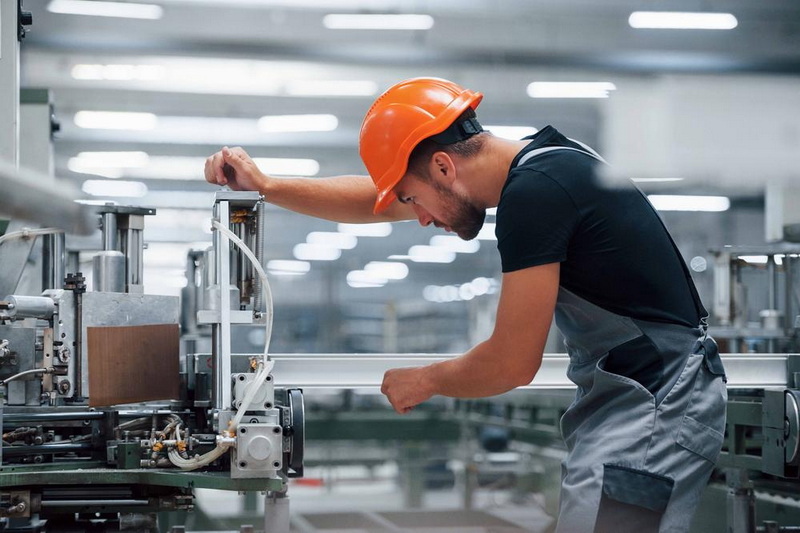
CNC milling has redefined how precision components are made. Unlike traditional machining, which relies heavily on manual control, CNC milling automates the process using computer-guided programming. This ensures precision, repeatability, and faster production cycles.
In Iran, increasing industrial diversification has fueled demand for high-quality machined components. From turbines and gear housings to electronics casings and vehicle engine blocks, Milling Services Manufacturers And Suppliers serve as critical enablers of local and regional supply chains. Their ability to fabricate customized components according to international standards makes them valuable players in the broader global manufacturing network.
Technological advancements are accelerating this trend. With government support and private investments, Iranian manufacturers are upgrading facilities with imported CNC machinery, robotics, and comprehensive quality control systems. This modernization has helped them enhance output efficiency and compete directly with leading producers in East Asia and Europe.
The range of capabilities offered by Iranian Milling Services Manufacturers And Suppliers covers both traditional and advanced applications. Modern workshops are often equipped with 3-axis, 4-axis, and 5-axis CNC milling machines, allowing complex geometric designs and tight tolerances.
Common milling operations include:
- High-speed precision cutting for metal and plastic components.
- Multi-axis machining for intricate shapes and deep cavities.
- Surface contouring, threading, drilling, and slotting.
- Batch production and prototyping for OEM clients.
The ability to operate with a variety of materials further strengthens Iran's competitiveness. Manufacturers routinely machine aluminum, copper, brass, steel alloys, titanium, and engineering plastics like PEEK and Delrin. Such versatility empowers clients from sectors like medical device manufacturing and aerospace, which require specialized material performance.
In addition, most major suppliers offer prototype-to-production transitions, using in-house design assistance and CAD/CAM analysis to ensure consistency between design and final output.
Located in the southern industrial region of Shiraz, this company specializes in complex, multi-axis milling services for aerospace, oil drilling, and automotive partners. Its investment in high-end 5-axis CNC equipment enables the firm to achieve micro-tolerance machining suitable for turbine components and fluid system parts. Shiraz Precision Industries is often recognized for its commitment to ISO-compliant quality management and on-time project delivery.
Based in Iran's capital, Tehran CNC Machining Center provides versatile manufacturing solutions for domestic and foreign clients. Its services include CNC milling, turning, and finishing. The company leverages advanced CAD/CAM integration and digital twin simulations, ensuring every prototype performs exactly as designed. They have built a strong reputation among Milling Services Manufacturers And Suppliers for offering both small-quantity production and large-volume orders with equal precision.
Pars Mechanical Solutions operates a modern facility focusing on machinery and industrial component manufacturing. The company offers extensive milling, welding, and assembly services. Its engineering department collaborates with global customers on design optimization — a crucial support function for OEMs aiming to reduce costs while maintaining accuracy. Pars Mechanical's attention to sustainable manufacturing practices, such as material recycling and energy-efficient machining, also sets it apart.
Aria CNC Engineering stands as one of Iran's most prominent names in advanced machining. With two decades of operational experience, it has gained expertise handling high-complexity projects — from aerospace brackets to precision valves and custom dies. The company operates multiple 5-axis CNC systems with automated tool changers and employs 3D scanning for quality verification. Their export-grade packaging and English-language documentation facilitate smooth international cooperation.
Established to support both local and international clients, Iran Metal Works Co. focuses on precision engineering and large-scale component milling. The company provides complete post-processing solutions including anodizing, polishing, and surface finishing. Its long-standing relationships with European and Middle Eastern buyers underscore Iran's growing international credibility among Milling Services Manufacturers And Suppliers.
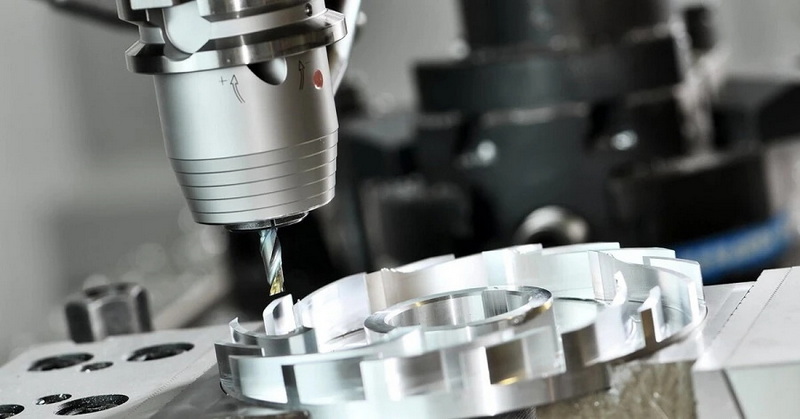
Iranian Milling Services Manufacturers And Suppliers hold several structural advantages enabling them to compete on a global scale.
1. Affordability and Cost Control
Local production costs are significantly lower than those in Europe or Japan. This advantage extends from energy prices and skilled labor to raw material acquisition. As a result, Iranian suppliers can offer very competitive quotations while maintaining quality integrity.
2. Technical Expertise
Iran has nurtured a new generation of engineers and machinists trained in domestic universities and through partnerships with foreign technology centers. Many are proficient in CAD, CAM, and CNC programming, enabling manufacturers to provide customized machining solutions.
3. Technological Investment
Despite economic challenges, several Iranian firms continue importing modern CNC equipment from China, Germany, and South Korea. These investments enhance precision, reliability, and scalability.
4. OEM and ODM Flexibility
Iranian suppliers are highly adaptable, working closely with OEM clients to develop proprietary components. They can take confidential designs, scale production quickly, and manage logistics to support international timelines.
5. Geographic Advantage
Iran's geographical location connects key trading routes between Asia and Europe. This makes export coordination more streamlined, allowing rapid delivery to surrounding markets with minimal logistical friction.
Modernization has become the focal point for Iranian machining companies. Embracing Industry 4.0 principles, many manufacturers now employ interconnected systems that optimize resource use and minimize downtime. For example, sensor-based monitoring tracks performance in real-time, identifying inefficiencies before they escalate into production delays.
Advanced machining software such as SolidWorks, Mastercam, and Siemens NX is increasingly utilized to conduct 3D modeling and CNC toolpath simulation. Coupled with laser scanning technology and coordinate measuring machines (CMM), this ensures that even the smallest geometric deviations are detected and corrected instantly.
Some manufacturers are experimenting with hybrid production systems that merge additive manufacturing (3D printing) with CNC milling. This approach drastically reduces waste and enables complex part geometries impossible through subtractive machining alone. These continuous innovations are helping Milling Services Manufacturers And Suppliers in Iran align with global standards for smart manufacturing.
Sustainability is gradually becoming a strategic focus in Iran's machining industry. Manufacturers are implementing eco-friendly practices such as recycling cutting fluids, reusing metal scraps, and optimizing energy consumption.
Investment in solar energy and water reclamation systems within certain industrial zones reflects a growing awareness of environmental responsibility. Additionally, digital inventory systems minimize overproduction and waste, aligning with international sustainability benchmarks demanded by modern OEM partners.
The movement toward sustainable machining not only improves environmental outcomes but also enhances Iran's brand reputation in global markets. Buyers increasingly prioritize suppliers with visible commitments to responsible manufacturing processes.
For international companies seeking outsourcing or OEM collaboration, Iranian Milling Services Manufacturers And Suppliers present a compelling alternative. They combine a favorable cost structure with excellent technical competencies, enabling Western and Asian clients to diversify their supply chains without compromising quality.
Foreign wholesalers and production firms can benefit from:
- Private-label production, where Iranian firms manufacture to exact specifications under brand confidentiality.
- Joint R&D projects aimed at developing customized milling solutions.
- Rapid prototyping services, reducing time to market for new products.
- Comprehensive post-machining processes, including coating, assembly, and inspection.
Chinese OEMs and European engineering companies have already begun establishing long-term contracts with Iranian partners, signaling global confidence in the country's manufacturing reliability.
Maintaining product integrity is a fundamental value for all competitive suppliers. Iranian manufacturers implement strict quality control at every stage — from raw material verification and in-process inspection to final testing and packaging.
The majority comply with internationally recognized standards such as:
- ISO 9001:2015 (Quality Management Systems)
- ISO/TS 16949 (Automotive Production Quality)
- ISO 13485 (Medical Equipment Manufacturing)
- AS9100D (Aerospace Industry Requirements)
Every production batch undergoes dimensional accuracy tests, surface finish analysis, and hardness verification. Many facilities maintain climate-controlled inspection rooms, ensuring consistent measurement accuracy for high-precision parts.
These continuous quality monitoring frameworks ensure that Iranian Milling Services Manufacturers And Suppliers remain competitive in international markets demanding zero-defect tolerance.
The outlook for Iran's CNC milling industry appears highly promising. With continued investment in education, infrastructure, and technology, the country is expected to expand its presence across Europe, Asia, and Africa.
Government initiatives supporting manufacturing exports and industrial digitization will likely further elevate the sector's standing. Moreover, growing collaborations with Chinese and Turkish machine tool enterprises are helping to transfer knowledge and technology into the local market.
As digital manufacturing ecosystems evolve, expect to see Iranian Milling Services Manufacturers And Suppliers adopting more automation, artificial intelligence, and sustainable production systems — enabling even greater efficiency and global competitiveness.
The evolution of Iran's CNC milling industry highlights how rapidly a nation can modernize through focused investment, education, and technology. Today, Iranian Milling Services Manufacturers And Suppliers provide unparalleled precision, strong export readiness, and a deep understanding of OEM requirements.
Their combination of cost efficiency, high technical standards, and innovative mindset makes them trusted partners for global firms seeking reliable machining solutions. As automation, sustainability, and digital transformation continue to shape manufacturing worldwide, Iran's CNC milling sector stands poised to become a powerful contributor to the international supply chain.
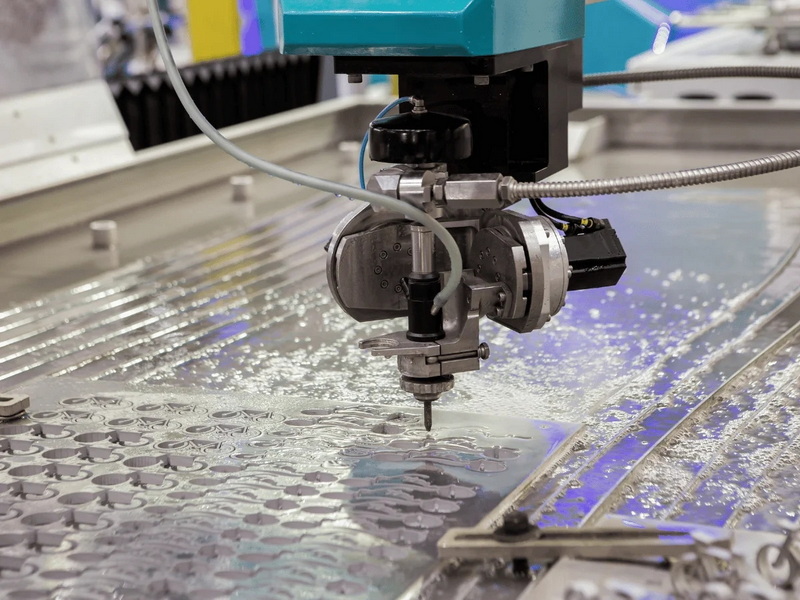
Industries such as automotive, aerospace, oil and gas, defense, electronics, and medical equipment heavily depend on Iranian CNC milling specialists for precision-machined components.
Yes. Many Iranian companies hold ISO and AS certifications and have extensive export experience. Components produced in Iran are used globally under strict OEM guidelines.
They process a wide range of metals and plastics—aluminum, stainless steel, titanium, brass, copper, PEEK, and others—depending on the client's design and functionality requirements.
Suppliers utilize modern quality systems, coordinate measuring machines, and digital inspection tools to ensure every item meets international tolerances.
Absolutely. Iranian manufacturers are experienced in OEM collaborations and can modify or produce custom components while maintaining intellectual property confidentiality.


